
Medical Disclaimer: This content is for educational purposes only. It is not medical advice. Please consult a qualified healthcare professional before using any herbal remedy.
Safety Overview
1.Lambs Ear — Overview
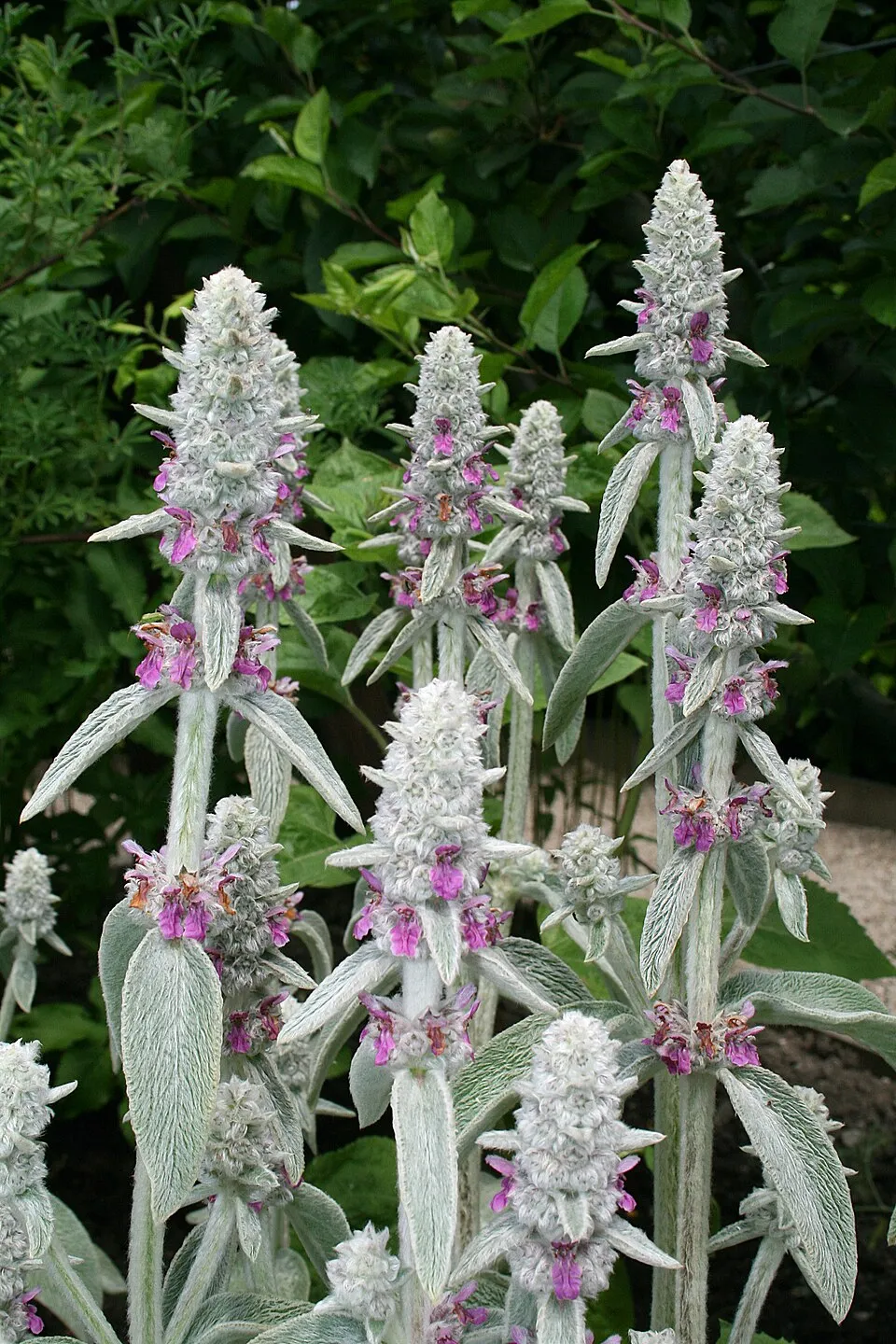
Stachys byzantina, commonly known as Lamb's Ear, is a distinctive herbaceous perennial belonging to the Lamiaceae family, renowned for its soft, velvety, and silvery-gray foliage. Native to the arid and semi-arid regions of Turkey, Iran, and the Caucasus, it has successfully naturalized across diverse global landscapes, becoming a favored ornamental plant in temperate zones. The plant exhibits a prostrate, mat-forming growth habit, typically reaching heights of 15 to 30 cm (6 to 12 inches) and spreading up to 60 to 90 cm (2 to 3 feet), creating a dense groundcover.
Its most striking feature is its oblong to lanceolate leaves, measuring 5 to 10 cm (2 to 4 inches) in length, which are densely covered in woolly trichomes, imparting a tactile sensation akin to a lamb's ear and a visual appeal ranging from pale silver-green to deep silvery-gray. This unique foliage provides excellent textural contrast in garden designs, particularly against darker green plants.
During the summer months, Lamb's Ear produces erect, square flower stalks that ascend 45 to 60 cm (18 to 24 inches) above the basal foliage. These stalks bear terminal spikes of small, bilabiate (two-lipped) flowers arranged in whorls, typically appearing in shades of lavender, pinkish-purple, or occasionally white. While the individual flowers are not overtly showy, their collective display adds a subtle charm and serves as an attractive nectar source for pollinators such as bees and butterflies.
The plant's adaptability extends to its cultivation requirements; it thrives in full sun to partial shade and prefers well-drained soil, demonstrating remarkable drought tolerance once established. Its fuzzy leaves also confer a natural resistance to browsing by deer and rabbits, enhancing its utility in diverse garden settings. Stachys byzantina readily propagates through self-seeding and creeping stems but is generally considered non-invasive, with spread easily managed by division.
Trusted Scientific References
1. Authoritative external sources for Stachys byzantina
1.1 Wikipedia — Stachys byzantina
1.2 Kew POWO (Plants of the World Online)
1.3 PubMed — peer-reviewed research
1.4 NCBI Taxonomy Browser
1.5 GBIF — Global Biodiversity
1.1.Lambs Ear — Key Features
- ✓Soft, velvety, silvery — gray foliage — Distinctive tactile and visual appeal.
- ✓Mat — forming growth habit — Excellent groundcover or edging plant.
- ✓Drought — tolerant — Ideal for xeriscaping and low-water gardens.
- ✓Deer and rabbit resistant — Due to its fuzzy texture.
- ✓Produces lavender — pink flower spikes — Attractive to pollinators.
- ✓Traditional wound healing properties — Used as a natural bandage.
- ✓Anti — inflammatory and antiseptic potential — Due to active compounds.
- ✓Low maintenance — Easy to grow in various conditions.
- ✓Evergreen in warmer climates — Provides year-round interest.
- ✓Adaptable to full sun to partial shade — Versatile planting options.
1.2.Lambs Ear — In Brief
- ✓Fuzzy, silvery foliage makes it a popular ornamental plant.
- ✓Traditional use for wound care and minor cuts.
- ✓Contains anti-inflammatory and antiseptic compounds.
- ✓Drought-tolerant and low-maintenance garden plant.
- ✓Attracts pollinators like bees and butterflies.
- ✓Generally non-toxic but internal use needs caution.
2.Lambs Ear — Scientific Profile
3.Lambs Ear — Quick Facts
4.Lambs Ear — Plant Morphology
5.Lambs Ear — Geographic Distribution
6.Lambs Ear — Historical Applications
7.Lambs Ear — Active Compounds
- ✓Flavonoids — Including apigenin, luteolin, and their glycosides, known for antioxidant, anti-inflammatory, and potentially antiviral activities.
- ✓Phenylethanoid Glycosides — Such as verbascoside (acteoside), which exhibits significant anti-inflammatory, antioxidant, and antimicrobial properties.
- ✓Iridoids — Compounds like harpagide and ajugol, contributing to anti-inflammatory and analgesic effects.
- ✓Tannins — Astringent compounds that contribute to wound healing and antiseptic properties by precipitating proteins and forming a protective layer.
- ✓Terpenoids — Including diterpenes and triterpenes, which can have diverse biological activities such as anti-inflammatory and antimicrobial.
- ✓Volatile Oils — Present in small quantities, contributing to the plant's aroma and potentially offering mild antiseptic or insect-repellent qualities.
- ✓Saponins — Glycosides that can have expectorant properties and may contribute to general tonic effects.
- ✓Alkaloids — Often present in trace amounts in plants, with various potential pharmacological actions, though not primary active compounds in Lamb's Ear.
- ✓Polysaccharides — Complex carbohydrates that can possess immunomodulatory and soothing properties.
- ✓Sterols — Including beta-sitosterol, contributing to anti-inflammatory and cholesterol-lowering effects.
8.Lambs Ear — Research Insights
- ✓Wound Healing — The fuzzy leaves of Lamb's Ear have been traditionally applied directly to wounds to absorb blood and promote clotting, acting as a natural bandage due to their hemostatic properties and potential antimicrobial effects.
- ✓Anti-inflammatory — Extracts contain compounds like flavonoids and phenylethanoid glycosides that may help reduce inflammation, both internally and when applied topically to irritated skin.
- ✓Antiseptic Properties — Traditional uses suggest its application on minor cuts and scrapes to prevent infection, attributed to certain constituents that exhibit mild antimicrobial activity.
- ✓Pain Relief — Historically used as a poultice for minor aches and stings, potentially due to its anti-inflammatory compounds that can soothe localized pain.
- ✓Digestive Aid — In some traditional systems, infusions from Stachys species have been used to alleviate mild digestive discomfort, though specific mechanisms for S. byzantina are less studied.
- ✓Antioxidant Support — Rich in phenolic compounds, Lamb's Ear offers antioxidant benefits, helping to neutralize free radicals and protect cellular integrity.
- ✓Skin Soothing — The soft, absorbent leaves, or preparations from them, can be applied to soothe insect bites, rashes, and minor skin irritations.
- ✓Respiratory Support — Traditional remedies sometimes utilized Stachys species for coughs and colds, possibly due to expectorant or soothing properties, though direct evidence for S. byzantina is limited.
- ✓Hemostatic Agent — The physical structure of the leaves, combined with potential biochemical factors, aids in stopping minor bleeding when applied topically.
- ✓Antispasmodic Effects — Some Stachys species are noted for antispasmodic properties, which could theoretically extend to S. byzantina for muscle cramps or spasms.
8.1.Lambs Ear — Therapeutic Indications
9.Lambs Ear — Precautions & Warnings
9.1.Lambs Ear — Warnings
- ✓Allergic Reactions — Skin irritation or contact dermatitis can occur in sensitive individuals due to direct contact with the fuzzy leaves.
- ✓Gastrointestinal Upset — Internal consumption, especially in large quantities, may lead to stomach upset, nausea, or diarrhea.
- ✓Photosensitivity — While rare, some individuals might experience increased sun sensitivity after internal use.
- ✓Drug Interactions — Potential for interaction with medications, particularly those affecting blood clotting or inflammation, due to its hemostatic and anti-inflammatory properties.
- ✓Respiratory Irritation — Inhaling fine hairs from the leaves may cause irritation in some individuals with respiratory sensitivities.
- ✓Contamination Risk — Improperly cleaned or wild-harvested leaves may carry pathogens or pesticides if used topically on open wounds.
- ✓Toxicity in Large Doses — Although generally considered non-toxic, excessive internal consumption could lead to adverse effects due to concentrated active compounds.
9.2.Lambs Ear — Toxicity Assessment
- ✓Pregnancy and Lactation — Avoid internal use during pregnancy and breastfeeding due to insufficient safety data.
- ✓Children — Use with caution in children; topical application for minor issues with supervision is generally acceptable, but internal use is not recommended.
- ✓Allergic History — Individuals with known allergies to plants in the Lamiaceae family should exercise caution.
- ✓Open Wounds — While traditionally used on wounds, ensure leaves are sterile before applying to prevent infection; avoid deep or severely infected wounds.
- ✓Internal Use — Not widely recommended for internal consumption without expert guidance due to limited scientific studies on efficacy and safety dosages.
- ✓Skin Patch Test — Perform a patch test on a small area of skin before extensive topical application to check for allergic reactions.
- ✓Consult Physician — Always consult a healthcare professional before using Lamb's Ear medicinally, especially if taking other medications or having pre-existing health conditions.
10.Lambs Ear — How to Use
- ✓Topical Wound Dressing — Fresh, clean leaves can be gently crushed and applied directly to minor cuts, scrapes, or insect bites to help stop bleeding and soothe irritation.
- ✓Herbal Poultice — Macerate leaves to create a poultice for localized inflammation, sprains, or bruises. Apply directly to the affected area and secure.
- ✓Infusion/Tea — Dried leaves can be steeped in hot water to make a tea for mild digestive complaints or as a general tonic, though internal use should be approached with caution and medical advice.
- ✓Tincture — Prepare an alcohol-based tincture from fresh or dried leaves for internal or external application, allowing for concentrated extraction of active compounds.
- ✓Ointment/Salve — Infuse dried leaves into a carrier oil (e.g., olive oil) and then combine with beeswax to create a soothing salve for skin irritations.
- ✓Compresses — Soak a cloth in a strong infusion of Lamb's Ear and apply as a cold or warm compress to reduce swelling or discomfort.
- ✓Herbal Bath — Add a strong infusion of leaves to bathwater to soothe widespread skin irritations or for a relaxing, aromatic experience.
- ✓Decoction — For more robust extraction of certain compounds, the leaves can be simmered in water for a longer period, especially beneficial for woody parts, although less common for Lamb's Ear.
11.Lambs Ear — Growth Requirements
- ✓Sunlight — Prefers full sun (at least 6 hours daily) but tolerates partial shade, especially in hot climates to prevent leaf scorch.
- ✓Soil Requirements — Thrives in well-drained soil; poor drainage can lead to root rot. Amend heavy clay soils with organic matter.
- ✓Watering — Drought-tolerant once established. Water sparingly, only during prolonged dry spells, ensuring soil dries out between waterings.
- ✓Air Circulation — Ensure good air flow to prevent fungal diseases like powdery mildew, particularly in humid conditions.
- ✓Fertilization — Generally not required; Lamb's Ear thrives in lean soil. Over-fertilization can reduce foliage quality.
- ✓Pruning — Deadhead spent flower stalks to maintain tidiness and prevent unwanted self-seeding; this also encourages energy into foliage.
- ✓Propagation — Easily propagated by division in spring or fall, or from stem cuttings. Can also be grown from seed, though cultivars may not come true.
- ✓Pest and Disease Management — Generally pest-free; susceptible to root rot and foliar diseases in overly wet or humid conditions. Remove affected leaves promptly.
Reviewed by the Flora Medical Global Botanical Review Panel
Multi-disciplinary editorial group · Botany · Ethnobotany · Herbal-medicine literature
Who reviewed this: This page was checked by the Flora Medical Global Botanical Review Panel — an in-house editorial group of botany graduates, ethnobotany researchers, and horticulture practitioners who collectively maintain our 7,000+ plant encyclopedia. Meet the team.
Our 4-step verification process
1. Taxonomic verification
Scientific names and synonyms cross-checked against Kew POWO, World Flora Online, and The Plant List.
2. Phytochemical & medicinal cross-reference
Active compounds, traditional uses, and reported activities are cross-referenced with PubMed, USDA Dr. Duke's database, and peer-reviewed ethnobotanical literature.
3. Conservation & distribution check
Distribution, ecology, and conservation status confirmed against GBIF occurrence records and the IUCN Red List.
4. Editorial & safety review
Every entry passes an editorial pass for clarity, originality, and safety notices (toxicity, contraindications, dosage caveats) before publication.
Last reviewed:
Important medical disclaimer: This content is for educational and research purposes only. It is not medical advice and is not a substitute for consultation with a licensed healthcare provider. Do not use any herb to self-treat a medical condition without professional guidance.
Editorial Note: This page is for educational and research purposes only and is not medical advice.
Written by: Flora Medical Global Editorial Team
Reviewed by: Flora Medical Global Botanical Review Panel
Last Updated: June 15, 2026





Lambs Ear — Comments & Community Reviews
Rate this plant