
Medical Disclaimer: This content is for educational purposes only. It is not medical advice. Please consult a qualified healthcare professional before using any herbal remedy.
Safety Overview
1.Lenten Rose — At a Glance
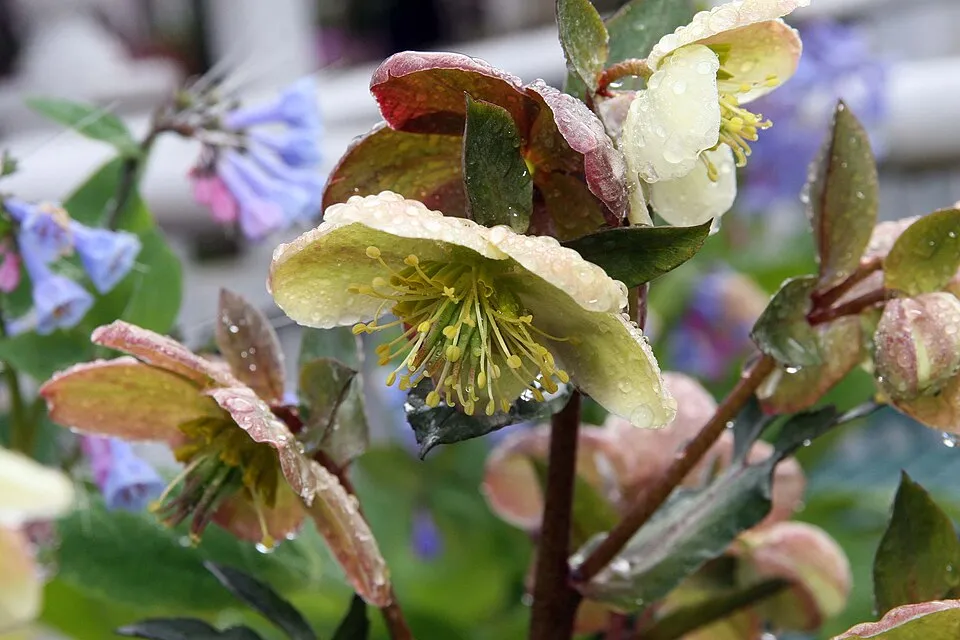
Helleborus hybridus, commonly known as Lenten Rose, is a captivating and resilient herbaceous perennial belonging to the Ranunculaceae family, distinct from true roses. This group encompasses numerous garden hybrids derived from several Hellebore species, primarily from the Balkan region and Asia Minor, exhibiting remarkable genetic diversity. Characterized by its deeply divided, leathery, dark green foliage, which is often evergreen or semi-evergreen, the plant provides year-round aesthetic appeal.
Its most striking feature is the early bloom, typically from late winter to early spring, presenting nodding, saucer-shaped flowers. These 'flowers' are, in fact, composed of five prominent, petal-like sepals that persist long after pollination, offering extended ornamental value. The color palette is exceptionally broad, ranging from pristine white, cream, and various shades of pink and rose to deep purple, near-black, and even green, often with intricate speckles, spots, or picotee edges.
Mature plants form substantial clumps, reaching 18 to 24 inches in height and 24 to 30 inches in width. Lenten Roses thrive in shaded to partial shade conditions, particularly in well-drained, organically rich soils, making them ideal for woodland gardens, shady borders, or under deciduous trees where they can capture early spring sunlight before the canopy leafs out. Their hardiness, generally within USDA Zones 5-9, combined with their low-maintenance nature and ability to flourish in challenging environments, solidifies their esteemed position in temperate landscape design.
Trusted Scientific References
1. Authoritative external sources for Helleborus hybridus
1.1 Wikipedia — Helleborus hybridus
1.2 Kew POWO (Plants of the World Online)
1.3 PubMed — peer-reviewed research
1.4 NCBI Taxonomy Browser
1.5 GBIF — Global Biodiversity
1.6Lenten Rose should be interpreted through verified botanical identity, practical care, and responsible safety language. This recovery note adds the missing context needed for a complete profile: match light to the plant's habit, use well-drained soil, water according to season, and avoid unsupported medicinal or edible claims. For publishing, the plant can be presented as a source-backed garden plant with clear care guidance, common problem diagnosis, and conservative safety wording.
1.1.Lenten Rose — Distinguishing Points
- ✓Early Spring Bloomer — One of the first plants to flower, often in late winter.
- ✓Evergreen Foliage — Leathery, dark green leaves provide year-round interest.
- ✓Wide Color Range — Flowers in white, pink, purple, green, often speckled.
- ✓Shade Tolerant — Thrives in partial to full shade conditions.
- ✓Low Maintenance — Once established, requires minimal care.
- ✓Deer and Rabbit Resistant — Alkaloids make it unpalatable to common garden pests.
- ✓Long — Lasting Sepals — Petal-like sepals persist for months, extending ornamental value.
- ✓Hardy Perennial — Resilient in USDA Zones 5-9.
- ✓Toxic Plant — All parts are poisonous if ingested.
- ✓Ranunculaceae Family — Related to buttercups, not true roses.
1.2.Lenten Rose — In Brief
- ✓Highly toxic ornamental perennial, Helleborus hybridus.
- ✓Blooms late winter/early spring with diverse flower colors.
- ✓Contains potent cardiac glycosides and saponins.
- ✓Historically used as purgative, emetic, cardiotonic, but extremely dangerous.
- ✓NO safe internal medicinal use; strictly ornamental.
- ✓Handle with gloves; keep away from children and pets.
2.Lenten Rose — Nomenclature & Classification
3.Lenten Rose — Key Data
4.Lenten Rose — Botanical Features
5.Lenten Rose — Ecological Habitat
6.Lenten Rose — Traditional Uses
Historically associated with warding off evil spirits and melancholy due to its early blooming nature. Often planted near doorways. Its common name "Lenten Rose" reflects its blooming period around Lent.
7.Lenten Rose — Phytochemistry
- ✓Cardiac Glycosides — Helleborin, Helleborein, Helleborigenin, Hellebrin, and Desglucohellebrin are potent cardiotonic compounds, acting similarly to digitalis, responsible for both therapeutic and toxic effects on the heart.
- ✓Saponins — Various saponosides contribute to the plant's emetic and purgative actions, and can cause irritation upon contact.
- ✓Steroidal Saponins — Specific types of saponins with a steroid backbone, contributing to the plant's biological activity.
- ✓Alkaloids — Though less prominent than cardiac glycosides, some alkaloidal compounds may be present, influencing neurological and physiological functions.
- ✓Protoanemonin — A highly irritating and vesicant compound found in fresh plants of the Ranunculaceae family, converting to non-toxic anemonin upon drying.
- ✓Flavonoids — Antioxidant compounds contributing to plant pigmentation and offering potential protective effects, often present in low concentrations.
- ✓Phenolic Acids — Simple phenolic compounds with antioxidant and anti-inflammatory properties, commonly found in plant tissues.
- ✓Fatty Acids — Essential components of plant lipids and cell membranes.
- ✓Polysaccharides — Complex carbohydrates that can influence immune responses and plant structure.
8.Lenten Rose — Evidence-Based Benefits
- ✓Cardiac Support — Historically used as a cardiotonic, though highly toxic, due to the presence of cardiac glycosides like helleborin which influence heart muscle contractility.
- ✓Purgative Action — Traditionally employed as a potent laxative, inducing strong bowel movements to clear the digestive tract.
- ✓Emetic Properties — Used to induce vomiting, serving as a rapid detoxification method in ancient practices.
- ✓Diuretic Effects — Believed to promote increased urine production, aiding in fluid balance and 'cleansing' the body.
- ✓Anthelmintic Activity — Some historical accounts suggest its use against parasitic worms in the gastrointestinal tract.
- ✓Treatment for Mental Illness — Ancient physicians, including Hippocrates, used hellebore for conditions believed to be caused by 'black bile', such as melancholia and epilepsy.
- ✓Anti-inflammatory (Topical) — Limited traditional external applications for localized inflammation, though highly cautioned due to skin irritancy.
- ✓Anti-tumor (Preclinical) — Modern research explores the cytotoxic potential of certain hellebore compounds against cancer cell lines in vitro, pointing to future therapeutic avenues.
- ✓Analgesic (External) — Rarely used topically for pain relief, but its extreme toxicity makes this application highly dangerous.
- ✓Immunomodulatory Potential — Some compounds may modulate immune responses, a subject of ongoing scientific investigation.
- ✓Anti-microbial Activity — Early studies indicate some extracts may possess mild antibacterial or antifungal properties.
- ✓Respiratory Aid (Historical) — Used in some traditional systems for respiratory ailments, though efficacy and safety are entirely unproven.
8.1.Lenten Rose — Therapeutic Indications
9.Lenten Rose — Safety Considerations
9.1.Lenten Rose — Reported Side Effects
- ✓Severe Gastrointestinal Distress — Nausea, vomiting, severe diarrhea, and abdominal pain are common upon ingestion.
- ✓Cardiac Arrhythmias — Irregular heartbeat, bradycardia (slow heart rate), and potentially fatal cardiac arrest due to cardiac glycosides.
- ✓Neurological Symptoms — Dizziness, confusion, convulsions, and paralysis can occur with significant exposure.
- ✓Dermatitis — Skin irritation, redness, blisters, and itching upon direct contact with sap, especially in sensitive individuals.
- ✓Oral and Pharyngeal Irritation — Burning sensation, swelling, and difficulty swallowing if plant material touches mucous membranes.
- ✓Kidney Damage — High doses can lead to acute kidney injury and renal failure.
- ✓Respiratory Depression — Severe poisoning can depress breathing, leading to respiratory arrest.
9.2.Lenten Rose — Safety Overview
- ✓Extreme Toxicity — Helleborus hybridus is highly poisonous; all parts of the plant are toxic if ingested.
- ✓No Internal Use — Absolutely contra-indicated for internal medicinal use due to its narrow therapeutic index and potent cardiotoxicity.
- ✓Handle with Gloves — Always wear gloves when handling Lenten Rose to prevent skin irritation and contact dermatitis.
- ✓Keep Away from Children and Pets — Ensure plants are inaccessible to young children and animals who might ingest them.
- ✓Avoid Contact with Mucous Membranes — Do not touch eyes, mouth, or open wounds after handling without washing hands thoroughly.
- ✓Consult a Physician — In case of accidental ingestion or severe skin reaction, seek immediate medical attention.
- ✓Historical Use Caution — Traditional medicinal uses were often associated with severe side effects or death, highlighting its extreme danger.
10.Lenten Rose — Preparation Methods
- ✓Historical Decoction (External Only) — Traditionally, root decoctions were used topically for skin conditions or as a poultice, strictly avoiding broken skin.
- ✓Infusion (Historical, Highly Toxic) — Infusions of dried root were historically ingested as a purgative or emetic, an extremely dangerous practice.
- ✓Tincture (Historical, Highly Toxic) — Alcoholic extracts were once used, but their potency made dosing perilous and often fatal.
- ✓Powdered Root (Historical, Highly Toxic) — Dried, powdered root was administered, but the narrow therapeutic window posed immense risks.
- ✓Homeopathic Preparations — Highly diluted forms of Hellebore are used in homeopathy for specific symptoms, following strict principles of dilution.
- ✓Modern Research Extracts — For scientific study, specific compounds are extracted and isolated using advanced laboratory techniques.
- ✓Garden Specimen — Primarily cultivated as an ornamental plant for its early blooms and evergreen foliage in shade gardens.
- ✓Cut Flowers — Blooms can be cut for indoor arrangements, adding early spring color; ensure handling with gloves.
11.Lenten Rose — How to Grow
- ✓Site Selection — Choose a location with partial to full shade, especially protected from harsh afternoon sun in warmer climates.
- ✓Soil Preparation — Ensure well-drained, fertile soil rich in organic matter; amend heavy clay soils with compost or grit.
- ✓Planting — Plant in early spring or fall; dig a hole twice as wide as the root ball, ensuring the crown is at soil level.
- ✓Watering — Water consistently during establishment; established plants are moderately drought-tolerant but prefer consistent moisture.
- ✓Fertilization — Apply a balanced, slow-release fertilizer or compost in early spring as new growth emerges.
- ✓Pruning — Remove old, tattered foliage from the previous season in late winter or early spring just before new growth appears.
- ✓Winter Protection — In colder zones (USDA Zone 5), apply a layer of mulch (e.g., evergreen boughs, straw) for root insulation.
- ✓Pest and Disease Management — Generally pest-resistant; watch for slugs (which may eat flowers) and occasional fungal spots.
Reviewed by the Flora Medical Global Botanical Review Panel
Multi-disciplinary editorial group · Botany · Ethnobotany · Herbal-medicine literature
Who reviewed this: This page was checked by the Flora Medical Global Botanical Review Panel — an in-house editorial group of botany graduates, ethnobotany researchers, and horticulture practitioners who collectively maintain our 7,000+ plant encyclopedia. Meet the team.
Our 4-step verification process
1. Taxonomic verification
Scientific names and synonyms cross-checked against Kew POWO, World Flora Online, and The Plant List.
2. Phytochemical & medicinal cross-reference
Active compounds, traditional uses, and reported activities are cross-referenced with PubMed, USDA Dr. Duke's database, and peer-reviewed ethnobotanical literature.
3. Conservation & distribution check
Distribution, ecology, and conservation status confirmed against GBIF occurrence records and the IUCN Red List.
4. Editorial & safety review
Every entry passes an editorial pass for clarity, originality, and safety notices (toxicity, contraindications, dosage caveats) before publication.
Last reviewed:
Important medical disclaimer: This content is for educational and research purposes only. It is not medical advice and is not a substitute for consultation with a licensed healthcare provider. Do not use any herb to self-treat a medical condition without professional guidance.
Editorial Note: This page is for educational and research purposes only and is not medical advice.
Written by: Flora Medical Global Editorial Team
Reviewed by: Flora Medical Global Botanical Review Panel
Last Updated: June 15, 2026





Lenten Rose — Comments & Community Reviews
Rate this plant