
Medical Disclaimer: This content is for educational purposes only. It is not medical advice. Please consult a qualified healthcare professional before using any herbal remedy.
Safety Overview
1.Lewisia Cotyledon — At a Glance
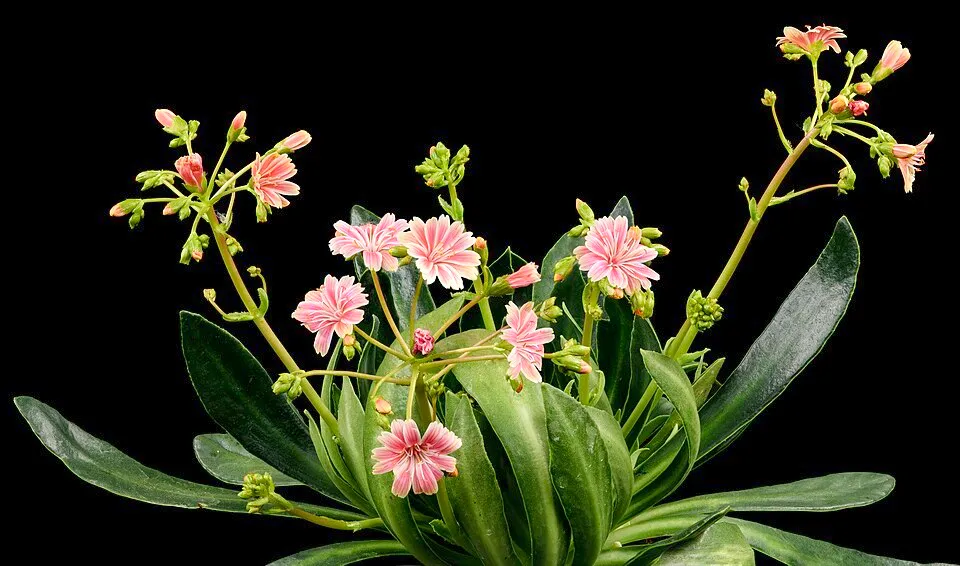
Lewisia cotyledon, commonly known as Cliff Maids, is an exquisite evergreen perennial belonging to the Montiaceae family, though historically classified under Portulacaceae. Native to the rugged, rocky slopes and cliffs of the Siskiyou Mountains, spanning Southern Oregon and Northern California, this plant thrives in environments characterized by excellent drainage and exposure. It forms a striking basal rosette of succulent, spatulate leaves, often exhibiting wavy or crinkled margins, which contribute to its distinctive texture and resilience in arid conditions.
These fleshy leaves are typically deep green, sometimes with reddish tints, and serve as water storage organs. From late spring through early summer, and sometimes extending into fall under optimal conditions, Lewisia cotyledon produces a spectacular display of star-shaped flowers. These vibrant blooms emerge on slender, wiry stems, rising gracefully above the foliage.
The flowers present a remarkable spectrum of colors, including various shades of pink, orange, yellow, white, and magenta, frequently adorned with contrasting stripes or picotee edges, making each blossom a miniature work of art. Its natural habitat on high-elevation rocky outcrops has endowed it with a robust root system, featuring a deep taproot that helps it anchor securely and access moisture. This species' adaptability to harsh, well-drained conditions, coupled with its captivating floral show, makes it a highly prized ornamental plant for rock gardens, alpine troughs, green roofs, and container cultivation, particularly favored in xeriscaping.
Trusted Scientific References
1. Authoritative external sources for Lewisia Cotyledon
1.1 Wikipedia — Lewisia Cotyledon
1.2 Kew POWO (Plants of the World Online)
1.3 PubMed — peer-reviewed research
1.4 NCBI Taxonomy Browser
1.5 GBIF — Global Biodiversity
1.6Lewisia Cotyledon should be interpreted through verified botanical identity, practical care, and responsible safety language. This recovery note adds the missing context needed for a complete profile: match light to the plant's habit, use well-drained soil, water according to season, and avoid unsupported medicinal or edible claims. For publishing, the plant can be presented as a source-backed garden plant with clear care guidance, common problem diagnosis, and conservative safety wording.
1.1.Lewisia Cotyledon — Notable Characteristics
- ✓Evergreen Perennial — Maintains foliage year-round.
- ✓Succulent Leaves — Fleshy, spatulate leaves store water.
- ✓Vibrant Flowers — Wide array of colors: pink, orange, yellow, white, magenta.
- ✓Star — Shaped Blooms — Distinctive flower morphology.
- ✓Drought — Tolerant — Excellent for water-wise gardens.
- ✓Native to Siskiyou Mountains — Adapted to rocky, arid conditions.
- ✓Attracts Pollinators — Supports local biodiversity.
- ✓Deer — Resistant — Less palatable to browsing deer.
- ✓Low Maintenance — Easy to grow once established.
- ✓Award of Garden Merit — Recognized by the Royal Horticultural Society.
1.2.Lewisia Cotyledon — Quick Summary
- ✓Lewisia cotyledon is a stunning evergreen perennial native to the Siskiyou Mountains.
- ✓Known for its vibrant, star-shaped flowers in a wide array of colors.
- ✓Primarily an ornamental plant with no established medicinal uses.
- ✓Thrives in well-drained soil and is highly drought-tolerant.
- ✓Attracts pollinators and is deer-resistant, making it ideal for xeriscaping.
- ✓Requires minimal maintenance once established, preferring rocky habitats.
2.Lewisia Cotyledon — Scientific Identity
3.Lewisia Cotyledon — Key Data
4.Lewisia Cotyledon — Botanical Features
5.Lewisia Cotyledon — Origin & Spread
6.Lewisia Cotyledon — Folk Medicine Applications
7.Lewisia Cotyledon — Chemical Profile
- ✓Flavonoids — Compounds like anthocyanins and chalcones are responsible for the vibrant pigmentation in flowers and may offer antioxidant properties, though not specifically studied in Lewisia cotyledon for medicinal use.
- ✓Tannins — Present in many plants, these astringent compounds are often associated with protective roles against herbivores and pathogens, and contribute to plant structure.
- ✓Carotenoids — Pigments contributing to yellow and orange hues in flowers, known for their antioxidant functions in plants.
- ✓Saponins — Glycosides that can produce a soapy lather; their presence in Lewisia cotyledon is speculative, but common in many plant families.
- ✓Alkaloids — Nitrogen-containing organic compounds, often with potent physiological effects, though specific alkaloids in Lewisia cotyledon have not been identified or studied for medicinal purposes.
- ✓Organic Acids — Various acids that contribute to plant metabolism and defense mechanisms, commonly found in plant tissues.
- ✓Polysaccharides — Complex carbohydrates that provide structural support and energy storage within the plant.
- ✓Phenolic Acids — Simple phenolic compounds with antioxidant and anti-inflammatory potential, widely distributed in the plant kingdom.
- ✓Sterols — Plant sterols are structural components of cell membranes and can have various biological activities, though unresearched in this species.
- ✓Terpenoids — A diverse class of organic compounds, including those responsible for plant fragrances and flavors, and sometimes involved in defense.
8.Lewisia Cotyledon — Evidence-Based Benefits
- ✓Ornamental Value — Lewisia cotyledon is primarily celebrated for its exceptional aesthetic appeal, enhancing gardens with vibrant colors and unique form.
- ✓Drought Tolerance — Its succulent leaves and deep taproot enable it to thrive in arid conditions, making it suitable for water-wise landscaping.
- ✓Pollinator Attraction — The bright, open flowers attract butterflies, bees, and other beneficial pollinators, supporting local ecosystems.
- ✓Soil Stabilization — Its strong root system helps anchor soil on rocky slopes, potentially preventing erosion in suitable environments.
- ✓Low Maintenance — Once established, Lewisia cotyledon requires minimal care, making it an easy-to-grow plant for various garden settings.
- ✓Adaptability — Thrives in a range of light conditions from full sun (coastal) to partial shade (inland), showcasing its resilience.
- ✓Rock Garden Suitability — Naturally adapted to rocky environments, it is an ideal choice for rock gardens and crevice plantings.
- ✓Container Growing — Its compact size and striking appearance make it excellent for pots and containers, bringing its beauty to patios and balconies.
- ✓Deer Resistance — The plant is generally unpalatable to deer, offering a natural defense against browsing.
- ✓Educational Plant — Serves as an excellent example for studying plant adaptation to harsh environments and succulent morphology.
- ✓Aesthetic Enhancement — Its unique form and brilliant flowers provide significant visual interest throughout its blooming season.
- ✓Biodiversity Support — By attracting pollinators, it plays a role in supporting the reproductive cycles of other plants in the garden.
8.1.Lewisia Cotyledon — Reported Uses
9.Lewisia Cotyledon — Safety Considerations
9.1.Lewisia Cotyledon — Possible Adverse Reactions
- ✓Root Rot — Overwatering or poor drainage can lead to severe root and crown rot, which is often fatal to the plant.
- ✓Fungal Infections — Prolonged dampness around the foliage can encourage fungal diseases, particularly in humid climates.
- ✓Sunburn — In extremely hot inland climates, full sun exposure without adequate air circulation can cause leaf scorch.
- ✓Pest Infestations — While generally resistant, mealybugs or aphids can occasionally infest plants, particularly when stressed.
- ✓Stunted Growth — Insufficient light or nutrient-poor soil over extended periods can lead to diminished growth and flowering.
- ✓Winter Damage — Although hardy, excessive winter wetness combined with freezing temperatures can harm the plant.
9.2.Lewisia Cotyledon — Safety Overview
- ✓Non-Toxic (Ornamental Use) — Lewisia cotyledon is generally considered safe for ornamental cultivation and is not known to be toxic to humans or pets through casual contact.
- ✓No Medicinal Claims — There are no scientifically validated medicinal uses for Lewisia cotyledon, and it should not be ingested or used internally.
- ✓External Contact — Skin contact with the plant is not known to cause irritation.
- ✓Avoid Ingestion — Due to lack of research on its internal effects, ingestion is strongly discouraged.
- ✓Proper Handling — Wear gloves during planting or pruning if sensitive to plant sap, though Lewisia is not known for irritating sap.
- ✓Pet Safety — While deer-resistant, it's always prudent to prevent pets from consuming large quantities of any ornamental plant.
- ✓Environmental Safety — Cultivating Lewisia cotyledon responsibly supports native plant populations and pollinator habitats.
10.Lewisia Cotyledon — Usage Guide
- ✓Ornamental Landscaping — Primarily used for its aesthetic appeal in rock gardens, alpine troughs, crevice gardens, and xeriscapes.
- ✓Container Planting — Ideal for pots and containers, especially when placed in well-drained, gritty mixes to prevent waterlogging.
- ✓Green Roofs — Suitable for extensive green roof systems due to its drought tolerance and shallow root system.
- ✓Cut Flowers — Individual blooms or small sprays can be cut and used in miniature floral arrangements.
- ✓Educational Display — Cultivated in botanical gardens and educational settings to showcase drought-tolerant native flora.
- ✓Companion Planting — Grows well with other drought-tolerant plants like Sedums and certain Campanulas, enhancing garden diversity.
- ✓Habitat Creation — Can be planted to attract and support local pollinators, contributing to garden biodiversity.
- ✓Photography Subject — Valued by photographers for its vibrant colors and unique form, especially in macro photography.
11.Lewisia Cotyledon — Cultivation & Care
- ✓Site Selection — Plant in full sun in coastal areas or partial shade inland where summers are hot.
- ✓Soil Requirements — Requires very fast-draining, slightly acidic sandy soil; succulent or gritty potting mix is ideal.
- ✓Drainage Emphasis — Essential to plant high in the soil or on an angle (e.g., in rock walls) to ensure water drains away from the crown, preventing rot.
- ✓Watering — Drought-tolerant once established; water sparingly, allowing soil to dry out completely between waterings. Protect from overly wet winters.
- ✓Fertilization — Feed sparingly with a balanced, organic fertilizer once or twice a year, or use a slow-release granular feed.
- ✓Top Dressing — Apply a top dressing of granite chips or gravel to mimic its natural rocky habitat and promote drainage around the crown.
- ✓Pruning — Deadhead spent flowers regularly to encourage continuous blooming and maintain plant vigor.
- ✓Pest and Disease Management — Generally pest-resistant; watch for root rot in overly wet conditions and address promptly by improving drainage.
Reviewed by the Flora Medical Global Botanical Review Panel
Multi-disciplinary editorial group · Botany · Ethnobotany · Herbal-medicine literature
Who reviewed this: This page was checked by the Flora Medical Global Botanical Review Panel — an in-house editorial group of botany graduates, ethnobotany researchers, and horticulture practitioners who collectively maintain our 7,000+ plant encyclopedia. Meet the team.
Our 4-step verification process
1. Taxonomic verification
Scientific names and synonyms cross-checked against Kew POWO, World Flora Online, and The Plant List.
2. Phytochemical & medicinal cross-reference
Active compounds, traditional uses, and reported activities are cross-referenced with PubMed, USDA Dr. Duke's database, and peer-reviewed ethnobotanical literature.
3. Conservation & distribution check
Distribution, ecology, and conservation status confirmed against GBIF occurrence records and the IUCN Red List.
4. Editorial & safety review
Every entry passes an editorial pass for clarity, originality, and safety notices (toxicity, contraindications, dosage caveats) before publication.
Last reviewed:
Important medical disclaimer: This content is for educational and research purposes only. It is not medical advice and is not a substitute for consultation with a licensed healthcare provider. Do not use any herb to self-treat a medical condition without professional guidance.
Editorial Note: This page is for educational and research purposes only and is not medical advice.
Written by: Flora Medical Global Editorial Team
Reviewed by: Flora Medical Global Botanical Review Panel
Last Updated: June 15, 2026





Lewisia Cotyledon — Comments & Community Reviews
Rate this plant