
Medical Disclaimer: This content is for educational purposes only. It is not medical advice. Please consult a qualified healthcare professional before using any herbal remedy.
Safety Overview
1.Libertia Grandiflora — Botanical Snapshot
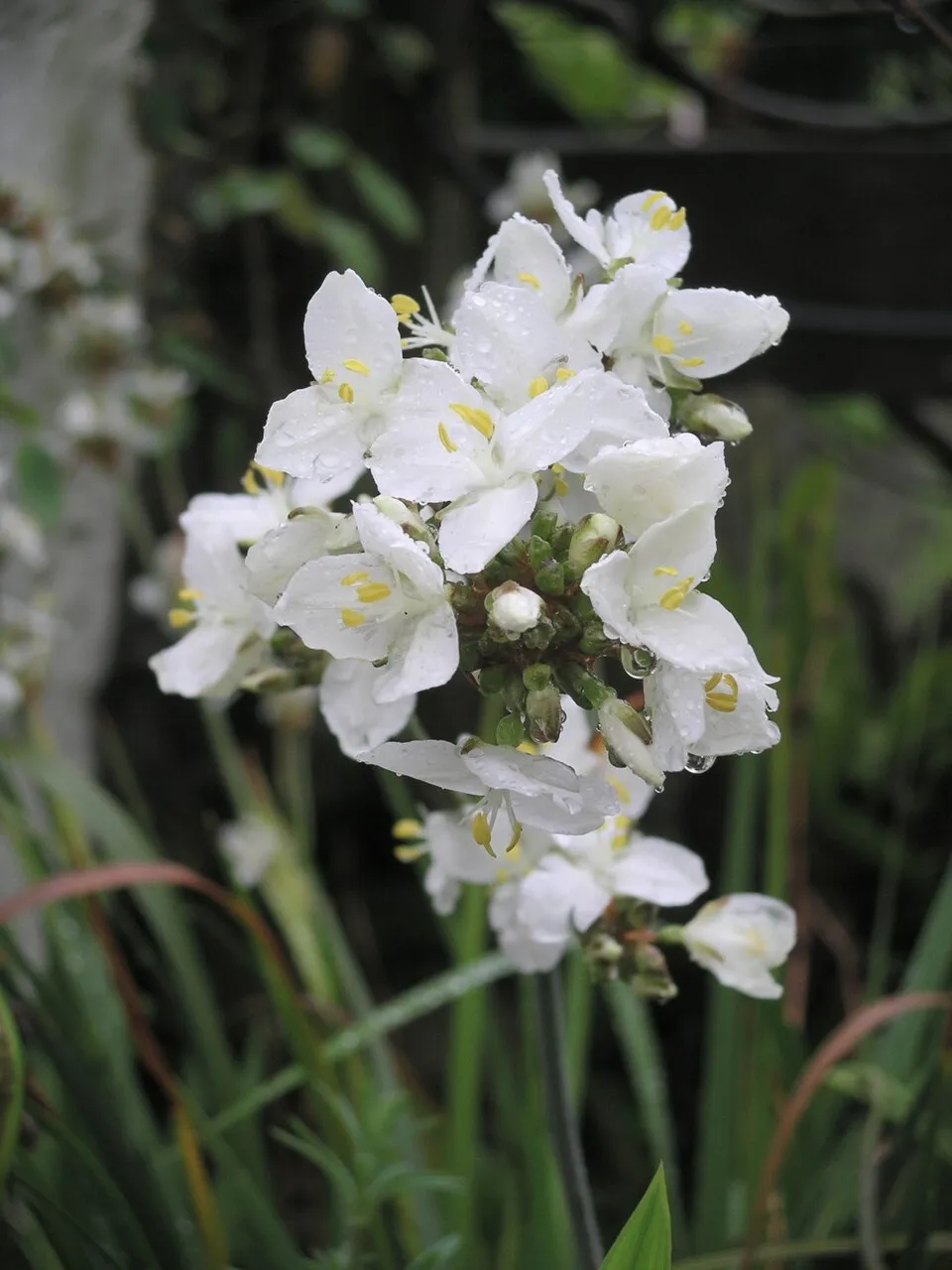
Libertia grandiflora, commonly recognized as the New Zealand Iris or Bridal Iris, is an elegant perennial herbaceous plant belonging to the Iridaceae family. Native to the diverse landscapes of New Zealand, this species thrives in varied conditions, showcasing remarkable adaptability. It forms distinctive evergreen clumps of stiff, sword-shaped leaves that can reach impressive heights, often exhibiting a subtle bronze hue in cooler temperatures, adding to its ornamental appeal. The foliage provides architectural interest throughout the year, making it a prominent feature in garden designs.
In late spring to early summer, Libertia grandiflora produces tall, slender flower stalks that gracefully ascend above the dense foliage. These stalks bear numerous delicate, pure white, three-petaled flowers, each adorned with prominent yellow anthers at its center. The blooms bear a striking resemblance to miniature irises, creating a spectacular visual display that can span several weeks. Following the flowering period, the plant develops attractive seed pods that persist well into autumn, further extending its aesthetic value.
Libertia grandiflora is a versatile and relatively low-maintenance plant, making it suitable for a wide range of horticultural applications, including borders, rockeries, mass plantings, and container gardening. Its elegant form, extended flowering season, and year-round appeal contribute to its popularity among gardeners seeking exotic beauty and structural interest. The species is robust and can tolerate a range of soil and light conditions, though it prefers well-drained soil and a sunny to partially shaded location.
Trusted Scientific References
1. Authoritative external sources for Libertia Grandiflora
1.1 Wikipedia — Libertia Grandiflora
1.2 Kew POWO (Plants of the World Online)
1.3 PubMed — peer-reviewed research
1.4 NCBI Taxonomy Browser
1.5 GBIF — Global Biodiversity
1.6Libertia Grandiflora should be interpreted through verified botanical identity, practical care, and responsible safety language. This recovery note adds the missing context needed for a complete profile: match light to the plant's habit, use well-drained soil, water according to season, and avoid unsupported medicinal or edible claims. For publishing, the plant can be presented as a source-backed garden plant with clear care guidance, common problem diagnosis, and conservative safety wording.
1.1.Libertia Grandiflora — Distinguishing Points
- ✓Common Names — New Zealand Iris, Bridal Iris.
- ✓Scientific Name — Libertia grandiflora.
- ✓Family — Iridaceae (Iris family).
- ✓Native Range — New Zealand.
- ✓Plant Type — Perennial herbaceous plant.
- ✓Foliage — Evergreen, sword-shaped, green, sometimes bronze-tinged.
- ✓Flowers — Pure white, three-petaled, iris-like, with yellow anthers.
- ✓Flowering Season — Late spring to early summer.
- ✓Height — Up to 0.9-1.2 meters (3-4 feet) including flower stalks.
- ✓Cultivation — Low maintenance, adaptable to various garden settings.
1.2.Libertia Grandiflora — In Brief
- ✓New Zealand Iris, ornamental perennial from Iridaceae family.
- ✓Features sword-shaped leaves and pure white, iris-like flowers.
- ✓Primarily valued for its aesthetic appeal and low maintenance.
- ✓No documented medicinal uses; cultivated for landscaping.
- ✓Requires well-drained soil, sun to partial shade, moderate watering.
- ✓Generally safe, non-toxic, but handle with care due to fibrous leaves.
2.Libertia Grandiflora — Nomenclature & Classification
3.Libertia Grandiflora — Fact Sheet
4.Libertia Grandiflora — Botanical Features
5.Libertia Grandiflora — Native Range & Habitat
6.Libertia Grandiflora — Traditional Uses
7.Libertia Grandiflora — Chemical Profile
- ✓Flavonoids — Responsible for various plant pigments and potential antioxidant activities, though not specifically studied in Libertia grandiflora.
- ✓Anthocyanins — Contribute to the subtle bronze coloration of leaves, particularly in cooler conditions.
- ✓Carotenoids — Present in petals and foliage, involved in photosynthesis and protective roles.
- ✓Polysaccharides — Structural carbohydrates found in cell walls, contributing to plant rigidity and energy storage.
- ✓Proteins — Essential for plant growth, enzymatic reactions, and structural integrity.
- ✓Lipids — Components of cell membranes and energy reserves, present in seeds.
- ✓Terpenoids — General class of compounds often responsible for plant scents and protective mechanisms.
- ✓Alkaloids — While not prominently documented, many plant species contain trace amounts with diverse biological activities.
- ✓Phenolic Acids — Common plant secondary metabolites with antioxidant properties, likely present in the foliage.
- ✓Lignans — Structural components of plant cell walls, contributing to the fibrous nature of the leaves.
8.Libertia Grandiflora — Scientific Evidence
- ✓Ornamental Value — Primarily cultivated for its aesthetic appeal in gardens and landscapes, providing year-round architectural interest.
- ✓Pollinator Attraction — Its white flowers with prominent yellow anthers attract various pollinators, contributing to biodiversity in ecosystems.
- ✓Erosion Control — The dense, fibrous root system of Libertia grandiflora can help stabilize soil, particularly on slopes or in areas prone to erosion.
- ✓Low Maintenance — Requires minimal care once established, making it a sustainable choice for landscaping.
- ✓Drought Tolerance — Once mature, it exhibits good drought tolerance, reducing water consumption in arid or semi-arid climates.
- ✓Aesthetic Enhancement — Its striking appearance and long flowering period enhance the visual appeal of any garden or public space.
- ✓Habitat Provision — The dense clumps can offer shelter for small garden animals and insects.
- ✓Air Purification — Like most plants, it contributes to local air quality by absorbing carbon dioxide and releasing oxygen.
- ✓Soil Improvement — The decaying foliage contributes organic matter to the soil, improving its structure and fertility over time.
- ✓Stress Reduction — Gardening and exposure to aesthetically pleasing plants like Libertia grandiflora are known to reduce stress and improve well-being.
8.1.Libertia Grandiflora — Reported Uses
9.Libertia Grandiflora — Safety Considerations
9.1.Libertia Grandiflora — Reported Side Effects
- ✓Allergic Reactions — Potential for contact dermatitis in sensitive individuals upon handling foliage or sap.
- ✓Invasive Tendencies — Can self-seed and spread in ideal conditions, requiring management to prevent overgrowth.
- ✓Frost Damage — Although moderately hardy, severe or prolonged frost can damage foliage or kill young plants.
- ✓Pest Susceptibility — May occasionally be affected by common garden pests like aphids or snails, especially when stressed.
- ✓Disease Susceptibility — Poor drainage can lead to root rot, a common issue for Iridaceae family members.
- ✓Overwatering Issues — Excessive watering can cause fungal diseases and decline in plant health.
9.2.Libertia Grandiflora — Safety Profile
- ✓Generally Non-Toxic — No known records of toxicity to humans or pets through ingestion.
- ✓Handling Precaution — Wear gloves when handling to avoid potential skin irritation from fibrous leaves.
- ✓Environmental Monitoring — Monitor spread in naturalized settings to prevent potential ecological disruption.
- ✓Proper Drainage — Ensure well-drained soil to prevent root rot and maintain plant health.
- ✓Climate Suitability — Choose appropriate growing zones to avoid cold damage and ensure plant vigor.
- ✓Pest Management — Employ integrated pest management practices if pests become an issue, using non-toxic methods first.
10.Libertia Grandiflora — Preparations & Uses
- ✓Ornamental Planting — Ideal for borders, rockeries, mass plantings, and container gardens due to its architectural form.
- ✓Landscape Design — Used to create visual interest, define garden spaces, or provide evergreen structure.
- ✓Cut Flowers — The elegant white blooms can be cut for fresh floral arrangements, though individual flowers are short-lived.
- ✓Seed Collection — Attractive seed pods can be collected for propagation or dried for decorative purposes.
- ✓Erosion Control — Planted on slopes or banks to help stabilize soil with its fibrous root system.
- ✓Xeriscaping — Suitable for water-wise gardens due to its established drought tolerance.
- ✓Architectural Focal Point — Positioned strategically to draw attention and provide a strong vertical element in garden design.
11.Libertia Grandiflora — How to Grow
- ✓Soil Preparation — Plant in well-drained soil, ideally enriched with organic matter, to ensure optimal growth.
- ✓Light Requirements — Prefers full sun to partial shade; too much shade can reduce flowering.
- ✓Watering — Water regularly until the plant is established, then reduce frequency as it becomes drought-tolerant.
- ✓Hardiness — Hardy to approximately -5°C (23°F); protect young plants from harsh frosts.
- ✓Fertilization — Apply a balanced, slow-release granular fertilizer annually in spring to promote vigorous growth.
- ✓Pruning — Deadhead spent flower stalks for tidiness and to encourage energy redirection; remove old, brown leaves to maintain aesthetic.
- ✓Division — Divide mature clumps every few years in spring or autumn to rejuvenate the plant and manage size.
- ✓Propagation — Can be propagated by seed or by dividing rhizomatous clumps.
Reviewed by the Flora Medical Global Botanical Review Panel
Multi-disciplinary editorial group · Botany · Ethnobotany · Herbal-medicine literature
Who reviewed this: This page was checked by the Flora Medical Global Botanical Review Panel — an in-house editorial group of botany graduates, ethnobotany researchers, and horticulture practitioners who collectively maintain our 7,000+ plant encyclopedia. Meet the team.
Our 4-step verification process
1. Taxonomic verification
Scientific names and synonyms cross-checked against Kew POWO, World Flora Online, and The Plant List.
2. Phytochemical & medicinal cross-reference
Active compounds, traditional uses, and reported activities are cross-referenced with PubMed, USDA Dr. Duke's database, and peer-reviewed ethnobotanical literature.
3. Conservation & distribution check
Distribution, ecology, and conservation status confirmed against GBIF occurrence records and the IUCN Red List.
4. Editorial & safety review
Every entry passes an editorial pass for clarity, originality, and safety notices (toxicity, contraindications, dosage caveats) before publication.
Last reviewed:
Important medical disclaimer: This content is for educational and research purposes only. It is not medical advice and is not a substitute for consultation with a licensed healthcare provider. Do not use any herb to self-treat a medical condition without professional guidance.
Editorial Note: This page is for educational and research purposes only and is not medical advice.
Written by: Flora Medical Global Editorial Team
Reviewed by: Flora Medical Global Botanical Review Panel
Last Updated: June 15, 2026





Libertia Grandiflora — Comments & Community Reviews
Rate this plant