
Medical Disclaimer: This content is for educational purposes only. It is not medical advice. Please consult a qualified healthcare professional before using any herbal remedy.
Safety Overview
1.Ligularia Dentata — Essential Profile
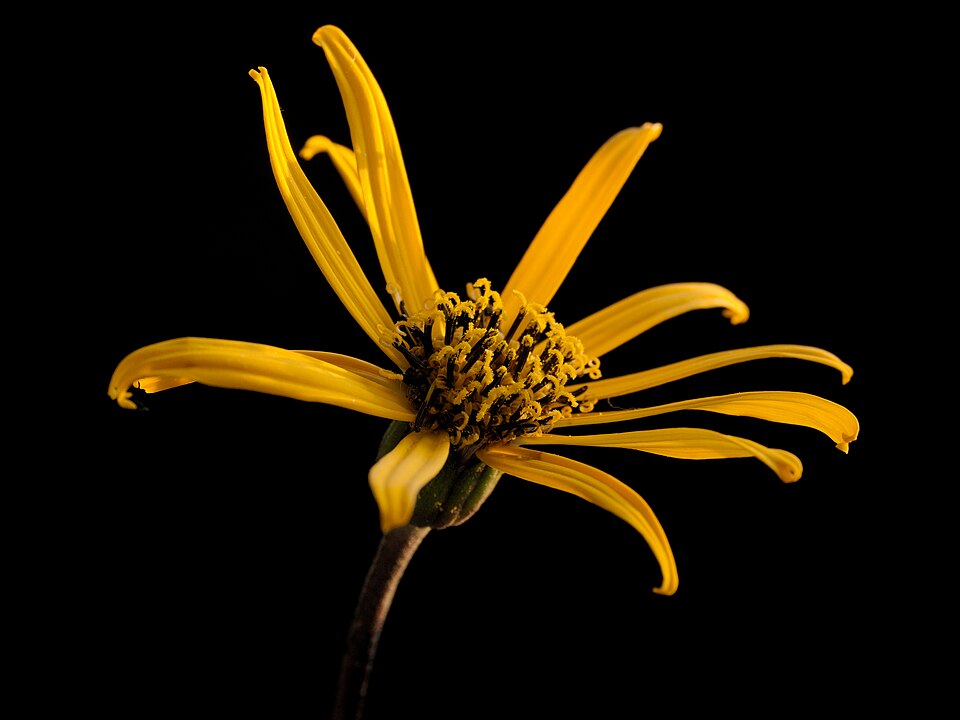
Ligularia dentata, universally known as Bigleaf Ligularia or Leopard Plant, is a striking herbaceous perennial belonging to the Asteraceae family. Native to the moist, forested regions of China and Japan, it is celebrated for its dramatic foliage and vibrant, daisy-like inflorescences. The plant typically forms robust clumps, reaching heights of 2 to 4 feet and spreading equally wide, making a bold statement in shaded garden settings. Its most distinguishing feature is the large, kidney-shaped to broadly ovate basal leaves, which can measure up to 12 inches across.
These leaves exhibit a range of colors, from deep green to rich purplish-bronze or even dark burgundy, depending on the cultivar, often with serrated or ruffled margins. In mid to late summer, tall, sturdy flower stalks emerge, rising well above the foliage, bearing terminal clusters of brilliant golden-orange to yellow ray and disc florets. These radiant blooms provide a spectacular contrast to the dark foliage, attracting pollinators like bees and butterflies. Ligularia dentata thrives in consistently moist, humus-rich soil and prefers partial to full shade, especially protection from intense afternoon sun, which can scorch its large leaves.
Its architectural form and exotic appearance make it a highly valued ornamental plant for woodland gardens, bog gardens, or along water features, where its moisture requirements can be naturally met. Despite its ornamental appeal, it is crucial to note its primary use is horticultural, with medicinal applications being highly cautioned due to the presence of toxic compounds.
Trusted Scientific References
1. Authoritative external sources for Ligularia dentata
1.1 Wikipedia — Ligularia dentata
1.2 Kew POWO (Plants of the World Online)
1.3 PubMed — peer-reviewed research
1.4 NCBI Taxonomy Browser
1.5 GBIF — Global Biodiversity
1.6Ligularia Dentata should be interpreted through verified botanical identity, practical care, and responsible safety language. This recovery note adds the missing context needed for a complete profile: match light to the plant's habit, use well-drained soil, water according to season, and avoid unsupported medicinal or edible claims. For publishing, the plant can be presented as a source-backed garden plant with clear care guidance, common problem diagnosis, and conservative safety wording.
1.1.Ligularia Dentata — Distinguishing Points
- ✓Bold, kidney — shaped to ovate leaves up to 12 inches across.
- ✓Foliage color ranges from green to purplish — bronze.
- ✓Tall stalks bearing clusters of golden — orange to yellow daisy-like flowers.
- ✓Blooms in mid — Blooms in mid to late summer, creating a dramatic visual.
- ✓Prefers consistently moist, humus — rich soil.
- ✓Thrives in partial — Thrives in partial to full shade, intolerant of dry conditions.
- ✓Hardy in USDA Zones 4 — 8.
- ✓Contains toxic pyrrolizidine — Contains toxic pyrrolizidine alkaloids (PAs).
- ✓Excellent for woodland — Excellent for woodland gardens, pond edges, or shady borders.
- ✓Attracts bees and — Attracts bees and butterflies.
1.2.Ligularia Dentata — Quick Summary
- ✓Highly ornamental perennial with bold foliage and vibrant flowers.
- ✓Native to China and Japan, thrives in moist, shaded environments.
- ✓Contains toxic pyrrolizidine alkaloids (PAs); strictly for ornamental use.
- ✓Requires consistently moist soil and protection from afternoon sun.
- ✓Attracts pollinators but is generally deer and rabbit resistant.
- ✓Not recommended for any internal medicinal applications due to toxicity.
2.Ligularia Dentata — Scientific Identity
3.Ligularia Dentata — Fact Sheet
4.Ligularia Dentata — Botanical Features
5.Ligularia Dentata — Ecological Habitat
6.Ligularia Dentata — Traditional Uses
Primarily valued for its ornamental beauty in gardening and landscaping. No significant historical cultural or medicinal uses recorded in traditional practices compared to other well-known plants.
7.Ligularia Dentata — Phytochemistry
- ✓Pyrrolizidine Alkaloids (PAs) — Contains toxic PAs such as senecionine and seneciphylline, which are hepatotoxic and carcinogenic, making internal use unsafe.
- ✓Flavonoids — Presence of various flavonoids, which contribute to antioxidant and anti-inflammatory activities in many plants, though specific to L. dentata not for internal use.
- ✓Sesquiterpenes — Includes sesquiterpene lactones, which can have diverse biological activities but may also contribute to allergic reactions or toxicity.
- ✓Triterpenoids — Contains triterpenoid compounds, known for potential anti-inflammatory and adaptogenic properties in other medicinal plants.
- ✓Phenolic Acids — Various phenolic acids are present, contributing to antioxidant capacity, common in many plant species.
- ✓Coumarins — May contain coumarin derivatives, which can possess anticoagulant, anti-inflammatory, and antimicrobial effects in some plant species.
- ✓Steroids — Plant steroids are often found, having potential hormonal or anti-inflammatory actions, but their role in L. dentata's bioactivity is limited due to overall toxicity.
- ✓Polysaccharides — Complex carbohydrates that can have immunomodulatory effects, though not typically isolated from L. dentata for medicinal purposes.
8.Ligularia Dentata — Evidence-Based Benefits
- ✓Anti-inflammatory — Some Ligularia species have demonstrated anti-inflammatory properties in traditional contexts, potentially due to flavonoid content, though L. dentata is not typically used medicinally.
- ✓Antioxidant Activity — Certain compounds found in related Ligularia species exhibit antioxidant effects, which help combat oxidative stress in the body.
- ✓Analgesic Effects — Traditional uses of other Ligularia species suggest pain-relieving properties, often attributed to their alkaloid compositions, which are also toxic.
- ✓Antipyretic Properties — Extracts from some Ligularia plants have been historically used to reduce fever, though specific efficacy for L. dentata is not established.
- ✓Immunomodulatory Potential — Research into various Ligularia species indicates possible immune system regulation, but this is not directly applicable to L. dentata for human consumption.
- ✓Antimicrobial Action — Constituents in some Ligularia species show activity against certain microbes, suggesting potential as natural antimicrobials, though not for L. dentata internally.
- ✓Detoxification Support — In traditional Chinese medicine, some Ligularia species are believed to aid in clearing toxins, but this is not recommended for L. dentata due to its toxicity.
- ✓Respiratory Aid — Historically, certain Ligularia species were employed to alleviate respiratory issues, though L. dentata's toxicity precludes such use.
- ✓Gastrointestinal Relief — Other Ligularia species have been used to address digestive complaints, but L. dentata contains compounds that would be harmful if ingested.
8.1.Ligularia Dentata — Indications & Uses
9.Ligularia Dentata — Cautions & Contraindications
9.1.Ligularia Dentata — Caution Notes
- ✓Liver Toxicity — Contains pyrrolizidine alkaloids (PAs) that are severely hepatotoxic, causing irreversible liver damage if ingested.
- ✓Carcinogenic Risk — PAs are known carcinogens, increasing the risk of cancer with exposure, especially oral consumption.
- ✓Gastrointestinal Distress — Ingestion can lead to severe nausea, vomiting, abdominal pain, and diarrhea.
- ✓Allergic Reactions — Skin contact with sap may cause dermatitis or allergic reactions in sensitive individuals.
- ✓Central Nervous System Effects — High doses of PAs can cause neurological symptoms, including confusion and weakness.
- ✓Renal Damage — Prolonged or high exposure to PAs can also lead to kidney damage.
- ✓Fatal Outcomes — Due to severe organ toxicity, ingestion of significant amounts can be fatal.
9.2.Ligularia Dentata — Toxicity Assessment
- ✓NOT for Internal Use — Ligularia dentata is highly toxic due to pyrrolizidine alkaloids (PAs) and should absolutely not be ingested by humans or animals.
- ✓Handle with Care — Wear gloves when handling the plant, especially if you have sensitive skin, to avoid potential contact dermatitis.
- ✓Keep Away from Children and Pets — Ensure the plant is inaccessible to young children and pets who might accidentally ingest parts of it.
- ✓Ornamental Use Only — Strictly limit its application to ornamental gardening; do not attempt any medicinal preparations.
- ✓Dispose Safely — When pruning or discarding plant material, ensure it is disposed of in a manner that prevents accidental ingestion by wildlife or livestock.
- ✓Consult Experts — If accidental ingestion occurs, seek immediate medical or veterinary attention.
- ✓No Traditional Medicinal Use for This Species — While some Ligularia species have traditional uses, L. dentata specifically is not recommended for medicinal purposes due to its toxicity.
10.Ligularia Dentata — Preparation Methods
- ✓Ornamental Planting — Primarily cultivated as a striking ornamental plant for shade gardens, woodland borders, and waterside landscapes.
- ✓Landscape Design — Utilized for its bold architectural form and vibrant summer blooms to create dramatic visual impact in moist, shaded areas.
- ✓Soil Stabilization — Can be used in moist areas to help stabilize soil due to its robust root system, particularly along stream banks or ponds.
- ✓Wildlife Attraction — Its bright flowers attract pollinators such as bees and butterflies, contributing to garden biodiversity.
- ✓Groundcover (Mass Planting) — When planted in masses, it can form an impressive and lush groundcover in large shaded spaces.
- ✓Cut Flowers — The tall, vibrant flower spikes can be cut for use in floral arrangements, adding a dramatic element to indoor displays.
- ✓Container Planting — Can be grown in large containers in shaded patios, provided consistent moisture is maintained, though it may not reach full size.
11.Ligularia Dentata — How to Grow
- ✓Site Selection — Choose a location with partial to full shade, especially protected from harsh afternoon sun to prevent leaf scorch.
- ✓Soil Requirements — Plant in consistently moist, rich, well-draining soil, ideally amended with organic matter to retain moisture.
- ✓Watering — Requires frequent and consistent watering; soil should never be allowed to dry out completely. Suitable for bog gardens or near water features.
- ✓Hardiness Zones — Thrives in USDA Hardiness Zones 4-8, with appropriate winter mulching in colder regions for root protection.
- ✓Pruning — Deadhead spent flower spikes to encourage further blooming and remove any yellowing or damaged leaves to maintain plant vigor.
- ✓Pest Management — Monitor for slugs and snails, which are attracted to the large leaves; use appropriate organic or chemical controls if infestations occur.
- ✓Propagation — Primarily propagated by division in early spring or early autumn, as seeds may not come true to type and germination can be unreliable.
Reviewed by the Flora Medical Global Botanical Review Panel
Multi-disciplinary editorial group · Botany · Ethnobotany · Herbal-medicine literature
Who reviewed this: This page was checked by the Flora Medical Global Botanical Review Panel — an in-house editorial group of botany graduates, ethnobotany researchers, and horticulture practitioners who collectively maintain our 7,000+ plant encyclopedia. Meet the team.
Our 4-step verification process
1. Taxonomic verification
Scientific names and synonyms cross-checked against Kew POWO, World Flora Online, and The Plant List.
2. Phytochemical & medicinal cross-reference
Active compounds, traditional uses, and reported activities are cross-referenced with PubMed, USDA Dr. Duke's database, and peer-reviewed ethnobotanical literature.
3. Conservation & distribution check
Distribution, ecology, and conservation status confirmed against GBIF occurrence records and the IUCN Red List.
4. Editorial & safety review
Every entry passes an editorial pass for clarity, originality, and safety notices (toxicity, contraindications, dosage caveats) before publication.
Last reviewed:
Important medical disclaimer: This content is for educational and research purposes only. It is not medical advice and is not a substitute for consultation with a licensed healthcare provider. Do not use any herb to self-treat a medical condition without professional guidance.
Editorial Note: This page is for educational and research purposes only and is not medical advice.
Written by: Flora Medical Global Editorial Team
Reviewed by: Flora Medical Global Botanical Review Panel
Last Updated: June 15, 2026





Ligularia Dentata — Comments & Community Reviews
Rate this plant