
Medical Disclaimer: This content is for educational purposes only. It is not medical advice. Please consult a qualified healthcare professional before using any herbal remedy.
Safety Overview
1.Lilium Asiatic — Botanical Snapshot
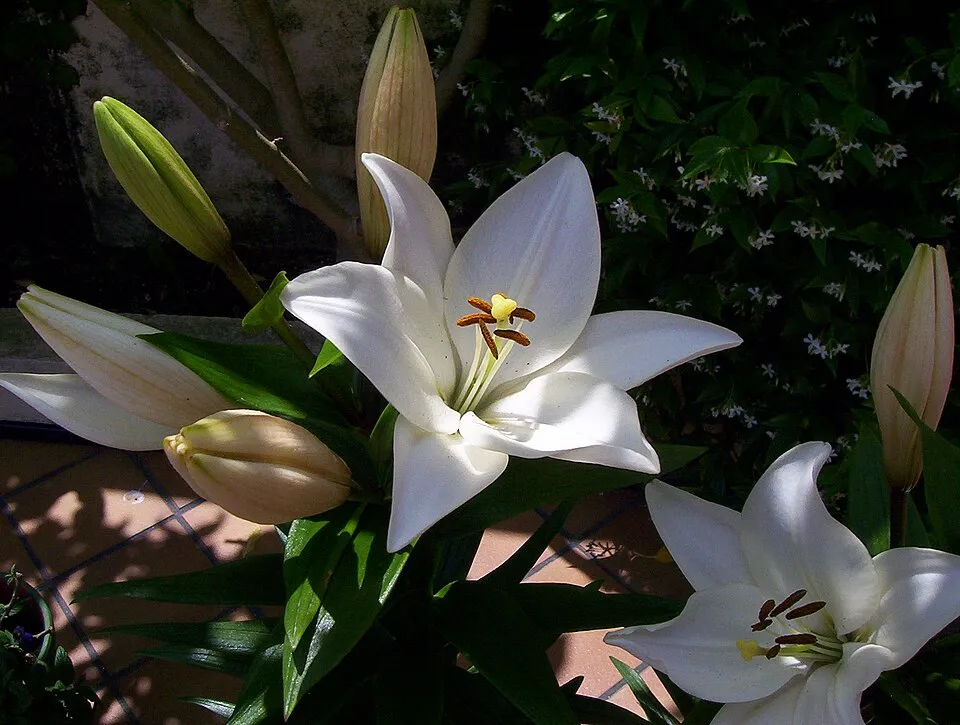
Lilium hybrid, commonly known as Asiatic Lilies, are a diverse group of ornamental plants belonging to the Liliaceae family. These complex hybrids are primarily derived from various East Asian Lilium species, meticulously bred for their spectacular floral displays and robust garden performance rather than medicinal properties. Morphologically, Asiatic Lilies are characterized by their sturdy, unbranched stems, typically reaching heights of 60 to 120 cm.
They bear lanceolate to linear leaves arranged spirally along the stem. The most striking feature is their large, often upward-facing, trumpet-shaped or bowl-shaped flowers, which emerge in early to mid-summer. These flowers exhibit an extraordinary palette of colors, ranging from pure whites, yellows, and oranges to vibrant reds, pinks, and intricate bi-colors, often adorned with speckles or contrasting throats.
Unlike many other lily types, Asiatic Lilies generally lack fragrance. Their bulbs are tunicate, consisting of fleshy scales, and serve as perennial storage organs. While their wild progenitors are native to temperate regions of Asia, the cultivated hybrids are globally distributed in gardens and landscapes due to their adaptability and ease of cultivation across various climates.
Trusted Scientific References
1. Authoritative external sources for Lilium hybrid
1.1 Wikipedia — Lilium hybrid
1.2 Kew POWO (Plants of the World Online)
1.3 PubMed — peer-reviewed research
1.4 NCBI Taxonomy Browser
1.5 GBIF — Global Biodiversity
1.6Lilium Asiatic should be interpreted through verified botanical identity, practical care, and responsible safety language. This recovery note adds the missing context needed for a complete profile: match light to the plant's habit, use well-drained soil, water according to season, and avoid unsupported medicinal or edible claims. For publishing, the plant can be presented as a source-backed garden plant with clear care guidance, common problem diagnosis, and conservative safety wording.
1.1.Lilium Asiatic — Notable Characteristics
- ✓Striking Visual Appeal — Brilliant, diverse colors and forms.
- ✓Upward — Facing Blooms — Distinctive flower orientation.
- ✓Unscented Flowers — Unlike many other lily types.
- ✓Early Summer Bloom — Among the first lilies to flower.
- ✓High Hardiness — Resilient in various climates.
- ✓Ease of Cultivation — Low-maintenance for gardeners.
- ✓Hybrid Vigor — Robust growth and disease resistance.
- ✓Non — Medicinal Focus — Bred for aesthetics, not herbal use.
- ✓Tunicate Bulbs — Characteristic bulb structure.
- ✓Attracts Pollinators — Supports local biodiversity.
1.2.Lilium Asiatic — In Brief
- ✓Vibrant ornamental lilies, primarily for gardens.
- ✓Hybrids of various East Asian Lilium species.
- ✓Known for large, upward-facing, unscented flowers.
- ✓Easy to grow and popular for their hardiness.
- ✓Toxic to cats; handle with care around pets.
- ✓No significant documented medicinal uses for this specific hybrid.
2.Lilium Asiatic — Botanical Identity
3.Lilium Asiatic — Vital Statistics
4.Lilium Asiatic — Physical Description
5.Lilium Asiatic — Origin & Spread
6.Lilium Asiatic — Traditional Uses
7.Lilium Asiatic — Chemical Profile
- ✓Steroidal Saponins — Including compounds like spirostanol and furostanol saponins, which are known for their hemolytic activity and potential anti-inflammatory effects in some Lilium species.
- ✓Flavonoids — Such as kaempferol and quercetin derivatives, contributing to antioxidant activity and floral pigmentation.
- ✓Alkaloids — Various nitrogen-containing compounds, which can have diverse pharmacological actions, though generally in lower concentrations in ornamental hybrids.
- ✓Polysaccharides — Complex carbohydrates found in the bulbs, potentially contributing to immunomodulatory properties in other Lilium species.
- ✓Phenolic Compounds — A broad group including phenolic acids and tannins, known for their antioxidant and antimicrobial properties.
- ✓Carotenoids — Pigments responsible for yellow, orange, and red coloration in flowers, also acting as antioxidants.
- ✓Anthocyanins — Water-soluble pigments contributing to red, pink, and purple hues in the petals, offering antioxidant benefits.
- ✓Essential Sugars — Glucose, fructose, and sucrose stored in the bulbs, providing energy for plant growth.
- ✓Fatty Acids — Present in bulb tissues, involved in energy storage and membrane structure.
- ✓Amino Acids — Building blocks of proteins, essential for plant metabolism and growth.
8.Lilium Asiatic — Scientific Evidence
- ✓Ornamental Value — Primarily cultivated for their aesthetic appeal, adding vibrant color and structural interest to gardens and floral arrangements.
- ✓Mood Enhancement — The visual beauty of flowers is known to positively impact mood and reduce stress, contributing to psychological well-being.
- ✓Air Purification (Minor) — Like many plants, they contribute minimally to air quality by absorbing carbon dioxide and releasing oxygen.
- ✓Soil Stabilization — Their root systems can help bind soil, reducing erosion in garden settings.
- ✓Pollinator Attraction — While not primarily medicinal, their bright flowers attract bees and other pollinators, supporting local ecosystems.
- ✓Historical Use (General Lilium) — Historically, some Lilium species have been used as expectorants and diuretics in traditional medicine to alleviate coughs and promote urination.
- ✓Anti-inflammatory Potential (General Lilium) — Certain compounds found in other Lilium species have shown in vitro anti-inflammatory properties, though not specifically documented for Asiatic hybrids.
- ✓Antioxidant Activity (General Lilium) — Some Lilium species contain flavonoids and phenolic compounds with antioxidant potential, which could help combat oxidative stress.
8.1.Lilium Asiatic — Reported Uses
9.Lilium Asiatic — Safety Considerations
9.1.Lilium Asiatic — Caution Notes
- ✓Allergic Reactions — Direct skin contact with sap can cause mild irritation or dermatitis in sensitive individuals.
- ✓Toxicity to Pets — Ingestion of any part of the plant, especially pollen, is highly toxic to cats, potentially causing kidney failure.
- ✓Gastric Upset (Minor) — Ingestion by other animals or humans might cause mild digestive upset, though not generally considered highly toxic.
- ✓Pollen Staining — The prominent pollen can stain clothing or furniture if flowers are brought indoors.
- ✓Competition with Native Species — In some non-native environments, vigorous growth could potentially outcompete local flora, though typically managed in gardens.
- ✓Pest Harboring — Can sometimes attract specific pests like lily beetles, which can then spread to other plants.
9.2.Lilium Asiatic — Risk Assessment
- ✓Pet Warning (Cats) — Highly toxic to cats; extreme caution is advised, and keeping them out of reach is critical.
- ✓Skin Irritation — Wear gloves when handling bulbs or stems if you have sensitive skin to avoid potential contact dermatitis.
- ✓Ingestion Avoidance — Not intended for human consumption; keep away from children and pets.
- ✓Pollen Management — Remove anthers from cut flowers to prevent pollen staining indoors and reduce potential allergen exposure.
- ✓Garden Safety — Position away from areas where pets or small children might easily access and ingest plant parts.
- ✓No Documented Human Toxicity — While not for consumption, serious human poisoning from accidental ingestion is rare but still not recommended.
- ✓Environmental Consideration — Dispose of plant material responsibly, especially if treated with pesticides, to avoid environmental contamination.
10.Lilium Asiatic — Usage Guide
- ✓Garden Ornamental — Plant bulbs directly into garden beds for vibrant summer displays.
- ✓Potted Plants — Grow in containers for flexible placement on patios or balconies, ensuring adequate drainage.
- ✓Cut Flowers — Harvest stems when the lowest bud shows color for long-lasting indoor floral arrangements.
- ✓Landscape Design — Integrate into mixed borders, mass plantings, or as focal points in garden designs.
- ✓Pollinator Garden Inclusion — Incorporate into gardens designed to attract bees, butterflies, and other beneficial insects.
- ✓Educational Display — Use in botanical gardens or educational settings to showcase plant diversity and hybridization.
- ✓Photographic Subject — Utilized by photographers for their striking colors and forms.
- ✓Gifting — Potted Asiatic lilies or cut flower bouquets are popular gifts for various occasions.
11.Lilium Asiatic — Garden Cultivation
- ✓Site Selection — Choose a location with full sun to partial shade; morning sun is ideal, with afternoon shade in hot climates.
- ✓Soil Requirements — Plant in well-drained, fertile soil rich in organic matter, maintaining a slightly acidic to neutral pH (6.0-7.0).
- ✓Planting Depth and Spacing — Plant bulbs 15-20 cm (6-8 inches) deep, with 20-30 cm (8-12 inches) spacing between them for optimal growth.
- ✓Watering — Provide consistent moisture, especially during dry spells and active growth, but avoid overwatering to prevent bulb rot.
- ✓Fertilization — Apply a balanced, slow-release granular fertilizer in early spring as new shoots appear, and again after flowering.
- ✓Pest and Disease Management — Regularly inspect for common pests like lily beetles and aphids; ensure good air circulation to prevent fungal diseases such as botrytis.
- ✓Winter Care — In colder zones, apply a protective layer of mulch (straw, leaves) over the planting area in late autumn to insulate bulbs from freezing temperatures.
- ✓Propagation — Propagate by dividing mature clumps of bulbs in late summer or early autumn, or from bulbils that form on stems.
Reviewed by the Flora Medical Global Botanical Review Panel
Multi-disciplinary editorial group · Botany · Ethnobotany · Herbal-medicine literature
Who reviewed this: This page was checked by the Flora Medical Global Botanical Review Panel — an in-house editorial group of botany graduates, ethnobotany researchers, and horticulture practitioners who collectively maintain our 7,000+ plant encyclopedia. Meet the team.
Our 4-step verification process
1. Taxonomic verification
Scientific names and synonyms cross-checked against Kew POWO, World Flora Online, and The Plant List.
2. Phytochemical & medicinal cross-reference
Active compounds, traditional uses, and reported activities are cross-referenced with PubMed, USDA Dr. Duke's database, and peer-reviewed ethnobotanical literature.
3. Conservation & distribution check
Distribution, ecology, and conservation status confirmed against GBIF occurrence records and the IUCN Red List.
4. Editorial & safety review
Every entry passes an editorial pass for clarity, originality, and safety notices (toxicity, contraindications, dosage caveats) before publication.
Last reviewed:
Important medical disclaimer: This content is for educational and research purposes only. It is not medical advice and is not a substitute for consultation with a licensed healthcare provider. Do not use any herb to self-treat a medical condition without professional guidance.
Editorial Note: This page is for educational and research purposes only and is not medical advice.
Written by: Flora Medical Global Editorial Team
Reviewed by: Flora Medical Global Botanical Review Panel
Last Updated: June 15, 2026





Lilium Asiatic — Comments & Community Reviews
Rate this plant