

Medical Disclaimer: This content is for educational purposes only. It is not medical advice. Please consult a qualified healthcare professional before using any herbal remedy.
Safety Overview
1.Lily of Valley — Plant Snapshot
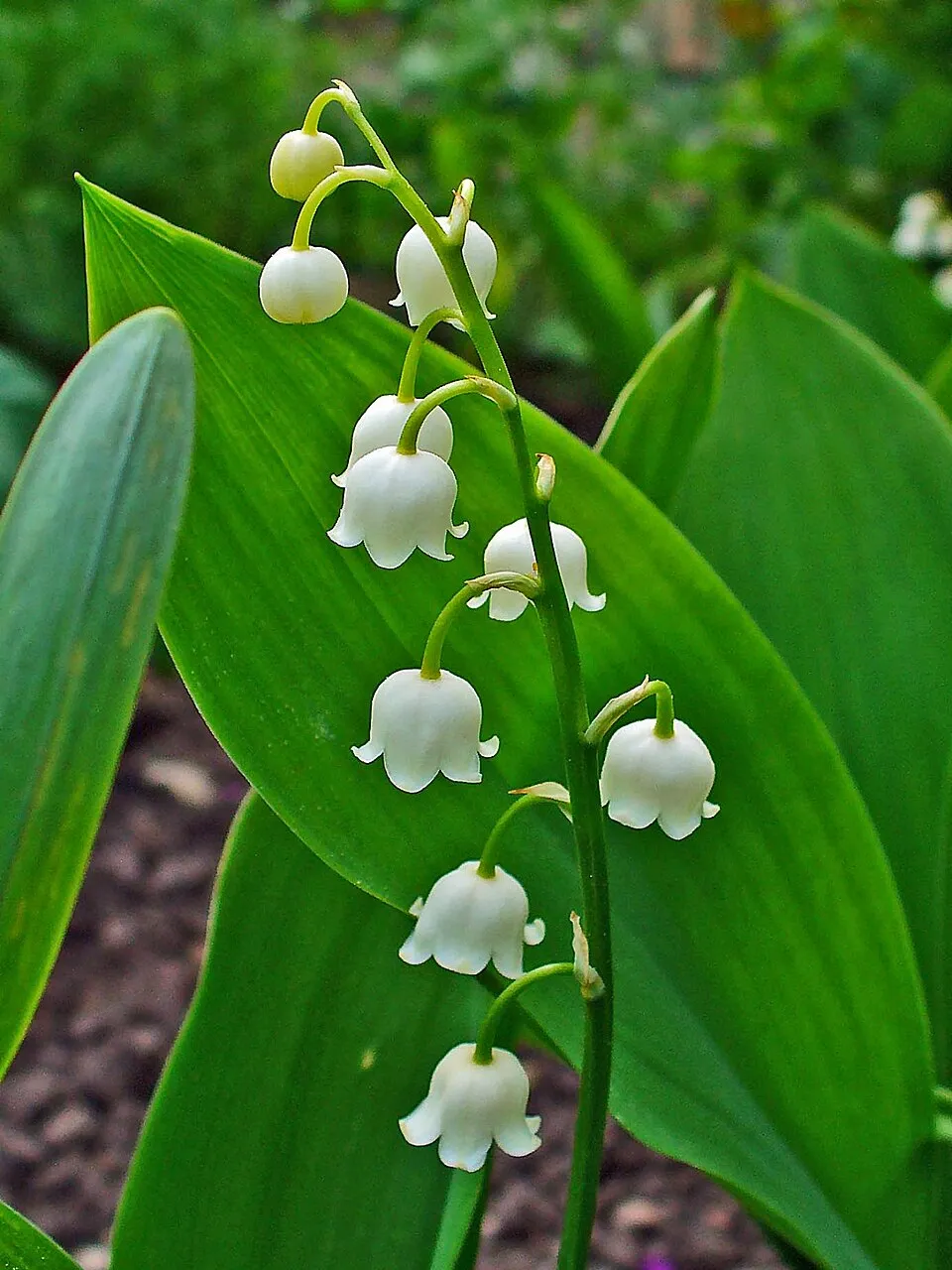
Lily of the Valley, scientifically known as Convallaria majalis, is an exquisite perennial herbaceous plant renowned for its delicate, bell-shaped white flowers and intensely sweet fragrance. Belonging to the Asparagaceae family, it stands as a symbol of spring and purity in many cultures. Morphologically, Convallaria majalis typically grows to about 15-30 cm (6-12 inches) tall, featuring two large, oblong-lanceolate basal leaves that emerge from the ground, often clasping the flower stem at their base. The small, nodding, waxy white flowers, sometimes tinged with pink, are arranged in a raceme on a slender stalk. These give way to small, bright red berries in late summer, which are equally toxic. The plant spreads vigorously via underground rhizomes, forming dense colonies.
Native to temperate regions of Eurasia, Lily of the Valley thrives in deciduous woodlands, forest edges, and shaded slopes, preferring moist, well-drained soil rich in organic matter. It has also naturalized in parts of North America and is widely cultivated as an ornamental garden plant globally due to its aesthetic appeal and fragrant blooms. Its taxonomic placement within the Asparagaceae family, specifically the Nolinoideae subfamily, highlights its relationship to other lily-like plants. Historically, Convallaria majalis holds significant cultural and symbolic importance, often associated with religious festivals, weddings, and the return of happiness. However, its historical significance in traditional medicine is fraught with caution. For centuries, various parts of the plant, particularly the leaves and flowers, were utilized in European folk medicine for conditions related to the heart, as a diuretic, and for epilepsy.
Despite these traditional applications, the plant's inherent toxicity, primarily due to the presence of potent cardiac glycosides, was often poorly understood or managed, leading to numerous instances of poisoning. Modern scientific understanding unequivocally classifies Lily of the Valley as a highly poisonous plant, emphasizing that all parts—flowers, leaves, stems, and especially the berries—are toxic if ingested. Therefore, while historically noted, its medicinal use in contemporary herbalism is strictly discouraged due to severe safety risks. Trusted Scientific References Authoritative external sources for Convallaria majalis : Wikipedia — Convallaria majalis Kew POWO (Plants of the World Online) PubMed — peer-reviewed research NCBI Taxonomy Browser GBIF — ...[CURRENT TEXT EXISTS: 2519 chars]
1.1.Lily of Valley — Defining Traits
- ✓Common Name — Lily of the Valley
- ✓Scientific Name — Convallaria majalis
- ✓Family — Asparagaceae
- ✓Native Range — Temperate Eurasia
- ✓Growth Habit — Perennial herbaceous plant, spreads by rhizomes
- ✓Flower Morphology — Delicate, bell-shaped, white (sometimes pink-tinged) flowers in a raceme
- ✓Fragrance — Intensely sweet and distinctive aroma
- ✓Fruit — Small, bright red, highly poisonous berries
- ✓Primary Toxins — Cardiac glycosides (e.g., convallatoxin, convalloside)
- ✓Toxicity Level — Highly poisonous; all plant parts are toxic if ingested
- ✓Historical Medicinal Use — Traditional European folk medicine for heart conditions, diuretics (now considered unsafe)
- ✓Modern Medicinal Status — Not recommended for therapeutic use due to extreme toxicity and narrow therapeutic window
- ✓Ornamental Value — Widely cultivated for its beauty and fragrance in gardens
- ✓Habitat Preference — Prefers shade to partial shade, moist, well-drained, humus-rich soil
1.2.Lily of Valley — Concise Overview
- ✓Lily of the Valley (Convallaria majalis) is a beautiful, highly fragrant, but extremely poisonous plant.
- ✓Contains potent cardiac glycosides (e.g., convallatoxin) which affect heart function.
- ✓All parts of the plant, especially the red berries, are toxic if ingested.
- ✓Historically used in folk medicine for heart conditions, but modern use is strictly contraindicated due to severe risks.
- ✓Ingestion can cause dangerous irregular heartbeats, nausea, vomiting, blurred vision, and can be fatal.
- ✓Interacts negatively with various medications, including heart drugs and diuretics.
- ✓Keep away from children and pets; seek immediate medical help if ingested.
2.Lily of Valley — Taxonomic Classification
3.Lily of Valley — Quick Facts
4.Lily of Valley — Structural Profile
5.Lily of Valley — Where It Grows
6.Lily of Valley — Cultural & Traditional Roles
7.Lily of Valley — Bioactive Constituents
- ✓Cardiac Glycosides (Cardenolides) — These are the primary active and highly toxic compounds in Convallaria majalis. Key examples include convallatoxin, convalloside, convallatoxol, convallamarin, and convallarin. These compounds exert potent cardiotonic effects by inhibiting the Na+/K+-ATPase pump in cell membranes, similar to digoxin, leading to increased intracellular calcium and enhanced myocardial contractility. Their narrow therapeutic index makes them extremely dangerous.
- ✓Flavonoids — Present in varying amounts, these polyphenolic compounds contribute to the plant's antioxidant capacity. Examples may include quercetin, kaempferol, and their glycosides, which typically possess free-radical scavenging and anti-inflammatory properties in other plants. In Lily of the Valley, their presence is overshadowed by the cardiac glycosides.
- ✓Saponins — These triterpenoid or steroidal glycosides are found in many plants and can have a bitter taste and foaming properties. While some saponins have expectorant or anti-inflammatory actions, their specific role and safety in Convallaria majalis are secondary to its cardiotoxicity.
- ✓Volatile Organic Compounds (VOCs) — Responsible for the plant's characteristic sweet and intense fragrance, these compounds include various terpenes and aromatic alcohols. While contributing to its ornamental value, they hold little to no medicinal significance compared to the cardiac glycosides.
- ✓Resins — Complex mixtures of organic compounds, often found in plant exudates. Their specific composition and pharmacological relevance in Lily of the Valley are not well-defined or medically significant.
- ✓Sugars — Basic carbohydrates essential for plant metabolism, present in all plant parts. They have no direct medicinal action related to Lily of the Valley's traditional or toxic effects.
- ✓Organic Acids — Various organic acids are present, playing roles in plant metabolism and defense. Their specific contribution to the plant's pharmacology is minor in the context of its potent toxins.
- ✓Fatty Acids — Essential components of cell membranes and energy storage in plants. They are not considered primary active compounds for the medicinal or toxic effects of Convallaria majalis.
8.Lily of Valley — Modern Studies
- ✓Cardiotonic Activity (Historical/Investigational) — Historically, certain preparations of Lily of the Valley were used in traditional European medicine to support heart function, akin to digitalis. This effect is attributed to the presence of cardiac glycosides like convallatoxin, which can increase the force of myocardial contraction. However, its narrow therapeutic window and high toxicity make it extremely dangerous for self-medication.
- ✓Diuretic Properties (Traditional Use) — In historical contexts, Convallaria majalis was sometimes employed as a diuretic to help reduce fluid retention and edema. This action was likely linked to its cardiac glycoside content, which can indirectly influence kidney function and fluid balance. Modern medical science strongly contraindicates its use for this purpose due to severe risks.
- ✓Anti-inflammatory Effects (Preclinical) — Laboratory studies have indicated that certain isolated compounds from Lily of the Valley may exhibit anti-inflammatory properties. These findings are primarily from in vitro or animal models and do not support the safe use of the whole plant or its extracts in humans.
- ✓Antioxidant Activity (Preclinical) — Research on specific phytochemicals within Convallaria majalis suggests the presence of antioxidant compounds. These may help neutralize free radicals and reduce oxidative stress in a laboratory setting. However, this does not translate to a safe or recommended therapeutic application for humans.
- ✓Antimicrobial Potential (Preclinical) — Some in vitro studies have explored the antimicrobial activity of Lily of the Valley extracts against various microorganisms. While demonstrating potential in a controlled environment, these findings are preliminary and do not justify internal or external use due to the plant's toxicity.
- ✓Historical Use for Epilepsy (Folkloric) — In some ancient folk medicine traditions, Lily of the Valley was anecdotally used for nervous system disorders, including epilepsy. There is absolutely no scientific evidence or safety data to support this use, and such application is considered highly dangerous.
- ✓Traditional Remedy for Stroke (Historical) — European folk medicine occasionally referenced Convallaria majalis in remedies for post-stroke recovery or prevention. This practice is entirely unsupported by modern medical research and is exceedingly hazardous due to the plant's cardiotoxicity.
- ✓Gout and Rheumatism (Folkloric Applications) — Historically, the plant was sometimes applied topically or ingested in very small, carefully monitored doses for conditions like gout and rheumatism. These uses are not validated and carry significant risks of systemic poisoning.
- ✓External Application for Burns (Traditional, Unsafe) — There are accounts of Lily of the Valley being used externally as a poultice for burns or skin irritations in some traditional practices. Given its toxicity, even external application can be problematic, and it is not recommended.
8.1.Lily of Valley — Reported Uses
9.Lily of Valley — Adverse Effects
9.1.Lily of Valley — Caution Notes
- ✓Severe Cardiac Arrhythmias — Ingestion can lead to dangerous irregular heartbeats, including bradycardia, tachycardia, and ventricular fibrillation, potentially fatal.
- ✓Nausea and Vomiting — Common initial symptoms of poisoning, often accompanied by abdominal pain and diarrhea.
- ✓Blurred Vision and Visual Disturbances — Characteristic of cardiac glycoside toxicity, including seeing halos around lights (xanthopsia).
- ✓Dizziness and Weakness — Systemic effects of poisoning leading to general malaise and impaired coordination.
- ✓Confusion and Disorientation — Neurological symptoms can manifest, including lethargy, confusion, and even delirium.
- ✓Headache — A common symptom accompanying systemic poisoning.
- ✓Hyperkalemia — Can lead to elevated potassium levels in the blood, which further exacerbates cardiac issues.
- ✓Allergic Skin Reactions — Contact with the plant can cause skin irritation or dermatitis in sensitive individuals.
- ✓Respiratory Distress — In severe cases, respiratory depression can occur, complicating the poisoning.
9.2.Lily of Valley — Toxicity Assessment
- ✓Extreme Toxicity — All parts of Convallaria majalis, including leaves, flowers, stems, roots, and especially the red berries, are highly poisonous if ingested, primarily due to cardiac glycosides.
- ✓Not for Internal Use — Lily of the Valley is considered unsafe for internal consumption by humans or animals in any form, including herbal remedies, due to its potent cardiotoxicity.
- ✓Pregnancy and Breastfeeding — Likely unsafe during pregnancy and breastfeeding; avoid use entirely due to the risk of fetal harm or transfer of toxins to infants.
- ✓Heart Conditions — Individuals with pre-existing heart conditions should strictly avoid any contact or ingestion, as the plant's compounds can dangerously exacerbate cardiac issues.
- ✓Low Potassium Levels (Hypokalemia) — Unsafe for individuals with low blood potassium, as this condition can increase sensitivity to cardiac glycosides and worsen toxicity.
- ✓Drug Interactions — Interacts significantly with numerous medications, including digoxin, diuretics, stimulant laxatives, corticosteroids, certain antibiotics (macrolides, tetracyclines), lithium, and quinine, potentially leading to severe adverse effects.
- ✓Children and Pets — Keep Lily of the Valley out of reach of children and pets, as accidental ingestion is a common cause of poisoning.
- ✓Medical Emergency — In case of accidental ingestion, seek immediate emergency medical attention.
10.Lily of Valley — Application Forms
- ✓STRICT AVOIDANCE OF INTERNAL USE — Due to extreme toxicity, Lily of the Valley (Convallaria majalis) should NEVER be ingested in any form, including teas, tinctures, or extracts, without direct, expert medical supervision. Self-medication is highly dangerous and can be fatal.
- ✓Historical Tinctures — Historically, highly diluted tinctures were prepared from the leaves and flowers, but these were extremely difficult to dose safely and are not recommended today.
- ✓Traditional Infusions — Folkloric use sometimes involved brewing weak infusions, but the unpredictable concentration of cardiac glycosides made this practice perilous.
- ✓Poultices (External, with Caution) — In some traditions, crushed leaves or flowers were applied as poultices for external ailments. However, even external application carries risks of skin irritation or systemic absorption of toxins, thus it is not advised.
- ✓Aromatic Use (Safe for Fragrance) — The flowers are safe to enjoy for their fragrance in bouquets or gardens, provided they are not ingested.
- ✓Handling Precautions — Always wear gloves when handling any part of the plant, especially if you have sensitive skin, to avoid potential irritation.
- ✓Disposal — Dispose of plant waste carefully, ensuring it is not accessible to children, pets, or livestock.
- ✓Emergency Protocol — In case of accidental ingestion, seek immediate emergency medical attention. Do not induce vomiting unless advised by a medical professional.
- ✓Educational Awareness — Emphasize educating others, especially children, about the poisonous nature of all parts of the Lily of the Valley plant.
11.Lily of Valley — Growth Requirements
- ✓Soil Preference — Thrives in humus-rich, well-drained soil with a slightly acidic to neutral pH (6.0-7.0).
- ✓Light Requirements — Prefers partial to full shade; direct afternoon sun can scorch the leaves, especially in warmer climates.
- ✓Watering — Requires consistently moist soil, especially during the growing season. Avoid waterlogging, which can lead to root rot.
- ✓Propagation by Rhizomes — Most commonly propagated by dividing its creeping rhizomes (pips) in late autumn or early spring.
- ✓Seed Propagation — Can be grown from seeds, but germination is slow and irregular, often requiring cold stratification.
- ✓Planting Depth — Plant rhizomes about 2-3 inches deep, with the 'nose' or bud pointing upwards.
- ✓Spacing — Space plants about 4-6 inches apart to allow for spreading, as they form dense groundcover.
- ✓Fertilization — Benefits from an annual application of compost or balanced slow-release fertilizer in spring.
- ✓Pest and Disease — Generally robust, but can occasionally suffer from leaf spot or rust, and rarely bothered by slugs or snails.
- ✓Cold Hardiness — Extremely cold hardy, typically thriving in USDA Zones 2-7, requiring a cold dormancy period for optimal growth.
- ✓Container Growing — Can be grown in containers, but requires consistent moisture and protection from extreme temperatures.
Reviewed by the Flora Medical Global Botanical Review Panel
Multi-disciplinary editorial group · Botany · Ethnobotany · Herbal-medicine literature
Who reviewed this: This page was checked by the Flora Medical Global Botanical Review Panel — an in-house editorial group of botany graduates, ethnobotany researchers, and horticulture practitioners who collectively maintain our 7,000+ plant encyclopedia. Meet the team.
Our 4-step verification process
1. Taxonomic verification
Scientific names and synonyms cross-checked against Kew POWO, World Flora Online, and The Plant List.
2. Phytochemical & medicinal cross-reference
Active compounds, traditional uses, and reported activities are cross-referenced with PubMed, USDA Dr. Duke's database, and peer-reviewed ethnobotanical literature.
3. Conservation & distribution check
Distribution, ecology, and conservation status confirmed against GBIF occurrence records and the IUCN Red List.
4. Editorial & safety review
Every entry passes an editorial pass for clarity, originality, and safety notices (toxicity, contraindications, dosage caveats) before publication.
Last reviewed:
Important medical disclaimer: This content is for educational and research purposes only. It is not medical advice and is not a substitute for consultation with a licensed healthcare provider. Do not use any herb to self-treat a medical condition without professional guidance.
Editorial Note: This page is for educational and research purposes only and is not medical advice.
Written by: Flora Medical Global Editorial Team
Reviewed by: Flora Medical Global Botanical Review Panel
Last Updated: June 15, 2026





Lily of Valley — Comments & Community Reviews
Rate this plant