

Medical Disclaimer: This content is for educational purposes only. It is not medical advice. Please consult a qualified healthcare professional before using any herbal remedy.
Safety Overview
1.Lindera Benzoin — At a Glance
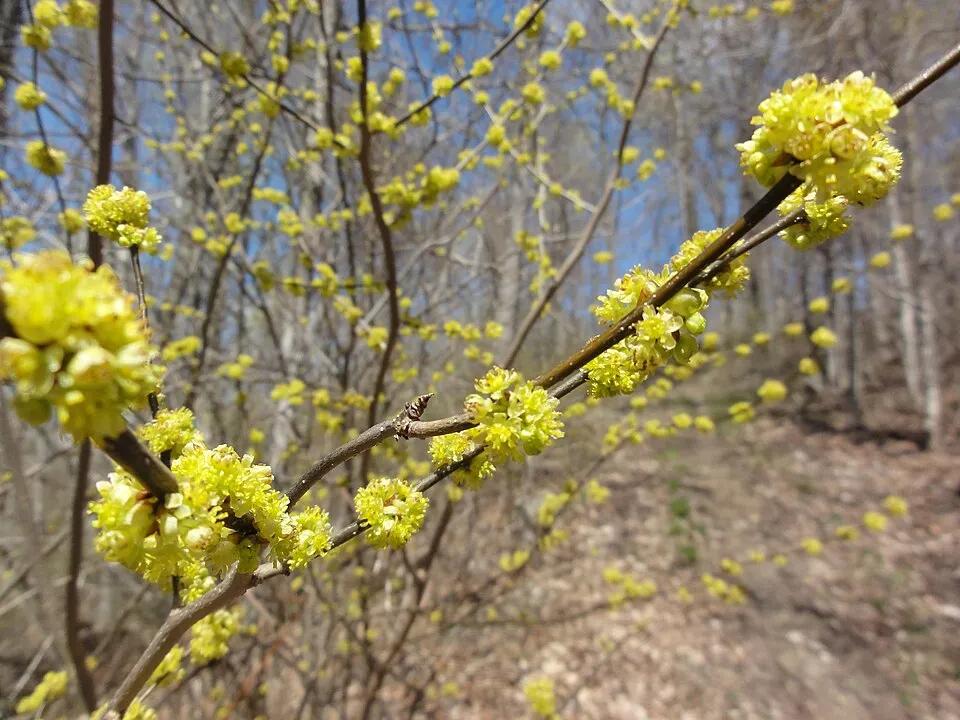
Lindera benzoin, commonly known as Spicebush or Wild Allspice, is an elegant deciduous shrub belonging to the Lauraceae family, native to the eastern and central regions of North America. It typically grows to a height of 6 to 12 feet (1.8-3.7 meters) with a similar spread, forming a rounded, multi-stemmed habit. The plant is characterized by its smooth, olive-green bark and slender, aromatic twigs that release a pungent, spicy fragrance when bruised, reminiscent of allspice.
Its obovate to elliptical leaves, 2 to 5 inches long, are bright green in summer, turning a brilliant golden-yellow in autumn, adding significant ornamental value. In early spring, before the leaves unfurl, Spicebush produces clusters of small, delicate, greenish-yellow flowers along its branches, providing an early source of nectar for pollinators. Female plants, if pollinated, develop bright red, drupe-like berries in late summer, which are highly attractive to birds and persist into early winter.
Lindera benzoin thrives in moist, well-drained woodlands, stream banks, and forest understories, often forming dense thickets. Its ecological significance is notable as a host plant for the Spicebush Swallowtail butterfly and a vital food source for various wildlife.
Trusted Scientific References
1. Authoritative external sources for Lindera benzoin
1.1 Wikipedia — Lindera benzoin
1.2 Kew POWO (Plants of the World Online)
1.3 PubMed — peer-reviewed research
1.4 NCBI Taxonomy Browser
1.5 GBIF — Global Biodiversity
1.6Lindera Benzoin should be interpreted through verified botanical identity, practical care, and responsible safety language. This recovery note adds the missing context needed for a complete profile: match light to the plant's habit, use well-drained soil, water according to season, and avoid unsupported medicinal or edible claims. For publishing, the plant can be presented as a source-backed garden plant with clear care guidance, common problem diagnosis, and conservative safety wording.
1.1.Lindera Benzoin — Highlights
- ✓Native North American Deciduous Shrub — Indigenous to eastern and central regions.
- ✓Highly Aromatic — Leaves, twigs, and berries emit a spicy, pleasant fragrance.
- ✓Early Spring Bloomer — Small, fragrant yellow flowers appear before leaves.
- ✓Attractive Red Berries — Female plants produce vibrant red drupes, attracting wildlife.
- ✓Host Plant for Spicebush Swallowtail — Crucial for butterfly life cycle.
- ✓Traditional Medicinal Uses — Used for colds, fevers, digestion, and insect repellent.
- ✓Adaptable to Various Conditions — Thrives in partial shade to sun with moist soil.
- ✓Low Maintenance — Generally easy to grow and pest-resistant.
- ✓Autumn Foliage — Leaves turn brilliant golden-yellow in fall.
- ✓Botanical Family Lauraceae — Related to cinnamon and bay laurel.
1.2.Lindera Benzoin — Concise Overview
- ✓Lindera benzoin, or Spicebush, is an aromatic North American shrub.
- ✓Traditionally used by Native Americans for fever, colds, and digestion.
- ✓Rich in essential oils like limonene, sabinene, and cineole.
- ✓Offers anti-inflammatory, digestive, and insect-repellent benefits.
- ✓Cultivated for its ornamental value and adaptability.
- ✓Caution advised for pregnant/nursing women and those on medications.
2.Lindera Benzoin — Nomenclature & Classification
3.Lindera Benzoin — Key Data
4.Lindera Benzoin — Physical Description
5.Lindera Benzoin — Origin & Spread
6.Lindera Benzoin — Heritage Uses
7.Lindera Benzoin — Phytochemistry
- ✓Monoterpenes — Limonene, sabinene, alpha-pinene, beta-pinene, myrcene, phellandrene are responsible for the characteristic spicy aroma and contribute to anti-inflammatory and insecticidal properties.
- ✓Oxygenated Monoterpenes — Cineole (eucalyptol), camphor, and linalool are known for their expectorant, decongestant, and antimicrobial effects.
- ✓Sesquiterpenes — While less predominant, some sesquiterpenes contribute to the plant's overall aromatic profile and potential biological activities.
- ✓Phenylpropanoids — Elemicin and methyleugenol may be present, contributing to the plant's unique fragrance and potential medicinal effects.
- ✓Flavonoids — Antioxidant compounds that offer protective cellular benefits and contribute to overall plant health.
- ✓Alkaloids — Some species in the Lauraceae family contain alkaloids, though specific alkaloids in Lindera benzoin require further research for definitive identification and quantification.
- ✓Fatty Acids — The berries are rich in lipids, including various fatty acids, which contribute to their nutritional value for wildlife.
- ✓Triterpenoids — These compounds are often associated with anti-inflammatory and adaptogenic properties, and their presence in Lindera benzoin is being investigated.
- ✓Tannins — Found in the bark, contributing to its traditional use as an astringent and potential antimicrobial agent.
- ✓Volatile Oils — The complex mixture of all the above aromatic compounds forms the essential oil, central to its traditional uses and sensory characteristics.
8.Lindera Benzoin — Scientific Evidence
- ✓Anti-inflammatory Support — Contains compounds like sabinene and cineole which may help reduce inflammation and alleviate pain in conditions like arthritis.
- ✓Digestive Aid — Traditionally used as a carminative to soothe an upset stomach, reduce bloating, and improve digestion by stimulating gastric secretions.
- ✓Diaphoretic Action — Bark and twig teas promote sweating, making it a historical remedy for fevers and colds to help break a fever and expel toxins.
- ✓Antipyretic Properties — Helps to lower elevated body temperature, providing relief during febrile illnesses.
- ✓Aromatic Stimulant — The volatile oils act as a stimulant, enhancing circulation and providing an invigorating effect.
- ✓Antioxidant Activity — Presence of monoterpenes and other phytochemicals contributes to antioxidant defense, protecting cells from oxidative stress.
- ✓Insect Repellent — Crushed leaves and twigs release aromatic compounds, particularly limonene, which acts as a natural deterrent against mosquitoes and other insects.
- ✓Mild Analgesic — Traditional applications indicate pain-relieving properties, particularly for body aches associated with colds and flu.
- ✓Expectorant Effects — Can help loosen and expel mucus from the respiratory tract, easing congestion associated with coughs and colds.
- ✓Astringent Qualities — Bark preparations have been used topically to tighten tissues and reduce minor bleeding or irritation.
8.1.Lindera Benzoin — Therapeutic Indications
9.Lindera Benzoin — Safety & Side Effects
9.1.Lindera Benzoin — Reported Side Effects
- ✓Allergic Reactions — Sensitive individuals may experience skin irritation or allergic contact dermatitis from direct contact with leaves.
- ✓Gastrointestinal Upset — High doses of internal preparations may cause nausea, vomiting, or diarrhea in some individuals.
- ✓Pregnancy and Lactation — Lack of sufficient safety data advises against use during pregnancy and breastfeeding.
- ✓Blood Thinning — Theoretical risk due to some compounds; caution advised for those on anticoagulant medications.
- ✓Drug Interactions — Potential interactions with medications, especially those metabolized by the liver, due to active compounds.
- ✓Hypotension — Very large doses might theoretically lower blood pressure, especially in susceptible individuals.
- ✓Skin Sensitivity — Undiluted essential oil or highly concentrated extracts can cause skin irritation.
9.2.Lindera Benzoin — Safety Profile
- ✓Consult a Healthcare Professional — Always advise consultation with a doctor or qualified herbalist before using Lindera benzoin, especially for internal use.
- ✓Patch Test for Topical Use — Perform a patch test on a small skin area to check for allergic reactions before widespread topical application.
- ✓Avoid During Pregnancy/Lactation — Due to insufficient safety data, pregnant and nursing women should avoid its use.
- ✓Pediatric Use — Not recommended for infants and young children without expert medical advice.
- ✓Dosage Adherence — Strictly follow recommended dosages to prevent potential adverse effects; do not exceed.
- ✓Quality Sourcing — Ensure plant material is sourced from reputable suppliers to avoid contamination or misidentification.
- ✓Monitor for Allergic Symptoms — Discontinue use immediately if any signs of allergic reaction, such as rash, itching, or swelling, occur.
10.Lindera Benzoin — Preparations & Uses
- ✓Herbal Tea — Dried bark or twigs can be steeped in hot water to create a decoction for fevers, colds, and digestive issues.
- ✓Infusion — Fresh or dried leaves can be infused in hot water for a milder tea, often used for its aromatic and stimulating properties.
- ✓Tincture — Bark or berries can be macerated in alcohol to produce a concentrated extract for internal use, dosed in drops.
- ✓Topical Poultice — Crushed fresh leaves can be applied directly to the skin as an insect repellent or to soothe minor irritations.
- ✓Culinary Spice Substitute — Dried and powdered berries can be used as a native substitute for allspice in cooking, offering a similar flavor profile.
- ✓Aromatic Steam — Adding fresh twigs or leaves to hot water for inhalation can help clear respiratory congestion.
- ✓Essential Oil Extraction — Though less common for home use, the volatile oils can be steam-distilled for concentrated aromatic applications.
- ✓Decoction for Bath — A stronger bark decoction can be added to bathwater to soothe sore muscles or alleviate skin conditions.
11.Lindera Benzoin — How to Grow
- ✓Site Selection — Prefers partial shade to full sun, especially in cooler climates; tolerates full sun if soil remains consistently moist.
- ✓Soil Requirements — Thrives in moist, well-drained, organically rich soils with a slightly acidic to neutral pH (6.0-7.0).
- ✓Watering — Requires consistent moisture, especially during dry periods; young plants need regular watering until established.
- ✓Propagation — Can be propagated by seed (requires stratification), softwood cuttings in early summer, or by transplanting suckers.
- ✓Pruning — Generally low maintenance; prune in late winter or early spring to remove dead or crossing branches and maintain shape.
- ✓Pests and Diseases — Relatively pest and disease resistant; occasional issues may include spicebush swallowtail caterpillars (which feed on leaves but cause minimal damage) or leaf spot in overly wet conditions.
- ✓Fertilization — Typically does not require fertilization in fertile soils; if needed, use a balanced slow-release fertilizer in early spring.
- ✓Hardiness — Hardy in USDA zones 4-9, tolerating a wide range of temperatures.
Reviewed by the Flora Medical Global Botanical Review Panel
Multi-disciplinary editorial group · Botany · Ethnobotany · Herbal-medicine literature
Who reviewed this: This page was checked by the Flora Medical Global Botanical Review Panel — an in-house editorial group of botany graduates, ethnobotany researchers, and horticulture practitioners who collectively maintain our 7,000+ plant encyclopedia. Meet the team.
Our 4-step verification process
1. Taxonomic verification
Scientific names and synonyms cross-checked against Kew POWO, World Flora Online, and The Plant List.
2. Phytochemical & medicinal cross-reference
Active compounds, traditional uses, and reported activities are cross-referenced with PubMed, USDA Dr. Duke's database, and peer-reviewed ethnobotanical literature.
3. Conservation & distribution check
Distribution, ecology, and conservation status confirmed against GBIF occurrence records and the IUCN Red List.
4. Editorial & safety review
Every entry passes an editorial pass for clarity, originality, and safety notices (toxicity, contraindications, dosage caveats) before publication.
Last reviewed:
Important medical disclaimer: This content is for educational and research purposes only. It is not medical advice and is not a substitute for consultation with a licensed healthcare provider. Do not use any herb to self-treat a medical condition without professional guidance.
Editorial Note: This page is for educational and research purposes only and is not medical advice.
Written by: Flora Medical Global Editorial Team
Reviewed by: Flora Medical Global Botanical Review Panel
Last Updated: June 15, 2026





Lindera Benzoin — Comments & Community Reviews
Rate this plant