

Medical Disclaimer: This content is for educational purposes only. It is not medical advice. Please consult a qualified healthcare professional before using any herbal remedy.
Safety Overview
1.Liriodendron — Overview
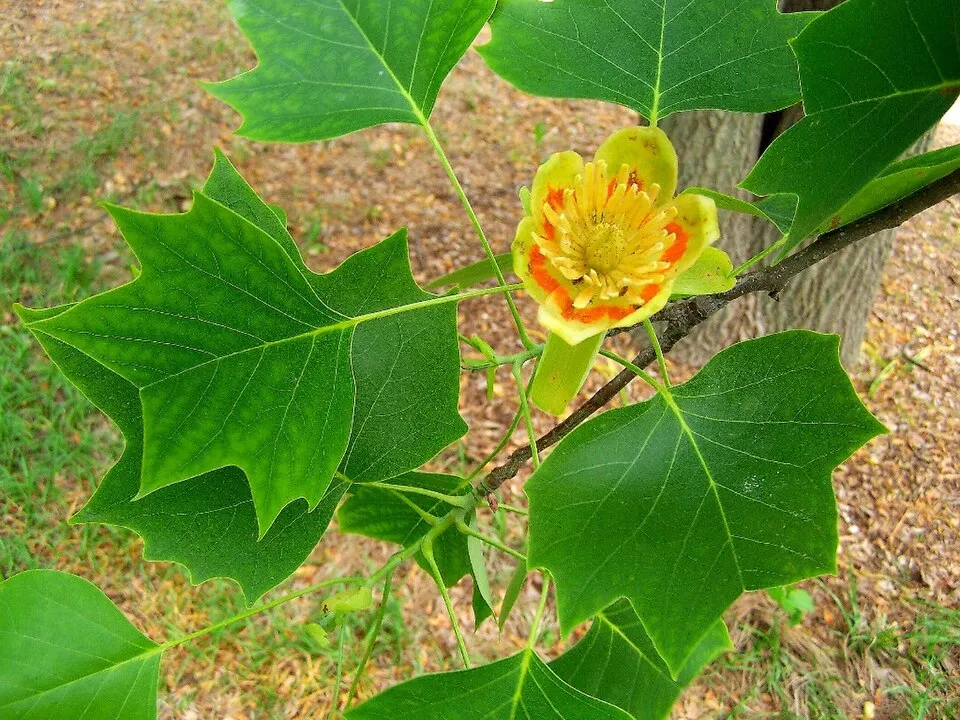
Liriodendron tulipifera, widely recognized as the tulip tree or yellow poplar, stands as a magnificent deciduous tree native to the eastern regions of North America, from southern Ontario, Canada, southward to Florida and westward to Missouri. This imposing species is renowned for its remarkable height, frequently reaching 30 to 60 meters (98 to 197 feet), and occasionally exceeding these dimensions, establishing itself as one of the tallest native trees in its range. Its distinctive foliage is a key identifier: bright green leaves, measuring 8 to 15 centimeters (3 to 6 inches) across, feature a unique four-lobed shape, often described as resembling a duck's foot or a lyre. In late spring to early summer, the tulip tree produces its namesake flowers, which are both striking and elegant.
These cup-shaped blooms, typically 5 to 10 centimeters (2 to 4 inches) in diameter, exhibit yellowish-green petals subtly accented with a vibrant orange band near their base, making them resemble large tulips perched atop the branches. The bark of young trees is smooth and grayish-brown, gradually transforming with age into a deeply furrowed and ridged texture, offering a visual contrast to its canopy. Liriodendron tulipifera thrives in well-drained, moist, and fertile soils, preferring full sun exposure and often found in mixed deciduous forests, floodplains, and along stream banks. Ecologically, it plays a vital role in forest ecosystems, providing habitat and food for various wildlife.
Taxonomically, it belongs to the ancient Magnoliaceae family, a lineage known for its primitive flowering plant characteristics within the Angiosperms clade. Beyond its ecological and ornamental value, with its rapid growth and straight trunk, the tulip tree has historically been a significant source of timber, prized for its light, strong wood. Its striking morphology and broad distribution underscore its botanical and cultural significance across its native range.
Trusted Scientific References
1. Authoritative external sources for Liriodendron tulipifera
1.1 Wikipedia — Liriodendron tulipifera
1.2 Kew POWO (Plants of the World Online)
1.3 PubMed — peer-reviewed research
1.4 NCBI Taxonomy Browser
1.5 GBIF — Global Biodiversity
1.1.Liriodendron — Standout Qualities
- ✓Impressive height, often — Impressive height, often exceeding 50 meters (164 feet), one of North America's tallest deciduous trees.
- ✓Distinctive four — lobed leaves, resembling a lyre or a duck's foot, turning golden-yellow in autumn.
- ✓Striking, large, cup — shaped flowers with yellowish-green petals and an orange band at the base.
- ✓Fast — growing species, making it popular for landscaping and timber production.
- ✓Smooth, grayish — brown bark on young trees, developing deep furrows with age.
- ✓Native to the — Native to the eastern United States and parts of Canada.
- ✓Member of the — Member of the ancient Magnoliaceae family, showcasing primitive floral characteristics.
- ✓Historically utilized by — Historically utilized by Native American tribes for a variety of medicinal applications.
- ✓Bark traditionally known — Bark traditionally known for its expectorant properties, aiding respiratory health.
- ✓Possesses analgesic and anti — inflammatory effects, used for pain and rheumatic conditions.
- ✓Rich in bioactive — Rich in bioactive compounds including alkaloids (e.g., liriodenine, glaucine), flavonoids, and tannins.
- ✓Exhibited antimicrobial activity — Exhibited antimicrobial activity in preliminary scientific investigations.
- ✓Important source of — Important source of commercial timber, often marketed as yellow poplar or tulip poplar.
- ✓Aesthetically valued for — Aesthetically valued for its grand stature, unique foliage, and showy blooms.
1.2.Liriodendron — Snapshot Summary
- ✓Majestic deciduous tree native to Eastern North America, known for its height and distinctive leaves.
- ✓Produces striking yellowish-green, cup-shaped flowers resembling tulips.
- ✓Traditionally used by Native Americans and early settlers for various medicinal purposes.
- ✓Bark is a rich source of potent alkaloids, flavonoids, and tannins.
- ✓Valued for its traditional expectorant, analgesic, and anti-inflammatory properties.
- ✓Modern research supports its antimicrobial and antioxidant potential.
- ✓Caution advised due to alkaloid content; professional guidance is essential for safe use.
- ✓Significant timber tree (yellow poplar) and popular ornamental species.
2.Liriodendron — Systematic Position
3.Liriodendron — Quick Facts
4.Liriodendron — Morphological Account
5.Liriodendron — Geographic Distribution
6.Liriodendron — Cultural & Traditional Roles
7.Liriodendron — Bioactive Constituents
- ✓Alkaloids — Key compounds include liriodenine, glaucine, magnoflorine, and liriodenine N-oxide. These compounds are largely responsible for the analgesic, anti-inflammatory, antitussive, and antimicrobial actions observed.
- ✓Flavonoids — Important examples are quercetin, kaempferol, and their glycosides. These potent antioxidants contribute to the plant's anti-inflammatory and cell-protective properties by scavenging free radicals and modulating immune responses.
- ✓Tannins — Predominantly condensed tannins (proanthocyanidins) and hydrolyzable tannins are present. These compounds impart astringent properties, contributing to antimicrobial effects, wound healing, and anti-diarrheal actions.
- ✓Lignans — Compounds like liriodendrin have been identified. Lignans are known for their antioxidant, anti-inflammatory, and potentially anticancer activities, contributing to the overall therapeutic profile.
- ✓Sesquiterpenes — Various sesquiterpene lactones may be present, often linked to anti-inflammatory and cytotoxic activities. Their presence contributes to the plant's complex pharmacology.
- ✓Steroids — Phytosterols such as beta-sitosterol are found, which are known for their anti-inflammatory and cholesterol-lowering properties, supporting cellular health and modulating immune responses.
- ✓Phenolic Acids — Compounds like caffeic acid and ferulic acid contribute to the plant's antioxidant and anti-inflammatory capacity. These are common in many medicinal plants and offer broad protective effects.
- ✓Volatile Oils — Trace amounts of essential oils may be present, contributing to the plant's aroma and potentially offering mild antiseptic or expectorant qualities, though not a primary constituent.
- ✓Saponins — These glycosides can exhibit expectorant, anti-inflammatory, and immune-modulating effects. Their presence can contribute to the plant's traditional uses for respiratory conditions.
- ✓Anthraquinones — While not a primary constituent, some species in the Magnoliaceae family may contain trace amounts, which can contribute to laxative or antimicrobial properties.
- ✓Polysaccharides — Complex carbohydrates that can have immunomodulatory effects, supporting the body's natural defense mechanisms.
8.Liriodendron — Research Insights
- ✓Respiratory Support — Historically, the bark of Liriodendron tulipifera has been utilized as an expectorant, helping to clear mucus and ease congestion in conditions such as coughs and bronchitis. Its traditional application aimed to soothe irritated airways and facilitate easier breathing.
- ✓Pain Relief — The inner bark is traditionally recognized for its analgesic properties, providing relief from various forms of pain, particularly those associated with rheumatic conditions. This effect is attributed to certain alkaloid compounds present in the plant.
- ✓Anti-inflammatory Action — Extracts from the tulip tree, especially the bark, possess anti-inflammatory effects that have been traditionally employed to alleviate swelling and discomfort. This makes it beneficial for conditions like arthritis and gout.
- ✓Antimicrobial Activity — Research suggests that Liriodendron tulipifera exhibits antimicrobial properties, which can help combat bacterial and fungal infections. This action contributes to its traditional use in treating minor infections and promoting overall healing.
- ✓Wound Healing — Topically applied preparations from the leaves and bark have been traditionally used to aid in the healing of skin irritations, cuts, and minor wounds. Its compounds may support tissue regeneration and protect against infection.
- ✓Febrifuge Properties — In traditional Native American and early American herbalism, the bark was often used as a febrifuge to reduce fever. This action helps to cool the body and alleviate symptoms associated with febrile states.
- ✓Diaphoretic Effects — The plant has been noted for its diaphoretic action, meaning it can promote sweating. This traditional use was aimed at assisting the body in expelling toxins and cooling during fevers.
- ✓Digestive Aid — Historically, the bitter principles found in the bark were sometimes used to stimulate digestion and improve appetite. This traditional application suggests a tonic effect on the gastrointestinal system.
- ✓Diuretic Properties — Some traditional uses indicate diuretic effects, assisting the body in expelling excess water and supporting kidney function. This could be beneficial in conditions requiring fluid balance regulation.
- ✓Anthelmintic Use — In some folk traditions, the bark was employed as an anthelmintic to expel intestinal worms. This parasiticidal action highlights another facet of its traditional therapeutic range.
- ✓Antioxidant Support — The presence of flavonoids and other phenolic compounds in Liriodendron tulipifera contributes to its antioxidant capacity. These compounds help to neutralize free radicals, protecting cells from oxidative damage.
- ✓Sedative Potential — Certain alkaloids present in the plant, such as glaucine, have been investigated for potential mild sedative effects. This traditional application might have been used to calm nerves or aid sleep.
- ✓Skin Irritation Relief — Beyond wound healing, topical applications can soothe general skin irritations, rashes, and insect bites. Its anti-inflammatory and antiseptic qualities contribute to this effect.
- ✓Cardioprotective Aspects — Preliminary research on certain constituents like liriodenine suggests potential benefits for cardiovascular health, though extensive human studies are needed. This area warrants further scientific exploration.
- ✓Antispasmodic Effects — Traditional uses hint at antispasmodic properties, which could help relieve muscle cramps and spasms. This might contribute to its efficacy in pain management and respiratory conditions.
8.1.Liriodendron — Therapeutic Indications
9.Liriodendron — Adverse Effects
9.1.Liriodendron — Possible Adverse Reactions
- ✓Gastrointestinal Upset — High doses may lead to nausea, vomiting, stomach discomfort, or diarrhea in sensitive individuals.
- ✓Allergic Reactions — Skin rashes, itching, or other hypersensitivity reactions can occur, especially with topical application or in susceptible individuals.
- ✓Central Nervous System Effects — The alkaloid content, particularly glaucine, may cause dizziness, drowsiness, or lightheadedness in some users.
- ✓Hypotension — Certain alkaloids could potentially lower blood pressure, which may be a concern for individuals already on hypotensive medication.
- ✓Drug Interactions — May interact with anticoagulant medications, sedatives, blood pressure drugs, or other central nervous system depressants.
- ✓Liver/Kidney Stress — Prolonged use or excessive doses might theoretically place undue stress on liver or kidney function, though specific evidence is limited.
- ✓Uterine Stimulation — Due to potential alkaloid effects, it is advised to avoid during pregnancy as it might stimulate uterine contractions.
- ✓Bitter Taste — The strong bitter taste of bark preparations can be unpalatable for some individuals, potentially leading to compliance issues.
9.2.Liriodendron — Toxicity Assessment
- ✓Professional Consultation — Always consult a qualified healthcare professional or medical herbalist before using Liriodendron tulipifera, especially for internal use.
- ✓Pregnancy and Lactation — Contraindicated during pregnancy and breastfeeding due to lack of safety data and potential uterine stimulant effects.
- ✓Pediatric Use — Not recommended for infants, children, or adolescents without strict medical supervision due to potent alkaloid content.
- ✓Pre-existing Conditions — Use with extreme caution in individuals with heart conditions, liver disease, kidney impairment, or neurological disorders.
- ✓Dosage Adherence — Strictly adhere to recommended dosages; excessive intake can increase the risk of adverse effects.
- ✓Discontinue if Adverse Reactions — Cease use immediately if any adverse reactions such as severe gastrointestinal upset, dizziness, or allergic reactions occur.
- ✓Drug Interactions Awareness — Be aware of potential interactions with prescription medications, particularly blood thinners, sedatives, and antihypertensives.
- ✓External Use Caution — While generally safer, topical applications should be patch-tested first to check for skin sensitivity or allergic reactions.
- ✓Quality Sourcing — Ensure the plant material is sourced from reputable suppliers to avoid contamination or misidentification.
- ✓Long-Term Use — Avoid prolonged, continuous internal use without professional guidance, especially given the presence of active alkaloids.
10.Liriodendron — Application Forms
- ✓Decoction of Bark — The dried inner bark is typically simmered in water for 15-20 minutes to create a potent decoction, used internally for respiratory ailments or pain relief.
- ✓Tincture Preparation — High-proof alcohol is used to extract compounds from fresh or dried bark, creating a concentrated tincture for internal use, dosed in drops.
- ✓Poultice Application — Crushed fresh leaves or inner bark can be directly applied as a poultice to skin irritations, wounds, or swollen joints for topical relief.
- ✓Infusion of Leaves/Flowers — A milder preparation made by steeping dried leaves or flowers in hot water, suitable for external washes or as a gentle internal tonic.
- ✓Topical Ointments/Creams — Extracts of Liriodendron can be incorporated into salves, balms, or creams for targeted application on skin conditions, rashes, or minor injuries.
- ✓Powdered Bark Encapsulation — Dried and finely powdered bark can be encapsulated for convenient internal administration, ensuring precise dosing.
- ✓Compresses and Fomentations — A cloth soaked in a strong bark decoction can be applied as a hot or cold compress to inflamed areas or painful joints.
- ✓Gargle and Mouthwash — A dilute decoction can be used as a gargle for sore throats or as a mouthwash for oral hygiene, utilizing its antimicrobial properties.
- ✓Herbal Tea Blends — Dried leaves or small pieces of bark can be combined with other complementary herbs in tea blends for synergistic effects, particularly for wellness.
- ✓Steam Inhalation — Infusions of leaves or flowers can be used in a steam inhaler to help clear nasal and bronchial passages during respiratory congestion.
11.Liriodendron — Growing Guide
- ✓Soil Preference — Thrives in deep, moist, well-drained, and fertile soils, ideally with a slightly acidic to neutral pH (6.0-7.0).
- ✓Light Requirements — Prefers full sun exposure for optimal growth, though it can tolerate partial shade, which may result in slower growth and fewer flowers.
- ✓Water Management — Requires consistent moisture, especially during establishment; mature trees are moderately drought-tolerant but benefit from regular watering during dry periods.
- ✓Temperature and Hardiness — Hardy in USDA Zones 4-9, tolerating a wide range of temperatures but preferring climates with distinct seasons.
- ✓Propagation from Seed — Seeds require cold stratification (2-3 months at 1-5°C) before germination; sow in fall or early spring.
- ✓Vegetative Propagation — Can be propagated through stem cuttings, though success rates can vary and often require rooting hormones.
- ✓Pruning Practices — Generally requires minimal pruning; focus on removing dead, damaged, or crossing branches to maintain tree health and structure.
- ✓Fertilization Needs — Young trees benefit from a balanced, slow-release fertilizer in spring to encourage vigorous growth.
- ✓Pest and Disease Management — Relatively pest-resistant, but can be susceptible to aphids, scale, and canker diseases; maintain good air circulation.
- ✓Spacing — Allow ample space for mature size, as it grows into a large tree; typically planted 15-20 meters (50-65 feet) apart in landscapes.
Reviewed by the Flora Medical Global Botanical Review Panel
Multi-disciplinary editorial group · Botany · Ethnobotany · Herbal-medicine literature
Who reviewed this: This page was checked by the Flora Medical Global Botanical Review Panel — an in-house editorial group of botany graduates, ethnobotany researchers, and horticulture practitioners who collectively maintain our 7,000+ plant encyclopedia. Meet the team.
Our 4-step verification process
1. Taxonomic verification
Scientific names and synonyms cross-checked against Kew POWO, World Flora Online, and The Plant List.
2. Phytochemical & medicinal cross-reference
Active compounds, traditional uses, and reported activities are cross-referenced with PubMed, USDA Dr. Duke's database, and peer-reviewed ethnobotanical literature.
3. Conservation & distribution check
Distribution, ecology, and conservation status confirmed against GBIF occurrence records and the IUCN Red List.
4. Editorial & safety review
Every entry passes an editorial pass for clarity, originality, and safety notices (toxicity, contraindications, dosage caveats) before publication.
Last reviewed:
Important medical disclaimer: This content is for educational and research purposes only. It is not medical advice and is not a substitute for consultation with a licensed healthcare provider. Do not use any herb to self-treat a medical condition without professional guidance.
Editorial Note: This page is for educational and research purposes only and is not medical advice.
Written by: Flora Medical Global Editorial Team
Reviewed by: Flora Medical Global Botanical Review Panel
Last Updated: June 15, 2026





Liriodendron — Comments & Community Reviews
Rate this plant