

Medical Disclaimer: This content is for educational purposes only. It is not medical advice. Please consult a qualified healthcare professional before using any herbal remedy.
Safety Overview
1.Liriope Muscari — At a Glance
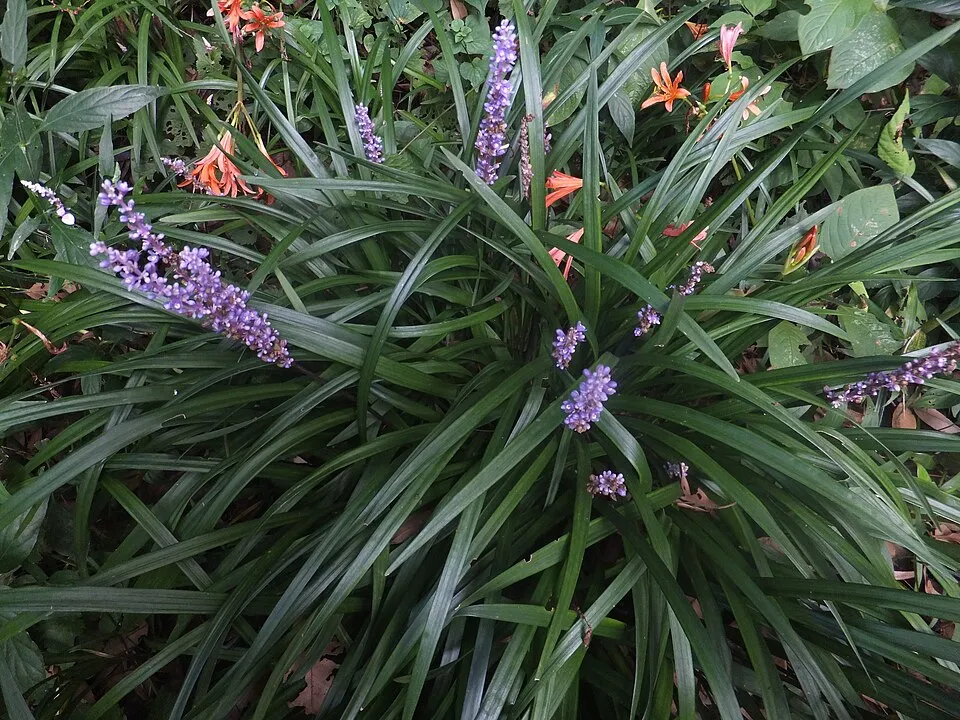
Liriope muscari, commonly known as Big Blue Lilyturf or Monkey Grass, is a resilient evergreen perennial belonging to the Asparagaceae family. Native to East and Southeast Asia, it is widely cultivated globally, particularly in temperate regions, for its ornamental and ecological value. This plant forms dense, grass-like clumps, typically reaching heights of 9 to 18 inches and spreading 12 to 24 inches. Its foliage consists of narrow, arching, dark green leaves, which remain vibrant throughout the year in warmer climates but may die back in colder zones.
In late summer, Liriope muscari produces distinctive spikes of small, bell-shaped flowers, predominantly in shades of lavender or purple, though white varieties also exist. These inflorescences rise above the foliage, creating an attractive display. Following the bloom period, the plant develops small, spherical, black berries, which persist into winter. Liriope muscari thrives in a wide range of conditions, from full sun to deep shade, and is highly adaptable to various soil types, provided they are well-drained.
Its robust nature, coupled with low maintenance requirements and drought tolerance once established, makes it a popular choice for groundcovers, borders, and erosion control in landscaping. Taxonomically, it is distinguished from its close relative, Liriope spicata, by its clumping growth habit versus the latter's creeping rhizomatous spread.
Trusted Scientific References
1. Authoritative external sources for Liriope muscari
1.1 Wikipedia — Liriope muscari
1.2 Kew POWO (Plants of the World Online)
1.3 PubMed — peer-reviewed research
1.4 NCBI Taxonomy Browser
1.5 GBIF — Global Biodiversity
1.6Liriope Muscari should be interpreted through verified botanical identity, practical care, and responsible safety language. This recovery note adds the missing context needed for a complete profile: match light to the plant's habit, use well-drained soil, water according to season, and avoid unsupported medicinal or edible claims. For publishing, the plant can be presented as a source-backed garden plant with clear care guidance, common problem diagnosis, and conservative safety wording.
1.1.Liriope Muscari — Distinguishing Points
- ✓Evergreen Perennial — Maintains foliage year-round in warmer climates.
- ✓Ornamental Value — Popular as groundcover, border plant, or for erosion control.
- ✓Medicinal Roots — Rhizomes used in traditional medicine, particularly TCM.
- ✓Lung Tonic — Known for moistening lungs and relieving dry coughs.
- ✓Anti — inflammatory — Contains compounds that reduce inflammation.
- ✓Drought Tolerant — Once established, requires minimal watering.
- ✓Shade Tolerant — Adaptable to various light conditions, from sun to deep shade.
- ✓Low Maintenance — Requires minimal pruning and care.
- ✓Purple/White Flowers — Produces attractive flower spikes in late summer.
- ✓Black Berries — Follows flowering, providing seasonal interest.
1.2.Liriope Muscari — At-a-Glance Summary
- ✓Liriope muscari is an evergreen perennial with medicinal roots.
- ✓Traditionally used in TCM for lung health, coughs, and dryness.
- ✓Contains saponins, polysaccharides, and homoisoflavonoids.
- ✓Exhibits anti-inflammatory, antioxidant, and immunomodulatory properties.
- ✓Low-maintenance ornamental plant, hardy in USDA Zones 5-10.
- ✓Potential drug interactions and side effects; consult a professional.
2.Liriope Muscari — Scientific Identity
3.Liriope Muscari — Fact Sheet
4.Liriope Muscari — Botanical Features
5.Liriope Muscari — Native Range & Habitat
6.Liriope Muscari — Traditional Uses
7.Liriope Muscari — Key Phytochemicals
- ✓Saponins — Specifically ophiopogonins A, B, C, and D, which are triterpenoid saponins known for their expectorant, anti-inflammatory, and cardiotonic effects.
- ✓Polysaccharides — Including Liriope muscari polysaccharide (LMP), which exhibits immunomodulatory, hypoglycemic, and antioxidant activities.
- ✓Flavonoids — Such as quercetin and kaempferol derivatives, contributing to antioxidant and anti-inflammatory properties.
- ✓Homoisoflavonoids — Including methylophiopogonanone A, B, and C, and ophiopogonanone, known for their anti-inflammatory and cardiovascular protective effects.
- ✓Steroidal Glycosides — Similar to those found in Ophiopogon japonicus, contributing to various pharmacological actions.
- ✓Amino Acids — Essential and non-essential amino acids are present, supporting general nutritional and metabolic functions.
- ✓Fatty Acids — Including linoleic acid and oleic acid, which are important for cell membrane integrity and overall health.
- ✓Organic Acids — Such as citric acid and malic acid, involved in metabolic pathways.
- ✓Volatile Oils — Trace amounts contributing to the plant's natural defense mechanisms.
- ✓Alkaloids — Present in minor quantities, with potential for various biological activities.
- ✓Phytosterols — Including beta-sitosterol, known for cholesterol-lowering and anti-inflammatory effects.
- ✓Vitamins and Minerals — Providing general nutritional support, though in varying concentrations.
8.Liriope Muscari — Scientific Evidence
- ✓Lung Health Support — Historically used to moisten the lungs and alleviate dry coughs by nourishing Yin.
- ✓Cough and Bronchitis Relief — Helps to suppress coughs and reduce inflammation associated with chronic bronchitis.
- ✓Anti-inflammatory Properties — Compounds like homoisoflavonoids contribute to reducing systemic inflammation.
- ✓Antioxidant Activity — Saponins and flavonoids exhibit antioxidant effects, protecting cells from oxidative stress.
- ✓Immune Modulation — Polysaccharides present may help to modulate the immune system's response.
- ✓Cardiovascular Support — Some research suggests potential benefits for heart health, including blood pressure regulation.
- ✓Hypoglycemic Effects — May assist in lowering blood glucose levels, beneficial for metabolic health.
- ✓Neuroprotective Potential — Certain constituents could offer protection against neuronal damage.
- ✓Anti-tumor Activity — Preliminary studies indicate some compounds may inhibit the proliferation of cancer cells.
- ✓Gastrointestinal Aid — Traditionally used to relieve constipation by promoting fluid balance in the intestines.
- ✓Diuretic Properties — May support kidney function and help in the elimination of excess fluids.
- ✓Adaptogenic Qualities — Believed to help the body adapt to stress and maintain homeostasis.
8.1.Liriope Muscari — Indications & Uses
9.Liriope Muscari — Cautions & Contraindications
9.1.Liriope Muscari — Side Effects & Warnings
- ✓Gastrointestinal Upset — May cause mild nausea, diarrhea, or stomach discomfort in sensitive individuals.
- ✓Allergic Reactions — Skin rashes or respiratory symptoms can occur in individuals sensitive to the plant.
- ✓Hypoglycemia — Individuals with diabetes should monitor blood sugar closely due to potential glucose-lowering effects.
- ✓Hypotension — May lower blood pressure, caution advised for those on anti-hypertensive medication.
- ✓Drug Interactions — Potential interactions with blood thinners, immunosuppressants, and diabetes medications.
- ✓Pregnancy and Lactation — Insufficient data; use is generally discouraged during these periods.
- ✓Overdose Symptoms — High doses could potentially lead to more pronounced gastrointestinal issues or other adverse effects.
9.2.Liriope Muscari — Toxicity Assessment
- ✓Consult a Healthcare Professional — Always seek medical advice before beginning any new herbal treatment.
- ✓Not for Prolonged Use — Generally recommended for short-term or specific therapeutic courses rather than continuous, long-term use.
- ✓Dosage Adherence — Strictly follow recommended dosages to avoid potential adverse effects.
- ✓Pregnancy and Breastfeeding — Avoid use during pregnancy and lactation due to lack of safety data.
- ✓Pre-existing Conditions — Individuals with chronic diseases, especially diabetes or cardiovascular issues, should exercise caution.
- ✓Allergic History — Individuals with known allergies to Asparagaceae family plants should avoid Liriope muscari.
- ✓Children and Infants — Use in pediatric populations is not well-established and should be avoided.
10.Liriope Muscari — Preparation Methods
- ✓Decoction — Dried roots are simmered in water to extract active compounds, commonly used for lung conditions.
- ✓Tincture — Roots are steeped in alcohol to create a concentrated extract, often used for systemic effects.
- ✓Powdered Form — Dried roots are ground into a fine powder for encapsulation or mixing into beverages.
- ✓Topical Application — Extracts or poultices might be used for localized inflammatory conditions, though less common.
- ✓Herbal Teas — Infusions of the roots can be prepared for mild relief of coughs and dryness.
- ✓Syrups — Often combined with honey or other demulcents for soothing coughs and sore throats.
- ✓Traditional Formulas — Incorporated into complex TCM formulations with other herbs to address specific syndromes.
- ✓Culinary Use — Though rare, some cultures might use young shoots or roots in specific dishes, but primarily medicinal.
11.Liriope Muscari — Garden Cultivation
- ✓Soil Preference — Thrives in well-drained, fertile soil rich in organic matter, but is highly adaptable to a wide range of soil types, including clay and sandy loams; pH acidic to neutral.
- ✓Light Requirements — Tolerates full sun to deep shade; however, optimal growth and flowering occur in partial shade, especially in hotter climates.
- ✓Watering — Requires moderate watering during its first growing season; once established, it becomes drought-tolerant and needs about an inch of water per week.
- ✓Propagation — Primarily propagated by division of clumps in spring or fall, or by seed, though seed germination can be slow and erratic.
- ✓Fertilization — Benefits from a balanced, slow-release fertilizer (e.g., 10-10-10 NPK) in early spring to promote vigorous growth and flowering.
- ✓Pests and Diseases — Generally pest and disease resistant; occasional issues may include slugs or snails, and root rot in poorly drained, waterlogged conditions.
- ✓Hardiness — Extremely hardy, typically thriving in USDA Zones 5-10, tolerating both cold winters and hot, humid summers.
- ✓Maintenance — Low maintenance; requires minimal pruning, mainly to remove old or damaged foliage in late winter before new growth emerges.
Reviewed by the Flora Medical Global Botanical Review Panel
Multi-disciplinary editorial group · Botany · Ethnobotany · Herbal-medicine literature
Who reviewed this: This page was checked by the Flora Medical Global Botanical Review Panel — an in-house editorial group of botany graduates, ethnobotany researchers, and horticulture practitioners who collectively maintain our 7,000+ plant encyclopedia. Meet the team.
Our 4-step verification process
1. Taxonomic verification
Scientific names and synonyms cross-checked against Kew POWO, World Flora Online, and The Plant List.
2. Phytochemical & medicinal cross-reference
Active compounds, traditional uses, and reported activities are cross-referenced with PubMed, USDA Dr. Duke's database, and peer-reviewed ethnobotanical literature.
3. Conservation & distribution check
Distribution, ecology, and conservation status confirmed against GBIF occurrence records and the IUCN Red List.
4. Editorial & safety review
Every entry passes an editorial pass for clarity, originality, and safety notices (toxicity, contraindications, dosage caveats) before publication.
Last reviewed:
Important medical disclaimer: This content is for educational and research purposes only. It is not medical advice and is not a substitute for consultation with a licensed healthcare provider. Do not use any herb to self-treat a medical condition without professional guidance.
Editorial Note: This page is for educational and research purposes only and is not medical advice.
Written by: Flora Medical Global Editorial Team
Reviewed by: Flora Medical Global Botanical Review Panel
Last Updated: June 15, 2026





Liriope Muscari — Comments & Community Reviews
Rate this plant