
Medical Disclaimer: This content is for educational purposes only. It is not medical advice. Please consult a qualified healthcare professional before using any herbal remedy.
Safety Overview
1.Lithodora — At a Glance
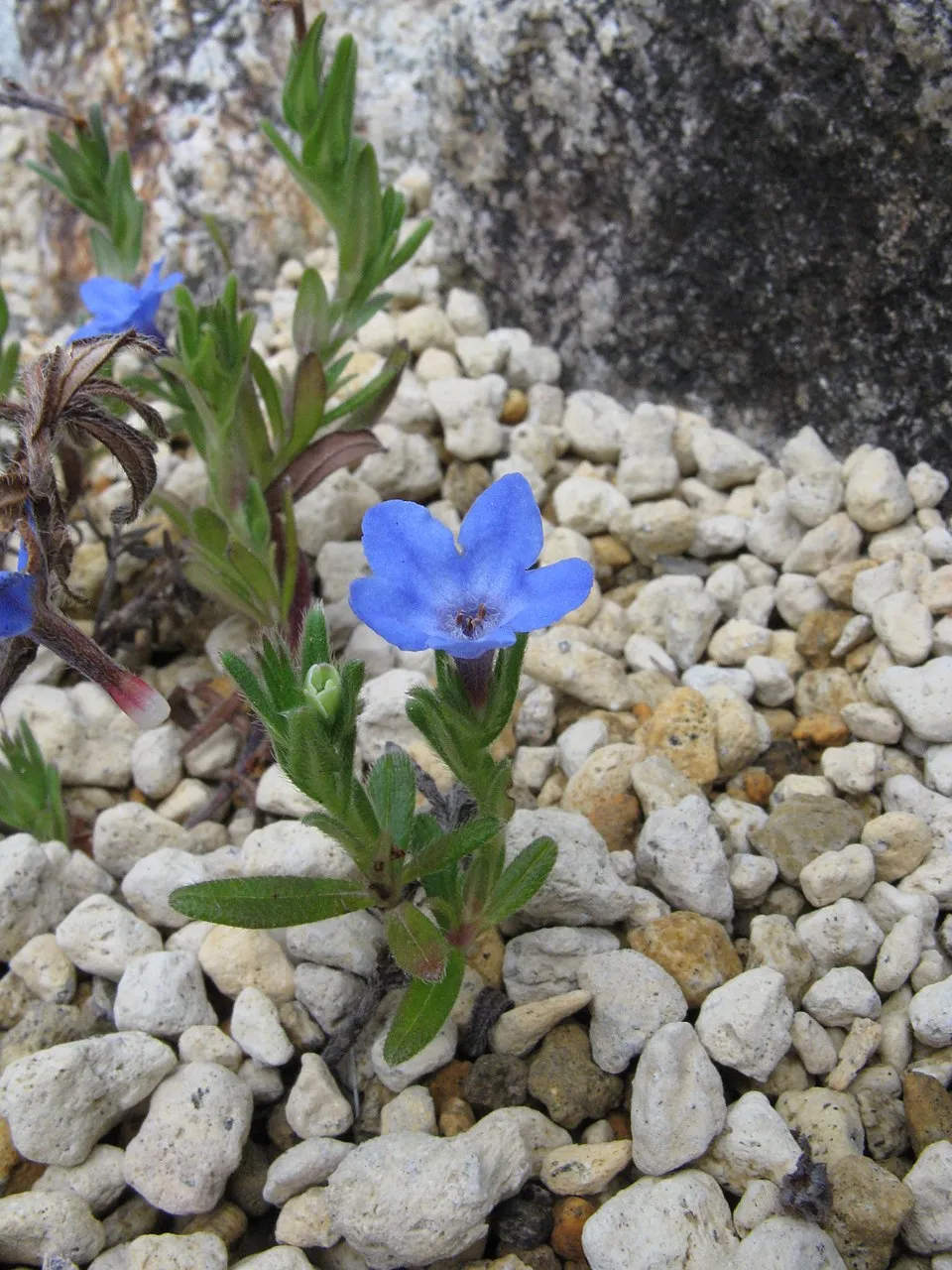
Lithodora diffusa, commonly known as Lithodora or Glandora, is a captivating evergreen perennial belonging to the Boraginaceae family. Native to the rocky, acidic soils of southwestern Europe, particularly the Iberian Peninsula, this species forms a dense, mat-forming groundcover, typically reaching heights of 6-10 inches and spreading up to 2-3 feet wide. Its morphology is characterized by small, lance-shaped, dark green leaves that are often slightly hairy, providing a rich, textural backdrop.
The plant is most celebrated for its profusion of intensely vibrant, gentian-blue, star-shaped flowers, which emerge from late spring through early summer, frequently reblooming sporadically into autumn. These striking blooms are borne in terminal clusters, creating a brilliant carpet of color. Lithodora diffusa thrives in full sun to partial shade, requiring consistently moist, well-drained, and distinctly acidic soil to flourish.
Its natural habitat suggests a preference for conditions mimicking Mediterranean scrublands. While primarily valued ornamentally for its aesthetic appeal in rock gardens, borders, and containers, its botanical characteristics align with many other Boraginaceae members known for various traditional uses, although specific medicinal applications for Lithodora diffusa itself are not widely documented.
Trusted Scientific References
1. Authoritative external sources for Lithodora diffusa
1.1 Wikipedia — Lithodora diffusa
1.2 Kew POWO (Plants of the World Online)
1.3 PubMed — peer-reviewed research
1.4 NCBI Taxonomy Browser
1.5 GBIF — Global Biodiversity
1.6Lithodora should be interpreted through verified botanical identity, practical care, and responsible safety language. This recovery note adds the missing context needed for a complete profile: match light to the plant's habit, use well-drained soil, water according to season, and avoid unsupported medicinal or edible claims. For publishing, the plant can be presented as a source-backed garden plant with clear care guidance, common problem diagnosis, and conservative safety wording.
1.1.Lithodora — Highlights
- ✓Intense Gentian — Blue Flowers — The most striking feature, providing vivid color.
- ✓Evergreen Foliage — Dark green, lance-shaped leaves maintain interest year-round.
- ✓Mat — Forming Groundcover — Spreading habit ideal for low-maintenance landscaping.
- ✓Acid — Loving Plant — Requires specific soil pH for optimal growth.
- ✓Native to Southwestern Europe — Indicates preference for Mediterranean-like climates.
- ✓Attracts Pollinators — Supports local ecosystems by drawing bees and butterflies.
- ✓Low Growing — Reaches modest heights, suitable for front borders or rockeries.
- ✓Drought Tolerant (once established) — Resilient in drier conditions after initial growth.
- ✓Deer Resistant (generally) — Not typically favored by deer.
- ✓Easy to Grow (with proper soil) — Relatively low maintenance once its specific needs are met.
1.2.Lithodora — At-a-Glance Summary
- ✓Vibrant blue-flowered evergreen perennial, native to SW Europe.
- ✓Primarily an ornamental plant, excellent for groundcover and rock gardens.
- ✓Thrives in acidic, well-drained soil and full sun to partial shade.
- ✓Attracts pollinators like bees and butterflies.
- ✓No significant documented medicinal uses or traditional herbal applications.
- ✓Contains common plant compounds like anthocyanins and flavonoids.
2.Lithodora — Scientific Identity
3.Lithodora — Fact Sheet
4.Lithodora — Botanical Description
5.Lithodora — Origin & Spread
6.Lithodora — Heritage Uses
7.Lithodora — Phytochemistry
- ✓Anthocyanins — Responsible for the plant's vivid blue coloration; potent antioxidants.
- ✓Flavonoids — General plant metabolites with documented antioxidant and anti-inflammatory properties in many species.
- ✓Tannins — Astringent compounds, commonly found in plants, with potential antimicrobial effects.
- ✓Carotenoids — Pigments involved in photosynthesis; also act as antioxidants.
- ✓Chlorophyll — The primary photosynthetic pigment, essential for plant life.
- ✓Terpenoids — A diverse group of organic compounds contributing to plant aroma and defense mechanisms.
- ✓Alkaloids (potential) — Some Boraginaceae members contain pyrrolizidine alkaloids, though specific presence and quantity in Lithodora diffusa are not well-documented.
- ✓Lignans — Phenolic compounds with antioxidant and potential phytoestrogenic activities.
8.Lithodora — Scientific Evidence
- ✓Ornamental Value — Primarily cultivated for its intense blue flowers, enhancing garden aesthetics and providing vibrant groundcover.
- ✓Pollinator Attractor — Its abundant blue blooms attract bees and butterflies, supporting local ecosystems and biodiversity.
- ✓Erosion Control — Its mat-forming growth habit helps stabilize soil on slopes and prevents erosion in garden settings.
- ✓Low Maintenance — Once established, it requires minimal care, making it suitable for gardeners seeking easy-to-manage plants.
- ✓Drought Tolerance (moderate) — Exhibits fair drought tolerance once established, reducing water consumption in certain climates.
- ✓Evergreen Foliage — Provides year-round visual interest with its dark green leaves, even in milder winter climates.
- ✓Rock Garden Specimen — Thrives in rocky, well-drained environments, making it an ideal choice for specialized garden designs.
- ✓Acidic Soil Indicator — Its preference for acidic soil can help gardeners identify suitable planting locations for other acid-loving plants.
8.1.Lithodora — Indications & Uses
9.Lithodora — Safety & Side Effects
9.1.Lithodora — Reported Side Effects
- ✓No Documented Medicinal Side Effects — As it is primarily an ornamental plant, no specific medicinal side effects are reported.
- ✓Skin Irritation (possible) — Contact with some Boraginaceae family members can cause mild skin irritation in sensitive individuals.
- ✓Allergic Reactions (rare) — As with any plant, allergic reactions to pollen or plant parts are theoretically possible but not documented.
- ✓Toxicity (unlikely) — No known reports of toxicity from ingestion for humans or pets, but not recommended for consumption.
- ✓Pyrrolizidine Alkaloids (potential concern) — Some Boraginaceae contain PAs, which are hepatotoxic; specific data for Lithodora diffusa is lacking, so ingestion is cautioned against.
- ✓Gastrointestinal Upset (hypothetical) — Ingestion of any non-food plant material could potentially cause mild digestive upset.
9.2.Lithodora — Safety Profile
- ✓Not for Internal Consumption — Lithodora diffusa is strictly an ornamental plant; internal use is not advised due to lack of safety data.
- ✓Keep Out of Reach of Children and Pets — To prevent accidental ingestion, which could lead to unknown effects.
- ✓Handle with Gloves if Sensitive — Individuals with sensitive skin may opt for gloves when handling the plant, though irritation is rare.
- ✓No Known Drug Interactions — Due to its lack of medicinal use, no drug interactions have been studied or reported.
- ✓Pregnancy and Lactation — Avoid use during pregnancy and lactation due to insufficient safety information.
- ✓Consult a Healthcare Professional — Always consult a physician before using any plant for medicinal purposes, even if anecdotal.
- ✓Limited Research — The absence of extensive research means its safety for internal use is largely unknown.
10.Lithodora — Preparations & Uses
- ✓Ornamental Groundcover — Plant in rock gardens, borders, or cascading over walls for vibrant blue displays.
- ✓Container Planting — Ideal for pots and window boxes, especially where soil pH is a concern in garden beds.
- ✓Pollinator Garden Inclusion — Incorporate into gardens designed to attract bees and butterflies.
- ✓Erosion Control Planting — Utilize on slopes or embankments to help prevent soil erosion.
- ✓Companion Planting — Pair with other acid-loving plants like azaleas, rhododendrons, or heathers.
- ✓Aesthetic Landscaping — Use to add a striking color contrast in various garden designs.
- ✓Educational Plant — Can be used in botanical gardens to showcase acid-loving species.
11.Lithodora — Cultivation & Care
- ✓Soil Preparation — Requires well-drained, acidic soil (pH 4.5-6.0); amend with peat moss or pine bark.
- ✓Light Exposure — Prefers full sun to partial shade; provide afternoon shade in hotter climates.
- ✓Watering — Keep soil consistently moist, especially during establishment; avoid waterlogging.
- ✓Fertilization — Generally not required unless nutrient deficiency is observed; use acid-loving plant fertilizer sparingly.
- ✓Pruning — Prune lightly after flowering to maintain shape and encourage bushier growth; remove dead or leggy stems in early spring.
- ✓Propagation — Best propagated by semi-hardwood cuttings in late summer; division in early spring is also possible.
- ✓Hardiness — Hardy in USDA Zones 6-8; mulch heavily in winter in colder regions for root protection.
- ✓Pests and Diseases — Generally resistant; watch for aphids, spider mites, and root rot in poorly drained conditions.
Reviewed by the Flora Medical Global Botanical Review Panel
Multi-disciplinary editorial group · Botany · Ethnobotany · Herbal-medicine literature
Who reviewed this: This page was checked by the Flora Medical Global Botanical Review Panel — an in-house editorial group of botany graduates, ethnobotany researchers, and horticulture practitioners who collectively maintain our 7,000+ plant encyclopedia. Meet the team.
Our 4-step verification process
1. Taxonomic verification
Scientific names and synonyms cross-checked against Kew POWO, World Flora Online, and The Plant List.
2. Phytochemical & medicinal cross-reference
Active compounds, traditional uses, and reported activities are cross-referenced with PubMed, USDA Dr. Duke's database, and peer-reviewed ethnobotanical literature.
3. Conservation & distribution check
Distribution, ecology, and conservation status confirmed against GBIF occurrence records and the IUCN Red List.
4. Editorial & safety review
Every entry passes an editorial pass for clarity, originality, and safety notices (toxicity, contraindications, dosage caveats) before publication.
Last reviewed:
Important medical disclaimer: This content is for educational and research purposes only. It is not medical advice and is not a substitute for consultation with a licensed healthcare provider. Do not use any herb to self-treat a medical condition without professional guidance.
Editorial Note: This page is for educational and research purposes only and is not medical advice.
Written by: Flora Medical Global Editorial Team
Reviewed by: Flora Medical Global Botanical Review Panel
Last Updated: June 15, 2026





Lithodora — Comments & Community Reviews
Rate this plant