
Medical Disclaimer: This content is for educational purposes only. It is not medical advice. Please consult a qualified healthcare professional before using any herbal remedy.
Safety Overview
1.Lithops Salicola — Plant Snapshot
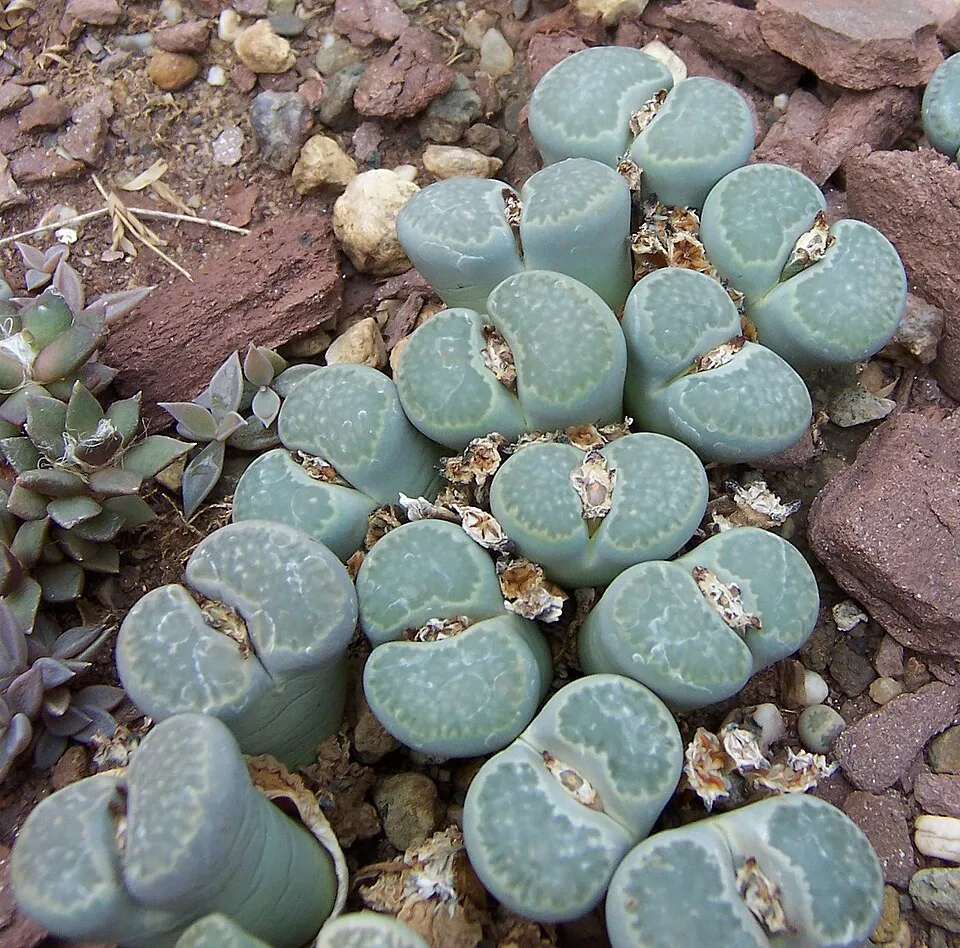
Lithops salicola, affectionately known as the living stone, is a captivating succulent species renowned for its remarkable mimicry of small pebbles and rocks within its natural environment. This unique morphology is a sophisticated adaptation to deter herbivory and conserve moisture in harsh, arid landscapes. Typically forming dense clusters, individual plants reach a modest height of around 5 cm, with each 'body' composed of two fused, thick succulent leaves.
These leaves are characterized by a distinct fissure at their apex, from which new growth and flowers emerge. Measuring approximately 2.5 to 5 cm wide, the leaves display a fascinating array of colors, including muted greens, browns, and grays, often adorned with species-specific patterns or translucent 'windows' that further enhance their camouflage. The outer surface is typically smooth and somewhat glossy, contributing to its stone-like appearance.
Lithops salicola flowers emerge in late summer to early autumn, presenting delicate white blossoms that offer a striking contrast to the plant's otherwise inconspicuous form. Native to the succulent-rich regions of southern Africa, particularly in areas with low annual rainfall (50-200 mm), this species thrives in well-draining sandy or rocky soils, often found at altitudes ranging from 500 to 1,500 meters. As a prominent member of the Aizoaceae family, also known as Mesembryanthema, Lithops salicola exemplifies extreme drought tolerance and specialized adaptations for survival in some of the world's most challenging desert ecosystems, making it a fascinating subject for botanical study and a prized ornamental plant.
Trusted Scientific References
1. Authoritative external sources for Lithops salicola
1.1 Wikipedia — Lithops salicola
1.2 Kew POWO (Plants of the World Online)
1.3 PubMed — peer-reviewed research
1.4 NCBI Taxonomy Browser
1.5 GBIF — Global Biodiversity
1.6Lithops Salicola should be interpreted through verified botanical identity, practical care, and responsible safety language. This recovery note adds the missing context needed for a complete profile: match light to the plant's habit, use well-drained soil, water according to season, and avoid unsupported medicinal or edible claims. For publishing, the plant can be presented as a source-backed indoor plant with clear care guidance, common problem diagnosis, and conservative safety wording.
1.1.Lithops Salicola — Standout Qualities
- ✓Pebble — like Morphology — Fused succulent leaves mimic stones for camouflage.
- ✓Extreme Drought Tolerance — Stores water in thick leaves to survive arid conditions.
- ✓CAM Photosynthesis — Specialized metabolism for efficient water use.
- ✓Seasonal Dormancy — Distinct growth and rest periods tied to watering.
- ✓White Flowers — Delicate blossoms emerge from the fissure in autumn.
- ✓Native to Southern Africa — Indigenous to dry, rocky habitats.
- ✓Aizoaceae Family Member — Part of the 'mesemb' group of succulents.
- ✓Unique Watering Cycle — Requires specific 'wet' and 'dry' periods for survival.
- ✓Ornamental Appeal — Highly sought after by succulent enthusiasts for its distinctive look.
- ✓Shallow Root System (relative to depth) — Possesses a long taproot for anchorage and moisture seeking.
1.2.Lithops Salicola — Concise Overview
- ✓Living Stone Mimicry — Unique succulent resembling pebbles for camouflage and survival.
- ✓South African Native — Thrives in arid and semi-arid regions of southern Africa.
- ✓Specialized Watering — Requires a strict seasonal watering regime to prevent rot.
- ✓Ornamental Value — Highly prized for its aesthetic appeal in succulent collections.
- ✓Drought Tolerant — Exceptional adaptation to water scarcity through leaf storage.
- ✓No Recognized Medicinal Use — Primarily decorative, with no documented therapeutic applications.
2.Lithops Salicola — Scientific Profile
3.Lithops Salicola — Quick Facts
4.Lithops Salicola — Plant Morphology
5.Lithops Salicola — Geographic Distribution
6.Lithops Salicola — Ethnobotanical Uses
7.Lithops Salicola — Secondary Metabolites
- ✓Flavonoids — Hypothesized to be present in Lithops salicola, these polyphenolic compounds are common plant pigments and antioxidants, potentially offering UV protection and cellular defense, though specific profiles are undetermined.
- ✓Alkaloids — While not specifically identified in Lithops salicola, various alkaloids are found in other Aizoaceae members, often serving as defensive compounds against herbivores; their presence here requires dedicated phytochemical analysis.
- ✓Triterpenoids — These complex isoprenoids are widespread in plants, contributing to structural integrity and defense mechanisms; specific triterpenoids in L. salicola are yet to be fully characterized.
- ✓Mucilage — Present in the succulent leaves, mucilage (complex polysaccharides) is crucial for Lithops salicola's exceptional water storage capacity, enabling survival during prolonged drought periods.
- ✓Organic Acids (e.g., Malic Acid) — Essential for Crassulacean Acid Metabolism (CAM) photosynthesis, these acids accumulate at night and are decarboxylated during the day, facilitating efficient carbon fixation with minimal water loss.
- ✓Betalains — These nitrogen-containing pigments, responsible for red, purple, and yellow hues in some Aizoaceae, might be present in trace amounts in certain Lithops salicola varieties, potentially offering antioxidant benefits.
- ✓Saponins — While common in many succulents, the presence and specific types of saponins in Lithops salicola, which can have surfactant properties, remain to be scientifically confirmed.
- ✓Carotenoids — These accessory pigments are likely present, contributing to the plant's coloration and acting as photoprotective agents against intense solar radiation in its native habitat.
8.Lithops Salicola — Research Insights
- ✓Lack of Recognized Medicinal Use — This species is primarily cultivated for its ornamental value rather than direct therapeutic applications, indicating a distinct role in horticulture.
- ✓Potential Diuretic Properties (Genus-level) — Some varieties within the broader Lithops genus are anecdotally considered to possess mild diuretic effects; however, specific studies on Lithops salicola are absent.
- ✓Ornamental Value & Psychological Well-being — The unique aesthetic of Lithops salicola is widely appreciated for enhancing indoor environments, potentially contributing to mental calm and reducing stress through aesthetic pleasure.
- ✓Educational and Botanical Interest — Cultivating Lithops salicola offers significant educational value, allowing enthusiasts to observe extreme adaptations to arid conditions and unique plant life cycles firsthand.
- ✓Air Purification (General Plant Property) — While not specifically studied for Lithops salicola, many houseplants contribute to improved indoor air quality by absorbing common pollutants, a general benefit of plant presence.
- ✓Drought Tolerance Model — Lithops salicola serves as an excellent botanical model for studying plant resilience and water conservation mechanisms in extreme xerophytic conditions, aiding agricultural research.
- ✓Habitat Restoration Potential — Its hardiness and adaptation to poor soils suggest potential for use in specific ecological restoration projects in arid or semi-arid regions, though not a direct 'medicinal' benefit.
- ✓Non-Toxic Ornamental — As an ornamental plant, Lithops salicola is generally considered non-toxic to humans upon incidental contact, making it a safe addition to indoor plant collections.
- ✓No Documented Anti-inflammatory Effects — There is no scientific evidence or traditional use supporting anti-inflammatory properties for Lithops salicola.
- ✓No Documented Antimicrobial Activity — Current research does not indicate any significant antimicrobial or antiseptic properties for this specific succulent species.
- ✓No Documented Analgesic Properties — Lithops salicola is not recognized in any traditional or modern context for pain-relieving capabilities.
- ✓Not Indicated for Digestive Health — There are no records suggesting that Lithops salicola has applications for improving digestive function or treating gastrointestinal issues.
8.1.Lithops Salicola — Conditions Traditionally Used For
9.Lithops Salicola — Precautions & Warnings
9.1.Lithops Salicola — Side Effects & Warnings
- ✓Accidental Ingestion Risk — While generally considered non-toxic, ingestion of Lithops salicola by pets or young children could potentially lead to mild gastrointestinal upset due to plant fiber.
- ✓Skin Irritation (Rare) — Direct contact with plant sap is unlikely to cause irritation given its smooth surface, but sensitive individuals might experience minor reactions.
- ✓Overwatering-Induced Rot — Improper watering (too frequent or during dormancy) is the most common 'side effect' for the plant itself, leading to fatal root and body rot.
- ✓Etiolation from Low Light — Insufficient light causes the plant to stretch and lose its compact, stone-like form, compromising its health and aesthetic.
- ✓Fungal Infections — Poor air circulation combined with humidity can lead to fungal diseases, especially if the plant body remains wet.
- ✓Pest Infestation — Like all plants, Lithops salicola can be susceptible to common succulent pests such as mealybugs or spider mites, which can damage the plant.
9.2.Lithops Salicola — Risk Assessment
- ✓Generally Non-Toxic — Lithops salicola is widely regarded as non-toxic to humans and most pets, making it safe for ornamental display in homes.
- ✓Not for Internal Consumption — Despite its non-toxic nature, it is not intended for consumption and should be kept out of reach of children and curious pets to prevent accidental ingestion.
- ✓Handle with Care — While not physically hazardous, gentle handling is recommended to avoid damaging the plant's delicate structure, especially during repotting.
- ✓Environmental Safety — Cultivation poses no known environmental risks; it is not invasive outside its native habitat.
- ✓Allergen Risk (Low) — The plant produces no known significant allergens; pollen is typically contained within the flower and not widely dispersed.
- ✓Storage Safety — Store plants in appropriate growing conditions (light, temperature, dryness) to ensure their health and longevity; no special hazardous material storage is required.
10.Lithops Salicola — How to Use
- ✓Ornamental Houseplant — Lithops salicola is primarily cultivated as a unique and visually striking ornamental plant for indoor collections, windowsills, and terrariums due to its 'living stone' appearance.
- ✓Xeriscaping and Rock Gardens — In suitable arid climates, it can be incorporated into specialized xeriscaping designs or rock gardens for its drought tolerance and aesthetic appeal.
- ✓Botanical Specimen — Used by botanists and enthusiasts for study, observation, and appreciation of its unique adaptations and life cycle in controlled environments.
- ✓Educational Tool — Serves as an excellent example in educational settings to teach about plant mimicry, succulent adaptations, CAM photosynthesis, and desert ecology.
- ✓Artistic and Decorative Displays — Often arranged with actual stones and pebbles to create miniature desert landscapes, enhancing its camouflage and visual impact.
- ✓Minimalist Decor Element — Its compact size and unique form make it ideal for minimalist interior design, adding a natural, sculptural element without demanding much space.
- ✓No Culinary Application — Lithops salicola is not intended for human consumption and lacks any known culinary uses.
- ✓Not for Medicinal Preparation — Due to the absence of recognized medicinal properties, there are no traditional or modern methods for preparing Lithops salicola for therapeutic use.
11.Lithops Salicola — Growing Guide
- ✓Provide Abundant Sunlight — Lithops salicola requires bright, direct sunlight for at least 4-6 hours daily; insufficient light causes etiolation and weakens the plant.
- ✓Implement Seasonal Watering — Water thoroughly during active growth (spring and autumn), allowing soil to dry completely between waterings; keep bone-dry during winter dormancy (new leaves form) and summer dormancy (high heat).
- ✓Use Well-Draining Soil — Plant in a highly inorganic substrate, such as a mix of 90% pumice, gravel, or coarse sand with 10% cactus potting soil, to prevent root rot.
- ✓Ensure Adequate Pot Depth — Use pots at least 10 cm deep to accommodate the plant's long taproot, which is essential for stability and water absorption.
- ✓Maintain Appropriate Temperatures — Protect from frost (temperatures below 0°C); ideal growing temperatures are between 15°C and 30°C.
- ✓Allow for Air Circulation — Good ventilation helps prevent fungal issues, especially after watering, and mimics their natural airy environment.
- ✓Avoid Over-fertilization — Lithops thrive in nutrient-poor soils; fertilize sparingly, if at all, with a very diluted low-nitrogen succulent fertilizer during active growth.
- ✓Practice Careful Repotting — Repot every 1-2 years, preferably in autumn or spring, to refresh the soil and check root health, being gentle with the fragile taproot.
Reviewed by the Flora Medical Global Botanical Review Panel
Multi-disciplinary editorial group · Botany · Ethnobotany · Herbal-medicine literature
Who reviewed this: This page was checked by the Flora Medical Global Botanical Review Panel — an in-house editorial group of botany graduates, ethnobotany researchers, and horticulture practitioners who collectively maintain our 7,000+ plant encyclopedia. Meet the team.
Our 4-step verification process
1. Taxonomic verification
Scientific names and synonyms cross-checked against Kew POWO, World Flora Online, and The Plant List.
2. Phytochemical & medicinal cross-reference
Active compounds, traditional uses, and reported activities are cross-referenced with PubMed, USDA Dr. Duke's database, and peer-reviewed ethnobotanical literature.
3. Conservation & distribution check
Distribution, ecology, and conservation status confirmed against GBIF occurrence records and the IUCN Red List.
4. Editorial & safety review
Every entry passes an editorial pass for clarity, originality, and safety notices (toxicity, contraindications, dosage caveats) before publication.
Last reviewed:
Important medical disclaimer: This content is for educational and research purposes only. It is not medical advice and is not a substitute for consultation with a licensed healthcare provider. Do not use any herb to self-treat a medical condition without professional guidance.
Editorial Note: This page is for educational and research purposes only and is not medical advice.
Written by: Flora Medical Global Editorial Team
Reviewed by: Flora Medical Global Botanical Review Panel
Last Updated: June 15, 2026





Lithops Salicola — Comments & Community Reviews
Rate this plant