

Medical Disclaimer: This content is for educational purposes only. It is not medical advice. Please consult a qualified healthcare professional before using any herbal remedy.
Safety Overview
1.Lonicera Periclymenum — Introduction & Highlights
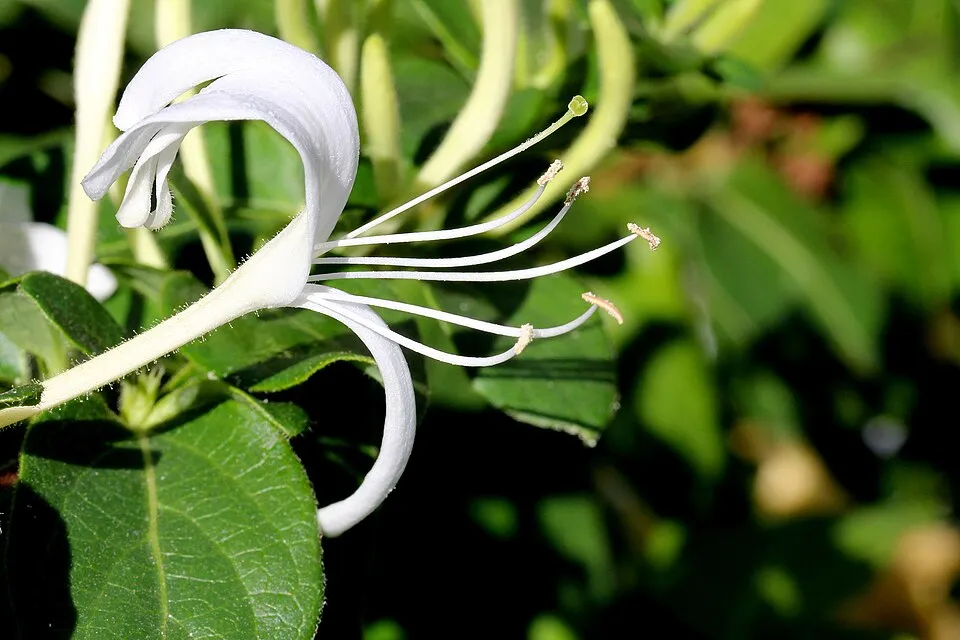
Lonicera periclymenum, commonly known as Woodbine or Honeysuckle, is a robust, deciduous, woody climbing vine belonging to the Caprifoliaceae family. Native to Europe and North Africa, it thrives in woodlands, hedgerows, and scrubland, often twining clockwise around other plants or structures. This species is characterized by its opposite, ovate-elliptic leaves, which are typically glaucous beneath.
The plant's most striking feature is its highly fragrant, bilaterally symmetrical, tubular flowers, arranged in terminal whorls or capitula. These blossoms, which emerge from early summer through autumn, typically display a creamy white to yellowish hue, often tinged with pink or red, especially on the outside of the corolla lobes. The strong, sweet scent is particularly intense in the evening, attracting nocturnal pollinators like moths.
Following successful pollination, the flowers give way to clusters of bright red, translucent berries in autumn, providing a crucial food source for various bird species. While visually appealing, these berries are mildly toxic to humans if ingested in significant quantities. Lonicera periclymenum is widely cultivated in gardens for its ornamental value, delightful aroma, and ability to attract wildlife, demonstrating considerable adaptability to different soil types and growing conditions, though it prefers well-drained, fertile soil and partial shade for its roots.
Trusted Scientific References
1. Authoritative external sources for Lonicera periclymenum
1.1 Wikipedia — Lonicera periclymenum
1.2 Kew POWO (Plants of the World Online)
1.3 PubMed — peer-reviewed research
1.4 NCBI Taxonomy Browser
1.5 GBIF — Global Biodiversity
1.6Lonicera Periclymenum should be interpreted through verified botanical identity, practical care, and responsible safety language. This recovery note adds the missing context needed for a complete profile: match light to the plant's habit, use well-drained soil, water according to season, and avoid unsupported medicinal or edible claims. For publishing, the plant can be presented as a source-backed garden plant with clear care guidance, common problem diagnosis, and conservative safety wording.
1.1.Lonicera Periclymenum — Standout Qualities
- ✓Highly fragrant, tubular — Highly fragrant, tubular flowers.
- ✓Deciduous climbing vine — Deciduous climbing vine morphology.
- ✓Native to European — Native to European and North African regions.
- ✓Produces bright red, — Produces bright red, mildly toxic berries.
- ✓Attracts pollinators, especially — Attracts pollinators, especially moths.
- ✓Traditionally used for — Traditionally used for respiratory and skin ailments.
- ✓Contains significant levels — Contains significant levels of antioxidants.
- ✓Adaptable to various — Adaptable to various garden settings.
- ✓Known for its — Known for its ornamental value and sweet aroma.
- ✓Valued in traditional — Valued in traditional herbal medicine for its diverse properties.
1.2.Lonicera Periclymenum — In Brief
- ✓Fragrant, deciduous climbing vine native to Europe.
- ✓Traditional uses include anti-inflammatory, expectorant, and antiseptic actions.
- ✓Rich in flavonoids, iridoid glycosides, and tannins.
- ✓Berries are mildly toxic to humans if ingested.
- ✓Requires well-drained soil, partial sun, and support for climbing.
- ✓Used in teas, tinctures, poultices, and topical washes.
2.Lonicera Periclymenum — Scientific Profile
3.Lonicera Periclymenum — Botanical Stats
4.Lonicera Periclymenum — Morphological Account
5.Lonicera Periclymenum — Geographic Distribution
6.Lonicera Periclymenum — Ethnobotanical Uses
7.Lonicera Periclymenum — Active Compounds
- ✓Flavonoids — Includes quercetin, kaempferol, and luteolin, known for their potent antioxidant, anti-inflammatory, and antiallergic activities.
- ✓Iridoid Glycosides — Such as loganin, secologanin, and sweroside, which contribute to its anti-inflammatory, antimicrobial, and bitter tonic properties.
- ✓Saponins — These compounds have expectorant, anti-inflammatory, and mild diuretic effects, and can also enhance nutrient absorption.
- ✓Tannins — Provide astringent properties, useful for reducing inflammation and promoting wound healing, particularly in topical applications.
- ✓Volatile Oils — Responsible for the plant's characteristic fragrance and may possess antimicrobial and calming effects.
- ✓Phenolic Acids — Including caffeic acid and chlorogenic acid, which are strong antioxidants and contribute to the plant's anti-inflammatory actions.
- ✓Lignans — Exhibit antioxidant and potential anticancer properties.
- ✓Coumarins — May have anticoagulant and anti-inflammatory activities.
- ✓Fatty Acids — Present in the seeds, contributing to nutritional value.
- ✓Minerals — Contains various essential minerals important for overall health.
- ✓Vitamins — Provides trace amounts of vitamins, supporting metabolic functions.
8.Lonicera Periclymenum — What Research Suggests
- ✓Anti-inflammatory — Contains flavonoids and iridoid glycosides that help reduce inflammation throughout the body, making it useful for conditions like arthritis and skin irritations.
- ✓Expectorant — Aids in clearing respiratory passages by promoting the expulsion of mucus, beneficial for coughs, colds, and bronchitis.
- ✓Antiseptic — Possesses properties that inhibit the growth of microorganisms, making it suitable for topical application on minor wounds and skin infections.
- ✓Antioxidant — Rich in phenolic acids and flavonoids, it combats oxidative stress by neutralizing free radicals, protecting cellular health.
- ✓Diuretic — Traditionally used to increase urine production, helping to flush toxins from the body and support kidney function.
- ✓Mild Laxative — May gently promote bowel movements, aiding in digestive health and relieving occasional constipation.
- ✓Skin Soother — Applied topically, it can alleviate itching, redness, and irritation associated with conditions like eczema and insect bites.
- ✓Antipyretic — Folk medicine suggests its use to help reduce fever.
- ✓Antimicrobial — Certain compounds exhibit activity against various bacteria and fungi, contributing to its traditional use in fighting infections.
- ✓Circulatory Support — Some constituents may support healthy blood circulation, though more research is needed.
- ✓Analgesic — May offer mild pain-relieving effects, particularly when used topically for inflammatory pain.
- ✓Immunomodulatory — Preliminary research indicates potential to modulate immune responses, supporting overall immune health.
8.1.Lonicera Periclymenum — Health Applications
9.Lonicera Periclymenum — Precautions & Warnings
9.1.Lonicera Periclymenum — Caution Notes
- ✓Nausea and Vomiting — May occur if berries or large quantities of plant material are ingested.
- ✓Diarrhea — Possible with excessive internal consumption due to mild laxative effects.
- ✓Skin Irritation — Allergic reactions or contact dermatitis can occur in sensitive individuals with topical use.
- ✓Stomach Upset — Mild gastrointestinal discomfort has been reported with internal use.
- ✓Drowsiness — Some traditional uses suggest a mild sedative effect, which could cause drowsiness.
- ✓Photosensitivity — Rarely, some plant compounds can increase sensitivity to sunlight.
- ✓Drug Interactions — Potential for interaction with medications due to diuretic or laxative properties.
9.2.Lonicera Periclymenum — Safety Profile
- ✓Berries are mildly toxic — Do not consume berries, especially in large quantities, as they can cause gastrointestinal distress.
- ✓Consult a healthcare professional — Always seek medical advice before using honeysuckle for medicinal purposes, especially if pregnant, breastfeeding, or on medication.
- ✓Patch test for topical use — Apply a small amount to skin first to check for allergic reactions.
- ✓Not for prolonged internal use — Avoid long-term internal consumption without professional guidance.
- ✓Keep out of reach of children — Ensure plant parts, especially berries, are inaccessible to young children.
- ✓Avoid during pregnancy and lactation — Insufficient safety data for these populations.
- ✓Do not exceed recommended dosages — Adhere strictly to expert-advised dosages to prevent adverse effects.
10.Lonicera Periclymenum — Application Forms
- ✓Herbal Tea/Infusion — Use dried leaves and flowers steeped in hot water for respiratory complaints, colds, and general well-being.
- ✓Tincture — A concentrated alcohol extract of flowers and leaves for internal use, typically dosed in drops.
- ✓Poultice — Crush fresh leaves or flowers and apply directly to skin irritations, minor wounds, or inflammatory skin conditions.
- ✓Topical Wash — Prepare an infusion and use as a cooling and antiseptic wash for skin ailments, eczema, or insect bites.
- ✓Syrup — Infuse flowers and leaves with honey or sugar to create a soothing syrup for coughs and sore throats.
- ✓Glycerite — A non-alcoholic extract using vegetable glycerin, suitable for children or those avoiding alcohol.
- ✓Infused Oil — Macerate flowers in a carrier oil (e.g., olive, almond) for topical application as a massage oil or skin balm.
- ✓Decoction — Boil roots or tougher plant parts for longer extraction of constituents, traditionally for more chronic conditions.
11.Lonicera Periclymenum — Growth Requirements
- ✓Plant in well-drained, organically rich soil to ensure optimal growth.
- ✓Provide partial sun to dappled shade; roots prefer cool, shaded conditions while vines can tolerate more sun.
- ✓Water regularly, especially during dry periods and for young plants, aiming for about 1 inch per week.
- ✓Offer sturdy support structures like trellises, pergolas, or wires for climbing varieties to thrive.
- ✓Prune annually in late summer or early spring to maintain shape, encourage blooming, and remove dead or damaged wood.
- ✓Fertilize in spring with a balanced, slow-release fertilizer or enrich soil with compost.
- ✓Mulch around the base to retain soil moisture and keep roots cool, especially in warmer climates.
- ✓Monitor for pests like aphids and diseases such as powdery mildew, treating promptly if issues arise.
Reviewed by the Flora Medical Global Botanical Review Panel
Multi-disciplinary editorial group · Botany · Ethnobotany · Herbal-medicine literature
Who reviewed this: This page was checked by the Flora Medical Global Botanical Review Panel — an in-house editorial group of botany graduates, ethnobotany researchers, and horticulture practitioners who collectively maintain our 7,000+ plant encyclopedia. Meet the team.
Our 4-step verification process
1. Taxonomic verification
Scientific names and synonyms cross-checked against Kew POWO, World Flora Online, and The Plant List.
2. Phytochemical & medicinal cross-reference
Active compounds, traditional uses, and reported activities are cross-referenced with PubMed, USDA Dr. Duke's database, and peer-reviewed ethnobotanical literature.
3. Conservation & distribution check
Distribution, ecology, and conservation status confirmed against GBIF occurrence records and the IUCN Red List.
4. Editorial & safety review
Every entry passes an editorial pass for clarity, originality, and safety notices (toxicity, contraindications, dosage caveats) before publication.
Last reviewed:
Important medical disclaimer: This content is for educational and research purposes only. It is not medical advice and is not a substitute for consultation with a licensed healthcare provider. Do not use any herb to self-treat a medical condition without professional guidance.
Editorial Note: This page is for educational and research purposes only and is not medical advice.
Written by: Flora Medical Global Editorial Team
Reviewed by: Flora Medical Global Botanical Review Panel
Last Updated: June 15, 2026





Lonicera Periclymenum — Comments & Community Reviews
Rate this plant