
Medical Disclaimer: This content is for educational purposes only. It is not medical advice. Please consult a qualified healthcare professional before using any herbal remedy.
Safety Overview
1.Lupin — Essential Profile
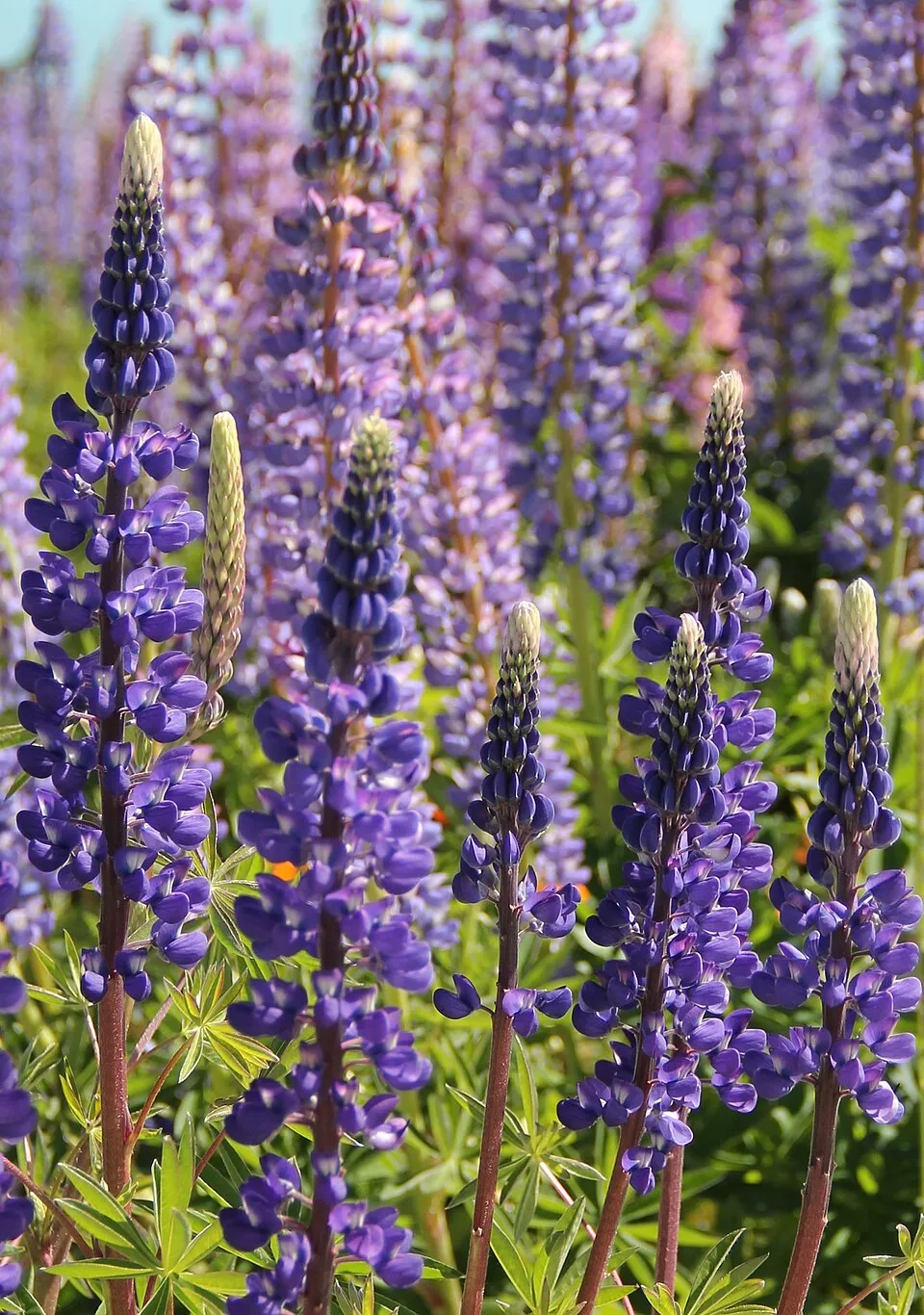
Lupinus polyphyllus, commonly known as the garden lupin or large-leaved lupine, is a robust perennial herbaceous plant belonging to the Fabaceae family. Native to the western regions of North America, particularly from Alaska south through British Columbia to California, this species is characterized by its impressive stature, often reaching heights of 0.9 to 1.5 meters (3 to 5 feet). Its distinct palmate leaves are composed of 9 to 17 leaflets radiating from a central point, presenting a unique, hand-like appearance. These leaflets are typically lanceolate, dark green on the upper surface, and often silvery-hairy beneath.
The most striking feature of L. polyphyllus is its dense, spire-like inflorescences, which can extend up to 60 cm (2 feet) in length. These racemes are densely packed with numerous pea-like flowers, exhibiting a remarkable palette of colors including vibrant blues, purples, pinks, yellows, and whites, frequently displaying bicoloration. The plant develops a deep taproot system, enabling it to access moisture from deeper soil layers and contributing to its drought tolerance once established.
After flowering, it produces hairy pods containing several seeds. While primarily valued as an ornamental garden plant for its dramatic floral displays and ability to attract pollinators, its vigorous growth can lead to naturalization in suitable environments. Taxonomically, it is part of a large genus, Lupinus, comprising hundreds of species, many of which share the characteristic presence of quinolizidine alkaloids, necessitating caution regarding internal consumption.
Trusted Scientific References
1. Authoritative external sources for Lupinus polyphyllus
1.1 Wikipedia — Lupinus polyphyllus
1.2 Kew POWO (Plants of the World Online)
1.3 PubMed — peer-reviewed research
1.4 NCBI Taxonomy Browser
1.5 GBIF — Global Biodiversity
1.6Lupin should be interpreted through verified botanical identity, practical care, and responsible safety language. This recovery note adds the missing context needed for a complete profile: match light to the plant's habit, use well-drained soil, water according to season, and avoid unsupported medicinal or edible claims. For publishing, the plant can be presented as a source-backed garden plant with clear care guidance, common problem diagnosis, and conservative safety wording.
1.1.Lupin — Highlights
- ✓Botanical Name — Lupinus polyphyllus
- ✓Common Names — Garden Lupin, Large-leaved Lupine
- ✓Family — Fabaceae (Pea family)
- ✓Native Range — Western North America
- ✓Flower Type — Dense, spire-like racemes of pea-like flowers
- ✓Flower Colors — Blue, purple, pink, yellow, white, often bicolored
- ✓Leaf Type — Palmate, with 9-17 leaflets
- ✓Growth Habit — Upright perennial, 0.9-1.5 meters tall
- ✓Soil Preference — Well-drained, slightly acidic to neutral
- ✓Toxicity — High, due to quinolizidine alkaloids
1.2.Lupin — In Brief
- ✓Highly ornamental perennial with vibrant, spire-like flowers.
- ✓Native to Western North America, thrives in cool climates.
- ✓Contains toxic quinolizidine alkaloids; NOT for internal use.
- ✓Excellent for pollinators and soil nitrogen fixation.
- ✓Deep taproot aids in drought tolerance and erosion control.
- ✓Requires full sun and well-drained, slightly acidic soil.
2.Lupin — Nomenclature & Classification
3.Lupin — Fact Sheet
4.Lupin — Botanical Description
5.Lupin — Ecological Habitat
6.Lupin — Heritage Uses
7.Lupin — Key Phytochemicals
- ✓Quinolizidine Alkaloids — Primarily lupinine, sparteine, lupanine, and anagyrine; these are responsible for the plant's toxicity, acting as neurotoxins and affecting cardiac function.
- ✓Flavonoids — Compounds like genistein and daidzein, which possess antioxidant and anti-inflammatory properties, but are present in quantities not suitable for medicinal extraction from this toxic species.
- ✓Proteins — Lupin seeds are typically rich in protein, though L. polyphyllus seeds are not consumed by humans due to high alkaloid content.
- ✓Lipids — Seeds contain various fatty acids, but again, not for human consumption from this species.
- ✓Saponins — Glycosides that can have foaming properties and may contribute to bitterness and toxicity.
- ✓Polysaccharides — Complex carbohydrates found in plant cell walls, providing structural support.
- ✓Phytosterols — Plant sterols such as beta-sitosterol, which are structurally similar to cholesterol.
8.Lupin — Scientific Evidence
- ✓Soil Nitrogen Fixation — As a legume, Lupinus polyphyllus forms symbiotic relationships with nitrogen-fixing bacteria in its root nodules, enriching soil fertility for other plants.
- ✓Ornamental Value — Its striking, colorful flower spikes provide significant aesthetic appeal in gardens and landscapes, enhancing biodiversity.
- ✓Pollinator Attraction — The abundant, nectar-rich flowers serve as a vital food source for bees, butterflies, and other beneficial insects, supporting ecosystem health.
- ✓Erosion Control — The extensive root system, particularly the deep taproot, helps to stabilize soil and prevent erosion, especially on slopes.
- ✓Green Manure — When cultivated and tilled into the soil before flowering, the plant contributes organic matter and nitrogen, improving soil structure and nutrient content.
- ✓Habitat Provision — Dense stands of lupine can offer shelter and food for various small wildlife, contributing to local biodiversity.
- ✓Phytoremediation Potential — Some lupine species show potential for extracting heavy metals from contaminated soils, though L. polyphyllus specifically needs more research.
- ✓Biofuel Research — The high oil content in seeds of certain lupine species (notably other Lupinus spp.) is being investigated for biofuel production, though L. polyphyllus is not a primary candidate.
- ✓Livestock Feed Potential — While toxic to non-ruminants, specific 'sweet' lupine varieties (other species) have been bred for livestock feed due to high protein content, a characteristic not applicable to L. polyphyllus.
8.1.Lupin — Therapeutic Indications
9.Lupin — Safety & Side Effects
9.1.Lupin — Warnings
- ✓Severe Toxicity — Ingestion of any part of Lupinus polyphyllus, especially seeds, can cause severe poisoning due to quinolizidine alkaloids.
- ✓Neurological Symptoms — Symptoms of poisoning include tremors, convulsions, respiratory distress, and paralysis.
- ✓Gastrointestinal Distress — Nausea, vomiting, abdominal pain, and diarrhea are common initial signs of ingestion.
- ✓Cardiac Effects — Alkaloids can affect heart rhythm and function, leading to serious cardiovascular issues.
- ✓Teratogenic Effects — Consumption by pregnant livestock can lead to birth defects in offspring, known as 'crooked calf disease' in some lupine species.
- ✓Allergic Reactions — Contact with the plant may cause skin irritation or allergic reactions in sensitive individuals.
- ✓Livestock Poisoning — Can be highly toxic to grazing animals if consumed in sufficient quantities, leading to illness or death.
9.2.Lupin — Risk Assessment
- ✓HIGH TOXICITY — Lupinus polyphyllus is highly toxic if ingested by humans or animals due to the presence of quinolizidine alkaloids.
- ✓NOT FOR INTERNAL USE — Absolutely no part of this plant should be consumed or used internally for medicinal purposes.
- ✓KEEP AWAY FROM CHILDREN AND PETS — Ensure children and pets cannot access or ingest any part of the plant.
- ✓CAUTION WITH LIVESTOCK — Exercise extreme caution if planting in areas accessible to grazing animals, as it can cause poisoning.
- ✓WEAR GLOVES — When handling, especially if you have sensitive skin, to avoid potential irritation.
- ✓EDUCATIONAL AWARENESS — Inform others, especially gardeners and parents, about the plant's toxic nature.
- ✓DISPOSE RESPONSIBLY — When removing plant material, ensure it is disposed of where it cannot be accidentally ingested.
10.Lupin — Usage Guide
- ✓Ornamental Gardening — Plant in borders, cottage gardens, or meadowscapes for dramatic vertical interest and vibrant color.
- ✓Pollinator Gardens — Integrate into gardens designed to attract bees, butterflies, and other beneficial insects.
- ✓Cut Flowers — Harvest flower spikes when about 50% of florets are open for bouquets, ensuring immediate placement in water for vase life.
- ✓Soil Improvement — Cultivate as a green manure crop to fix nitrogen and add organic matter to agricultural soils, then till under before seed set.
- ✓Erosion Control Planting — Utilize in areas prone to soil erosion due to its deep and extensive root system.
- ✓Wildlife Habitat — Plant to provide shelter and food for local wildlife, particularly in naturalized areas.
- ✓Landscape Design — Use in mass plantings or as focal points in naturalistic landscape designs.
- ✓Seed Collection — Allow pods to mature and turn yellow, then collect seeds for future planting or propagation.
11.Lupin — Cultivation & Care
- ✓Soil Preparation — Prefers moist, well-drained, slightly acidic to neutral soil; amend heavy soils with organic matter and grit for optimal drainage.
- ✓Planting Time — Sow seeds in early spring after the last frost, or in early autumn to allow establishment before winter.
- ✓Seed Scarification — Soak seeds in warm water for 24-48 hours and lightly scarify (roughen) with sandpaper to improve germination rates.
- ✓Sun Exposure — Requires full sun (at least 6 hours daily) for best flowering, though it tolerates partial shade.
- ✓Spacing — Space plants 18-24 inches apart to ensure adequate airflow and accommodate mature size.
- ✓Watering — Maintain consistent soil moisture, especially during establishment and dry periods; avoid waterlogging.
- ✓Fertilization — Avoid fertilizing, as lupines fix their own nitrogen; excessive nitrogen can reduce flowering.
- ✓Deadheading — Cut off spent flower spikes to encourage reblooming and prevent unwanted self-seeding.
Reviewed by the Flora Medical Global Botanical Review Panel
Multi-disciplinary editorial group · Botany · Ethnobotany · Herbal-medicine literature
Who reviewed this: This page was checked by the Flora Medical Global Botanical Review Panel — an in-house editorial group of botany graduates, ethnobotany researchers, and horticulture practitioners who collectively maintain our 7,000+ plant encyclopedia. Meet the team.
Our 4-step verification process
1. Taxonomic verification
Scientific names and synonyms cross-checked against Kew POWO, World Flora Online, and The Plant List.
2. Phytochemical & medicinal cross-reference
Active compounds, traditional uses, and reported activities are cross-referenced with PubMed, USDA Dr. Duke's database, and peer-reviewed ethnobotanical literature.
3. Conservation & distribution check
Distribution, ecology, and conservation status confirmed against GBIF occurrence records and the IUCN Red List.
4. Editorial & safety review
Every entry passes an editorial pass for clarity, originality, and safety notices (toxicity, contraindications, dosage caveats) before publication.
Last reviewed:
Important medical disclaimer: This content is for educational and research purposes only. It is not medical advice and is not a substitute for consultation with a licensed healthcare provider. Do not use any herb to self-treat a medical condition without professional guidance.
Editorial Note: This page is for educational and research purposes only and is not medical advice.
Written by: Flora Medical Global Editorial Team
Reviewed by: Flora Medical Global Botanical Review Panel
Last Updated: June 15, 2026





Lupin — Comments & Community Reviews
Rate this plant