
Medical Disclaimer: This content is for educational purposes only. It is not medical advice. Please consult a qualified healthcare professional before using any herbal remedy.
Safety Overview
1.Lupinus Perennis — At a Glance
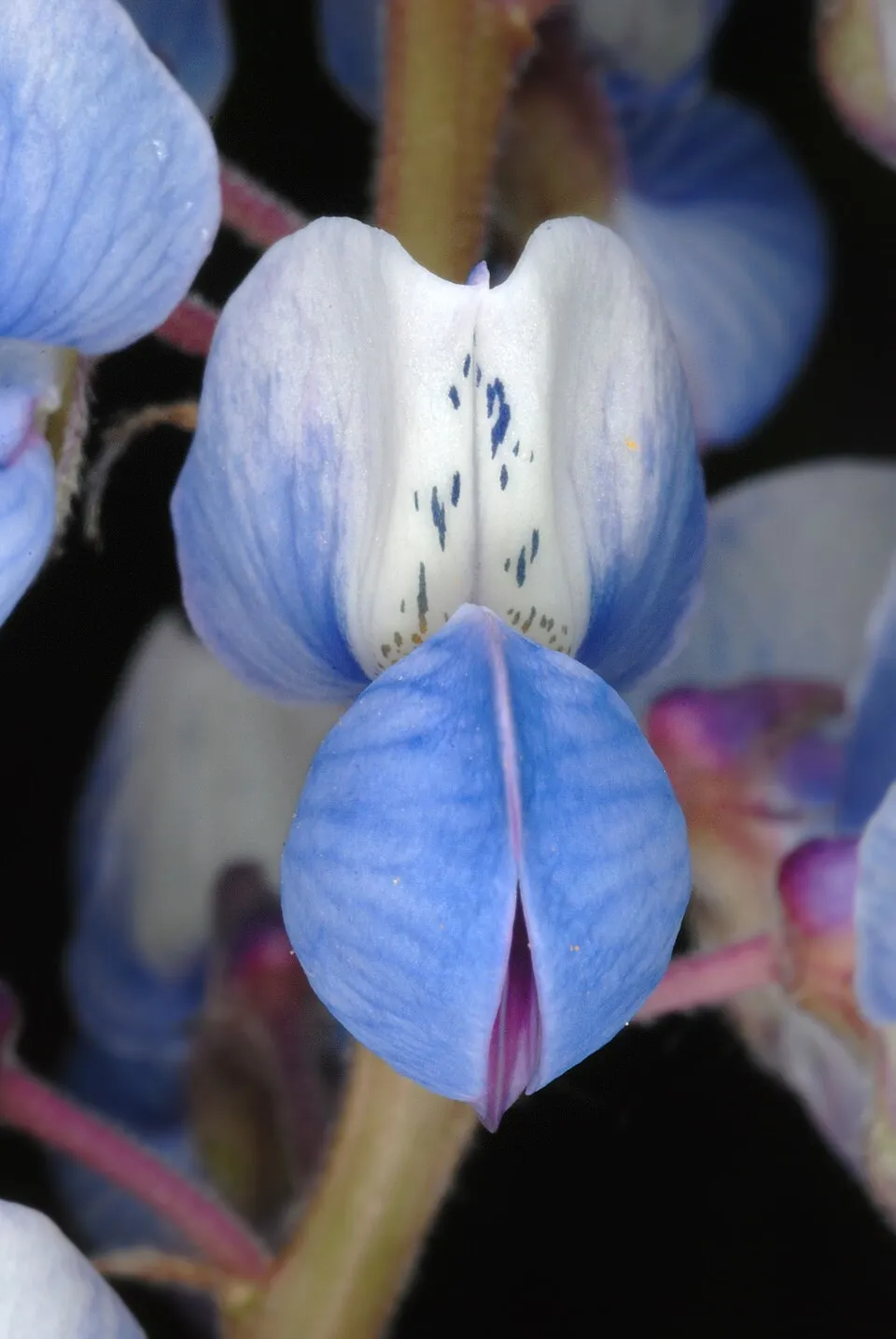
Lupinus perennis, commonly known as perennial lupine, blue lupine, wild lupine, or Indian bean, is an iconic herbaceous perennial belonging to the Fabaceae family. Native to the eastern and central regions of North America, this species flourishes in well-drained, sandy, and acidic soils characteristic of open woodlands, prairies, and roadside verges. It typically exhibits an upright growth habit, reaching heights between 0.5 to 1.5 meters (1.5 to 5 feet). The plant's most distinguishing feature is its striking inflorescence—dense, terminal spikes adorned with vibrant blue to violet-blue, pea-like flowers that bloom from late spring through early summer.
Each flower comprises a standard, two wings, and a keel, arranged spirally along the raceme. Its foliage is palmately compound, typically featuring 7 to 11 oblanceolate to elliptic leaflets radiating from a central point, often with a sparse to dense covering of hairs. A robust taproot system anchors the plant, enabling it to access deeper water reserves and contributing to its perennial nature and drought tolerance. Following successful pollination, the flowers give way to flattened, hairy pods, each containing several seeds.
Lupinus perennis is ecologically significant, serving as a vital host plant for the Karner blue butterfly larvae and contributing to soil enrichment through its nitrogen-fixing capabilities, a common trait among legumes. While primarily valued for its ornamental appeal in native plant gardens and ecological restoration projects, it's crucial to acknowledge the presence of quinolizidine alkaloids throughout the plant, necessitating caution regarding ingestion.
Trusted Scientific References
1. Authoritative external sources for Lupinus Perennis
1.1 Wikipedia — Lupinus Perennis
1.2 Kew POWO (Plants of the World Online)
1.3 PubMed — peer-reviewed research
1.4 NCBI Taxonomy Browser
1.5 GBIF — Global Biodiversity
1.6Lupinus Perennis should be interpreted through verified botanical identity, practical care, and responsible safety language. This recovery note adds the missing context needed for a complete profile: match light to the plant's habit, use well-drained soil, water according to season, and avoid unsupported medicinal or edible claims. For publishing, the plant can be presented as a source-backed garden plant with clear care guidance, common problem diagnosis, and conservative safety wording.
1.1.Lupinus Perennis — Notable Characteristics
- ✓Native to Eastern — Native to Eastern and Central North America.
- ✓Showy spikes of blue to violet — blue flowers.
- ✓Palmately compound leaves with 7 — 11 leaflets.
- ✓Deep taproot system — Deep taproot system for drought tolerance.
- ✓Nitrogen — fixing legume, enriching soil.
- ✓Host plant for — Host plant for Karner blue butterfly larvae.
- ✓Contains toxic quinolizidine — Contains toxic quinolizidine alkaloids.
- ✓Prefers sandy, acidic, well — drained soils.
- ✓Blooms late spring — Blooms late spring to early summer.
- ✓Attracts various pollinators. — Attracts various pollinators.
1.2.Lupinus Perennis — At-a-Glance Summary
- ✓Iconic North American native perennial with vibrant blue-violet flowers.
- ✓Important for nitrogen fixation and supporting specific wildlife, like the Karner blue butterfly.
- ✓Contains toxic quinolizidine alkaloids; ingestion is dangerous.
- ✓Thrives in sandy, acidic soils and full sun; drought-tolerant once established.
- ✓Valued for ornamental beauty and ecological restoration efforts.
- ✓Seeds require scarification for successful germination.
2.Lupinus Perennis — Nomenclature & Classification
3.Lupinus Perennis — Fact Sheet
4.Lupinus Perennis — Botanical Features
5.Lupinus Perennis — Native Range & Habitat
6.Lupinus Perennis — Traditional Uses
7.Lupinus Perennis — Key Phytochemicals
- ✓Quinolizidine Alkaloids — Sparteine, lupanine, and anagyrine are present, conferring toxicity and acting as natural pesticides.
- ✓Flavonoids — Contribute to the plant's pigmentation and possess antioxidant properties.
- ✓Glycosides — Various types present, potentially contributing to defensive mechanisms.
- ✓Proteins — Seeds, though toxic, contain proteins.
- ✓Fatty Acids — Found in the seeds, contributing to their nutritional profile if detoxified.
- ✓Saponins — Present in varying amounts, potentially contributing to bitter taste and some biological activities.
- ✓Polysaccharides — Structural components with potential immune-modulating effects.
- ✓Phenolic Acids — Exhibit antioxidant and anti-inflammatory activities.
- ✓Trace Minerals — Essential minerals absorbed from the soil, contributing to plant health.
- ✓Phytosterols — Plant sterols with potential health benefits, found in various plant parts.
8.Lupinus Perennis — Pharmacological Findings
- ✓Nitrogen Fixation — Enriches soil fertility, benefiting surrounding flora by converting atmospheric nitrogen into usable forms.
- ✓Ecological Restoration — Essential for restoring degraded ecosystems, especially in sandy, nutrient-poor soils.
- ✓Pollinator Attraction — Its vibrant flowers attract a diverse range of pollinators, including bees and butterflies, supporting biodiversity.
- ✓Erosion Control — The deep taproot system helps stabilize soil, preventing erosion in vulnerable areas.
- ✓Soil Improvement — Enhances soil structure and organic matter content over time.
- ✓Biodiversity Support — Provides habitat and food sources for specific insect species, such as the Karner blue butterfly.
- ✓Ornamental Value — Widely used in landscaping for its aesthetic appeal and low maintenance requirements in suitable climates.
- ✓Traditional Uses (Limited) — Historically, some indigenous groups used parts of lupine for external applications, though internal use is rare and cautioned due to toxicity.
8.1.Lupinus Perennis — Health Applications
9.Lupinus Perennis — Safety Considerations
9.1.Lupinus Perennis — Reported Side Effects
- ✓Alkaloid Toxicity — All parts of the plant, especially seeds, contain quinolizidine alkaloids which are toxic if ingested.
- ✓Gastrointestinal Distress — Ingestion can cause nausea, vomiting, abdominal pain, and diarrhea.
- ✓Neurological Symptoms — Severe poisoning may lead to dizziness, tremors, confusion, and respiratory depression.
- ✓Teratogenicity — Anagyrine, an alkaloid, is known to cause birth defects in livestock.
- ✓Skin Irritation — Direct contact with plant sap might cause mild skin irritation in sensitive individuals.
- ✓Allergic Reactions — Rare, but possible allergic responses to pollen or plant contact.
- ✓Liver Damage — Chronic or high-dose ingestion of alkaloids can potentially lead to liver toxicity.
9.2.Lupinus Perennis — Safety Profile
- ✓Ingestion Warning — Absolutely avoid internal consumption of any part of Lupinus perennis due to alkaloid content.
- ✓Children and Pets — Keep out of reach of children and pets who might inadvertently ingest plant material.
- ✓Livestock Caution — Exercise extreme caution with livestock grazing in areas where wild lupine grows, especially during seed production.
- ✓Pregnancy and Lactation — Contraindicated for pregnant or lactating individuals due to potential teratogenic and toxic effects.
- ✓Handling Precautions — Wear gloves when handling large quantities of the plant, especially if sensitive to plant saps.
- ✓Identification — Ensure correct identification, as some lupine species are more toxic than others.
- ✓Medical Consultation — Seek immediate medical attention if accidental ingestion occurs or symptoms of poisoning are observed.
10.Lupinus Perennis — Preparations & Uses
- ✓Direct Sowing — Plant scarified seeds directly into garden beds in late fall or early spring.
- ✓Container Growing — Can be grown in large containers, ensuring good drainage and adequate root space.
- ✓Garden Specimen — Used as a striking focal point or background plant in native gardens and borders.
- ✓Mass Planting — Effective when planted in drifts for a dramatic visual impact in meadows or naturalized areas.
- ✓Wildlife Garden — Incorporate into gardens designed to attract pollinators and support local wildlife.
- ✓Erosion Control Planting — Utilize on slopes or disturbed areas to stabilize soil with its deep root system.
- ✓Cut Flower — Spikes can be cut for fresh flower arrangements, though vase life may vary.
11.Lupinus Perennis — How to Grow
- ✓Soil Preference — Thrives in well-drained, sandy, acidic soils (pH 6.0-7.0) with low fertility.
- ✓Sunlight Exposure — Requires full sun (at least 6 hours daily) for optimal growth and flowering.
- ✓Watering Regimen — Drought-tolerant once established, but benefits from regular watering during dry spells.
- ✓Seed Scarification — Seeds require scarification (e.g., sandpaper or hot water soak) to break dormancy.
- ✓Planting Depth — Sow seeds shallowly, about 1/4 inch deep, or transplant seedlings carefully to avoid taproot disturbance.
- ✓Spacing — Space plants 1-3 feet apart to allow for mature size and air circulation.
- ✓Fertilization — Generally does not require fertilization due to its nitrogen-fixing ability; avoids high-nitrogen fertilizers.
- ✓Deadheading — Deadhead spent flowers to encourage a second bloom and prevent excessive self-seeding.
Reviewed by the Flora Medical Global Botanical Review Panel
Multi-disciplinary editorial group · Botany · Ethnobotany · Herbal-medicine literature
Who reviewed this: This page was checked by the Flora Medical Global Botanical Review Panel — an in-house editorial group of botany graduates, ethnobotany researchers, and horticulture practitioners who collectively maintain our 7,000+ plant encyclopedia. Meet the team.
Our 4-step verification process
1. Taxonomic verification
Scientific names and synonyms cross-checked against Kew POWO, World Flora Online, and The Plant List.
2. Phytochemical & medicinal cross-reference
Active compounds, traditional uses, and reported activities are cross-referenced with PubMed, USDA Dr. Duke's database, and peer-reviewed ethnobotanical literature.
3. Conservation & distribution check
Distribution, ecology, and conservation status confirmed against GBIF occurrence records and the IUCN Red List.
4. Editorial & safety review
Every entry passes an editorial pass for clarity, originality, and safety notices (toxicity, contraindications, dosage caveats) before publication.
Last reviewed:
Important medical disclaimer: This content is for educational and research purposes only. It is not medical advice and is not a substitute for consultation with a licensed healthcare provider. Do not use any herb to self-treat a medical condition without professional guidance.
Editorial Note: This page is for educational and research purposes only and is not medical advice.
Written by: Flora Medical Global Editorial Team
Reviewed by: Flora Medical Global Botanical Review Panel
Last Updated: June 15, 2026





Lupinus Perennis — Comments & Community Reviews
Rate this plant