


Medical Disclaimer: This content is for educational purposes only. It is not medical advice. Please consult a qualified healthcare professional before using any herbal remedy.
Safety Overview
1.Lychnis Coronaria — Essential Profile
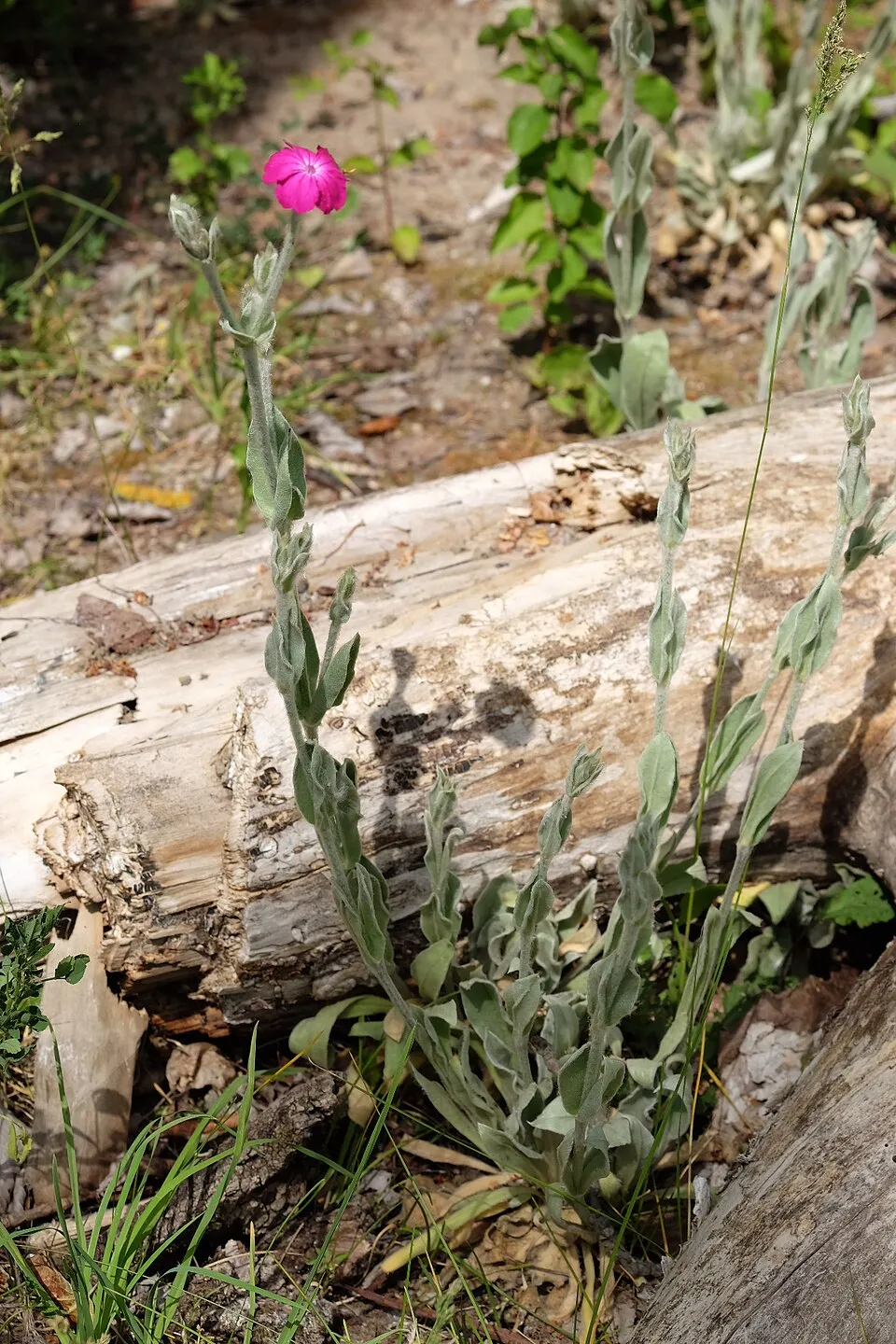
Lychnis coronaria, commonly known as Rose Campion, Crown Pink, or Dusty Miller (though this name is also applied to other plants like Centaurea cineraria), is a captivating short-lived perennial or biennial belonging to the Caryophyllaceae family. Native to southeastern Europe and parts of Asia, this species has naturalized across many temperate regions, thriving in disturbed soils, rocky outcrops, and open woodlands. Its distinctive appearance features upright, branching stems typically reaching 60-90 cm (24-36 inches) in height, adorned with striking, vibrant magenta-pink flowers.
The most notable characteristic is its foliage: ovate to lanceolate leaves densely covered in soft, silvery-white hairs, creating a velvety, almost felt-like texture and a luminous, dusty appearance that provides a beautiful contrast to the intense floral color. Flowers are solitary or form loose cymes, each measuring 2.5-4 cm (1-1.5 inches) in diameter, with five unfused petals that often have a slightly ruffled margin. While magenta is classic, cultivars also present white ('Alba') or bi-colored blooms.
Rose Campion blooms profusely from late spring through summer, attracting pollinators. Its robust nature, drought tolerance once established, and ability to prosper in poor, well-drained soils make it a favored ornamental in cottage gardens, borders, and xeriscaping. The plant's open, airy architecture contributes to its graceful habit, and it readily self-seeds, forming charming naturalized drifts over time if allowed.
Trusted Scientific References
1. Authoritative external sources for Lychnis coronaria
1.1 Wikipedia — Lychnis coronaria
1.2 Kew POWO (Plants of the World Online)
1.3 PubMed — peer-reviewed research
1.4 NCBI Taxonomy Browser
1.5 GBIF — Global Biodiversity
1.6Lychnis Coronaria should be interpreted through verified botanical identity, practical care, and responsible safety language. This recovery note adds the missing context needed for a complete profile: match light to the plant's habit, use well-drained soil, water according to season, and avoid unsupported medicinal or edible claims. For publishing, the plant can be presented as a source-backed garden plant with clear care guidance, common problem diagnosis, and conservative safety wording.
1.1.Lychnis Coronaria — Highlights
- ✓Striking silvery — grey, woolly foliage.
- ✓Vibrant magenta — pink flowers (also white and bicolored cultivars).
- ✓Short — lived perennial or biennial.
- ✓Drought — tolerant and low-maintenance.
- ✓Attracts pollinators (bees, — Attracts pollinators (bees, butterflies).
- ✓Readily self — seeds, creating naturalized drifts.
- ✓Deer and rabbit — Deer and rabbit resistant.
- ✓Native to Europe — Native to Europe and Asia.
- ✓Member of the — Member of the Caryophyllaceae family.
- ✓Primarily valued as — Primarily valued as an ornamental plant.
1.2.Lychnis Coronaria — In Brief
- ✓Lychnis coronaria is a striking perennial with silvery foliage and magenta flowers.
- ✓Contains triterpenoid saponins and flavonoids, offering traditional expectorant and diuretic uses.
- ✓Primarily an ornamental plant; medicinal uses are largely folk-based and lack strong scientific validation.
- ✓Requires well-drained soil and full sun; drought-tolerant and easy to grow.
- ✓Not recommended for internal medicinal use without professional guidance due to saponin content.
- ✓Important to note its potential toxicity and exercise caution, especially for internal consumption.
2.Lychnis Coronaria — Nomenclature & Classification
3.Lychnis Coronaria — Fact Sheet
4.Lychnis Coronaria — Botanical Description
5.Lychnis Coronaria — Native Range & Habitat
6.Lychnis Coronaria — Folk Medicine Applications
7.Lychnis Coronaria — Phytochemistry
- ✓Triterpenoid Saponins — Lychnis coronaria contains various triterpenoid saponins, known for their detergent-like properties, expectorant, and potentially anti-inflammatory actions.
- ✓Flavonoids — Quercetin, kaempferol, and their glycosides are present, contributing to antioxidant, anti-inflammatory, and vasoprotective effects.
- ✓Phenolic Acids — Caffeic acid, p-coumaric acid, and ferulic acid derivatives are found, providing significant antioxidant and antimicrobial activity.
- ✓Anthocyanins — Responsible for the vibrant magenta coloration of the flowers, these compounds are potent antioxidants.
- ✓Sterols — Beta-sitosterol and other plant sterols are typically found in the plant, contributing to various physiological functions.
- ✓Volatile Compounds — Small amounts of terpenoids and other aromatic compounds may be present, influencing the plant's scent and potentially its medicinal properties.
- ✓Fatty Acids — Essential fatty acids are constituents of plant tissues, supporting cell membrane integrity and overall plant health.
- ✓Polysaccharides — Complex carbohydrates contribute to the plant's structural integrity and may have immunomodulatory effects.
- ✓Carotenoids — Present in leaves and flowers, these pigments act as antioxidants and precursors to other beneficial compounds.
- ✓Glycosides — Various glycosidic compounds, beyond saponins and flavonoids, can be found, often influencing bioavailability and activity.
8.Lychnis Coronaria — Evidence-Based Benefits
- ✓Anti-inflammatory properties — Saponins and flavonoids present in Lychnis coronaria may help reduce inflammation through modulation of inflammatory pathways.
- ✓Expectorant action — Traditional uses suggest its saponin content could aid in loosening respiratory tract secretions, facilitating their expulsion.
- ✓Diuretic effects — The plant has been anecdotally used to promote urine flow, potentially assisting in conditions like edema.
- ✓Wound healing support — Extracts might possess antiseptic and regenerative qualities, promoting the closure and healing of minor cuts and abrasions.
- ✓Antioxidant activity — Flavonoids and other phenolic compounds contribute to scavenging free radicals, protecting cells from oxidative damage.
- ✓Antimicrobial potential — Preliminary in vitro studies indicate some efficacy against certain bacteria and fungi, possibly due to its secondary metabolites.
- ✓Skin soothing — The velvety leaves, when applied topically, were traditionally thought to soothe skin irritations and minor burns.
- ✓Astringent qualities — Triterpenoid saponins can impart astringency, useful in toning tissues and reducing minor bleeding.
- ✓Mild analgesic — Folk medicine sometimes employed it for relieving minor aches and pains, though specific mechanisms are not well-documented.
- ✓Detoxification support — As a diuretic, it may indirectly support the body's natural detoxification processes by increasing urinary excretion.
8.1.Lychnis Coronaria — Reported Uses
9.Lychnis Coronaria — Safety & Side Effects
9.1.Lychnis Coronaria — Side Effects & Warnings
- ✓Gastrointestinal Upset — High doses of saponins can cause nausea, vomiting, and diarrhea.
- ✓Skin Irritation — Direct contact with plant sap may cause mild dermatitis in sensitive individuals.
- ✓Allergic Reactions — Rare cases of allergic reactions, including skin rashes or respiratory symptoms, are possible.
- ✓Hemolytic Activity — Saponins can cause hemolysis of red blood cells if directly introduced into the bloodstream.
- ✓Drug Interactions — Potential to interact with medications, especially diuretics or those affecting blood clotting.
- ✓Pregnancy/Lactation Risks — Insufficient data; generally advised against during pregnancy and breastfeeding.
- ✓Kidney Irritation — Excessive diuretic use might strain kidney function in predisposed individuals.
9.2.Lychnis Coronaria — Safety Overview
- ✓Consult a Professional — Always seek advice from a healthcare provider or qualified herbalist before medicinal use.
- ✓Pregnancy & Breastfeeding — Avoid use due to lack of safety data and potential for saponin toxicity.
- ✓Children — Not recommended for use in children due to insufficient safety information.
- ✓Pre-existing Conditions — Individuals with kidney, liver, or gastrointestinal issues should exercise extreme caution.
- ✓Dosage — Adhere strictly to recommended dosages; high doses of saponins can be toxic.
- ✓Topical Use — Perform a patch test before widespread topical application to check for skin sensitivity.
- ✓Internal Use — Generally not recommended for internal use without expert guidance due to potential toxicity of saponins.
10.Lychnis Coronaria — Preparation Methods
- ✓Herbal Infusion — Dried leaves and flowers can be steeped in hot water to create a tea for internal use (expectorant, diuretic).
- ✓Poultice — Fresh crushed leaves may be applied topically as a poultice for minor skin irritations or wounds.
- ✓Tincture — An alcohol-based extract of the aerial parts can be prepared for concentrated internal use.
- ✓Decoction — Roots or tougher plant parts can be simmered in water to extract compounds for a stronger preparation.
- ✓Ointment/Salve — Infused oil from flowers and leaves can be incorporated into salves for topical skin application.
- ✓Bath Additive — Dried flowers and leaves can be added to bathwater for a soothing, aromatic experience.
- ✓Gargle/Mouthwash — A diluted infusion can be used as a gargle for throat discomfort or as a mild mouthwash.
11.Lychnis Coronaria — How to Grow
- ✓Sun Exposure — Thrives in full sun to partial shade; ensure morning sun if possible in hot climates.
- ✓Soil Type — Prefers well-drained soil; tolerant of most soil types, including poor or rocky conditions.
- ✓Watering — Drought-tolerant once established; water moderately, avoiding soggy conditions to prevent root rot.
- ✓Hardiness Zones — Hardy in USDA Zones 5-8; may act as a biennial or short-lived perennial.
- ✓Propagation — Easily grown from seed (requires cold stratification) or by dividing established clumps.
- ✓Fertilization — Generally does not require fertilizer; adding compost to poor soil can enhance vigor.
- ✓Pruning — Deadhead spent blooms to prevent excessive self-seeding and encourage re-bloom.
- ✓Pests and Diseases — Highly resistant to most common pests and diseases, and typically deer-resistant.
Reviewed by the Flora Medical Global Botanical Review Panel
Multi-disciplinary editorial group · Botany · Ethnobotany · Herbal-medicine literature
Who reviewed this: This page was checked by the Flora Medical Global Botanical Review Panel — an in-house editorial group of botany graduates, ethnobotany researchers, and horticulture practitioners who collectively maintain our 7,000+ plant encyclopedia. Meet the team.
Our 4-step verification process
1. Taxonomic verification
Scientific names and synonyms cross-checked against Kew POWO, World Flora Online, and The Plant List.
2. Phytochemical & medicinal cross-reference
Active compounds, traditional uses, and reported activities are cross-referenced with PubMed, USDA Dr. Duke's database, and peer-reviewed ethnobotanical literature.
3. Conservation & distribution check
Distribution, ecology, and conservation status confirmed against GBIF occurrence records and the IUCN Red List.
4. Editorial & safety review
Every entry passes an editorial pass for clarity, originality, and safety notices (toxicity, contraindications, dosage caveats) before publication.
Last reviewed:
Important medical disclaimer: This content is for educational and research purposes only. It is not medical advice and is not a substitute for consultation with a licensed healthcare provider. Do not use any herb to self-treat a medical condition without professional guidance.
Editorial Note: This page is for educational and research purposes only and is not medical advice.
Written by: Flora Medical Global Editorial Team
Reviewed by: Flora Medical Global Botanical Review Panel
Last Updated: June 15, 2026





Lychnis Coronaria — Comments & Community Reviews
Rate this plant