

Medical Disclaimer: This content is for educational purposes only. It is not medical advice. Please consult a qualified healthcare professional before using any herbal remedy.
Safety Overview
1.Lycopodium Squarrosum — Overview
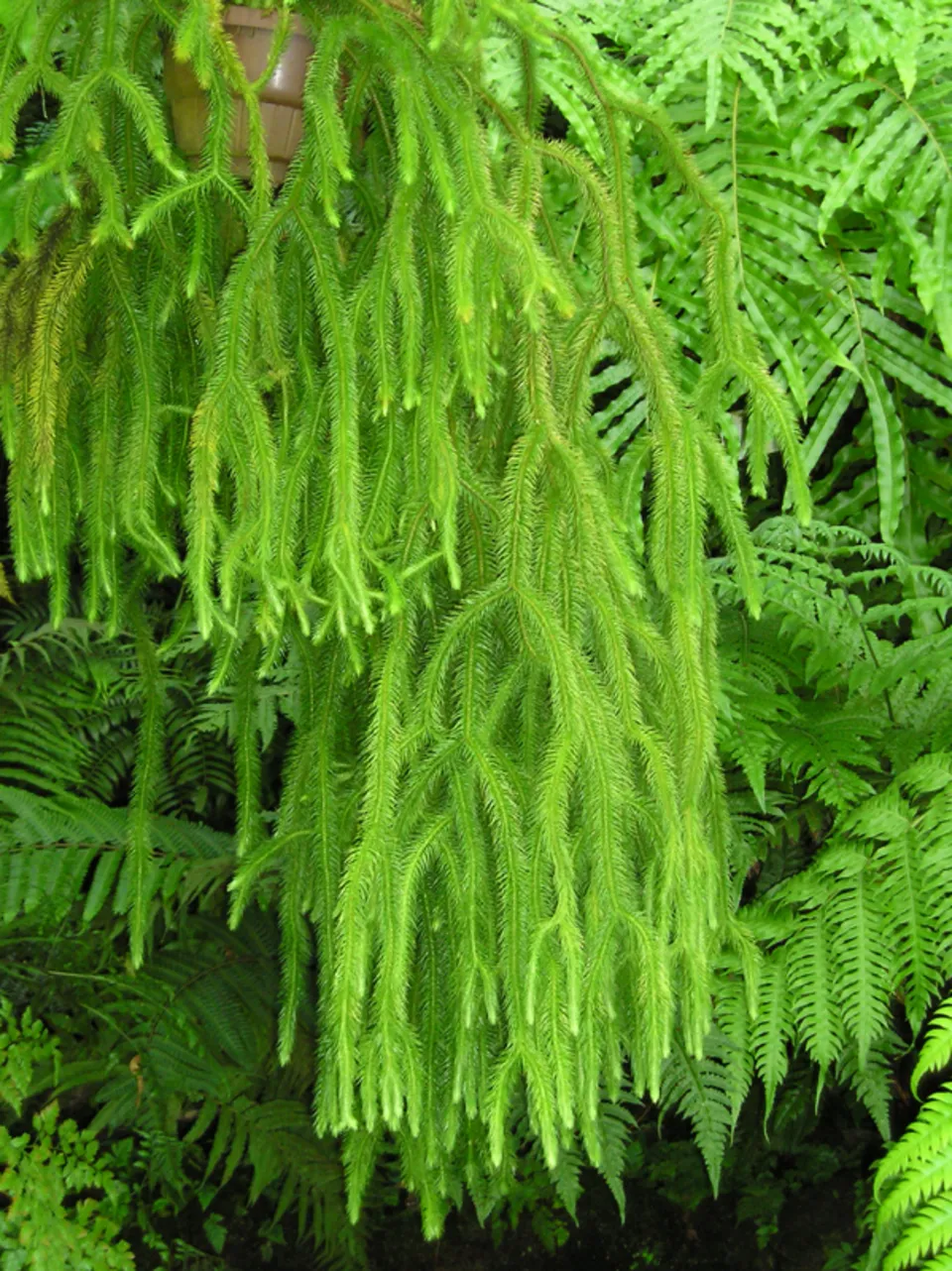
Phlegmariurus squarrosus, an ancient and captivating pteridophyte, is commonly known as Tassel Fern or Hanging Clubmoss, despite not being a true fern. It thrives as an epiphyte, anchoring itself to tree branches, or as a lithophyte, clinging to rock crevices in the humid, shaded understories of tropical and subtropical montane forests. This perennial clubmoss exhibits a striking pendulous or cascading growth habit, with robust yet flexible stems typically extending 30 to 90 cm.
Its densely packed foliage consists of small, spirally arranged, scale-like or needle-like leaves, each about 1 to 2 cm long, presenting a lush, muted green hue. Unlike flowering plants, Phlegmariurus squarrosus reproduces via spores, which are produced in specialized sporangia. These sporangia are aggregated into distinct, cylindrical strobili (cone-like structures) found terminally on branches, maturing to a pale yellow or light brown before releasing their fine, powdery spores for dispersal.
Its adventitious, fibrous root system provides firm anchorage. Geographically, Lycopodium squarrosum is widespread across Southeast Asia, including Thailand, Malaysia, Indonesia, and the Philippines, extending into parts of Australia and various Pacific islands. Taxonomically, it was historically classified under Lycopodium but has been reclassified into the genus Phlegmariurus following phylogenetic studies, underscoring its unique evolutionary lineage within the ancient Lycopodiaceae family.
Trusted Scientific References
1. Authoritative external sources for Phlegmariurus squarrosus
1.1 Wikipedia — Phlegmariurus squarrosus
1.2 Kew POWO (Plants of the World Online)
1.3 PubMed — peer-reviewed research
1.4 NCBI Taxonomy Browser
1.5 GBIF — Global Biodiversity
1.6Lycopodium Squarrosum should be interpreted through verified botanical identity, practical care, and responsible safety language. This recovery note adds the missing context needed for a complete profile: match light to the plant's habit, use well-drained soil, water according to season, and avoid unsupported medicinal or edible claims. For publishing, the plant can be presented as a source-backed indoor plant with clear care guidance, common problem diagnosis, and conservative safety wording.
1.1.Lycopodium Squarrosum — Standout Qualities
- ✓Ancient Vascular Plant — Belongs to the Lycopodiaceae family, one of the oldest lineages of vascular plants on Earth.
- ✓Epiphytic/Lithophytic Growth — Naturally grows on trees or rocks, not in soil, adapting to its substrate with adventitious roots.
- ✓Cascading/Pendulous Habit — Displays a unique weeping or hanging form, making it popular for hanging baskets.
- ✓Spore — Bearing — Reproduces via spores produced in terminal strobili, lacking flowers or seeds.
- ✓Dense, Scale — like Foliage — Characterized by numerous small, spirally arranged leaves, giving it a lush, moss-like appearance.
- ✓Humid Environment Lover — Requires consistently high humidity, typical of its tropical and subtropical forest origins.
- ✓Slow Growing — Exhibits a relatively slow growth rate compared to many other houseplants.
- ✓Distinctive Strobili — Produces prominent, cylindrical spore-producing cones at the tips of its branches.
- ✓Taxonomic Reclassification — Formerly Lycopodium squarrosum, now Phlegmariurus squarrosus, reflecting modern phylogenetic understanding.
- ✓Reported Toxicity — Contains compounds that are toxic if ingested by humans or animals.
1.2.Lycopodium Squarrosum — At-a-Glance Summary
- ✓Phlegmariurus squarrosus is an ancient, epiphytic clubmoss, often called Tassel Fern.
- ✓Known for its distinctive cascading growth and dense, scale-like leaves.
- ✓Primarily an ornamental plant, thriving in high humidity and bright, indirect light.
- ✓Reported to be toxic if ingested; not suitable for internal medicinal use.
- ✓Reproduces via spores, a characteristic of its ancient vascular plant lineage.
- ✓Contains various phytochemicals, including alkaloids and flavonoids, common to the Lycopodiaceae family.
2.Lycopodium Squarrosum — Scientific Profile
3.Lycopodium Squarrosum — Reference Facts
4.Lycopodium Squarrosum — Plant Morphology
5.Lycopodium Squarrosum — Where It Grows
6.Lycopodium Squarrosum — Cultural & Traditional Roles
7.Lycopodium Squarrosum — Bioactive Constituents
- ✓Alkaloids — The Lycopodiaceae family is renowned for its diverse array of alkaloids, including lycopodine, serratine, and especially huperzine A (found in related Huperzia species), which acts as an acetylcholinesterase inhibitor with neuroprotective potential.
- ✓Flavonoids — These powerful polyphenolic compounds, such as quercetin and kaempferol derivatives, contribute significantly to the plant's antioxidant, anti-inflammatory, and potentially antiviral activities.
- ✓Triterpenoids — Including compounds like serratene and similar structures, triterpenoids are often associated with anti-inflammatory, hepatoprotective, and cytotoxic properties in various plant species.
- ✓Phenolic Acids — Gallic acid, caffeic acid, and ferulic acid are common phenolic acids that provide robust antioxidant and radical-scavenging capabilities, protecting cells from oxidative damage.
- ✓Polysaccharides — Complex carbohydrates that can possess immunomodulatory effects, supporting the body's immune system and offering general health benefits.
- ✓Sterols — Plant sterols such as beta-sitosterol are known for their potential to support cardiovascular health and exhibit anti-inflammatory actions.
- ✓Waxes and Lipids — Surface waxes and internal lipids provide protective barriers and contribute to the plant's structural integrity, also containing various fatty acids.
- ✓Glycosides — A broad class of compounds where a sugar molecule is linked to one or more non-sugar molecules, often responsible for various pharmacological activities.
8.Lycopodium Squarrosum — Modern Studies
- ✓Antioxidant Properties — Rich in phenolic compounds, Phlegmariurus squarrosus may offer potent antioxidant activity, helping to neutralize free radicals and reduce oxidative stress within cells, which is crucial for overall cellular health.
- ✓Anti-inflammatory Potential — Certain triterpenoids and flavonoids found in clubmosses suggest an ability to modulate inflammatory pathways, potentially offering relief from inflammation-related discomfort.
- ✓Neuroprotective Considerations — The Lycopodiaceae family is known for alkaloids like huperzine A, which has neuroprotective effects. While not confirmed for P. squarrosus, it highlights a potential area of research for cognitive support.
- ✓Traditional Wound Healing — In some traditional practices, related clubmoss species have been applied externally to wounds or skin irritations, potentially due to antimicrobial or astringent properties.
- ✓Diuretic Effects — Historically, some clubmosses were employed as mild diuretics, aiding in fluid balance and supporting urinary tract health, though specific evidence for P. squarrosus is limited.
- ✓Support for Respiratory Health — Certain plant extracts are traditionally used to soothe respiratory passages; clubmosses might possess compounds with mucolytic or expectorant properties, though this is speculative for P. squarrosus.
- ✓Antimicrobial Activity — Research on various pteridophytes indicates the presence of compounds with antibacterial or antifungal properties, suggesting a potential role in inhibiting microbial growth.
- ✓Detoxification Support — Through potential diuretic or antioxidant actions, the plant may indirectly support the body's natural detoxification processes.
- ✓Analgesic Properties — Some phytochemicals found in the broader Lycopodiaceae family are associated with pain-relieving effects, offering a potential, albeit unconfirmed, benefit for P. squarrosus.
- ✓Immune System Modulation — Plant compounds like polysaccharides and flavonoids are often recognized for their ability to influence immune responses, potentially enhancing the body's natural defenses.
8.1.Lycopodium Squarrosum — Health Applications
9.Lycopodium Squarrosum — Risk Profile
9.1.Lycopodium Squarrosum — Possible Adverse Reactions
- ✓Toxicity Upon Ingestion — Phlegmariurus squarrosus is reported to be toxic if ingested by humans or pets, potentially causing gastrointestinal upset or more severe systemic effects.
- ✓Skin Irritation — Direct contact with plant sap or spores might cause skin irritation or allergic reactions in sensitive individuals.
- ✓Allergic Reactions — Inhalation of the fine, powdery spores can potentially trigger respiratory allergies or asthma in susceptible persons.
- ✓Gastrointestinal Distress — Accidental ingestion can lead to nausea, vomiting, diarrhea, and abdominal pain due to its toxic compounds.
- ✓Systemic Effects — In larger doses or severe exposures, systemic toxicity could manifest, affecting various organ systems, though specific human case reports are limited.
- ✓Interactions with Medications — If any active compounds were to be absorbed, there is a theoretical risk of interaction with certain medications, particularly those affecting the nervous system or detoxification pathways.
9.2.Lycopodium Squarrosum — Toxicity Assessment
- ✓Not for Internal Consumption — Phlegmariurus squarrosus is considered toxic upon ingestion; it should never be consumed internally by humans or animals.
- ✓Keep Out of Reach of Children and Pets — Due to its toxicity, ensure the plant is placed where children and pets cannot access or ingest any part of it.
- ✓Handle with Care — Wear gloves when handling the plant if you have sensitive skin, as some individuals may experience contact dermatitis or irritation.
- ✓Avoid Spore Inhalation — When the plant is mature and releasing spores, susceptible individuals, especially those with respiratory sensitivities, should avoid inhaling the fine powder.
- ✓Consult a Healthcare Professional — Individuals with pre-existing health conditions, pregnant or breastfeeding women, and those on medication should avoid any form of medicinal use.
- ✓Ornamental Use Only — Its primary and safest use is as an ornamental plant; any traditional or potential medicinal applications should be approached with extreme caution and expert guidance.
- ✓No Established Therapeutic Dose — There is no scientifically established safe or effective therapeutic dose for Phlegmariurus squarrosus for any medicinal purpose.
10.Lycopodium Squarrosum — Application Forms
- ✓Ornamental Display — Primarily cultivated as a unique and striking ornamental houseplant, often displayed in hanging baskets due to its cascading habit.
- ✓Homeopathic Preparations — While specific to related species like Lycopodium clavatum, some Lycopodium preparations are used in homeopathy, typically in highly diluted forms for various constitutional ailments.
- ✓External Poultices — Historically, some clubmosses were used externally as poultices for skin irritations or minor wounds, though direct application of Phlegmariurus squarrosus is not widely documented and caution is advised due to toxicity.
- ✓Botanical Specimen — Valued by botanists and plant enthusiasts as a living fossil, representing an ancient lineage of vascular plants for study and appreciation.
- ✓Traditional Craft Material — In some cultures, the dried stems of clubmosses were used in traditional crafts or as decorative elements.
- ✓Environmental Indicator — Its presence in specific habitats can indicate certain environmental conditions, making it useful in ecological studies.
- ✓Research Extract — For scientific research, extracts may be prepared to isolate and study specific phytochemicals for their potential pharmacological activities, strictly under laboratory control.
11.Lycopodium Squarrosum — Growing Guide
- ✓Light — Provide bright, indirect light; soft morning sun or dappled light is beneficial, but harsh, direct sun should be avoided to prevent leaf scorch.
- ✓Water — Requires frequent watering, often several times per week, especially in warm or brightly lit conditions; the chunky growing medium necessitates regular, thorough soaks.
- ✓Humidity — Thrives in high humidity (above 60-80%); regular misting or placement in a humid environment like a bathroom is crucial for its delicate foliage.
- ✓Soil/Substrate — Plant in a well-draining, chunky medium such as coco coir pieces, orchid bark, or a blend that mimics its epiphytic/lithophytic natural habitat.
- ✓Temperature — Maintain warm temperatures, ideally above 15°C (60°F); it prefers stable tropical or subtropical conditions and is sensitive to cold drafts.
- ✓Air Circulation — Good air movement is important to prevent fungal issues in high humidity; ensure adequate ventilation without strong, drying drafts.
- ✓Fertilization — Fertilize sparingly during the growing season (spring/summer) with a diluted nitrogen-rich liquid fertilizer once a month to support its slow growth.
- ✓Propagation — Propagation is challenging and slow, often taking over a year from cuttings; it is generally not recommended for casual growers due to low success rates.
Reviewed by the Flora Medical Global Botanical Review Panel
Multi-disciplinary editorial group · Botany · Ethnobotany · Herbal-medicine literature
Who reviewed this: This page was checked by the Flora Medical Global Botanical Review Panel — an in-house editorial group of botany graduates, ethnobotany researchers, and horticulture practitioners who collectively maintain our 7,000+ plant encyclopedia. Meet the team.
Our 4-step verification process
1. Taxonomic verification
Scientific names and synonyms cross-checked against Kew POWO, World Flora Online, and The Plant List.
2. Phytochemical & medicinal cross-reference
Active compounds, traditional uses, and reported activities are cross-referenced with PubMed, USDA Dr. Duke's database, and peer-reviewed ethnobotanical literature.
3. Conservation & distribution check
Distribution, ecology, and conservation status confirmed against GBIF occurrence records and the IUCN Red List.
4. Editorial & safety review
Every entry passes an editorial pass for clarity, originality, and safety notices (toxicity, contraindications, dosage caveats) before publication.
Last reviewed:
Important medical disclaimer: This content is for educational and research purposes only. It is not medical advice and is not a substitute for consultation with a licensed healthcare provider. Do not use any herb to self-treat a medical condition without professional guidance.
Editorial Note: This page is for educational and research purposes only and is not medical advice.
Written by: Flora Medical Global Editorial Team
Reviewed by: Flora Medical Global Botanical Review Panel
Last Updated: June 15, 2026





Lycopodium Squarrosum — Comments & Community Reviews
Rate this plant