

Medical Disclaimer: This content is for educational purposes only. It is not medical advice. Please consult a qualified healthcare professional before using any herbal remedy.
Safety Overview
1.Macleaya Microcarpa — Essential Profile
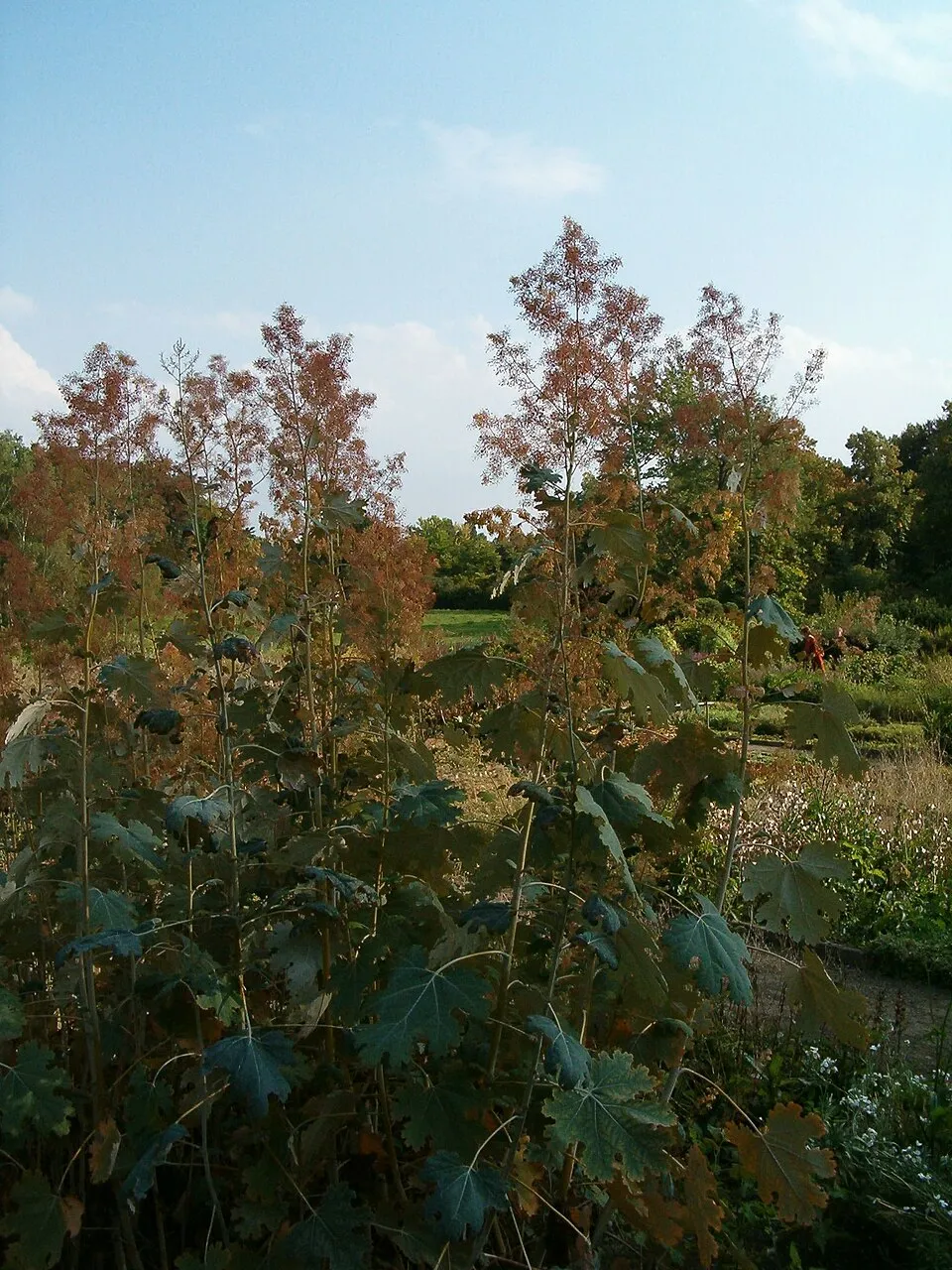
Macleaya microcarpa, commonly known as Plume Poppy or sometimes mistakenly as Blood Root, is a majestic herbaceous perennial belonging to the Papaveraceae family. Native to the temperate regions of East Asia, particularly China and Japan, it thrives in woodland edges and disturbed areas. This striking plant is characterized by its robust, upright growth habit, frequently reaching heights of 1.8 to 2.5 meters (6-8 feet) with a similar spread, forming impressive clumps.
Its most distinctive features are the large, deeply lobed, palmate leaves, which exhibit a captivating glaucous blue-green to silvery-gray coloration on the upper surface and a downy white underside, often measuring up to 30 cm (12 inches) across. The hollow stems are stout and typically tinged with reddish-brown. During mid to late summer, from July through September, Macleaya microcarpa produces airy, terminal panicles of numerous small, apetalous flowers.
These inflorescences are typically a creamy white to soft coral-pink, creating a hazy, plume-like effect that gives the plant its common name. The flowers mature into small, heart-shaped seed pods containing numerous tiny seeds, facilitating its vigorous self-seeding. The root system is fibrous and rhizomatous, enabling it to spread readily and establish large colonies, making it a powerful architectural plant for large borders or naturalized settings.
Trusted Scientific References
1. Authoritative external sources for Macleaya Microcarpa
1.1 Wikipedia — Macleaya Microcarpa
1.2 Kew POWO (Plants of the World Online)
1.3 PubMed — peer-reviewed research
1.4 NCBI Taxonomy Browser
1.5 GBIF — Global Biodiversity
1.6Macleaya Microcarpa should be interpreted through verified botanical identity, practical care, and responsible safety language. This recovery note adds the missing context needed for a complete profile: match light to the plant's habit, use well-drained soil, water according to season, and avoid unsupported medicinal or edible claims. For publishing, the plant can be presented as a source-backed garden plant with clear care guidance, common problem diagnosis, and conservative safety wording.
1.1.Macleaya Microcarpa — Highlights
- ✓Architectural plant with — Architectural plant with dramatic height and spread.
- ✓Distinctive deeply lobed, blue — green to silvery leaves.
- ✓Produces airy panicles of creamy white to coral — pink flowers.
- ✓Contains potent, toxic — Contains potent, toxic isoquinoline alkaloids.
- ✓Rhizomatous root system — Rhizomatous root system leads to vigorous spreading.
- ✓Low maintenance once — Low maintenance once established in suitable conditions.
- ✓Deer and rabbit — Deer and rabbit resistant due to toxicity.
- ✓Awarded the RHS — Awarded the RHS Award of Garden Merit for ornamental value.
- ✓Excellent for large — Excellent for large borders, woodland gardens, or as a focal point.
- ✓Flowers from mid — summer to fall, providing late-season interest.
1.2.Macleaya Microcarpa — In Brief
- ✓Tall, ornamental perennial with glaucous leaves and airy plumes.
- ✓Rich in toxic isoquinoline alkaloids like sanguinarine and chelerythrine.
- ✓Traditional uses include anti-inflammatory, analgesic, and antimicrobial actions.
- ✓Potent medicinal properties, but all parts are highly toxic if ingested.
- ✓Requires careful handling and strict professional supervision for any medicinal application.
- ✓Spreads vigorously via rhizomes, can be invasive in ideal conditions.
2.Macleaya Microcarpa — Nomenclature & Classification
3.Macleaya Microcarpa — Key Data
4.Macleaya Microcarpa — Botanical Features
5.Macleaya Microcarpa — Origin & Spread
6.Macleaya Microcarpa — Folk Medicine Applications
7.Macleaya Microcarpa — Chemical Profile
- ✓Isoquinoline Alkaloids — Sanguinarine, chelerythrine, protopine, allocryptopine, and cryptopine are major components, known for their diverse pharmacological activities.
- ✓Flavonoids — Quercetin, kaempferol, and their glycosides contribute to antioxidant and anti-inflammatory effects.
- ✓Phenolic Acids — Caffeic acid, ferulic acid, and chlorogenic acid provide antioxidant and antimicrobial properties.
- ✓Saponins — Triterpenoid saponins might contribute to its anti-inflammatory and expectorant actions.
- ✓Lignans — Present in smaller amounts, these compounds may have antioxidant and anticancer potential.
- ✓Fatty Acids — Essential fatty acids found in the seeds and roots support cellular health.
- ✓Polysaccharides — Contribute to immunomodulatory effects and overall plant health.
- ✓Sterols — Beta-sitosterol and stigmasterol are present, offering potential anti-inflammatory benefits.
- ✓Terpenoids — Various terpenoid compounds are found, contributing to its aroma and potential medicinal properties.
- ✓Amino Acids — Essential and non-essential amino acids are present, vital for metabolic processes.
8.Macleaya Microcarpa — Evidence-Based Benefits
- ✓Anti-inflammatory — Alkaloids like sanguinarine and chelerythrine inhibit inflammatory pathways, reducing swelling and pain.
- ✓Analgesic — The plant's alkaloids possess pain-relieving properties, potentially by interfering with nociceptive signals.
- ✓Antimicrobial — Extracts show activity against various bacteria and fungi, useful for topical infections.
- ✓Antitumor activity — Some alkaloids, particularly sanguinarine, have demonstrated cytotoxic effects against cancer cells in vitro.
- ✓Antiviral properties — Certain compounds may interfere with viral replication, though more research is needed.
- ✓Spasmolytic — Traditional uses suggest it can relieve smooth muscle spasms, particularly in the gastrointestinal tract.
- ✓Detoxifying — In traditional medicine, it's used to clear heat and toxins, supporting overall detoxification processes.
- ✓Insecticidal — Extracts have shown efficacy as natural insecticides, protecting crops from pests.
- ✓Antioxidant — Contains compounds that scavenge free radicals, protecting cells from oxidative damage.
- ✓Immunomodulatory — May influence immune responses, though the exact mechanisms require further elucidation.
8.1.Macleaya Microcarpa — Reported Uses
9.Macleaya Microcarpa — Safety & Side Effects
9.1.Macleaya Microcarpa — Reported Side Effects
- ✓Gastrointestinal Upset — Ingestion can cause nausea, vomiting, abdominal pain, and diarrhea due to alkaloid content.
- ✓Skin Irritation — Direct contact with sap can cause dermatitis, redness, and itching in sensitive individuals.
- ✓Central Nervous System Effects — High doses may lead to dizziness, sedation, or even paralysis.
- ✓Liver Toxicity — Prolonged or excessive use can potentially cause liver damage due to hepatotoxic alkaloids.
- ✓Cardiovascular Effects — Certain alkaloids can affect heart rate and blood pressure.
- ✓Teratogenicity — Should be avoided during pregnancy due to potential harm to fetal development.
- ✓Allergic Reactions — Rare but possible allergic responses including rashes or respiratory symptoms.
9.2.Macleaya Microcarpa — Safety Profile
- ✓HIGH TOXICITY — All parts of Macleaya microcarpa are considered toxic due to the presence of isoquinoline alkaloids.
- ✓NOT FOR INTERNAL USE — Self-medication is strongly discouraged; internal use should only be under strict professional supervision.
- ✓PREGNANCY/LACTATION — Contraindicated in pregnant and breastfeeding women due to potential genotoxic and abortifacient effects.
- ✓CHILDREN — Keep away from children and pets due to severe toxicity upon ingestion.
- ✓SKIN CONTACT — Handle with gloves to avoid skin irritation from sap.
- ✓DRUG INTERACTIONS — May interact with central nervous system depressants, cardiovascular medications, or liver-metabolized drugs.
- ✓PROFESSIONAL GUIDANCE — Consultation with a qualified herbalist or medical professional is essential before any medicinal use.
10.Macleaya Microcarpa — Preparations & Uses
- ✓Topical Compresses — Macerated leaves or root extracts applied externally for skin inflammation or minor wounds.
- ✓Decoctions — Boiled root or rhizome material used in traditional medicine for internal inflammatory conditions, always with caution due to toxicity.
- ✓Tinctures — Alcoholic extracts of the root or aerial parts for concentrated internal use, strictly under professional guidance.
- ✓Poultices — Crushed fresh leaves applied directly to reduce localized pain and swelling.
- ✓Herbal Washes — Diluted infusions used for antiseptic skin washes or gargles, avoiding ingestion.
- ✓Insect Repellents — Plant extracts used as natural sprays to deter garden pests due to insecticidal properties.
- ✓Veterinary Medicine — Historically used in some traditional systems for treating animal ailments, particularly skin issues.
11.Macleaya Microcarpa — How to Grow
- ✓Site Selection — Prefers full sun to partial shade; partial shade is ideal in hotter climates to prevent leaf scorch.
- ✓Soil Requirements — Thrives in moderately fertile, moist, well-drained soils; adaptable to chalk, clay, loam, or sandy soils.
- ✓PH Preference — Tolerates a wide pH range from acidic to alkaline, performing best in neutral to slightly alkaline conditions.
- ✓Water Needs — Requires average moisture; ensure consistent watering, especially during dry periods, but avoid waterlogging.
- ✓Spacing — Plant individual specimens 1.2-1.5 meters (4-5 feet) apart to accommodate its spreading habit.
- ✓Propagation — Easily propagated by division of rhizomes in late fall or early spring, or by root cuttings during dormancy.
- ✓Maintenance — Low maintenance; cut back to the base in late fall. Remove unwanted shoots to control spread.
- ✓Pest and Disease — Generally resistant to most pests and diseases, making it a robust garden plant.
Reviewed by the Flora Medical Global Botanical Review Panel
Multi-disciplinary editorial group · Botany · Ethnobotany · Herbal-medicine literature
Who reviewed this: This page was checked by the Flora Medical Global Botanical Review Panel — an in-house editorial group of botany graduates, ethnobotany researchers, and horticulture practitioners who collectively maintain our 7,000+ plant encyclopedia. Meet the team.
Our 4-step verification process
1. Taxonomic verification
Scientific names and synonyms cross-checked against Kew POWO, World Flora Online, and The Plant List.
2. Phytochemical & medicinal cross-reference
Active compounds, traditional uses, and reported activities are cross-referenced with PubMed, USDA Dr. Duke's database, and peer-reviewed ethnobotanical literature.
3. Conservation & distribution check
Distribution, ecology, and conservation status confirmed against GBIF occurrence records and the IUCN Red List.
4. Editorial & safety review
Every entry passes an editorial pass for clarity, originality, and safety notices (toxicity, contraindications, dosage caveats) before publication.
Last reviewed:
Important medical disclaimer: This content is for educational and research purposes only. It is not medical advice and is not a substitute for consultation with a licensed healthcare provider. Do not use any herb to self-treat a medical condition without professional guidance.
Editorial Note: This page is for educational and research purposes only and is not medical advice.
Written by: Flora Medical Global Editorial Team
Reviewed by: Flora Medical Global Botanical Review Panel
Last Updated: June 15, 2026





Macleaya Microcarpa — Comments & Community Reviews
Rate this plant