
Medical Disclaimer: This content is for educational purposes only. It is not medical advice. Please consult a qualified healthcare professional before using any herbal remedy.
Safety Overview
1.Macodes Petola — Overview
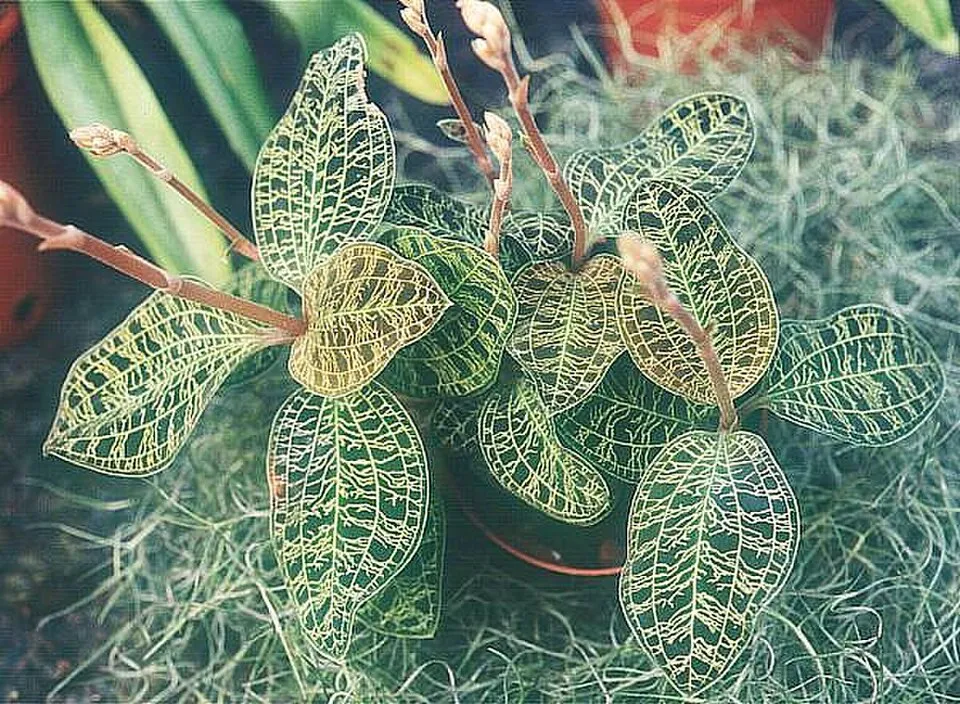
Macodes petola, widely recognized as the Jewel Orchid, is an enchanting terrestrial orchid species within the diverse Orchidaceae family, celebrated primarily for its strikingly intricate, vein-patterned foliage rather than its relatively modest flowers. This captivating plant is indigenous to the humid, shaded understories of Southeast Asian rainforests, thriving in regions spanning Malaysia, Indonesia (including Sumatra, Java, Borneo, and Sulawesi), the Philippines, and New Guinea. Its natural habitat is characterized by consistently high humidity, stable moisture levels, and filtered light, conditions crucial for its survival.
The genus name 'Macodes' originates from the Greek 'makos,' meaning length, possibly alluding to the elongated appearance of certain floral structures, while 'petola' likely refers to its distinctive, gem-like leaves that exhibit a mesmerizing iridescent sheen. Discovered and formally described in the early 19th century, Macodes petola rapidly gained acclaim among botanists and horticulturists, becoming a highly coveted specimen for plant collectors, particularly during the Victorian era's 'orchid craze.' Ecologically, beyond its ornamental appeal, its role is primarily as a component of the forest understory, contributing to local biodiversity. Its unique optical property, known as 'structural color,' results from specialized epidermal cells that reflect light in a metallic fashion, enhancing its allure as a decorative indoor plant for terrariums and shaded displays.
Trusted Scientific References
1. Authoritative external sources for Macodes petola
1.1 Wikipedia — Macodes petola
1.2 Kew POWO (Plants of the World Online)
1.3 PubMed — peer-reviewed research
1.4 NCBI Taxonomy Browser
1.5 GBIF — Global Biodiversity
1.6Macodes Petola should be interpreted through verified botanical identity, practical care, and responsible safety language. This recovery note adds the missing context needed for a complete profile: match light to the plant's habit, use well-drained soil, water according to season, and avoid unsupported medicinal or edible claims. For publishing, the plant can be presented as a source-backed indoor plant with clear care guidance, common problem diagnosis, and conservative safety wording.
1.1.Macodes Petola — Standout Qualities
- ✓Iridescent, metallic — veined foliage is its most prominent characteristic.
- ✓Terrestrial orchid species, — Terrestrial orchid species, growing in soil rather than on trees.
- ✓Indigenous to tropical — Indigenous to tropical rainforests of Southeast Asia.
- ✓Thrives in high — Thrives in high humidity and consistent moisture.
- ✓Prefers low to — Prefers low to moderate, indirect light conditions.
- ✓Exhibits slow to — Exhibits slow to moderate growth rate.
- ✓Non — toxic to humans and common household animals.
- ✓Prized ornamental plant — Prized ornamental plant for terrariums and indoor displays.
- ✓Unique structural coloration — Unique structural coloration due to specialized epidermal cells.
- ✓Limited scientifically documented — Limited scientifically documented medicinal applications.
1.2.Macodes Petola — Concise Overview
- ✓Jewel Orchid with striking, iridescent, vein-patterned foliage.
- ✓Native to the humid, shaded understories of Southeast Asian rainforests.
- ✓Primarily valued as a highly sought-after ornamental houseplant.
- ✓Considered non-toxic to humans and common household pets.
- ✓Requires specific care — high humidity, bright indirect light, and consistent moisture.
- ✓Traditional medicinal uses are scarce, largely anecdotal, and not scientifically substantiated.
2.Macodes Petola — Scientific Profile
3.Macodes Petola — Reference Facts
4.Macodes Petola — Plant Morphology
5.Macodes Petola — Habitat & Distribution
6.Macodes Petola — Cultural & Traditional Roles
7.Macodes Petola — Secondary Metabolites
- ✓Flavonoids — A broad class of polyphenolic compounds common in plants, known for potential antioxidant and anti-inflammatory activities, possibly present in Macodes petola, though not specifically identified.
- ✓Alkaloids — Nitrogen-containing organic compounds with diverse biological activities are often found in the Orchidaceae family, but their specific presence and types in Macodes petola remain largely uncharacterized.
- ✓Terpenoids — A large group of natural products, including essential oils, which contribute to plant defense mechanisms and may be present in Macodes petola, though not quantified.
- ✓Phenolic Acids — Simple phenolic compounds with antioxidant properties, commonly found across plant tissues, are likely present in Macodes petola but require specific phytochemical investigation.
- ✓Polysaccharides — Complex carbohydrates that form structural components and can have immunomodulatory effects, potentially present within the plant's cell walls and tissues.
- ✓Phytosterols — Plant sterols that resemble cholesterol, may be present in Macodes petola, contributing to cell membrane integrity and function.
- ✓Anthocyanins — Pigments responsible for red, purple, and blue coloration in some plant parts, could be present in subtle amounts influencing the leaf's base color or venation, though not prominently.
8.Macodes Petola — Modern Studies
- ✓Ornamental Value — Primarily valued for its aesthetic appeal, Macodes petola contributes to psychological well-being through biophilic design, reducing stress and enhancing mood in indoor environments.
- ✓Air Purification (General Plant Benefit) — Like many houseplants, it subtly contributes to indoor air quality by absorbing common volatile organic compounds, fostering a healthier living space.
- ✓Ethnobotanical Significance — Anecdotal evidence suggests some indigenous communities in its native range utilized parts of the plant for minor ailments, though specific records are scarce.
- ✓Anti-inflammatory Potential (Hypothetical) — While not extensively studied, some orchids contain compounds with anti-inflammatory properties, suggesting a potential for similar constituents in Macodes petola.
- ✓Antioxidant Capacity (Speculative) — Plants in rich, biodiverse environments often produce antioxidants for self-protection, hinting at the possible presence of such compounds in this orchid.
- ✓Mood Enhancement — The visual presence of this unique and beautiful plant has been linked to improved mental well-being and a sense of tranquility.
- ✓Humidity Regulation — As a plant native to rainforests, it naturally releases moisture into the air, subtly contributing to localized humidity, which can benefit respiratory comfort.
- ✓Traditional Topical Applications — Limited, unverified traditional accounts suggest crushed leaves were occasionally applied topically to soothe minor skin irritations or insect bites.
- ✓Cultural Symbolism — Valued in some cultures for its exceptional beauty and rarity, symbolizing luxury, refinement, and the intricate artistry of nature.
8.1.Macodes Petola — Therapeutic Indications
9.Macodes Petola — Precautions & Warnings
9.1.Macodes Petola — Possible Adverse Reactions
- ✓Gastrointestinal Upset — While generally considered non-toxic, ingestion of large quantities of plant material could potentially lead to mild stomach discomfort or nausea in sensitive individuals.
- ✓Allergic Reactions — Rare instances of contact dermatitis or mild skin irritation may occur in highly sensitive individuals upon direct contact with the plant's sap.
- ✓Choking Hazard — For very young children or pets, consuming fibrous plant parts could present a minor choking risk, though severe toxicity is not expected.
- ✓Oral Irritation — Chewing on leaves might cause mild mechanical irritation to mucous membranes due even if not chemically toxic.
- ✓No Documented Severe Toxicity — Extensive research does not indicate severe toxic effects from Macodes petola in humans or common household animals.
9.2.Macodes Petola — Toxicity Assessment
- ✓General Non-toxicity — Macodes petola is widely regarded as non-toxic to humans and common household pets, making it a safe choice for indoor cultivation.
- ✓External Use Caution — While traditional topical uses are noted, always perform a patch test when applying any plant material directly to the skin to identify individual sensitivities.
- ✓Ingestion Advisory — Despite its low toxicity, internal consumption is not recommended as its medicinal efficacy is unproven and large amounts could cause mild digestive upset.
- ✓Children and Pets — Keep the plant out of reach of very young children and inquisitive pets to prevent accidental ingestion or choking, though severe harm is unlikely.
- ✓Pregnant/Lactating Women — Due to a lack of specific research on internal use, pregnant or lactating individuals should avoid any form of internal consumption of Macodes petola.
- ✓Drug Interactions — No known drug interactions have been documented, consistent with its primary role as an ornamental plant and minimal widespread medicinal application.
10.Macodes Petola — Application Forms
- ✓Ornamental Display — Primarily cultivated as a prized indoor ornamental plant, ideal for terrariums, vivariums, or shaded indoor plant displays due to its unique foliage.
- ✓Horticultural Specimen — Valued by plant collectors and enthusiasts for its distinctive aesthetic, specific care requirements, and rarity.
- ✓Air Quality Enhancement — Placed in residential or office environments to contribute to general indoor air quality and promote a sense of natural well-being.
- ✓Ethnobotanical Decoction (Traditional) — Historically, some indigenous communities may have prepared mild infusions or decoctions for local, unverified topical or internal uses, though detailed recipes are scarce.
- ✓Topical Poultice (Traditional) — Anecdotal reports suggest crushed leaves were applied directly as a poultice to minor skin irritations or insect bites in traditional practices.
- ✓Environmental Enrichment — Incorporated into biophilic interior designs to bring natural elements into human-made spaces, fostering a connection to nature.
- ✓Research Specimen — Utilized in botanical studies to investigate its unique structural coloration, physiological adaptations, and ecological interactions within rainforest ecosystems.
11.Macodes Petola — Growth Requirements
- ✓Light — Provide bright, indirect sunlight; direct sun exposure can lead to leaf scorching, mimicking its natural shaded forest understory.
- ✓Watering — Keep the substrate consistently moist but never waterlogged; water when the top 1-2 inches of soil feel dry, using low-chlorine, lukewarm water.
- ✓Humidity — Requires high humidity, ideally above 80%; utilize humidifiers, terrariums, or pebble trays to maintain optimal environmental conditions.
- ✓Temperature — Thrives in warm, stable temperatures between 65-85°F (18-29°C), avoiding sudden fluctuations or cold drafts.
- ✓Soil — Plant in a well-draining, nutrient-rich, and porous substrate, such as a mix of 50% perlite and 50% coco coir or peat moss.
- ✓Fertilization — Apply a highly diluted organic or orchid-specific fertilizer weekly (1/5 to 1/10 of the recommended strength) to support robust growth.
- ✓Potting — Use appropriately sized pots; avoid over-potting which can retain too much moisture and lead to root issues.
- ✓Propagation — Can be propagated through stem cuttings, ensuring each cutting includes at least one node and is planted in moist, well-draining medium.
Reviewed by the Flora Medical Global Botanical Review Panel
Multi-disciplinary editorial group · Botany · Ethnobotany · Herbal-medicine literature
Who reviewed this: This page was checked by the Flora Medical Global Botanical Review Panel — an in-house editorial group of botany graduates, ethnobotany researchers, and horticulture practitioners who collectively maintain our 7,000+ plant encyclopedia. Meet the team.
Our 4-step verification process
1. Taxonomic verification
Scientific names and synonyms cross-checked against Kew POWO, World Flora Online, and The Plant List.
2. Phytochemical & medicinal cross-reference
Active compounds, traditional uses, and reported activities are cross-referenced with PubMed, USDA Dr. Duke's database, and peer-reviewed ethnobotanical literature.
3. Conservation & distribution check
Distribution, ecology, and conservation status confirmed against GBIF occurrence records and the IUCN Red List.
4. Editorial & safety review
Every entry passes an editorial pass for clarity, originality, and safety notices (toxicity, contraindications, dosage caveats) before publication.
Last reviewed:
Important medical disclaimer: This content is for educational and research purposes only. It is not medical advice and is not a substitute for consultation with a licensed healthcare provider. Do not use any herb to self-treat a medical condition without professional guidance.
Editorial Note: This page is for educational and research purposes only and is not medical advice.
Written by: Flora Medical Global Editorial Team
Reviewed by: Flora Medical Global Botanical Review Panel
Last Updated: June 15, 2026





Macodes Petola — Comments & Community Reviews
Rate this plant