

Medical Disclaimer: This content is for educational purposes only. It is not medical advice. Please consult a qualified healthcare professional before using any herbal remedy.
Safety Overview
1.Madanaphala — Overview
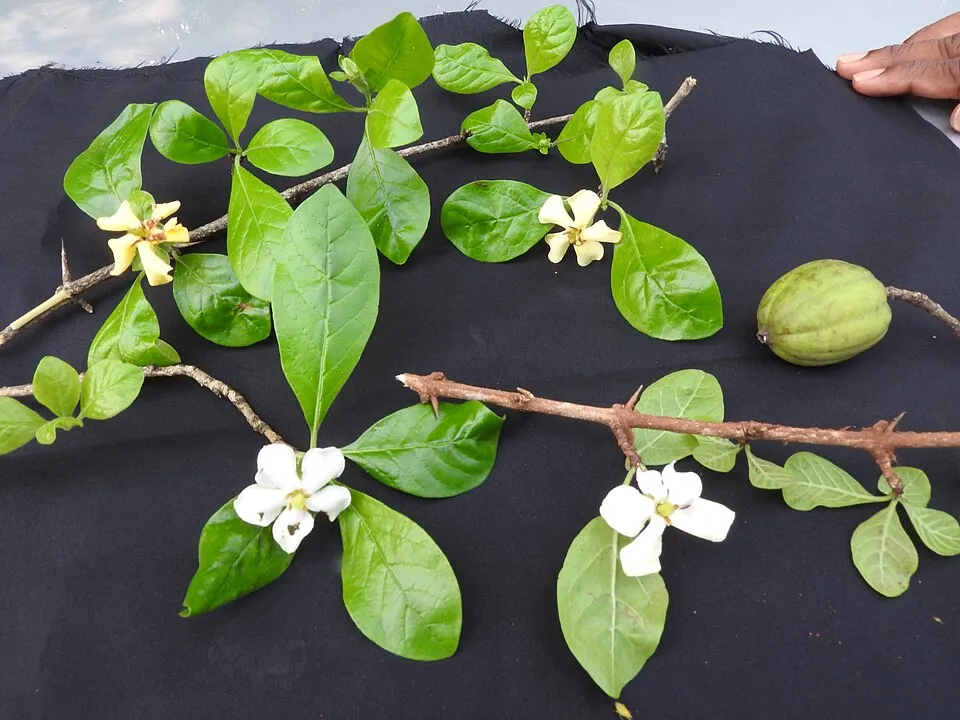
Randia dumetorum, widely recognized by its traditional name Madanaphala, is a robust, deciduous shrub or small tree belonging to the Rubiaceae family, typically reaching heights of 3 to 5 meters. It thrives in dense thickets and is frequently found across tropical and subtropical regions of India and Southeast Asia, particularly in the foothills of the Himalayas, and states like Sikkim, Maharashtra, Karnataka, and Jammu, favoring rugged terrains with high humidity. The plant's morphology is distinct: it features glossy, dark green, elliptic leaves that measure between 5 to 12 centimeters in length, arranged oppositely or in fascicles on suppressed branches, contributing to its dense and attractive foliage. During the summer months, Madanaphala produces small, delicate white flowers, often borne in terminal or axillary cymes.
These fragrant blossoms contrast beautifully against the rich green leaves and are known to attract various pollinators, signifying its ecological role. The fruit, a defining characteristic of this species, is globose or round, about 2 to 3 centimeters in diameter, and transitions from green to a yellowish hue upon ripening. It is historically renowned for its potent emetic properties, which are central to its medicinal applications. The bark of Madanaphala presents a rough, grayish-brown texture, often used in traditional remedies.
Taxonomically, its placement within the Rubiaceae family, often referred to as the coffee family, underscores its relation to numerous species with significant ecological and medicinal value. Madanaphala holds profound historical significance, particularly in Ayurvedic and Unani medicine, where its fruit, often called 'Emetic Nut,' plays a crucial role in detoxification processes like Vamana therapy, a fundamental component of Panchakarma. Its traditional uses extend beyond emesis, highlighting its versatility in ancient herbal practices for various ailments.
Trusted Scientific References
1. Authoritative external sources for Randia dumetorum
1.1 Wikipedia — Randia dumetorum
1.2 Kew POWO (Plants of the World Online)
1.3 PubMed — peer-reviewed research
1.4 NCBI Taxonomy Browser
1.5 GBIF — Global Biodiversity
1.1.Madanaphala — Defining Traits
- ✓Potent Ayurvedic Emetic Agent — Central to Vamana therapy in Panchakarma.
- ✓Rubiaceae Family Member — Part of the diverse coffee family.
- ✓Significant Detoxifier — Aids in expelling toxins and aggravated Kapha dosha.
- ✓Traditional Skin Remedy — Used topically for eczema, herpes, and other skin ailments.
- ✓Natural Pain Reliever — Applied for chronic and vascular headaches and abdominal colic.
- ✓Wound Healing Properties — Leaf decoction promotes healing of ulcers and wounds.
- ✓Kapha — Vata Balancer — Helps pacify imbalances of Kapha and Vata doshas.
- ✓Pitta — Nissaraka — Known to expel Pitta from the body, acting as a cholagogue.
- ✓Rich in Saponins — Key active compounds responsible for its emetic action.
- ✓Tropical and Subtropical Distribution — Indigenous to India and Southeast Asia.
- ✓Distinctive Fruit Morphology — Round, yellowish fruit with strong medicinal properties.
- ✓Historical Medicinal Significance — Long-standing use in Ayurvedic and Unani systems.
- ✓Requires Expert Guidance — Not suitable for self-medication due to strong effects.
- ✓Adaptable Shrub — Thrives in various rugged and humid environments.
- ✓Antioxidant and Anti — inflammatory Potential — Attributed to its phytochemical profile.
1.2.Madanaphala — Quick Summary
- ✓Madanaphala (Randia dumetorum) is a potent Ayurvedic emetic nut from the Rubiaceae family.
- ✓Key component of Panchakarma Vamana therapy for Kapha dosha detoxification.
- ✓Traditionally used for skin conditions, headaches, abdominal colic, and wound healing.
- ✓Rich in saponins, triterpenoids, and iridoid glycosides, driving its diverse actions.
- ✓Its strong emetic action requires strict professional guidance and is not for self-medication.
- ✓Offers anti-inflammatory, detoxifying, and Kapha-Vata balancing properties.
- ✓Found in tropical and subtropical regions, thriving in humid, rugged terrains.
- ✓Important safety considerations due to potential for severe side effects like dehydration.
2.Madanaphala — Systematic Position
3.Madanaphala — Quick Facts
4.Madanaphala — Structural Profile
5.Madanaphala — Habitat & Distribution
6.Madanaphala — Ethnobotanical Uses
7.Madanaphala — Active Compounds
- ✓Glycosides, randioside A, mollisidial triterpenoid glycosides and randianin, six saponins-dumetoronins A to F. methylixoside, an iridoid glycoside,. triterpene, -1-keto-3-hydroxyoleanane, Bark –. mannitol, saponins, coumarin glycosides, Leaves –.
8.Madanaphala — What Research Suggests
- ✓Potent Emetic Action — Madanaphala is primarily celebrated in Ayurveda for its powerful emetic properties, making it a key herb in Vamana (therapeutic vomiting) therapy. This action is crucial for expelling aggravated Kapha dosha and accumulated toxins from the upper gastrointestinal tract, promoting systemic detoxification.
- ✓Supports Detoxification Processes — Beyond its emetic use, the plant aids in broader detoxification by clearing metabolic waste. Its actions help reset the digestive system, contributing to enhanced metabolic function and overall physiological balance.
- ✓Alleviates Kapha-Vata Imbalances — Traditionally, Madanaphala is considered a Kapha-Vata shamaka, meaning it helps to pacify or balance these two doshas. This balancing effect contributes to its efficacy in various conditions associated with Kapha and Vata aggravation.
- ✓Promotes Wound Healing (Vranapaha) — The leaf decoction of Randia dumetorum is traditionally used for washing chronic wounds and ulcers, suggesting antiseptic and regenerative properties. Its application helps in the quick healing of skin lesions and prevents secondary infections.
- ✓Addresses Skin Conditions like Eczema — A paste made from the fresh root, often combined with lemon juice, is traditionally applied topically to alleviate symptoms of eczema and other inflammatory skin diseases. This remedy is also noted for its use in cases of Herpes in folk medicine.
- ✓Relieves Headaches, including Vascular Types — The flowers of Madanaphala, when ground into a paste with mustard seeds, are applied to the forehead. This traditional remedy is particularly effective for chronic and vascular headaches, providing soothing and analgesic effects.
- ✓Eases Abdominal Colic in Children — For infantile abdominal pain and dysuria, a paste prepared from the mature fruit with warm water and salt is applied externally around the navel area. This external application helps to soothe digestive discomfort and promote urination.
- ✓Manages Symptoms of Rhinitis (Pratishyaya) — Due to its Kapha-balancing properties and potential to clear congestion, Madanaphala is traditionally indicated for conditions like running nose and rhinitis. It helps in reducing mucus accumulation and alleviating associated discomfort.
- ✓Reduces Inflammation (Shopha) — Traditional texts mention its use in reducing various forms of inflammation. The plant's active constituents are believed to exert anti-inflammatory effects that can help mitigate swelling and pain.
- ✓Supports in Addressing Abdominal Tumors (Gulma) — In classical Ayurvedic literature, Madanaphala is listed among herbs used for Gulma, which refers to a type of abdominal tumor or mass. Its detoxifying and cleansing properties are thought to contribute to its action in these conditions.
- ✓Aids in Abscess Management (Vidradhi) — The plant is traditionally utilized in the treatment of abscesses. Its purifying and anti-inflammatory actions may help in the resolution of localized pus formations and promote healing.
- ✓Contributes to Cholesterol Reduction (Lekhana) — Madanaphala is described as 'Lekhana,' meaning it has a scraping action that helps reduce cholesterol and clear blockages in the body's channels. This effect is beneficial for cardiovascular health and maintaining clear blood vessels.
- ✓Alleviates Poison from the Body (Vishanasaka) — In traditional contexts, Madanaphala is regarded as a Vishanasaka, indicating its ability to neutralize or expel certain poisons. This is consistent with its strong emetic and detoxifying actions.
- ✓Enhances Digestive Health — Beyond its emetic action, the plant's traditional uses include addressing general gastrointestinal disturbances, such as indigestion and nausea. It helps in regulating digestive processes and improving gut comfort.
- ✓Useful in Basti Karma (Vastishodhana) — Madanaphala is categorized as 'Vastishodhana,' signifying its utility in cleansing the vasti (bladder or lower gastrointestinal tract) during enema therapies. This contributes to its role in comprehensive Ayurvedic detoxification protocols.
8.1.Madanaphala — Reported Uses
9.Madanaphala — Risk Profile
9.1.Madanaphala — Side Effects & Warnings
- ✓Excessive Vomiting — Due to its potent emetic properties, improper or excessive use of Madanaphala can lead to severe and uncontrolled vomiting.
- ✓Dehydration and Electrolyte Imbalance — Prolonged or intense vomiting can result in significant fluid loss and disturbance in the body's electrolyte balance, posing serious health risks.
- ✓Indigestion and Anorexia — In some individuals or with incorrect dosages, Madanaphala may cause symptoms of indigestion and a loss of appetite, rather than alleviating them.
- ✓Esophageal Irritation — The forceful expulsion of stomach contents during induced vomiting can potentially irritate or damage the esophagus.
- ✓Dizziness and Weakness — The physiological stress of intense vomiting, coupled with potential dehydration, can lead to feelings of dizziness, lightheadedness, and general weakness.
- ✓Abdominal Discomfort — Users may experience cramps, nausea, and general discomfort in the abdominal region following ingestion, particularly if not properly prepared or dosed.
- ✓Gastric Upset — The strong action of the herb can lead to general gastric upset, including feelings of unease or pain in the stomach.
- ✓Fatigue — The body expends significant energy during induced vomiting, which can result in profound fatigue and lethargy post-treatment.
9.2.Madanaphala — Risk Assessment
- ✓Professional Supervision is Essential — Madanaphala, especially for emetic purposes, must only be used under the direct guidance and supervision of a qualified medical herbalist or Ayurvedic practitioner.
- ✓Not for Self-Medication — Due to its powerful action and potential for severe side effects, self-administration of Madanaphala is strongly discouraged.
- ✓Contraindicated in Pregnancy and Lactation — Pregnant and breastfeeding women should strictly avoid Madanaphala due to its potent effects, which could be harmful to both mother and child.
- ✓Avoid in Young Children and Elderly — Its use is generally contraindicated in very young children and the elderly, as they are more vulnerable to dehydration and electrolyte imbalances.
- ✓Not for Debilitated Individuals — Individuals who are physically weak, debilitated, or suffering from severe chronic illnesses should not use Madanaphala.
- ✓Pre-existing Conditions — Patients with pre-existing gastrointestinal disorders, heart conditions, kidney disease, or severe hypertension should avoid this herb.
- ✓Drug Interactions — Caution is advised for individuals on medications, especially antiemetics, diuretics, or drugs affecting electrolyte balance, as interactions could be significant.
- ✓Adherence to Dosage — Strict adherence to prescribed dosages and preparation methods is crucial to minimize the risk of adverse effects and ensure therapeutic safety.
- ✓Hydration Post-Use — Adequate hydration and electrolyte replenishment are vital after any emetic therapy involving Madanaphala to counteract fluid loss.
- ✓Monitor for Adverse Reactions — Any signs of excessive vomiting, severe abdominal pain, chest pain, or extreme weakness warrant immediate medical attention.
10.Madanaphala — How to Use
- ✓Madanaphala Seed Infusion for Vamana — For inducing therapeutic vomiting (Vamana), 12 grams of Madanaphala seed powder is infused in 200 ml of hot water for 5-8 minutes. This infusion is consumed, sometimes with a pinch of mustard powder or rock salt to facilitate emesis.
- ✓Root Paste for Eczema and Skin Conditions — A fresh root of Madanaphala is traditionally ground on a stone with lemon juice to form a paste. This paste is then applied topically to lesions of eczema, other skin diseases, and even herpes.
- ✓Flower Paste for Headache Relief — A fistful of Madanaphala flowers is collected and thoroughly ground with mustard seeds to create a paste. This mixture is applied directly to the forehead to alleviate chronic and vascular headaches.
- ✓Fruit Paste for Abdominal Colic — Mature Madanaphala fruit is rubbed with warm water and salt to form a fine paste. This paste is applied externally around the navel area of children to relieve abdominal colic pain and dysuria.
- ✓Leaf Decoction for Wound Cleansing — To prepare a leaf decoction for washing chronic wounds and ulcers, one tablespoon (approximately 10 grams) of coarse leaf powder is boiled in two cups of water until the volume reduces to one cup. The filtered liquid is then used for external application.
- ✓Preparation for Panchakarma Vamana — In Ayurvedic Vamana therapy, the patient first undergoes Snehana (oleation) and Swedana (fomentation). The night before, a Kapha-increasing diet is given. On the day of therapy, Madanaphala, often soaked in decoctions of Yashtimadhu or other specific herbs, is administered with ghee after yavagu (gruel).
- ✓Therapeutic Oral Dosage — For general therapeutic purposes, the recommended dosage of Madanaphala powder is typically around 1 gram, taken under professional guidance.
- ✓Vamana Therapy Dosage — When used specifically for Vamana (emetic) therapy, the dosage of Madanaphala powder is usually higher, ranging from 3 to 6 grams, strictly administered under the supervision of an Ayurvedic practitioner.
- ✓Traditional Fruit Collection Method — Fruits are collected between spring and summer, wrapped in hay and cow dung paste, and then immersed in a heap of grains for 8 days until soft and fragrant. The seeds are then removed, dried, and ground with ghee, butter, honey, and sesame paste for preservation and therapeutic use.
11.Madanaphala — Growth Requirements
- ✓Climate Preference — Madanaphala thrives in tropical and subtropical climates, requiring consistently warm temperatures and high humidity, typical of its native habitat in India and Southeast Asia.
- ✓Soil Requirements — The plant adapts well to a variety of well-drained soils but prefers fertile, loamy soils. It can also tolerate rugged terrains, indicating its resilience to less ideal conditions.
- ✓Sunlight Exposure — It grows best under full sun to partial shade conditions. While it can tolerate some shade, ample sunlight promotes healthier growth and better fruit production.
- ✓Propagation from Seeds — Madanaphala can be propagated from seeds. The seeds should be collected from ripe fruits, cleaned, and sown in a well-prepared seedbed during the appropriate season.
- ✓Vegetative Propagation — Stem cuttings can also be used for propagation. Semi-hardwood cuttings are generally taken and rooted in a suitable medium under controlled humidity conditions.
- ✓Watering Regimen — Consistent moisture is crucial, especially during dry spells and the plant's establishment phase. Regular, moderate watering is recommended, avoiding waterlogging.
- ✓Fertilization — While adaptable, an annual application of organic compost or a balanced slow-release fertilizer can enhance growth and vigor, particularly in nutrient-poor soils.
- ✓Pruning Practices — Light pruning can be done to maintain the plant's shape, promote bushier growth, and remove any dead or diseased branches, ensuring overall plant health.
- ✓Pest and Disease Management — Madanaphala generally exhibits good resistance to common pests and diseases. However, monitoring for signs of infestation and applying organic controls if necessary is advisable.
- ✓Harvesting of Fruits — Fruits, which are the primary medicinal part, are typically harvested when they turn from green to yellow, indicating ripeness and optimal potency for traditional uses.
Reviewed by the Flora Medical Global Botanical Review Panel
Multi-disciplinary editorial group · Botany · Ethnobotany · Herbal-medicine literature
Who reviewed this: This page was checked by the Flora Medical Global Botanical Review Panel — an in-house editorial group of botany graduates, ethnobotany researchers, and horticulture practitioners who collectively maintain our 7,000+ plant encyclopedia. Meet the team.
Our 4-step verification process
1. Taxonomic verification
Scientific names and synonyms cross-checked against Kew POWO, World Flora Online, and The Plant List.
2. Phytochemical & medicinal cross-reference
Active compounds, traditional uses, and reported activities are cross-referenced with PubMed, USDA Dr. Duke's database, and peer-reviewed ethnobotanical literature.
3. Conservation & distribution check
Distribution, ecology, and conservation status confirmed against GBIF occurrence records and the IUCN Red List.
4. Editorial & safety review
Every entry passes an editorial pass for clarity, originality, and safety notices (toxicity, contraindications, dosage caveats) before publication.
Last reviewed:
Important medical disclaimer: This content is for educational and research purposes only. It is not medical advice and is not a substitute for consultation with a licensed healthcare provider. Do not use any herb to self-treat a medical condition without professional guidance.
Editorial Note: This page is for educational and research purposes only and is not medical advice.
Written by: Flora Medical Global Editorial Team
Reviewed by: Flora Medical Global Botanical Review Panel
Last Updated: June 15, 2026





Madanaphala — Comments & Community Reviews
Rate this plant