

Medical Disclaimer: This content is for educational purposes only. It is not medical advice. Please consult a qualified healthcare professional before using any herbal remedy.
Safety Overview
1.Magnolia Soulangeana — Overview
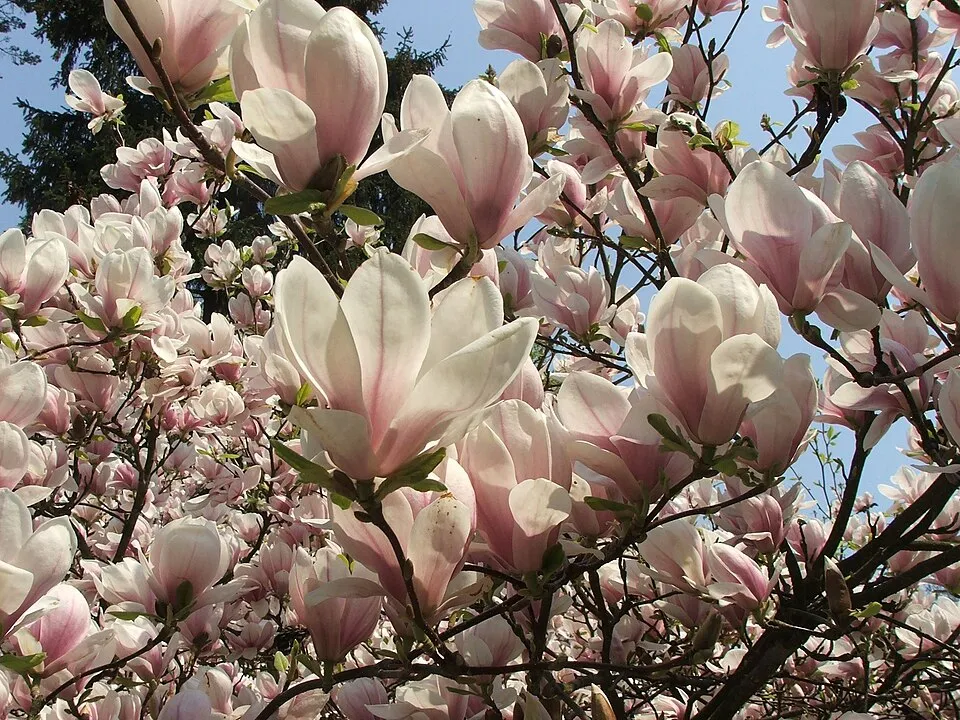
Magnolia × soulangeana, commonly known as the saucer magnolia or tulip tree, is a distinguished deciduous ornamental hybrid renowned for its spectacular early spring floral display. This captivating small tree or large shrub typically reaches heights of 6-9 meters (20-30 feet) with a comparable spread, developing a dense, rounded to vase-shaped canopy. It is a horticultural cross between Magnolia denudata and Magnolia liliiflora, first cultivated in France during the 1820s. Its most striking feature is the profusion of large, goblet to saucer-shaped flowers, approximately 10-15 cm (4-6 inches) across, which emerge in late winter or early spring before the foliage, creating a dramatic visual impact on bare branches.
The flowers exude a subtle, pleasant fragrance, with petals (tepals) typically showcasing a creamy white interior and a vibrant pink or purplish-red exterior, varying in intensity and distribution among numerous cultivars. Cultivars like 'Alexandrina' display pronounced pink hues, while 'Lennei' offers fuller, more rounded tepals. The foliage consists of large, glossy, dark green, oblong to obovate leaves that provide a lush canopy throughout summer and transition to a yellowish-brown or coppery color in autumn, offering secondary seasonal interest. Young trees feature smooth, gray bark that develops slight furrows with age.
Widely prized in landscape design for its exceptional ornamental value, Magnolia × soulangeana serves as a dramatic focal point in gardens, parks, and along avenues. It thrives in moist, well-drained, slightly acidic soils and benefits from a sheltered location to protect its delicate blooms from strong winds and late frosts. Its hardiness and adaptability have cemented its global popularity in temperate regions.
Trusted Scientific References
1. Authoritative external sources for Magnolia × soulangeana
1.1 Wikipedia — Magnolia × soulangeana
1.2 Kew POWO (Plants of the World Online)
1.3 PubMed — peer-reviewed research
1.4 NCBI Taxonomy Browser
1.5 GBIF — Global Biodiversity
1.1.Magnolia Soulangeana — Key Features
- ✓Deciduous hybrid tree/shrub. — Deciduous hybrid tree/shrub.
- ✓Large, fragrant, goblet — shaped flowers.
- ✓Blooms early spring — Blooms early spring before leaves.
- ✓Flowers typically white — Flowers typically white inside, pink/purple outside.
- ✓Lush dark green — Lush dark green summer foliage.
- ✓Smooth gray bark, — Smooth gray bark, becoming furrowed with age.
- ✓Ornamental landscape value. — Ornamental landscape value.
- ✓Prefers moist, acidic, well — drained soil.
- ✓Hardiness zones 4 — 9.
- ✓Moderate growth rate. — Moderate growth rate.
1.2.Magnolia Soulangeana — Snapshot Summary
- ✓Ornamental hybrid with spectacular early spring blooms.
- ✓Contains bioactive lignans magnolol and honokiol.
- ✓Known for anxiolytic, anti-inflammatory, and neuroprotective properties.
- ✓Traditional uses across various health systems for stress and digestion.
- ✓Requires moist, well-drained, acidic soil and sheltered location.
- ✓Caution advised for pregnant individuals, children, and those on certain medications.
2.Magnolia Soulangeana — Taxonomic Classification
3.Magnolia Soulangeana — Quick Facts
4.Magnolia Soulangeana — Structural Profile
5.Magnolia Soulangeana — Where It Grows
6.Magnolia Soulangeana — Historical Applications
7.Magnolia Soulangeana — Bioactive Constituents
- ✓Lignans — Magnolol and Honokiol are primary bioactive compounds, known for their anxiolytic, anti-inflammatory, and neuroprotective properties, acting on GABA receptors and inhibiting pro-inflammatory pathways.
- ✓Neolignans — Related to lignans, these compounds contribute to the plant's antioxidant and cytotoxic activities.
- ✓Alkaloids — While less prominent than lignans, some Magnolia species contain trace alkaloids that may have various pharmacological effects.
- ✓Flavonoids — Quercetin and kaempferol are examples, providing antioxidant and anti-inflammatory benefits, supporting cardiovascular health.
- ✓Volatile Oils — Comprising terpenes and monoterpenes, these contribute to the plant's fragrance and may possess antimicrobial and insecticidal properties.
- ✓Tannins — Astringent compounds that can have anti-inflammatory and antiseptic effects, traditionally used for wound healing and digestive issues.
- ✓Sesquiterpenes — These compounds contribute to the plant's aroma and may exhibit anti-inflammatory and cytotoxic activities.
- ✓Polysaccharides — Complex carbohydrates that can have immunomodulatory effects, supporting the body's immune response.
- ✓Sterols — Plant sterols are known for their potential to lower cholesterol levels and possess anti-inflammatory properties.
- ✓Phenolic Acids — Such as gallic acid and caffeic acid, which are potent antioxidants and contribute to the plant's overall protective effects.
- ✓Saponins — These compounds can have expectorant and anti-inflammatory properties, though their presence in Magnolia × soulangeana is typically minor.
8.Magnolia Soulangeana — Research Insights
- ✓Anti-inflammatory — Magnolia bark contains magnolol and honokiol, which inhibit pro-inflammatory cytokines and enzymes, offering relief from inflammation.
- ✓Anxiolytic — Honokiol and magnolol act on GABA-A receptors, producing calming effects and reducing anxiety without significant sedation.
- ✓Neuroprotective — These lignans cross the blood-brain barrier, protecting neurons from oxidative stress and excitotoxicity, potentially aiding in neurodegenerative conditions.
- ✓Antioxidant — Magnolia compounds scavenge free radicals and upregulate endogenous antioxidant enzymes, mitigating cellular damage.
- ✓Antimicrobial — Extracts demonstrate inhibitory activity against various bacteria and fungi, contributing to its traditional use in treating infections.
- ✓Antitumorigenic — Studies suggest magnolol and honokiol can induce apoptosis in cancer cells and inhibit angiogenesis, showing promise in cancer research.
- ✓Digestive Aid — Traditional systems use magnolia bark to alleviate indigestion, bloating, and nausea, possibly due to its anti-spasmodic effects.
- ✓Sleep Improvement — The anxiolytic properties can also promote better sleep quality by reducing stress and easing the transition into sleep.
- ✓Respiratory Support — Historically used for coughs and asthma, compounds may exhibit bronchodilatory and anti-inflammatory effects on the respiratory tract.
- ✓Oral Health — Magnolia bark extracts are incorporated into dental products for their antibacterial properties against oral pathogens, helping prevent cavities and gingivitis.
- ✓Skin Health — Its anti-inflammatory and antioxidant properties can benefit skin conditions like acne and eczema, reducing redness and promoting healing.
- ✓Stress Reduction — By modulating neurotransmitter activity, particularly GABA, magnolia can help the body adapt to stress and improve overall well-being.
8.1.Magnolia Soulangeana — Indications & Uses
9.Magnolia Soulangeana — Risk Profile
9.1.Magnolia Soulangeana — Caution Notes
- ✓Drowsiness — High doses of magnolia bark extracts can cause sedation due to anxiolytic properties.
- ✓Gastrointestinal Upset — Some individuals may experience mild nausea, diarrhea, or stomach discomfort.
- ✓Allergic Reactions — Skin rashes or irritation can occur in sensitive individuals upon topical application or ingestion.
- ✓Hypotension — Potential to lower blood pressure, which could be problematic for individuals already on antihypertensive medications.
- ✓Bleeding Risk — May have mild anticoagulant effects, increasing the risk of bleeding, especially if combined with blood thinners.
- ✓Uterine Contractions — Traditional warnings suggest avoiding during pregnancy due to potential to stimulate uterine contractions.
- ✓Drug Interactions — Can interact with sedatives, anticoagulants, and antihypertensives, potentiating their effects.
9.2.Magnolia Soulangeana — Risk Assessment
- ✓Pregnancy and Lactation — Avoid use due to insufficient safety data and traditional warnings regarding uterine stimulation.
- ✓Surgery — Discontinue use at least two weeks prior to surgery due to potential anticoagulant effects.
- ✓Children — Not recommended for children due to lack of specific safety studies in pediatric populations.
- ✓Liver/Kidney Conditions — Use with caution in individuals with pre-existing liver or kidney disease; consult a healthcare professional.
- ✓Driving/Operating Machinery — Exercise caution if experiencing drowsiness, especially when driving or operating heavy machinery.
- ✓Dosage Adherence — Always adhere to recommended dosages; excessive intake can increase the risk of adverse effects.
- ✓Professional Consultation — Consult a healthcare professional before use, especially if on medication or with underlying health conditions.
10.Magnolia Soulangeana — Preparation & Dosage
- ✓Bark Decoction — Prepare a decoction by simmering dried bark in water for 15-20 minutes, traditionally used for digestive complaints or as an anti-inflammatory.
- ✓Tincture — Macerate dried bark in alcohol for several weeks to create a concentrated tincture for internal or external application.
- ✓Poultice — Crush fresh leaves or bark and apply directly to skin for minor inflammation or insect bites, following traditional practices.
- ✓Herbal Tea — Infuse dried flowers or young leaves in hot water for a mild, calming tea, though medicinal properties are less concentrated than bark.
- ✓Essential Oil — Though not typically extracted from this specific hybrid, related Magnolia species yield essential oils used in aromatherapy for relaxation.
- ✓Topical Cream/Salve — Incorporate magnolia bark extract into creams or salves for localized anti-inflammatory and antioxidant benefits on the skin.
- ✓Capsules/Tablets — Standardized extracts of magnolol and honokiol are available in supplement form for precise dosing and systemic effects.
- ✓Mouthwash — A dilute decoction or extract can be used as a natural mouthwash for its antimicrobial properties to support oral hygiene.
11.Magnolia Soulangeana — Propagation & Care
- ✓Site Selection — Choose a location with full sun to partial shade, ideally sheltered from strong winds to protect delicate blooms.
- ✓Soil Requirements — Prefers moist, well-drained, slightly acidic soil (pH 5.5-6.5); amend heavy clay or sandy soils with organic matter.
- ✓Watering — Requires consistent moisture, especially during dry periods and in its establishment phase; avoid waterlogging.
- ✓Mulching — Apply a 5-10 cm (2-4 inch) layer of organic mulch around the base to conserve moisture, regulate soil temperature, and suppress weeds.
- ✓Fertilization — Fertilize in early spring with a balanced, slow-release granular fertilizer formulated for acid-loving plants.
- ✓Pruning — Prune after flowering to remove dead, damaged, or crossing branches; minimal pruning is generally required to maintain its natural form.
- ✓Pest and Disease Management — Monitor for common issues like magnolia scale, powdery mildew, and verticillium wilt; address promptly with appropriate treatments.
- ✓Winter Protection — In colder zones, protect young plants with burlap or a layer of mulch to prevent frost damage to flower buds.
Reviewed by the Flora Medical Global Botanical Review Panel
Multi-disciplinary editorial group · Botany · Ethnobotany · Herbal-medicine literature
Who reviewed this: This page was checked by the Flora Medical Global Botanical Review Panel — an in-house editorial group of botany graduates, ethnobotany researchers, and horticulture practitioners who collectively maintain our 7,000+ plant encyclopedia. Meet the team.
Our 4-step verification process
1. Taxonomic verification
Scientific names and synonyms cross-checked against Kew POWO, World Flora Online, and The Plant List.
2. Phytochemical & medicinal cross-reference
Active compounds, traditional uses, and reported activities are cross-referenced with PubMed, USDA Dr. Duke's database, and peer-reviewed ethnobotanical literature.
3. Conservation & distribution check
Distribution, ecology, and conservation status confirmed against GBIF occurrence records and the IUCN Red List.
4. Editorial & safety review
Every entry passes an editorial pass for clarity, originality, and safety notices (toxicity, contraindications, dosage caveats) before publication.
Last reviewed:
Important medical disclaimer: This content is for educational and research purposes only. It is not medical advice and is not a substitute for consultation with a licensed healthcare provider. Do not use any herb to self-treat a medical condition without professional guidance.
Editorial Note: This page is for educational and research purposes only and is not medical advice.
Written by: Flora Medical Global Editorial Team
Reviewed by: Flora Medical Global Botanical Review Panel
Last Updated: June 15, 2026





Magnolia Soulangeana — Comments & Community Reviews
Rate this plant