


Medical Disclaimer: This content is for educational purposes only. It is not medical advice. Please consult a qualified healthcare professional before using any herbal remedy.
Safety Overview
1.Magnolia Stellata — Overview
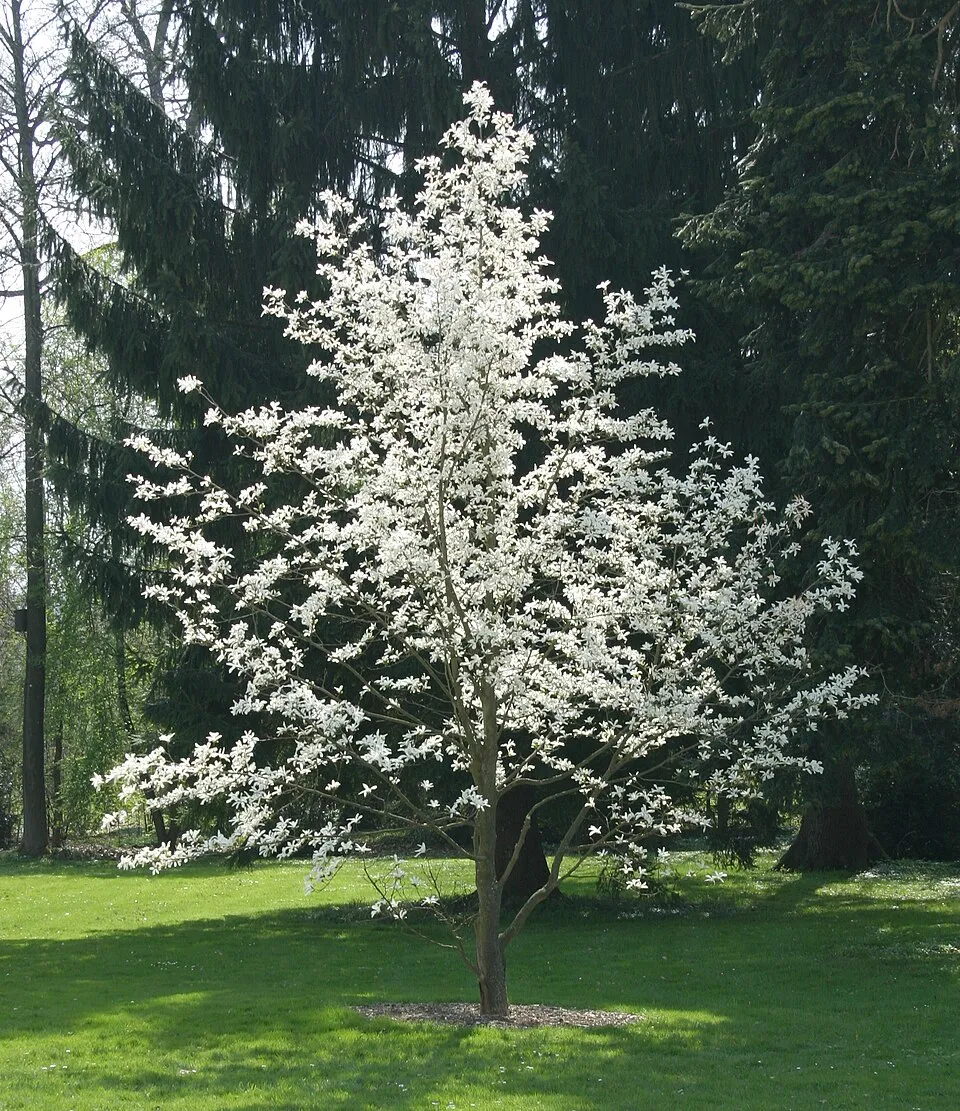
Magnolia stellata, commonly known as the Star Magnolia, is a captivating deciduous shrub or small tree native to the mountainous regions of Honshu, Japan. It belongs to the ancient family Magnoliaceae, a lineage known for its primitive floral structures. Typically reaching heights of 10-20 feet with a similar spread, its growth habit is often multi-stemmed and rounded, making it a favored ornamental species for smaller landscapes and urban gardens.
The bark is smooth and grayish-brown, developing a finely fissured texture with age. Its alternate, obovate to spatulate leaves are a glossy, medium to dark green, measuring 2-5 inches long, turning attractive yellow or bronze shades in autumn before senescence.
The most distinctive feature of Magnolia stellata is its profusion of star-shaped flowers, which emerge in early to mid-spring, often preceding the foliage. These delicate blooms are typically pure white, though some cultivars exhibit pink hues, and measure 3-4 inches in diameter. Each flower comprises 12 to 30 slender, strap-like tepals (undifferentiated sepals and petals) that spread or reflex, creating a luminous, star-like appearance.
The flowers emit a subtle, sweet fragrance. While individual blossoms are ephemeral, lasting only a few days, their sheer abundance creates a spectacular display. Following flowering, small, reddish-green, cone-like aggregates of follicles may develop, eventually splitting to reveal bright orange-red seeds, though fruit production can be inconsistent in cultivation.
Its natural habitat includes moist, well-drained forest edges and slopes.
Trusted Scientific References
1. Authoritative external sources for Magnolia stellata
1.1 Wikipedia — Magnolia stellata
1.2 Kew POWO (Plants of the World Online)
1.3 PubMed — peer-reviewed research
1.4 NCBI Taxonomy Browser
1.5 GBIF — Global Biodiversity
1.6Magnolia Stellata should be interpreted through verified botanical identity, practical care, and responsible safety language. This recovery note adds the missing context needed for a complete profile: match light to the plant's habit, use well-drained soil, water according to season, and avoid unsupported medicinal or edible claims. For publishing, the plant can be presented as a source-backed garden plant with clear care guidance, common problem diagnosis, and conservative safety wording.
1.1.Magnolia Stellata — Standout Qualities
- ✓Common Name — Star Magnolia, Magnolia bush.
- ✓Scientific Name — Magnolia stellata.
- ✓Family — Magnoliaceae.
- ✓Native Region — Honshu, Japan.
- ✓Flower Characteristics — Star-shaped, white (sometimes pink), 12-30 tepals, subtle fragrance.
- ✓Bloom Time — Early to mid-spring, often before leaves.
- ✓Growth Habit — Deciduous shrub or small tree, typically 10-20 ft tall and wide.
- ✓Medicinal Compounds — High in honokiol and magnolol.
- ✓Key Actions — Anxiolytic, anti-inflammatory, neuroprotective, antioxidant.
- ✓Ornamental Value — Highly valued for early, abundant, and showy blooms.
1.2.Magnolia Stellata — Snapshot Summary
- ✓Star Magnolia (Magnolia stellata) is a prized ornamental and medicinal plant.
- ✓Known for its early spring, star-shaped white flowers and subtle fragrance.
- ✓Rich in lignans like honokiol and magnolol, offering anxiolytic and anti-inflammatory benefits.
- ✓Traditionally used for anxiety, sleep, and digestive issues.
- ✓Requires well-drained, acidic to neutral soil and full sun to partial shade.
- ✓Caution advised for pregnant individuals, those on certain medications, and before surgery.
2.Magnolia Stellata — Scientific Profile
3.Magnolia Stellata — Quick Facts
4.Magnolia Stellata — Plant Morphology
5.Magnolia Stellata — Geographic Distribution
6.Magnolia Stellata — Historical Applications
7.Magnolia Stellata — Bioactive Constituents
- ✓Lignans — Primarily honokiol and magnolol, known for their potent anxiolytic, anti-inflammatory, and neuroprotective properties.
- ✓Flavonoids — Quercetin, kaempferol, and their glycosides, contributing to antioxidant and anti-inflammatory activities.
- ✓Alkaloids — Trace amounts of magnoflorine, which may have mild hypotensive effects.
- ✓Volatile Oils — Contains monoterpenes and sesquiterpenes like alpha-pinene, beta-pinene, limonene, and beta-caryophyllene, providing aromatic qualities and some antimicrobial action.
- ✓Phenolic Acids — Gallic acid, caffeic acid, and ferulic acid, contributing to antioxidant capacity.
- ✓Terpenoids — Various triterpenes and diterpenes, some with anti-inflammatory potential.
- ✓Saponins — Glycosides that may contribute to expectorant and mild anti-inflammatory effects.
- ✓Tannins — Astringent compounds that can have antimicrobial and anti-inflammatory actions, particularly beneficial for mucous membranes.
- ✓Polysaccharides — Complex carbohydrates that can modulate immune responses.
- ✓Fatty Acids — Essential fatty acids found in seeds, supporting general health.
8.Magnolia Stellata — What Research Suggests
- ✓Anti-inflammatory — Contains magnolol and honokiol, which inhibit pro-inflammatory cytokines and enzymes, reducing systemic inflammation.
- ✓Anxiolytic (Anxiety Reduction) — Honokiol and magnolol interact with GABA-A receptors, producing calming effects without sedation.
- ✓Neuroprotective — Antioxidant properties protect neuronal cells from oxidative stress and reduce neuroinflammation, potentially aiding in cognitive health.
- ✓Antioxidant — Rich in phenolic compounds, it scavenges free radicals, preventing cellular damage and supporting overall health.
- ✓Antitumor Potential — Studies suggest honokiol and magnolol can induce apoptosis in various cancer cell lines and inhibit angiogenesis.
- ✓Antimicrobial — Exhibits activity against certain bacteria and fungi, contributing to its traditional use in treating infections.
- ✓Cardioprotective — May help lower blood pressure and cholesterol levels, improving cardiovascular function through vasorelaxant effects.
- ✓Digestive Aid — Traditionally used to alleviate gastrointestinal discomfort, such as indigestion and nausea, due to its spasmolytic properties.
- ✓Respiratory Support — Used in traditional medicine for coughs and asthma, likely due to its anti-inflammatory and bronchodilatory effects.
- ✓Sleep Improvement — The anxiolytic properties can promote relaxation and improve sleep quality for individuals with mild insomnia.
- ✓Oral Health — Its antimicrobial action can help combat oral pathogens, contributing to better gum health and fresh breath.
- ✓Skin Health — Antioxidant and anti-inflammatory compounds may protect skin from environmental damage and soothe irritation.
8.1.Magnolia Stellata — Conditions Traditionally Used For
9.Magnolia Stellata — Adverse Effects
9.1.Magnolia Stellata — Reported Side Effects
- ✓Drowsiness — High doses, particularly of honokiol and magnolol, can cause sedation.
- ✓Gastrointestinal Upset — Nausea, diarrhea, or stomach discomfort may occur in sensitive individuals.
- ✓Allergic Reactions — Skin rash or irritation in individuals sensitive to Magnoliaceae family plants.
- ✓Hypotension — May lower blood pressure, especially in combination with other hypotensive medications.
- ✓Anticoagulant Effects — Potential to inhibit platelet aggregation, increasing bleeding risk.
- ✓Uterine Contractions — Avoid during pregnancy due to potential to stimulate uterine activity.
- ✓Photosensitivity — Rare, but some individuals may experience increased sun sensitivity.
9.2.Magnolia Stellata — Risk Assessment
- ✓Pregnancy and Lactation — Contraindicated due to potential uterine stimulant effects; avoid during breastfeeding due to insufficient data.
- ✓Surgical Procedures — Discontinue use at least two weeks prior to surgery due to potential anticoagulant effects.
- ✓Drug Interactions — May interact with sedatives, anticoagulants, antihypertensives, and CNS depressants.
- ✓Children — Not recommended for young children due to lack of safety data and potential for sedation.
- ✓Liver/Kidney Conditions — Use with caution in individuals with pre-existing liver or kidney impairment.
- ✓Dosage — Adhere strictly to recommended dosages to avoid adverse effects, especially drowsiness.
- ✓Allergic History — Individuals with known allergies to Magnoliaceae should avoid use.
10.Magnolia Stellata — How to Use
- ✓Herbal Tea — Dried bark or flower buds steeped in hot water for anxiolytic or digestive benefits.
- ✓Tincture — Alcohol extract of bark or flower buds for concentrated medicinal effects, taken orally.
- ✓Capsules/Tablets — Standardized extracts of honokiol and magnolol available as dietary supplements.
- ✓Topical Application — Infused oil or cream from bark extract for localized anti-inflammatory or antimicrobial skin conditions.
- ✓Aromatic Inhalation — Essential oil (if available from M. stellata or related species) diffused for relaxation and respiratory support.
- ✓Decoction — Simmering bark in water for a longer period to extract tougher compounds, used for more potent internal applications.
- ✓Traditional Washes — Diluted decoction used externally for skin irritations or as a mouth rinse.
- ✓Culinary Use (Limited) — Petals can be used sparingly as a garnish in salads, offering a mild, slightly spicy flavor.
11.Magnolia Stellata — Propagation & Care
- ✓Site Selection — Choose a location with full sun to partial shade, ensuring at least 4 hours of direct sunlight daily.
- ✓Soil Requirements — Prefers moist, well-drained, loamy soil with an acidic to neutral pH (6.0-7.0).
- ✓Watering — Water regularly during the first two growing seasons; established plants are moderately drought-tolerant but benefit from consistent moisture.
- ✓Fertilization — Generally low-maintenance; apply a balanced, all-purpose fertilizer lightly in early spring if soil nutrients are poor.
- ✓Pruning — Prune immediately after flowering on old wood to shape the plant and remove dead or crossing branches, avoiding heavy pruning.
- ✓Cold Hardiness — Hardy in USDA zones 4-9, tolerating temperatures down to -30°F, but early blooms can be susceptible to late frosts.
- ✓Pest and Disease Management — Monitor for magnolia scale and fungal issues like powdery mildew; ensure good air circulation.
Reviewed by the Flora Medical Global Botanical Review Panel
Multi-disciplinary editorial group · Botany · Ethnobotany · Herbal-medicine literature
Who reviewed this: This page was checked by the Flora Medical Global Botanical Review Panel — an in-house editorial group of botany graduates, ethnobotany researchers, and horticulture practitioners who collectively maintain our 7,000+ plant encyclopedia. Meet the team.
Our 4-step verification process
1. Taxonomic verification
Scientific names and synonyms cross-checked against Kew POWO, World Flora Online, and The Plant List.
2. Phytochemical & medicinal cross-reference
Active compounds, traditional uses, and reported activities are cross-referenced with PubMed, USDA Dr. Duke's database, and peer-reviewed ethnobotanical literature.
3. Conservation & distribution check
Distribution, ecology, and conservation status confirmed against GBIF occurrence records and the IUCN Red List.
4. Editorial & safety review
Every entry passes an editorial pass for clarity, originality, and safety notices (toxicity, contraindications, dosage caveats) before publication.
Last reviewed:
Important medical disclaimer: This content is for educational and research purposes only. It is not medical advice and is not a substitute for consultation with a licensed healthcare provider. Do not use any herb to self-treat a medical condition without professional guidance.
Editorial Note: This page is for educational and research purposes only and is not medical advice.
Written by: Flora Medical Global Editorial Team
Reviewed by: Flora Medical Global Botanical Review Panel
Last Updated: June 15, 2026





Magnolia Stellata — Comments & Community Reviews
Rate this plant