


Medical Disclaimer: This content is for educational purposes only. It is not medical advice. Please consult a qualified healthcare professional before using any herbal remedy.
Safety Overview
1.Majesty Palm — Introduction & Highlights
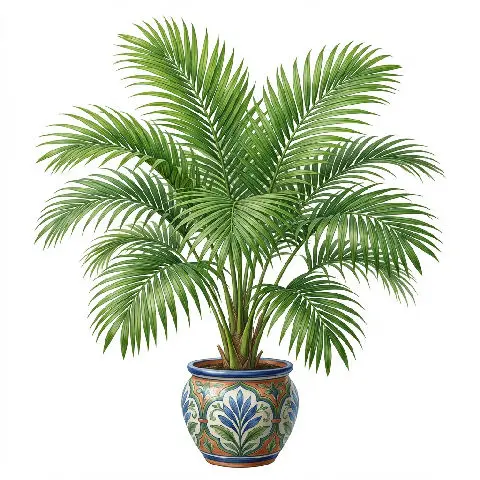
The Majesty Palm, scientifically known as Ravenea rivularis, is a magnificent tropical palm endemic to the island of Madagascar. In its native habitat, it thrives along riverbanks and in moist, lowland rainforests, often growing in seasonally flooded areas, which significantly influences its care requirements in cultivation. This elegant member of the Arecaceae family exhibits a robust, single trunk that can reach up to 6 inches in diameter, featuring a smooth, grayish bark that may display faint vertical striations.
Its most striking feature is its lush crown of pinnate fronds, which are long, arching, and feathery, extending up to 4 feet in length and showcasing a vibrant, glossy deep green hue. When cultivated indoors, the Majesty Palm typically achieves a graceful stature of 5 to 10 feet, though it can grow much taller in optimal outdoor conditions. While it can produce small, creamy white flowers in dense clusters, followed by small red fruits, these are rarely observed in indoor environments.
Taxonomically, Ravenea rivularis belongs to the Ceroxyleae tribe within the Ceroxyloideae subfamily, closely related to other Madagascan palms like Dypsis, highlighting its unique evolutionary lineage within the diverse palm family.
Trusted Scientific References
1. Authoritative external sources for Ravenea rivularis
1.1 Wikipedia — Ravenea rivularis
1.2 Kew POWO (Plants of the World Online)
1.3 PubMed — peer-reviewed research
1.4 NCBI Taxonomy Browser
1.5 GBIF — Global Biodiversity
1.6Majesty Palm should be interpreted through verified botanical identity, practical care, and responsible safety language. This recovery note adds the missing context needed for a complete profile: match light to the plant's habit, use well-drained soil, water according to season, and avoid unsupported medicinal or edible claims. For publishing, the plant can be presented as a source-backed indoor plant with clear care guidance, common problem diagnosis, and conservative safety wording.
1.1.Majesty Palm — Key Features
- ✓Tall, graceful stature, reaching 5 — 10 feet indoors.
- ✓Distinctive pinnate, feathery, — Distinctive pinnate, feathery, deep green, glossy fronds.
- ✓Smooth, grayish trunk — Smooth, grayish trunk with faint vertical lines.
- ✓Native to the — Native to the riverbanks and rainforests of Madagascar.
- ✓Primarily cultivated as — Primarily cultivated as an ornamental houseplant.
- ✓Known for its — Known for its potential to purify indoor air by absorbing toxins.
- ✓Requires high humidity — Requires high humidity and consistent soil moisture.
- ✓Thrives in bright, — Thrives in bright, indirect light conditions.
- ✓Generally considered non — toxic to humans and pets.
- ✓Creates a lush, — Creates a lush, tropical ambiance in indoor spaces.
1.2.Majesty Palm — At-a-Glance Summary
- ✓The Majesty Palm (Ravenea rivularis) is a majestic, non-toxic tropical houseplant from Madagascar.
- ✓Valued for its lush, pinnate fronds and elegant form, enhancing indoor aesthetics.
- ✓Requires bright, indirect light, consistently moist soil, and high humidity to thrive.
- ✓Contributes to improved indoor air quality and psychological well-being.
- ✓Generally safe for homes with children and pets, with minimal known adverse effects.
2.Majesty Palm — Scientific Profile
3.Majesty Palm — Botanical Stats
4.Majesty Palm — Structural Profile
5.Majesty Palm — Habitat & Distribution
6.Majesty Palm — Ethnobotanical Uses
7.Majesty Palm — Active Compounds
- ✓Carbohydrates — Primarily composed of cellulose and hemicellulose, which form the structural components of cell walls, and starches, serving as key energy storage molecules within the plant tissues.
- ✓Lipids — Includes various fatty acids, waxes, and sterols found in cell membranes and on leaf surfaces, providing protection against water loss and pathogens.
- ✓Proteins & Amino Acids — Essential for enzymatic functions, structural support, and metabolic processes throughout the plant's growth and development.
- ✓Chlorophylls — Predominantly chlorophyll a and b, these green pigments are crucial for capturing light energy during photosynthesis in the leaves.
- ✓Carotenoids — Accessory pigments such as beta-carotene and lutein are present, assisting in light absorption and providing photoprotection against oxidative stress.
- ✓Lignins — Complex phenolic polymers that provide rigidity and strength to the plant's vascular tissues and cell walls, particularly in the trunk and frond petioles.
- ✓Water — The primary constituent of all living plant cells, acting as a solvent for nutrients and a medium for biochemical reactions, maintaining turgor pressure.
- ✓Mineral Elements — Essential macro- and micronutrients like nitrogen, phosphorus, potassium, calcium, magnesium, and iron, absorbed from the soil for various physiological functions.
- ✓Flavonoids (General) — While not extensively studied for specific medicinal compounds, general flavonoid compounds are expected in the foliage, contributing to antioxidant defense and UV protection in trace amounts.
- ✓Volatile Organic Compounds (VOCs) — The plant may release minute quantities of naturally occurring VOCs, often involved in plant communication or defense mechanisms, though not in pharmacologically significant concentrations.
8.Majesty Palm — Research Insights
- ✓Air Purification — Majesty Palm, like many indoor plants, contributes to improved indoor air quality by absorbing common volatile organic compounds (VOCs) such as benzene, formaldehyde, and carbon monoxide from the surrounding environment.
- ✓Stress Reduction — The presence of living greenery in indoor spaces has been shown to reduce psychological stress and anxiety, promoting a sense of calm and well-being through biophilic interaction.
- ✓Humidity Regulation — Through the process of transpiration, Majesty Palms release water vapor into the air, naturally increasing ambient humidity, which can be beneficial in dry indoor climates for respiratory comfort.
- ✓Aesthetic Enhancement — Its tall, graceful form and lush foliage provide significant visual appeal, enhancing the aesthetic quality of living and working spaces, contributing to a more pleasant environment.
- ✓Cognitive Enhancement — Studies suggest that incorporating plants into workspaces can improve concentration, memory retention, and overall cognitive function by creating a more stimulating and natural setting.
- ✓Sound Dampening — The broad, feathery fronds of the Majesty Palm can help absorb and diffuse ambient noise, contributing to a quieter and more serene indoor atmosphere.
- ✓Biophilic Connection — Cultivating and interacting with a Majesty Palm fosters a connection to nature, which is vital for human psychological health and can alleviate feelings of isolation from the natural world.
- ✓Visual Comfort — The deep green color and natural patterns of the fronds offer a refreshing visual break, potentially reducing eye strain and fatigue associated with prolonged screen time.
- ✓Therapeutic Horticulture — Engaging in the care of plants like the Majesty Palm is a form of therapeutic horticulture, offering a sense of purpose, mindfulness, and a gentle physical activity.
- ✓Mood Elevation — The vibrant presence of a healthy indoor plant can positively influence mood, reduce feelings of sadness, and generally uplift the spirit of occupants in a room.
8.1.Majesty Palm — Indications & Uses
9.Majesty Palm — Risk Profile
9.1.Majesty Palm — Warnings
- ✓Allergic Reactions — While rare, some individuals with extreme sensitivities may experience mild contact dermatitis from handling the fronds or sap.
- ✓Pest Infestations — Improper care, particularly low humidity, can lead to susceptibility to common houseplant pests like spider mites, mealybugs, or scale insects.
- ✓Maintenance Demands — The plant's specific needs for high humidity, consistent moisture, and bright light can be challenging for novice growers, potentially leading to plant decline.
- ✓Overwatering Issues — Persistent overwatering without adequate drainage can lead to root rot, a common cause of plant death, manifesting as yellowing leaves and a foul odor.
- ✓Underwatering Stress — Allowing the soil to dry out completely can cause frond tips to brown and crisp, leading to significant stress and overall decline in plant health.
- ✓Space Requirements — Its potential to grow tall and wide means it may outgrow smaller indoor spaces, requiring larger pots and ample room.
- ✓Cold Sensitivity — Exposure to cold drafts or temperatures below 50°F (10°C) can cause chilling injury, leading to leaf discoloration and damage.
9.2.Majesty Palm — Clinical Safety Notes
- ✓Non-Toxic — The Majesty Palm (Ravenea rivularis) is generally considered non-toxic to humans, cats, and dogs, making it a safe choice for households with pets and children.
- ✓Minimal Skin Irritation — Direct contact with the fronds or sap typically does not cause skin irritation, though sensitive individuals should always exercise caution.
- ✓Ingestion Safety — While not intended for consumption, accidental ingestion of small amounts by pets or children is unlikely to cause severe adverse effects, potentially only mild digestive upset.
- ✓Low Allergen Potential — The plant produces inconspicuous flowers, and its pollen is not a common allergen, making it suitable for most indoor environments.
- ✓Handling Precautions — No sharp spines, thorns, or caustic sap necessitate special handling gloves or protective eyewear during routine care.
- ✓Environmental Impact — As an indoor ornamental, its ecological impact is minimal; it is not considered invasive in temperate climates if disposed of responsibly.
- ✓General Plant Hygiene — Maintaining good plant hygiene, such as washing hands after handling, is always recommended, as with any living organism.
10.Majesty Palm — Preparation & Dosage
- ✓Indoor Ornamental Display — Position the Majesty Palm in a prominent indoor location to leverage its tall, graceful stature and lush foliage for enhancing home or office aesthetics.
- ✓Air Purification — Place the palm in areas with good air circulation, such as living rooms or offices, to maximize its natural air-filtering capabilities against indoor pollutants.
- ✓Humidity Enhancement — Utilize the palm in rooms that benefit from increased humidity, like bathrooms (if sufficient light is present) or near other humidity-loving plants.
- ✓Biophilic Design Integration — Incorporate the Majesty Palm into interior design schemes to foster a stronger connection to nature and create a calming, natural environment.
- ✓Stress Reduction Element — Position the plant in relaxation zones or workspaces to harness its psychological benefits, contributing to reduced stress and improved focus.
- ✓Architectural Greenery — Use the Majesty Palm as a living architectural element to define spaces, add vertical interest, or soften harsh lines in modern interiors.
- ✓Gifting — Present a Majesty Palm as a thoughtful and lasting gift, suitable for housewarmings, office decor, or as a gesture of well-being for plant enthusiasts.
- ✓Educational Specimen — Display in botanical collections or educational settings to showcase palm morphology and the importance of tropical plant conservation.
11.Majesty Palm — Growth Requirements
- ✓Bright, Indirect Light — Provide 6-8 hours of bright, indirect sunlight daily; direct afternoon sun can scorch fronds, while insufficient light leads to sparse, pale growth.
- ✓Consistent Moisture — Keep the soil consistently moist but never waterlogged, allowing the top inch to dry slightly between waterings; avoid complete drying out as they are riparian natives.
- ✓High Humidity — Majesty Palms thrive in high humidity (above 50%); mist fronds regularly, use a pebble tray, or place a humidifier nearby, especially in dry indoor environments.
- ✓Well-Draining Soil — Plant in a rich, peat-based potting mix that offers good drainage while retaining adequate moisture, mimicking its native habitat.
- ✓Regular Fertilization — Feed with a balanced liquid houseplant fertilizer every 2-3 months during the spring and summer growing seasons, abstaining in fall and winter.
- ✓Repotting — Repot every 1-2 years, or when roots emerge from drainage holes, increasing pot size by no more than 2 inches to prevent root bound conditions and encourage growth.
- ✓Pruning — Prune only yellowed, brown, or dead fronds by cutting them close to the trunk with clean, sharp shears to maintain plant health and appearance.
- ✓Pest Monitoring — Regularly inspect fronds for common pests like spider mites, especially in dry conditions; increase humidity and wipe leaves to deter infestations.
Reviewed by the Flora Medical Global Botanical Review Panel
Multi-disciplinary editorial group · Botany · Ethnobotany · Herbal-medicine literature
Who reviewed this: This page was checked by the Flora Medical Global Botanical Review Panel — an in-house editorial group of botany graduates, ethnobotany researchers, and horticulture practitioners who collectively maintain our 7,000+ plant encyclopedia. Meet the team.
Our 4-step verification process
1. Taxonomic verification
Scientific names and synonyms cross-checked against Kew POWO, World Flora Online, and The Plant List.
2. Phytochemical & medicinal cross-reference
Active compounds, traditional uses, and reported activities are cross-referenced with PubMed, USDA Dr. Duke's database, and peer-reviewed ethnobotanical literature.
3. Conservation & distribution check
Distribution, ecology, and conservation status confirmed against GBIF occurrence records and the IUCN Red List.
4. Editorial & safety review
Every entry passes an editorial pass for clarity, originality, and safety notices (toxicity, contraindications, dosage caveats) before publication.
Last reviewed:
Important medical disclaimer: This content is for educational and research purposes only. It is not medical advice and is not a substitute for consultation with a licensed healthcare provider. Do not use any herb to self-treat a medical condition without professional guidance.
Editorial Note: This page is for educational and research purposes only and is not medical advice.
Written by: Flora Medical Global Editorial Team
Reviewed by: Flora Medical Global Botanical Review Panel
Last Updated: June 15, 2026





Majesty Palm — Comments & Community Reviews
Rate this plant