

Medical Disclaimer: This content is for educational purposes only. It is not medical advice. Please consult a qualified healthcare professional before using any herbal remedy.
Safety Overview
1.Mammillaria Gracilis — At a Glance
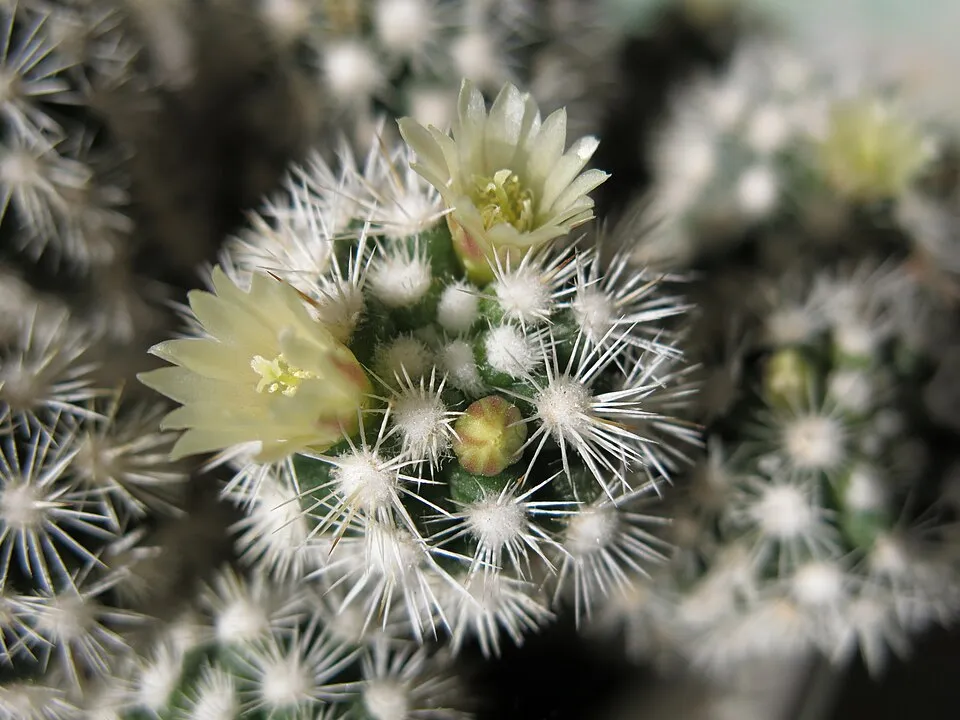
Mammillaria gracilis, widely recognized as the 'Ladyfinger Cactus' or 'Thimble Cactus,' is an enchanting and diminutive succulent species belonging to the extensive Cactaceae family, within the order Caryophyllales. This charming plant is characterized by its dense clustering habit, forming cylindrical stems that typically reach a height of 12-24 cm, with individual stems growing up to 12 cm long and approximately 5 cm in diameter. The stems are a vibrant deep green, intricately covered with small, conical tubercles, which are a defining feature of the Mammillaria genus.
Each tubercle is adorned with delicate, thin, white radial spines that interweave, creating a striking, almost fuzzy appearance that beautifully contrasts with the underlying green epidermis. Unlike many cacti, Mammillaria gracilis lacks prominent central spines, emphasizing its soft, thimble-like texture. In the cooler months, typically from early spring to winter, this species produces delightful funnel-shaped flowers, which emerge in a ring around the crown of each stem.
These blooms can vary in color from creamy white to pale pink or yellow, further enhancing its significant ornamental appeal. Native to the semi-arid regions of Mexico, particularly thriving in states such as San Luis Potosi and Coahuila, Mammillaria gracilis naturally occurs in rocky soils that provide exceptional drainage, adapting perfectly to its arid environment. Its unique morphology and ease of cultivation make it a favored addition to indoor plant collections and greenhouses globally.
Trusted Scientific References
1. Authoritative external sources for Mammillaria gracilis
1.1 Wikipedia — Mammillaria gracilis
1.2 Kew POWO (Plants of the World Online)
1.3 PubMed — peer-reviewed research
1.4 NCBI Taxonomy Browser
1.5 GBIF — Global Biodiversity
1.6Mammillaria Gracilis should be interpreted through verified botanical identity, practical care, and responsible safety language. This recovery note adds the missing context needed for a complete profile: match light to the plant's habit, use well-drained soil, water according to season, and avoid unsupported medicinal or edible claims. For publishing, the plant can be presented as a source-backed indoor plant with clear care guidance, common problem diagnosis, and conservative safety wording.
1.1.Mammillaria Gracilis — Highlights
- ✓Cylindrical, clustering stems with a 'thimble — like' appearance.
- ✓Distinctive interwoven white — Distinctive interwoven white radial spines, giving a soft, fuzzy texture.
- ✓Produces small, funnel — shaped flowers in white, pink, or yellow hues.
- ✓Native to the semi — arid regions of Mexico, adapted to rocky, well-draining soils.
- ✓Highly drought — tolerant due to its succulent nature and CAM photosynthesis.
- ✓Considered a low — maintenance and beginner-friendly cactus species.
- ✓Propagates very easily — Propagates very easily from offsets, forming dense clumps over time.
- ✓Traditional uses include — Traditional uses include topical application for inflammation and skin irritations.
- ✓Possesses high water — Possesses high water content, contributing to its purported hydrating effects.
- ✓Exhibits winter dormancy, — Exhibits winter dormancy, requiring reduced watering during cooler months.
1.2.Mammillaria Gracilis — At-a-Glance Summary
- ✓Mammillaria gracilis is an ornamental and traditionally recognized medicinal cactus.
- ✓Native to Mexico, known for its clustering cylindrical stems and white spines.
- ✓Traditionally used for its cooling, anti-inflammatory, and digestive support properties.
- ✓An easy-to-grow succulent, ideal for beginners and indoor cultivation.
- ✓Propagates readily from small offsets, making it excellent for ground cover.
- ✓Requires well-draining soil and ample sunlight to thrive.
2.Mammillaria Gracilis — Scientific Identity
3.Mammillaria Gracilis — Fact Sheet
4.Mammillaria Gracilis — Botanical Description
5.Mammillaria Gracilis — Ecological Habitat
6.Mammillaria Gracilis — Traditional Uses
7.Mammillaria Gracilis — Phytochemistry
- ✓Mucilage — Predominantly composed of complex polysaccharides like pectins and glucomannans, responsible for the plant's demulcent, soothing, and hydrating properties.
- ✓Flavonoids — Includes compounds such as quercetin and kaempferol derivatives, which are potent antioxidants and contribute to anti-inflammatory effects.
- ✓Alkaloids — Trace amounts of simple alkaloids, possibly including tyramine or hordenine, which are common in Cactaceae and may exert mild physiological effects.
- ✓Phenolic Acids — Such as caffeic acid and ferulic acid, known for their significant antioxidant and free-radical scavenging capabilities.
- ✓Triterpenoids — Compounds like beta-sitosterol and other phytosterols, which are recognized for their anti-inflammatory and potential cholesterol-modulating activities.
- ✓Vitamins — Contains essential vitamins, notably Vitamin C (ascorbic acid) for immune support and antioxidant defense, and various B vitamins crucial for metabolic processes.
- ✓Minerals — Rich in vital electrolytes and trace minerals including calcium, magnesium, potassium, and phosphorus, essential for cellular function and hydration.
- ✓Organic Acids — Malic acid and citric acid contribute to the plant's characteristic taste and may play roles in metabolic pathways and pH regulation.
- ✓Saponins — Glycosides that can have detergent-like properties and are sometimes associated with immune-modulating or anti-inflammatory effects.
- ✓Carotenoids — Pigments like beta-carotene, precursors to Vitamin A, which possess antioxidant properties and are important for vision and immune function.
8.Mammillaria Gracilis — Pharmacological Findings
- ✓Anti-inflammatory Properties — Traditionally, Mammillaria gracilis is applied topically as a poultice, believed to reduce localized inflammation and swelling due to its cooling nature.
- ✓Skin Soothing — The mucilaginous content within the stems may offer demulcent effects, providing relief for minor skin irritations, sunburn, and insect bites.
- ✓Digestive Health Support — In some traditional practices, preparations from the cactus are thought to aid in preventing gastric disturbances and promoting a healthy digestive tract.
- ✓Hydration Enhancement — Given its high water content, consuming parts of the cactus (where safe and appropriate) could contribute to systemic hydration and electrolyte balance.
- ✓Minor Wound Healing — The soothing properties and potential presence of beneficial compounds may support the natural healing process of superficial cuts and abrasions.
- ✓Antioxidant Activity — While not extensively studied, cacti often contain flavonoids and phenolic compounds that could contribute to antioxidant defense against cellular damage.
- ✓Mild Analgesic Effect — Topical application may offer a mild numbing or pain-relieving sensation, particularly for superficial skin discomfort.
- ✓Detoxification Support — The combination of water and fiber content may assist the body's natural detoxification pathways by promoting regular bowel movements and flushing toxins.
- ✓Immune System Modulation — General plant nutrients and potential phytochemicals could offer subtle support to the immune system, contributing to overall wellness.
- ✓Diuretic Action — The high water volume in the cactus may exert a mild diuretic effect, aiding in fluid balance and potentially supporting kidney function.
8.1.Mammillaria Gracilis — Reported Uses
9.Mammillaria Gracilis — Safety & Side Effects
9.1.Mammillaria Gracilis — Caution Notes
- ✓Skin Irritation from Spines — Direct contact with the sharp spines can cause minor punctures, redness, or irritation, requiring careful handling.
- ✓Allergic Reactions — While rare, individuals sensitive to members of the Cactaceae family may experience allergic contact dermatitis or other hypersensitivity reactions.
- ✓Gastrointestinal Upset — Ingesting large quantities of the plant material without proper preparation or identification may lead to mild digestive discomfort, nausea, or diarrhea.
- ✓Hypothetical Drug Interactions — Due to limited research, potential interactions with medications, especially diuretics or blood sugar regulators, cannot be ruled out.
- ✓Photosensitivity — Some plant compounds can rarely induce photosensitivity, potentially increasing skin sensitivity to sunlight after topical application in susceptible individuals.
- ✓Mild Laxative Effect — The fiber and water content, if ingested, could contribute to a mild laxative effect in some individuals.
9.2.Mammillaria Gracilis — Clinical Safety Notes
- ✓Expert Consultation — Always consult a qualified healthcare professional or medical herbalist before using Mammillaria gracilis for medicinal purposes, especially internally.
- ✓Pregnancy and Lactation — Avoid use during pregnancy and lactation due to the lack of sufficient safety data to ensure no adverse effects on mother or child.
- ✓Patch Testing — Perform a patch test on a small skin area before extensive topical application to check for any allergic reactions or sensitivities.
- ✓Proper Identification — Ensure accurate identification of Mammillaria gracilis; confusion with other cactus species could lead to unintended effects.
- ✓External Use Predominance — Most traditional medicinal applications are external; internal use is not widely documented or recommended without professional guidance.
- ✓Keep Out of Reach — Store plant material and preparations safely away from children and pets to prevent accidental ingestion or injury from spines.
- ✓Generally Non-Toxic (External) — While generally considered non-toxic to humans and animals for external contact, internal ingestion should be approached with extreme caution.
10.Mammillaria Gracilis — Preparation Methods
- ✓Topical Poultice — Crush fresh stems of Mammillaria gracilis and apply directly to the skin as a poultice to soothe irritations, reduce inflammation, or alleviate minor burns.
- ✓Infusion (External) — Steep dried or fresh stem pieces in hot water to create a mild infusion, which can be cooled and used as a wash for skin conditions.
- ✓Juicing (Topical) — Extract the juice from fresh stems and apply directly to affected skin areas for a concentrated soothing and hydrating effect.
- ✓Macerated Oil — Infuse chopped, dried Mammillaria gracilis in a carrier oil (like jojoba or almond oil) for several weeks to create an oil for massage or topical skin conditioning.
- ✓Dried Powder — Dehydrate the stems, then grind them into a fine powder; this can be incorporated into homemade salves, creams, or face masks for its purported benefits.
- ✓Edible Preparation (Caution) — In regions with traditional use, small, identified, and properly prepared portions might be consumed for hydration; however, this requires expert guidance due to lack of extensive safety data.
- ✓Tincture (External) — Prepare an alcohol-based tincture for concentrated topical application, allowing for longer shelf-life and potent delivery of plant compounds.
11.Mammillaria Gracilis — Cultivation & Care
- ✓Sunlight — Requires full sun to partial shade, ideally receiving at least 6 hours of direct sunlight daily; indoors, a south-facing window is optimal.
- ✓Watering — Employ the 'soak and dry' method, allowing the soil to dry out completely between waterings to prevent root rot, especially during its winter dormancy.
- ✓Soil — Plant in a well-draining cactus or succulent potting mix, often incorporating perlite or pumice to ensure excellent aeration and drainage.
- ✓Temperature — Not cold hardy; best grown in USDA zones 10a and above, or brought indoors if temperatures drop below 30°F (-1.1°C).
- ✓Propagation — Easily propagated from offsets; simply remove the small pups using a sterile knife, allow them to callus for several days, then replant in dry soil.
- ✓Container Growing — Ideal for containers, which allows for easy relocation indoors during colder months and precise control over soil conditions.
- ✓Dormancy — Experiences winter dormancy, during which watering should be significantly reduced or ceased entirely until active growth resumes in spring.
- ✓Fertilization — Fertilize sparingly with a diluted, balanced liquid succulent fertilizer during the active growing season (spring and summer), typically once a month.
Reviewed by the Flora Medical Global Botanical Review Panel
Multi-disciplinary editorial group · Botany · Ethnobotany · Herbal-medicine literature
Who reviewed this: This page was checked by the Flora Medical Global Botanical Review Panel — an in-house editorial group of botany graduates, ethnobotany researchers, and horticulture practitioners who collectively maintain our 7,000+ plant encyclopedia. Meet the team.
Our 4-step verification process
1. Taxonomic verification
Scientific names and synonyms cross-checked against Kew POWO, World Flora Online, and The Plant List.
2. Phytochemical & medicinal cross-reference
Active compounds, traditional uses, and reported activities are cross-referenced with PubMed, USDA Dr. Duke's database, and peer-reviewed ethnobotanical literature.
3. Conservation & distribution check
Distribution, ecology, and conservation status confirmed against GBIF occurrence records and the IUCN Red List.
4. Editorial & safety review
Every entry passes an editorial pass for clarity, originality, and safety notices (toxicity, contraindications, dosage caveats) before publication.
Last reviewed:
Important medical disclaimer: This content is for educational and research purposes only. It is not medical advice and is not a substitute for consultation with a licensed healthcare provider. Do not use any herb to self-treat a medical condition without professional guidance.
Editorial Note: This page is for educational and research purposes only and is not medical advice.
Written by: Flora Medical Global Editorial Team
Reviewed by: Flora Medical Global Botanical Review Panel
Last Updated: June 15, 2026





Mammillaria Gracilis — Comments & Community Reviews
Rate this plant