
Medical Disclaimer: This content is for educational purposes only. It is not medical advice. Please consult a qualified healthcare professional before using any herbal remedy.
Safety Overview
1.Mammillaria Hahniana — Introduction & Highlights
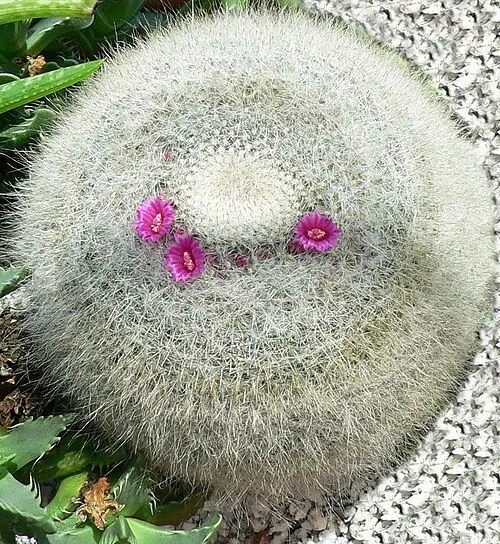
Mammillaria hahniana, commonly known as the Old Lady Cactus, is a captivating member of the Cactaceae family, celebrated for its unique ornamental characteristics. This species typically exhibits a globular to somewhat cylindrical stem morphology, usually reaching a modest height and diameter of 10 to 15 centimeters, though mature specimens can grow up to 20 cm, forming a charmingly compact and often clumping silhouette. Its most distinguishing feature is the dense covering of soft, white, hair-like radial spines that emanate from its tubercles, creating a remarkably fluffy, silvery-white coat. This delicate spination often obscures the green stem beneath, evoking the appearance of an elderly woman's hair, hence its endearing common name.
Like most cacti, Mammillaria hahniana lacks conventional leaves, instead utilizing its succulent stem and specialized tubercles for efficient photosynthesis and water storage. These small, conical protuberances are arranged in spirals along the stem, each bearing an areole from which the characteristic spines emerge, including 1-4 shorter, stouter central spines, sometimes with red tips when young. During the spring and early summer, this cactus produces a striking crown of vibrant pink to purplish-red, sometimes white, funnel-shaped flowers, each measuring approximately 2 to 3 centimeters in diameter. These beautiful blooms form a circlet around the plant's apex, emerging from the axils of older tubercles, creating a stark contrast against the silvery-white spination.
Following successful pollination, small, club-shaped, reddish fruits develop, containing minute, viable seeds. Mammillaria hahniana is indigenous to central Mexico, thriving in the semi-arid, rocky landscapes of states like Querétaro, Guanajuato, and Tamaulipas. It typically inhabits elevations ranging from 1,800 to 2,200 meters, where it has adapted to withstand significant diurnal temperature fluctuations and prolonged periods of drought, making it a resilient desert dweller.
Trusted Scientific References
1. Authoritative external sources for Mammillaria hahniana
1.1 Wikipedia — Mammillaria hahniana
1.2 Kew POWO (Plants of the World Online)
1.3 PubMed — peer-reviewed research
1.4 NCBI Taxonomy Browser
1.5 GBIF — Global Biodiversity
1.1.Mammillaria Hahniana — Key Features
- ✓Distinctive Appearance — Dense, soft, white hair-like radial spines give it a unique 'old lady' or 'fuzzy' look.
- ✓Globular to Cylindrical Shape — Compact growth habit, typically 10-20 cm in height and diameter.
- ✓Vibrant Crown of Flowers — Produces a circlet of pink to purplish-red flowers around its apex in spring/early summer.
- ✓Drought — Tolerant — Highly adapted to arid conditions, requiring infrequent watering.
- ✓Low Maintenance — Easy to care for, making it suitable for beginners and busy individuals.
- ✓Native to Mexico — Indigenous to semi-arid, rocky regions of central Mexico.
- ✓CAM Photosynthesis — Efficient water use due to Crassulacean Acid Metabolism.
- ✓Ornamental Value — Highly prized as a decorative houseplant or xeriscape garden specimen.
- ✓Succulent Nature — Stores water in its fleshy stem, enabling survival in dry environments.
- ✓Non — Traditional Medicinal Use — Primarily ornamental, with no established traditional medicinal applications for this specific species.
1.2.Mammillaria Hahniana — In Brief
- ✓Mammillaria hahniana, the Old Lady Cactus, is an ornamental Mexican succulent.
- ✓Distinctive for its dense, soft, white hair-like spines and vibrant pink flowers.
- ✓Thrives in full sun, well-draining soil, and requires minimal watering.
- ✓Primarily valued for aesthetic appeal; not traditionally used medicinally.
- ✓Requires careful handling due to spination; not for consumption.
- ✓An excellent, low-maintenance choice for succulent enthusiasts.
2.Mammillaria Hahniana — Systematic Position
3.Mammillaria Hahniana — Botanical Stats
4.Mammillaria Hahniana — Structural Profile
5.Mammillaria Hahniana — Geographic Distribution
6.Mammillaria Hahniana — Cultural & Traditional Roles
7.Mammillaria Hahniana — Active Compounds
- ✓Betalains — These nitrogen-containing pigments, found in the flowers and sometimes stems, are potent antioxidants and anti-inflammatory agents responsible for the vibrant coloration seen in many cacti, including the pink to purplish-red blooms of Mammillaria hahniana.
- ✓Mucilage (Polysaccharides) — Abundant in the stem, mucilage is a complex carbohydrate that contributes to the plant's water storage capacity; it is known for its emollient, demulcent, and potentially digestive-supportive properties if consumed, though M. hahniana is not typically ingested.
- ✓Phenolic Compounds — This broad category includes flavonoids (e.g., quercetin derivatives) and phenolic acids, which are widely distributed in plants and possess significant antioxidant, anti-inflammatory, and antimicrobial activities, contributing to overall plant defense.
- ✓Triterpenes and Sterols — Compounds like beta-sitosterol are often found in cacti, potentially offering anti-inflammatory and cholesterol-modulating effects, though their specific role and concentration in Mammillaria hahniana require further investigation.
- ✓Alkaloids — While some cacti are known for psychoactive alkaloids, Mammillaria species generally contain simple N-methylated phenylethylamine derivatives, which are not psychoactive but may have other subtle biological activities.
- ✓Organic Acids — Such as oxalic acid, which can be present in varying concentrations within cactus tissues, playing roles in mineral chelation and plant defense mechanisms.
- ✓Vitamins and Minerals — Like many plants, Mammillaria hahniana likely contains trace amounts of essential vitamins (e.g., Vitamin C, Vitamin E) and minerals (e.g., calcium, potassium), contributing to its general biological composition.
- ✓Waxes and Cuticular Lipids — These compounds form a protective layer on the epidermis, crucial for reducing water loss and defending against environmental stressors, particularly important for desert-dwelling succulents.
8.Mammillaria Hahniana — Modern Studies
- ✓Ornamental Therapeutic Value — Cultivating Mammillaria hahniana can provide aesthetic pleasure and a sense of connection with nature, contributing to stress reduction and improved psychological well-being through its unique visual appeal and low-maintenance care.
- ✓Potential Antioxidant Support — Like many members of the Cactaceae family, this species may contain betalains and various phenolic compounds, which are known for their cellular protective properties against oxidative stress caused by free radicals, though specific studies on M. hahniana are limited.
- ✓Hypothetical Anti-inflammatory Properties — Certain compounds present in cacti, such as flavonoids and triterpenes, are recognized for their potential to mitigate inflammatory responses, suggesting a theoretical anti-inflammatory capacity if extracts were to be studied.
- ✓Theoretical Mucilage Benefits — Cacti are rich in mucilage, a complex polysaccharide, which could theoretically offer emollient and soothing properties for topical application, or digestive support if prepared and consumed, although M. hahniana is not typically ingested.
- ✓Skin Soothing (External, Theoretical) — Based on the mucilaginous content common in cacti, an extract, if carefully prepared and applied topically, might offer a hypothetical soothing effect for minor skin irritations or dryness, though direct application of the spiny plant is impractical.
- ✓Hydration Retention — The succulent nature and CAM photosynthesis of Mammillaria hahniana highlight its exceptional ability to retain water, a physiological trait that underpins the hydrating potential of mucilage-rich cacti.
- ✓Environmental Air Purification — While not a direct medicinal benefit, plants like the Old Lady Cactus contribute to indoor air quality by absorbing carbon dioxide and releasing oxygen, fostering a healthier living environment.
- ✓Educational and Botanical Interest — Studying Mammillaria hahniana offers insights into xerophytic adaptations and the diversity of the Cactaceae family, enhancing botanical knowledge and appreciation.
8.1.Mammillaria Hahniana — Indications & Uses
9.Mammillaria Hahniana — Adverse Effects
9.1.Mammillaria Hahniana — Reported Side Effects
- ✓Physical Irritation — Contact with the sharp, though delicate, spines of Mammillaria hahniana can cause skin irritation, punctures, or embedded fragments, leading to discomfort or localized inflammation.
- ✓Allergic Contact Dermatitis — In rare instances, sensitive individuals may experience an allergic reaction, such as redness, itching, or rash, upon direct skin contact with the plant's sap or spination.
- ✓Ingestion Toxicity (Hypothetical) — While not known to be severely toxic, Mammillaria hahniana is not intended for human or animal consumption; ingestion could potentially lead to digestive upset or other unknown adverse effects.
- ✓Environmental Impact (Improper Disposal) — Although generally non-invasive, improper disposal of plant material could theoretically introduce a non-native species into an unsuitable ecosystem.
- ✓Handling Risks — The dense spination necessitates careful handling with protective gloves to avoid injury during repotting or routine care.
9.2.Mammillaria Hahniana — Toxicity Assessment
- ✓Not for Internal Consumption — Mammillaria hahniana is strictly an ornamental plant and should never be ingested by humans or animals due to unknown internal toxicity and the risk of physical injury from spines.
- ✓Handle with Care — Always wear protective gloves when handling the Old Lady Cactus to prevent skin irritation or punctures from its numerous, fine spines.
- ✓Keep Away from Children and Pets — Ensure the plant is placed out of reach of young children and curious pets to avoid accidental contact with spines or potential ingestion.
- ✓Observe for Allergic Reactions — Individuals with sensitive skin or known plant allergies should exercise caution and monitor for any signs of allergic contact dermatitis after handling.
- ✓Low Environmental Risk — Mammillaria hahniana is generally considered non-invasive in most cultivated environments, posing minimal ecological risk when grown responsibly.
- ✓General Low Toxicity — While not meant for consumption, the plant is not widely reported as highly toxic upon external contact, but caution is always advised.
10.Mammillaria Hahniana — Application Forms
- ✓Ornamental Cultivation — Mammillaria hahniana is primarily cultivated as a striking ornamental houseplant or a distinctive feature in xeriscape gardens, valued for its unique appearance and ease of care.
- ✓Aesthetic Display — Position the Old Lady Cactus in areas where its distinctive fuzzy texture and vibrant floral crown can be admired, such as sunny windowsills, office desks, or rock gardens, to enhance visual appeal.
- ✓Xeriscape Landscaping — Integrate this drought-tolerant species into water-wise garden designs, where it can thrive with minimal irrigation, contributing to sustainable landscaping efforts.
- ✓Educational Specimen — Utilize Mammillaria hahniana as an educational tool to demonstrate plant adaptations to arid environments, CAM photosynthesis, and the diversity of the Cactaceae family in botanical collections.
- ✓Topical Application (Hypothetical Research) — While not a traditional medicinal plant, if its mucilage were extracted, it could theoretically be studied for topical applications, similar to other cacti, for potential emollient or soothing effects on the skin, though direct plant contact is spiny and not advised.
- ✓Botanical Collection — Incorporate Mammillaria hahniana into botanical gardens or private collections for its taxonomic significance and horticultural interest within the Mammillaria genus.
- ✓Photography Subject — Its unique morphology and striking flowers make it a popular subject for botanical photography, capturing its intricate details and vibrant colors.
11.Mammillaria Hahniana — Growth Requirements
- ✓Sunlight — Mammillaria hahniana thrives in bright lighting conditions; it requires full sun for optimal growth and prolific flowering, ideally placed near a south-facing window or in a sunny outdoor spot.
- ✓Watering — As a drought-tolerant cactus, it prefers infrequent but thorough watering. Water every 1-2 weeks in summer, allowing the soil to dry completely between waterings, and reduce to once a month or less in winter during its dormancy.
- ✓Soil — Use a well-draining cactus or succulent potting mix. A homemade blend of turf, leaf soil, sand, and brick chips in a 2:2:3:1 ratio provides excellent drainage and aeration.
- ✓Temperature — This thermophilic plant prefers optimal summer temperatures between 20-24°C (68-75°F). During winter, a cooler period of 10-15°C (50-59°F) is beneficial for encouraging flowering.
- ✓Fertilization — Feed monthly from early spring to mid-fall using a balanced fertilizer formulated for cacti and succulents, diluted to half strength. Cease all feeding during the winter months.
- ✓Repotting — Repot Mammillaria hahniana every 2-3 years, or when it outgrows its container, into a pot only slightly larger than its current size. Ensure the new container has adequate drainage holes.
- ✓Propagation — This cactus can be propagated from seeds, which should be soaked in a mild potassium permanganate solution before sowing, or more easily from young offsets (pups) that form around the base of the mother plant.
Reviewed by the Flora Medical Global Botanical Review Panel
Multi-disciplinary editorial group · Botany · Ethnobotany · Herbal-medicine literature
Who reviewed this: This page was checked by the Flora Medical Global Botanical Review Panel — an in-house editorial group of botany graduates, ethnobotany researchers, and horticulture practitioners who collectively maintain our 7,000+ plant encyclopedia. Meet the team.
Our 4-step verification process
1. Taxonomic verification
Scientific names and synonyms cross-checked against Kew POWO, World Flora Online, and The Plant List.
2. Phytochemical & medicinal cross-reference
Active compounds, traditional uses, and reported activities are cross-referenced with PubMed, USDA Dr. Duke's database, and peer-reviewed ethnobotanical literature.
3. Conservation & distribution check
Distribution, ecology, and conservation status confirmed against GBIF occurrence records and the IUCN Red List.
4. Editorial & safety review
Every entry passes an editorial pass for clarity, originality, and safety notices (toxicity, contraindications, dosage caveats) before publication.
Last reviewed:
Important medical disclaimer: This content is for educational and research purposes only. It is not medical advice and is not a substitute for consultation with a licensed healthcare provider. Do not use any herb to self-treat a medical condition without professional guidance.
Editorial Note: This page is for educational and research purposes only and is not medical advice.
Written by: Flora Medical Global Editorial Team
Reviewed by: Flora Medical Global Botanical Review Panel
Last Updated: June 15, 2026





Mammillaria Hahniana — Comments & Community Reviews
Rate this plant