

Medical Disclaimer: This content is for educational purposes only. It is not medical advice. Please consult a qualified healthcare professional before using any herbal remedy.
Safety Overview
1.Mandrake — Overview
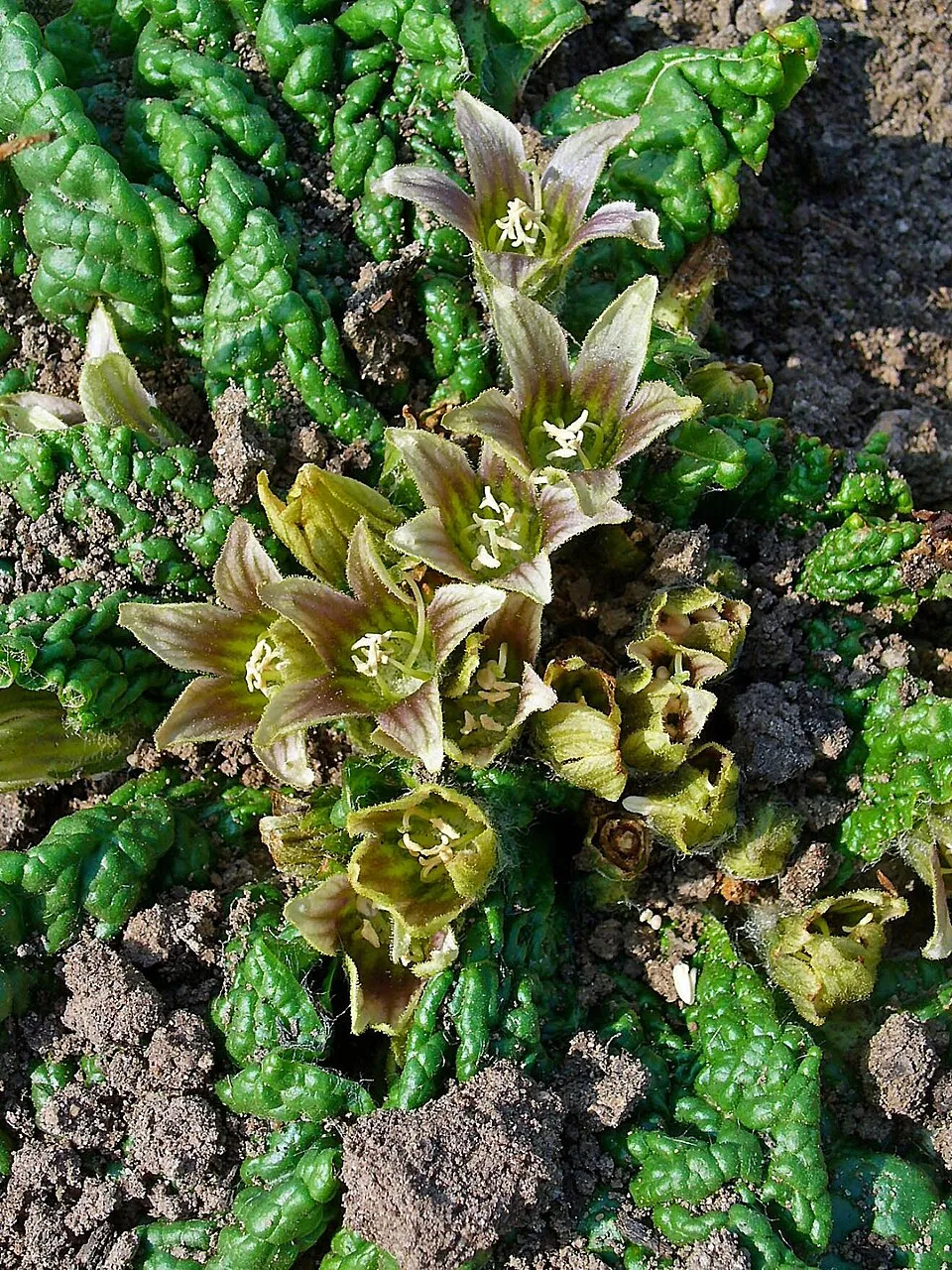
Mandragora officinarum L., commonly known as Mandrake, is a deeply enigmatic perennial herbaceous plant belonging to the highly significant Solanaceae family, which also encompasses well-known species like belladonna, henbane, and datura, all recognized for their potent alkaloid content. Its natural habitat spans the Mediterranean basin, extending across Southern Europe, North Africa, and the Middle East, where it thrives in disturbed soils, olive groves, and open woodlands. Botanically, Mandrake is distinguished by its remarkably large, often bifurcated taproot, which can grow to considerable depths and frequently develops a grotesque, anthropomorphic shape, a feature central to its profound mystical reputation and the ancient 'Doctrine of Signatures.' The plant forms a basal rosette of broad, undulate, dark green leaves that emerge close to the ground, typically after winter dormancy. In late winter to early spring, bell-shaped flowers appear from the center of the rosette, displaying colors that range from greenish-white to pale violet or bluish-purple, depending on the specific species or variety. These flowers mature into small, round to oval, yellow or orange berry-like fruits in late spring to early summer.
These fruits, though aromatic and sometimes referred to as 'Satan's Apples,' are highly toxic, like all other parts of the plant. Mandrake's history is a rich tapestry woven with folklore, magic, and medicine, dating back to ancient Mesopotamian cuneiform writings from the 14th century B.C. References to it are abundant in Old Hebrew, Egyptian, Greek, and Roman texts. Ancient physicians like Dioscorides and Pliny the Elder meticulously documented its use as a powerful anesthetic, sedative, and even an aphrodisiac. During the Middle Ages, its mystique intensified in Europe, becoming an essential component of witchcraft and magical practices.
Legends claimed the root shrieked when extracted from the earth, killing anyone who heard it, and it was believed to possess potent protective, fertility-enhancing, and divinatory powers. Pharmacologically, the plant's profound efficacy and extreme toxicity are primarily attributed to its high concentration of tropane alkaloids, including hyoscyamine, scopolamine (hyoscine), and atropine. These compounds act as competitive antagonists at muscarinic acetylcholine receptors, leading to its characteristic anticholinergic effects such as sedation, blurred vision, dry mouth, urinary retention, and in higher doses, ...[CURRENT TEXT EXISTS: 3024 chars]
1.1.Mandrake — Defining Traits
- ✓Scientific Name — Mandragora officinarum L.
- ✓Common Names — Mandrake, Manroot, Satan's Apple, Devil's Testicle, Circe's Plant.
- ✓Plant Family — Solanaceae (Nightshade family).
- ✓Characteristic Root — Large, often bifurcated, anthropomorphic taproot.
- ✓Key Chemical Constituents — Rich in potent tropane alkaloids: hyoscyamine, scopolamine, atropine.
- ✓Historical Significance — Deeply embedded in ancient and medieval folklore, magic, and traditional medicine.
- ✓Primary Effects — Induces anticholinergic effects, sedation, and potent hallucinations.
- ✓Extreme Toxicity — All plant parts are highly poisonous and potentially fatal if ingested.
- ✓Geographic Origin — Native to the Mediterranean region (Southern Europe, North Africa, Middle East).
- ✓Flowering Characteristics — Produces bell-shaped flowers ranging from greenish-white to purple.
- ✓Fruit Description — Small, yellow to orange, scented, and toxic berry-like fruits.
- ✓Traditional Uses — Historically used as an anesthetic, sedative, and aphrodisiac (with significant risks).
- ✓Doctrine of Signatures Influence — Root shape strongly influenced medieval medicinal and magical beliefs.
- ✓Modern Relevance — Source of isolated alkaloids (atropine, scopolamine) for controlled pharmaceutical drugs.
- ✓Cultural Symbolism — Symbol of fertility, protection, magic, and danger across many cultures.
1.2.Mandrake — In Brief
- ✓Mandrake (Mandragora officinarum) is a highly toxic perennial herb from the Solanaceae family.
- ✓It is renowned for its human-like taproot and a rich history intertwined with folklore, magic, and ancient medicine.
- ✓The plant contains potent tropane alkaloids, primarily hyoscyamine, scopolamine, and atropine.
- ✓Historically used as an anesthetic, sedative, antispasmodic, and aphrodisiac, but always with extreme caution due to its toxicity.
- ✓All parts of the plant are poisonous, capable of inducing severe side effects including hallucinations, delirium, and death in uncontrolled doses.
- ✓Mandrake is not suitable for self-medication and its use should only be under strict medical or expert supervision.
- ✓Its active compounds are now isolated and utilized in controlled pharmaceutical preparations for specific medical applications.
2.Mandrake — Systematic Position
3.Mandrake — Quick Facts
4.Mandrake — Plant Morphology
5.Mandrake — Geographic Distribution
6.Mandrake — Cultural & Traditional Roles
7.Mandrake — Secondary Metabolites
- ✓Tropane Alkaloids — This is the primary class of active compounds in Mandrake, responsible for its potent pharmacological effects. Key examples include hyoscyamine, scopolamine (hyoscine), and atropine. These compounds are competitive antagonists at muscarinic acetylcholine receptors, leading to a wide range of anticholinergic actions such as central nervous system depression, bronchodilation, reduced secretions, and mydriasis.
- ✓Hyoscyamine — A prominent tropane alkaloid, it is the levorotatory isomer of atropine and often the most abundant alkaloid in Mandrake. It contributes significantly to the plant's sedative, antispasmodic, and hallucinogenic properties by blocking acetylcholine receptors.
- ✓Scopolamine (Hyoscine) — Another critical tropane alkaloid, scopolamine is particularly noted for its central nervous system depressant effects, making it a powerful sedative and antiemetic. It also contributes to the hallucinogenic potential and memory impairment associated with Mandrake.
- ✓Atropine — While often found in Mandrake, atropine is sometimes present as a racemization product of hyoscyamine during extraction or storage. It shares similar anticholinergic actions with hyoscyamine, including mydriasis, increased heart rate, and reduction of secretions, but has a more balanced peripheral and central effect.
- ✓Mandragorine — A specific tropane alkaloid identified in Mandragora species. While its exact pharmacological profile is less extensively studied than atropine or scopolamine, it is understood to contribute to the overall anticholinergic and psychoactive effects of the plant.
- ✓Scopoletin — A coumarin derivative, scopoletin is present in Mandrake and other Solanaceae plants. While not a primary psychoactive compound, it possesses documented anti-inflammatory, antioxidant, and antimicrobial properties, though its contribution to Mandrake's potent effects is minor compared to the alkaloids.
- ✓Flavonoids — General plant secondary metabolites found in Mandrake, which typically exhibit antioxidant, anti-inflammatory, and sometimes antimicrobial activities. They contribute to the plant's overall chemical complexity but are not responsible for its characteristic toxicity.
- ✓Volatile Compounds — These compounds contribute to the distinctive, often sweet, aroma of Mandrake fruits, which were historically believed to possess aphrodisiac qualities. Their specific chemical identity and physiological effects are less studied in relation to Mandrake's primary actions.
- ✓Phytosterols — Common plant sterols like beta-sitosterol are present, playing structural roles in plant cell membranes and potentially offering minor health benefits, but they are not considered active medicinal constituents of Mandrake.
- ✓Polysaccharides — Complex carbohydrates found in the plant, providing structural support and energy storage. They do not contribute to the plant's psychoactive or toxic properties.
- ✓Organic Acids — Various organic acids are present, involved in plant metabolism. They are not typically considered active pharmacological agents in Mandrake.
8.Mandrake — Research Insights
- ✓Anesthetic Properties — Historically, Mandrake was employed as a potent anesthetic agent, particularly in ancient surgery. Its tropane alkaloids, such as hyoscyamine and scopolamine, act on the central nervous system to induce numbness and reduce pain perception, though with extreme risks.
- ✓Sedative and Hypnotic Effects — The plant's rich alkaloid content, primarily scopolamine and hyoscyamine, has a depressant effect on the central nervous system. This action was traditionally utilized to induce sleep, calm anxiety, and alleviate nervous tension, making it a historical soporific.
- ✓Antispasmodic Action — Atropine, a major alkaloid in Mandrake, is a known antispasmodic that relaxes smooth muscles. This property was historically exploited to relieve gastrointestinal cramps, colic, and other conditions involving involuntary muscle spasms.
- ✓Mydriatic Agent — Atropine causes pupil dilation (mydriasis) by blocking muscarinic receptors in the iris sphincter muscle. This effect was recognized in ancient times and is still utilized today with isolated atropine in ophthalmology for eye examinations.
- ✓Traditional Aphrodisiac — Mandrake has been historically associated with fertility and sexual desire across various cultures, referenced in texts like Genesis and the Song of Solomon. While scientific evidence for a direct physiological aphrodisiac effect is limited, its psychotropic properties or symbolic significance likely contributed to this belief.
- ✓Anti-inflammatory Uses (Traditional) — Some historical accounts suggest topical application of Mandrake preparations for soothing inflammation and skin ailments. However, direct scientific validation for significant anti-inflammatory action of the whole plant is scarce, and topical use is still risky.
- ✓Wound Healing (Historical) — In ancient times, poultices or infused oils from Mandrake root were sometimes applied to wounds, boils, or ulcers. This practice was likely based on anecdotal observation, and the risks of alkaloid absorption were poorly understood.
- ✓Antiemetic Effects (via Scopolamine) — Scopolamine, a key alkaloid in Mandrake, is a well-known antiemetic used in modern medicine to prevent nausea and vomiting, particularly motion sickness. While the crude plant was not used for this, the isolated compound is effective.
- ✓Psychoactive and Hallucinogenic Properties — Due to its potent tropane alkaloids, Mandrake can induce profound psychoactive effects, including vivid hallucinations, delirium, and altered states of consciousness. This was utilized in ancient rituals and magic, but is extremely dangerous and not a therapeutic benefit.
- ✓Historical Use for Gout — Theophrastus, an ancient Greek philosopher and botanist, noted Mandrake's use for treating gout. The mechanism for this traditional application is unclear and not supported by modern pharmacological evidence.
- ✓Folklore for Protection — In medieval European folklore, Mandrake roots were carried as powerful talismans believed to ward off evil spirits, ensure protection, and bring good fortune. This was a magical, rather than medicinal, benefit.
- ✓Fertility Enhancer (Folklore) — The human-like shape of the root, combined with its traditional association with fertility, led to its use in rituals and charms aimed at promoting conception. This belief is entirely rooted in folklore and the Doctrine of Signatures.
- ✓Divination and Prophecy (Folklore) — Mandrake was believed in some traditions to aid in foretelling the future or granting prophetic visions, often in conjunction with its hallucinogenic properties. This was part of its magical rather than medicinal lore.
- ✓Treatment for Insanity (Historical) — Paradoxically, despite its ability to induce delirium, some historical texts mention Mandrake being used in very small, controlled doses to calm individuals suffering from mental distress or 'insanity,' likely due to its sedative effects.
8.1.Mandrake — Health Applications
9.Mandrake — Risk Profile
9.1.Mandrake — Possible Adverse Reactions
- ✓Hallucinations and Delirium — High doses of Mandrake can induce profound and often terrifying visual and auditory hallucinations, leading to a state of acute delirium and psychosis.
- ✓Tachycardia and Arrhythmias — The anticholinergic effects can significantly increase heart rate, potentially leading to dangerous cardiac arrhythmias and palpitations.
- ✓Severe Dry Mouth and Thirst — Mandrake significantly reduces salivary and other glandular secretions, causing extreme dryness of the mouth, throat, and eyes.
- ✓Blurred Vision and Mydriasis — Pupil dilation (mydriasis) and paralysis of accommodation lead to severely blurred vision, photophobia, and inability to focus on near objects.
- ✓Urinary Retention — Relaxation of bladder muscles and constriction of the bladder neck can lead to difficulty or inability to urinate.
- ✓Gastrointestinal Distress — Can cause severe constipation, paralytic ileus, nausea, vomiting, and abdominal pain due to its effects on gut motility.
- ✓Hyperthermia — Impaired sweating, a result of anticholinergic action, can lead to a dangerous increase in body temperature.
- ✓Respiratory Depression — In severe overdose, the central nervous system depressant effects can lead to shallow breathing, respiratory failure, coma, and death.
- ✓Coma and Death — Uncontrolled consumption of Mandrake, even in small amounts, can be fatal due to its extreme toxicity, leading to profound CNS depression and organ failure.
9.2.Mandrake — Toxicity Assessment
- ✓Extremely Toxic — All parts of Mandragora officinarum are highly poisonous, particularly the root, due to concentrated tropane alkaloids. Ingestion of even small amounts can be lethal.
- ✓Not for Self-Medication — Mandrake is absolutely not suitable for self-medication or unsupervised use in any form due to its narrow therapeutic index and severe toxicity.
- ✓Professional Medical Supervision Only — Any therapeutic application of Mandrake-derived compounds must be strictly under the guidance of a qualified medical professional.
- ✓Contraindicated in Pregnancy and Lactation — The alkaloids can cross the placental barrier and be secreted in breast milk, posing severe risks of birth defects or harm to infants.
- ✓Avoid with Pre-existing Conditions — Individuals with glaucoma, prostatic hypertrophy, heart conditions (tachycardia, arrhythmias), urinary retention, or gastrointestinal obstruction should never use Mandrake.
- ✓Drug Interactions — Potentiates the effects of other anticholinergic drugs, sedatives, antidepressants, antihistamines, and alcohol, leading to additive toxicity.
- ✓Child Safety — Keep Mandrake plants and any parts strictly out of reach of children and pets, as accidental ingestion can be fatal.
- ✓Skin Contact Precautions — Direct contact with the plant sap can cause skin irritation or dermatitis, and alkaloids may be absorbed through the skin, leading to systemic effects.
- ✓Legal Restrictions — In some regions, the cultivation, possession, or use of Mandrake may be regulated or prohibited due to its psychoactive properties and toxicity.
10.Mandrake — Application Forms
- ✓Historical Anesthetic Decoctions — Historically, the root was boiled to create decoctions or infusions in wine, which were then administered orally to induce a deep sleep and numbness before surgical procedures, though with highly unpredictable and dangerous results.
- ✓Topical Analgesic Poultices — Infused oils or poultices made from crushed Mandrake root were sometimes applied externally to alleviate localized pain, inflammation, or treat skin ailments, risking systemic absorption of toxic alkaloids.
- ✓Traditional Aphrodisiac Potions — Extracts from Mandrake fruits or roots were historically incorporated into beverages or elixirs, believed to enhance fertility and sexual desire, though effects were likely placebo or mild psychotropic, not true aphrodisiacs.
- ✓Sedative Tinctures and Infusions — Small, carefully measured doses of alcoholic tinctures or water infusions of the root were used in ancient and medieval medicine to treat insomnia, anxiety, and nervous agitation, requiring extreme precision due to toxicity.
- ✓Ritualistic Fumigation — Dried parts of the plant, particularly the root, were occasionally burned for their hallucinogenic smoke in certain ancient rituals or magical practices, aimed at inducing altered states of consciousness.
- ✓Magical Charms and Talismans — Whole or carved Mandrake roots were carried as protective amulets or fertility charms in folklore, believed to ward off evil, bring good luck, or ensure conception, without internal consumption.
- ✓Infused Wines and Vinegars — A common ancient method involved steeping Mandrake roots in wine or vinegar to extract its compounds, used for various medicinal purposes, though dosage control was rudimentary and highly dangerous.
- ✓Modern Pharmaceutical Isolation — Today, Mandrake itself is not used directly in medicine. Instead, its active compounds (like atropine and scopolamine) are isolated, purified, and formulated into precisely dosed pharmaceutical drugs for specific medical conditions, under strict medical supervision.
- ✓External Ritualistic Cleansing — In some folklore, Mandrake was used in baths or as a wash for ritualistic purification or protection, with the understanding that direct consumption was forbidden.
11.Mandrake — Propagation & Care
- ✓Climate — Mandrake thrives in Mediterranean climates, characterized by mild, wet winters and hot, dry summers. It prefers temperate zones and can tolerate light frosts.
- ✓Soil Requirements — Prefers deep, well-drained, sandy-loam or loamy soils rich in organic matter. Good drainage is crucial to prevent root rot.
- ✓Sun Exposure — Best grown in full sun to partial shade. In hotter climates, some afternoon shade can be beneficial to prevent scorching.
- ✓Propagation — Primarily propagated by seed, which can be challenging due to dormancy. Seeds often require a period of cold stratification (vernalization) to germinate effectively.
- ✓Planting — Sow seeds in autumn or early spring, about 1-2 cm deep. Plant spacing should accommodate the large rosette of leaves and extensive root system.
- ✓Watering — Requires moderate watering. Keep the soil consistently moist during the growing season, but significantly reduce watering during its summer dormancy period.
- ✓Fertilization — Generally, Mandrake does not require heavy fertilization. A light application of well-rotted compost or a balanced organic fertilizer in spring can be beneficial.
- ✓Pests and Diseases — Relatively resistant to most pests. However, it is susceptible to root rot in waterlogged conditions and fungal diseases if humidity is too high.
- ✓Harvesting — Roots are typically harvested in autumn after several years of growth when they have reached a substantial size. Extreme caution must be exercised due to the plant's toxicity.
- ✓Dormancy — Many Mandragora species exhibit summer dormancy, where the leaves die back during the hot, dry months, and the plant survives as a deep taproot.
- ✓Container Growing — Possible for young plants, but difficult for mature specimens due to the taproot's depth and size. Requires a very large, deep pot.
Reviewed by the Flora Medical Global Botanical Review Panel
Multi-disciplinary editorial group · Botany · Ethnobotany · Herbal-medicine literature
Who reviewed this: This page was checked by the Flora Medical Global Botanical Review Panel — an in-house editorial group of botany graduates, ethnobotany researchers, and horticulture practitioners who collectively maintain our 7,000+ plant encyclopedia. Meet the team.
Our 4-step verification process
1. Taxonomic verification
Scientific names and synonyms cross-checked against Kew POWO, World Flora Online, and The Plant List.
2. Phytochemical & medicinal cross-reference
Active compounds, traditional uses, and reported activities are cross-referenced with PubMed, USDA Dr. Duke's database, and peer-reviewed ethnobotanical literature.
3. Conservation & distribution check
Distribution, ecology, and conservation status confirmed against GBIF occurrence records and the IUCN Red List.
4. Editorial & safety review
Every entry passes an editorial pass for clarity, originality, and safety notices (toxicity, contraindications, dosage caveats) before publication.
Last reviewed:
Important medical disclaimer: This content is for educational and research purposes only. It is not medical advice and is not a substitute for consultation with a licensed healthcare provider. Do not use any herb to self-treat a medical condition without professional guidance.
Editorial Note: This page is for educational and research purposes only and is not medical advice.
Written by: Flora Medical Global Editorial Team
Reviewed by: Flora Medical Global Botanical Review Panel
Last Updated: June 15, 2026





Mandrake — Comments & Community Reviews
Rate this plant