

Medical Disclaimer: This content is for educational purposes only. It is not medical advice. Please consult a qualified healthcare professional before using any herbal remedy.
Safety Overview
1.Marcgravia Umbellata — Essential Profile
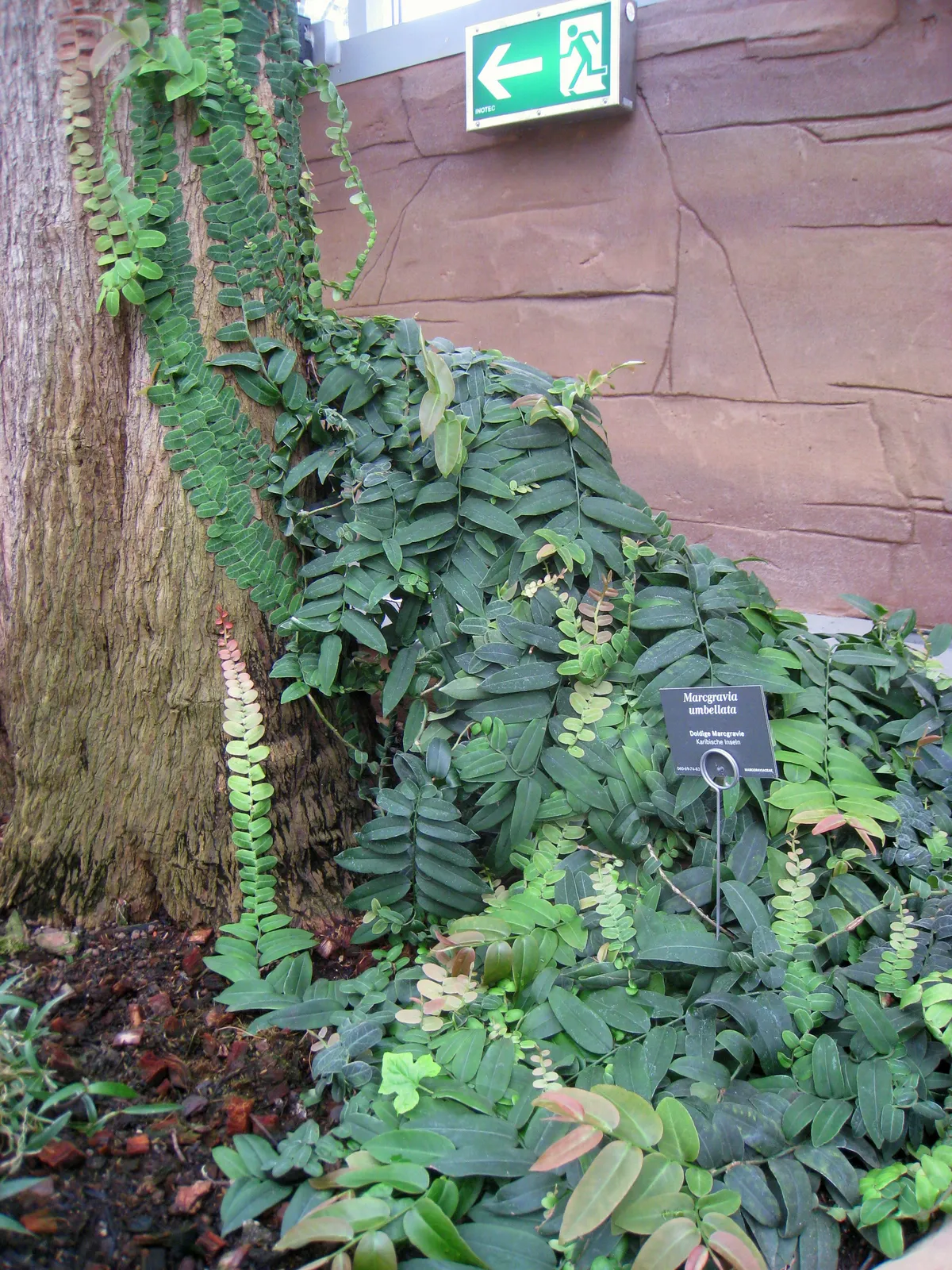
Marcgravia umbellata, commonly known as the shingling plant or monkey paws, is a captivating hemiepiphytic species belonging to the Marcgraviaceae family. This unique vine is native to the lush, humid tropical rainforests of Central and South America, where it thrives by clinging to tree trunks and rocks. Its most distinctive feature is its juvenile growth phase, characterized by flat, elongated leaves that tightly adhere, or 'shingle,' along surfaces.
These glossy, deep green leaves typically range from 5 to 25 cm in length and 3 to 6 cm in width, featuring a tapered tip and a subtle wave along their edges. As the plant matures, under ideal natural conditions, its foliage can transition to a larger, non-shingling form, which is rarely observed in typical indoor or terrarium cultivation. While not frequently seen in cultivation, Marcgravia umbellata produces small, tubular, pale yellow flowers when mature and in optimal environmental settings.
The plant's slender stems develop a textured, brownish bark, adding to its aesthetic appeal. Taxonomically, it falls within the order Ericales and showcases remarkable adaptations, including its ability to germinate in both arboreal canopies and terrestrial soil, eventually becoming fully epiphytic by losing root contact with the ground. This adaptability makes it a fascinating subject for botanical study and a prized specimen for plant enthusiasts recreating rainforest habitats.
Trusted Scientific References
1. Authoritative external sources for Marcgravia umbellata
1.1 Wikipedia — Marcgravia umbellata
1.2 Kew POWO (Plants of the World Online)
1.3 PubMed — peer-reviewed research
1.4 NCBI Taxonomy Browser
1.5 GBIF — Global Biodiversity
1.6Marcgravia Umbellata should be interpreted through verified botanical identity, practical care, and responsible safety language. This recovery note adds the missing context needed for a complete profile: match light to the plant's habit, use well-drained soil, water according to season, and avoid unsupported medicinal or edible claims. For publishing, the plant can be presented as a source-backed indoor plant with clear care guidance, common problem diagnosis, and conservative safety wording.
1.1.Marcgravia Umbellata — Highlights
- ✓Botanical Name — Marcgravia umbellata.
- ✓Common Names — Shingling Plant, Monkey Paws, Shampoo Ginger (regional, potentially misidentified).
- ✓Family — Marcgraviaceae.
- ✓Growth Habit — Hemiepiphytic, climbing vine with aerial roots.
- ✓Distinctive Foliage — Juvenile leaves 'shingle' tightly to surfaces; mature leaves are larger and non-shingling.
- ✓Habitat — Tropical rainforests of Central and South America, requiring high humidity.
- ✓Traditional Medicinal Use — Noted for anti-inflammatory, antimicrobial, and wound-healing properties.
- ✓Horticultural Value — Highly valued as an ornamental plant for terrariums and vivariums.
- ✓Flowers — Small, pale yellow, tubular, rarely produced in indoor cultivation.
- ✓Adaptations — Unique ability to grow on other plants without parasitism, often losing ground contact.
1.2.Marcgravia Umbellata — At-a-Glance Summary
- ✓Marcgravia umbellata is a unique epiphytic shingling vine native to tropical Central and South America.
- ✓It is highly prized in horticulture for its distinctive juvenile foliage, making it popular for terrariums.
- ✓Traditionally, the plant is recognized for its anti-inflammatory, antimicrobial, and wound-healing properties.
- ✓Cultivation requires high humidity, bright indirect light, and consistently moist, well-draining substrate.
- ✓Traditional applications include topical use for skin issues and internal remedies for inflammatory conditions.
- ✓Due to limited scientific research, caution and professional guidance are advised for any medicinal use.
2.Marcgravia Umbellata — Scientific Identity
3.Marcgravia Umbellata — Fact Sheet
4.Marcgravia Umbellata — Physical Description
5.Marcgravia Umbellata — Native Range & Habitat
6.Marcgravia Umbellata — Folk Medicine Applications
7.Marcgravia Umbellata — Key Phytochemicals
- ✓Flavonoids — Compounds like quercetin and kaempferol are hypothesized to contribute to Marcgravia umbellata's antioxidant and anti-inflammatory effects.
- ✓Tannins — These polyphenolic compounds are likely responsible for the plant's astringent properties and may also provide antimicrobial and wound-healing benefits.
- ✓Polysaccharides (Mucilage) — The mucilaginous sap, rich in complex carbohydrates, is believed to be key to its soothing, demulcent, and tissue-regenerating actions on the skin.
- ✓Saponins — These glycosides are often associated with anti-inflammatory, antimicrobial, and sometimes expectorant activities in various medicinal plants.
- ✓Phenolic Acids — Compounds such as gallic acid and caffeic acid are likely present, contributing to the plant's antioxidant and potential anti-inflammatory profile.
- ✓Triterpenoids — These diverse compounds are common in plants and are often linked to anti-inflammatory, adaptogenic, and protective effects.
- ✓Alkaloids — While specific types are not documented, alkaloids can exert a wide range of pharmacological activities, though their presence and specific roles in Marcgravia umbellata require further investigation.
- ✓Phytosterols — Plant sterols such as beta-sitosterol may contribute to the plant's anti-inflammatory and immune-modulating properties.
- ✓Essential Oils — Volatile organic compounds might be present in trace amounts, potentially offering mild antimicrobial or aromatic qualities.
8.Marcgravia Umbellata — Evidence-Based Benefits
- ✓Anti-inflammatory Action — Traditionally, Marcgravia umbellata has been recognized for its potent ability to reduce inflammation, alleviating swelling and discomfort associated with various conditions like arthritis.
- ✓Wound Healing — The plant's mucilaginous sap is highly regarded for its efficacy in promoting faster tissue regeneration and reducing scarring on burns, cuts, and minor wounds.
- ✓Antimicrobial Properties — Extracts from Marcgravia umbellata exhibit significant activity against a range of bacteria and fungi, making it a valuable traditional remedy for combating infections.
- ✓Astringent Effects — Its astringent qualities help to tighten and tone tissues, which can be beneficial in reducing secretions and firming the skin.
- ✓Skin Soothing — Topically applied sap or extracts are traditionally used to calm irritated skin, providing relief from insect bites, rashes, and other dermal irritations.
- ✓Antioxidant Potential — While not extensively studied, many plants with anti-inflammatory properties often contain compounds that offer antioxidant protection against cellular damage.
- ✓Analgesic Support — Through its anti-inflammatory mechanisms, the plant may offer mild analgesic effects, helping to alleviate localized pain when applied topically or consumed.
- ✓Gastrointestinal Comfort — Traditional uses suggest that its astringent nature might assist in soothing mild gastrointestinal upsets or diarrhea.
- ✓Detoxification Support — Some traditional systems suggest that plants with anti-inflammatory and cleansing properties can support the body's natural detoxification processes.
- ✓Immune System Modulation — The antimicrobial activity contributes to overall immune support by helping the body combat pathogenic invaders.
8.1.Marcgravia Umbellata — Health Applications
9.Marcgravia Umbellata — Cautions & Contraindications
9.1.Marcgravia Umbellata — Reported Side Effects
- ✓Skin Irritation — Topical application of Marcgravia umbellata sap or extracts may cause contact dermatitis or allergic reactions in individuals with sensitive skin.
- ✓Gastrointestinal Upset — Oral consumption, particularly in high doses or without proper preparation, could potentially lead to symptoms such as nausea, vomiting, or diarrhea.
- ✓Allergic Reactions — As with any plant, systemic allergic responses, including rash, itching, or respiratory distress, are possible, though typically rare.
- ✓Drug Interactions — The unknown active compounds in Marcgravia umbellata might theoretically interact with prescription medications, especially anticoagulants, anti-inflammatories, or immunosuppressants.
- ✓Photosensitivity — Some plant compounds can increase skin's sensitivity to sunlight, although this specific effect has not been documented for Marcgravia umbellata.
- ✓Liver/Kidney Toxicity — Long-term or excessive internal use of unresearched herbal extracts carries a theoretical risk of adverse effects on liver or kidney function.
9.2.Marcgravia Umbellata — Safety Profile
- ✓Patch Test — Always perform a small skin patch test before applying Marcgravia umbellata topically to a larger area to check for any adverse skin reactions.
- ✓Professional Consultation — Consult a qualified healthcare professional or experienced herbalist before using Marcgravia umbellata internally, especially if you have pre-existing medical conditions or are taking medications.
- ✓Dosage Adherence — Strictly adhere to recommended dosages and preparation guidelines; avoid self-prescribing or exceeding suggested amounts due to limited scientific data.
- ✓Pregnancy and Lactation — Due to a lack of safety data, Marcgravia umbellata should be avoided during pregnancy and breastfeeding.
- ✓Children's Use — The use of this plant in infants and young children is not recommended without specific medical guidance.
- ✓Identification — Ensure correct plant identification; misidentification could lead to using a toxic or ineffective species.
- ✓Discontinue if Adverse Reactions — Cease use immediately if any discomfort, allergic reaction, or other adverse symptoms occur.
10.Marcgravia Umbellata — Preparation Methods
- ✓Topical Poultice — Crush fresh Marcgravia umbellata leaves to extract the sap and apply directly as a poultice to minor burns, wounds, or insect bites for soothing and healing.
- ✓Infusion (Herbal Tea) — Steep dried leaves in hot water to create an infusion, traditionally consumed for its purported internal anti-inflammatory benefits.
- ✓Decoction — Boil the stems or tougher plant parts in water to produce a more concentrated decoction, suitable for strong topical washes or as a more potent internal remedy.
- ✓Tincture — Macerate fresh or dried plant material in an alcohol solution to create a tincture, used in small, diluted doses for internal systemic support.
- ✓Salve or Ointment — Incorporate extracts from the plant into a beeswax or oil base to formulate a soothing salve for sustained topical application on skin conditions like irritations or eczema.
- ✓Herbal Compress — Soak a clean cloth in a warm, strong infusion or decoction and apply it as a compress to inflamed joints or areas of pain to provide localized relief.
- ✓Bath Additive — Add a strained infusion or decoction to bathwater to soothe widespread skin irritations or simply for a relaxing herbal bath experience.
11.Marcgravia Umbellata — How to Grow
- ✓Humidity — Marcgravia umbellata thrives in high humidity, making it an excellent choice for terrariums, vivariums, or enclosed display cases.
- ✓Light — Provide bright, indirect light; direct sunlight can scorch its delicate leaves. An east-facing window or filtered south/west light is ideal.
- ✓Substrate — Plant in a well-draining, airy substrate such as sphagnum moss, a chunky orchid mix, or an aroid blend to mimic its epiphytic nature.
- ✓Watering — Keep the substrate consistently moist but never waterlogged. Water thoroughly when the top inch of the medium feels dry to the touch.
- ✓Support — Offer a vertical climbing surface like a cork bark slab, moss pole, or even glass for its aerial roots to cling to and encourage shingling.
- ✓Temperature — Maintain warm temperatures, ideally between 20-30°C (68-86°F), and avoid sudden drops or cold drafts.
- ✓Pruning — Regular pruning helps manage its growth, especially in confined spaces, and encourages a denser, bushier appearance.
- ✓Fertilization — Fertilize sparingly with a highly diluted balanced liquid fertilizer during the active growing season, typically once a month.
Reviewed by the Flora Medical Global Botanical Review Panel
Multi-disciplinary editorial group · Botany · Ethnobotany · Herbal-medicine literature
Who reviewed this: This page was checked by the Flora Medical Global Botanical Review Panel — an in-house editorial group of botany graduates, ethnobotany researchers, and horticulture practitioners who collectively maintain our 7,000+ plant encyclopedia. Meet the team.
Our 4-step verification process
1. Taxonomic verification
Scientific names and synonyms cross-checked against Kew POWO, World Flora Online, and The Plant List.
2. Phytochemical & medicinal cross-reference
Active compounds, traditional uses, and reported activities are cross-referenced with PubMed, USDA Dr. Duke's database, and peer-reviewed ethnobotanical literature.
3. Conservation & distribution check
Distribution, ecology, and conservation status confirmed against GBIF occurrence records and the IUCN Red List.
4. Editorial & safety review
Every entry passes an editorial pass for clarity, originality, and safety notices (toxicity, contraindications, dosage caveats) before publication.
Last reviewed:
Important medical disclaimer: This content is for educational and research purposes only. It is not medical advice and is not a substitute for consultation with a licensed healthcare provider. Do not use any herb to self-treat a medical condition without professional guidance.
Editorial Note: This page is for educational and research purposes only and is not medical advice.
Written by: Flora Medical Global Editorial Team
Reviewed by: Flora Medical Global Botanical Review Panel
Last Updated: June 15, 2026





Marcgravia Umbellata — Comments & Community Reviews
Rate this plant