
Medical Disclaimer: This content is for educational purposes only. It is not medical advice. Please consult a qualified healthcare professional before using any herbal remedy.
Safety Overview
1.Masdevallia Orchid — Overview
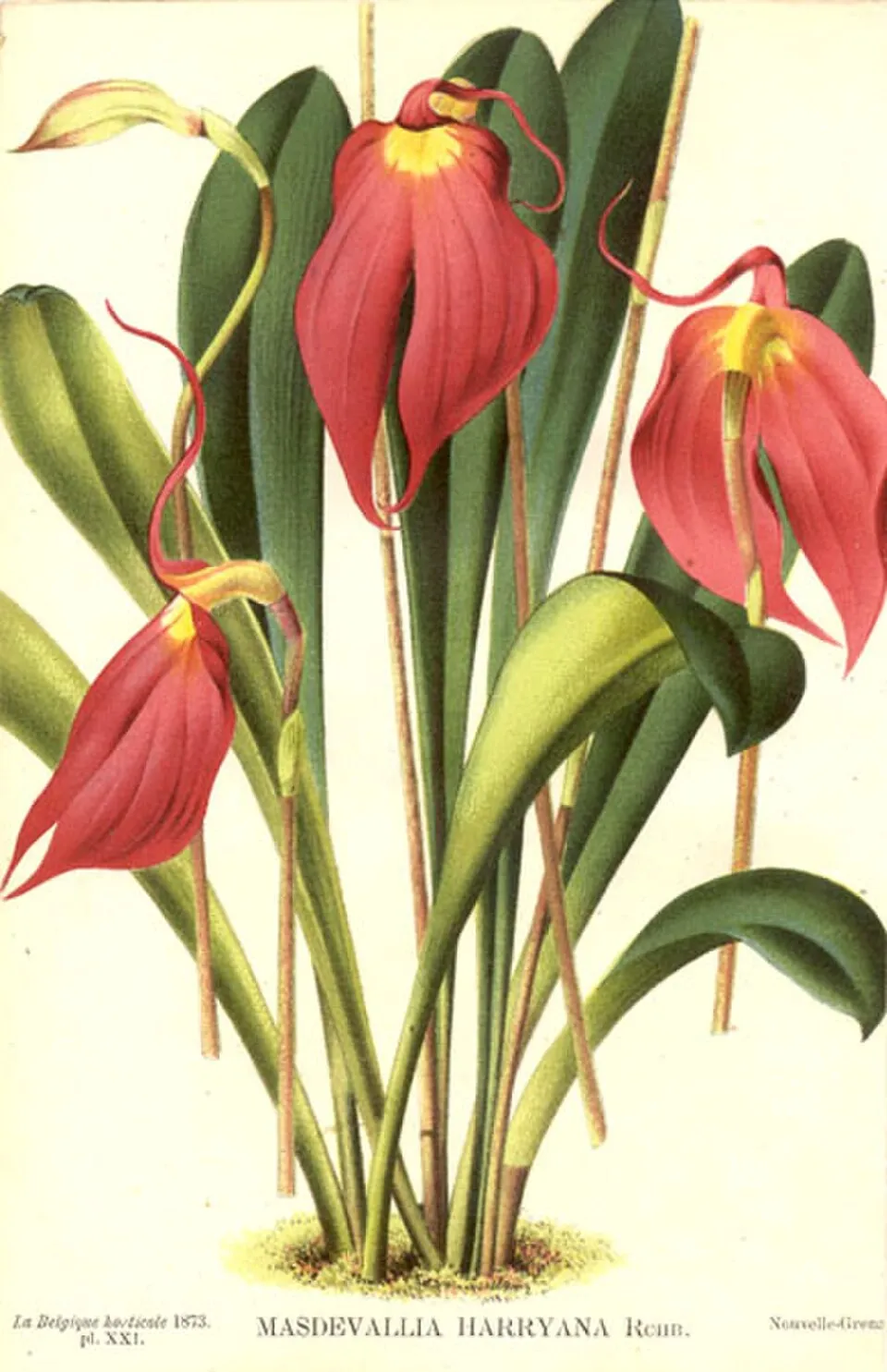
Masdevallia coccinea, commonly known as the Masdevallia Orchid or Kite Orchid, is a striking epiphytic species found predominantly in the high-altitude cloud forests of the Andean regions. Its natural distribution spans from Colombia, particularly in the Eastern Cordillera, including areas around Ocana in Norte de Santander and south to Santa Barbara in Cundinamarca, extending into Ecuador. This compact orchid typically reaches a modest height of 15 to 30 centimeters, making it well-suited for specialized indoor cultivation. Its foliage is characterized by narrow, lanceolate leaves, often 20 to 30 centimeters long, which are notably fleshy, rigid, and succulent, serving as primary water storage organs in the absence of pseudobulbs. These leaves display a vibrant, deep green hue, providing a vivid contrast to its spectacular floral displays.
The inflorescence usually produces one to several prominent, triangular flowers, each spanning up to 10 centimeters across. These blossoms are celebrated for their intense coloration, frequently appearing in brilliant shades of red or orange. The unique floral morphology features three fused sepals that form a tube-like structure, often extending into characteristic pointed, tail-like tips, giving them their distinctive 'kite-like' or 'mouth-like' appearance. The labellum, or lip, is typically smaller and less conspicuous, nestled within the sepaline cup, while the column is short and stout. The plant’s fine, fibrous roots are adapted for epiphytic growth, often covered by a spongy layer called velamen, which assists in absorbing moisture and nutrients from the humid atmosphere and decaying organic matter.
Masdevallia coccinea thrives in specific microclimates, preferring cool to cold temperatures, high humidity (70-90%), and dappled light, mimicking its natural understory habitat. It typically grows between 1,500 and 2,500 meters above sea level. Taxonomically, it is classified within the vast Orchidaceae family, specifically within the Pleurothallidinae subtribe.
Trusted Scientific References
1. Authoritative external sources for Masdevallia coccinea
1.1 Wikipedia — Masdevallia coccinea
1.2 Kew POWO (Plants of the World Online)
1.3 PubMed — peer-reviewed research
1.4 NCBI Taxonomy Browser
1.5 GBIF — Global Biodiversity
1.1.Masdevallia Orchid — Standout Qualities
- ✓Distinctive Kite — like Flowers — Characterized by prominent, triangular blooms with unique tail-like sepaline tips.
- ✓Intense Red/Orange Hues — Flowers exhibit vivid and captivating coloration, making them highly decorative.
- ✓High — Altitude Epiphyte — Naturally grows on trees in the cool, moist cloud forests of the Andes.
- ✓Cool — Growing Orchid — Prefers consistently cool to cold temperatures for healthy development and flowering.
- ✓High Humidity Requirement — Essential for successful cultivation, mimicking its native misty habitat.
- ✓No Pseudobulbs — Lacks water-storing pseudobulbs, relying on fleshy leaves for moisture retention.
- ✓Compact Growth Habit — Typically reaches a modest size, suitable for specialized indoor or greenhouse environments.
- ✓Conservation Concern — Wild populations are susceptible to habitat degradation and climate change impacts.
- ✓Scientific Name — Masdevallia coccinea — Named after the Spanish physician and botanist Dr. José Masdeval.
1.2.Masdevallia Orchid — Concise Overview
- ✓Vibrant Andean Orchid — Known for its striking red or orange flowers with distinctive 'kite-like' shapes.
- ✓Epiphytic Cloud Forest Dweller — Thrives naturally in cool, humid, high-altitude environments of Colombia and Ecuador.
- ✓Primarily Ornamental — Prized globally by horticulturists and collectors for its unique aesthetic beauty in specialized cultivation.
- ✓Limited Medicinal Research — Specific therapeutic uses for Masdevallia coccinea are largely unexplored and not traditionally documented.
- ✓Demanding Cultivation — Requires precise environmental control, including cool temperatures, high humidity, and bright indirect light, for optimal growth.
2.Masdevallia Orchid — Taxonomic Classification
3.Masdevallia Orchid — Botanical Stats
4.Masdevallia Orchid — Plant Morphology
5.Masdevallia Orchid — Where It Grows
6.Masdevallia Orchid — Historical Applications
7.Masdevallia Orchid — Active Compounds
- ✓Flavonoids — Responsible for flower pigmentation (e.g., anthocyanins) and potential antioxidant activities, contributing to cellular protection.
- ✓Phenolic Acids — Compounds like caffeic acid derivatives, commonly found in plants, offering potential antioxidant and antimicrobial properties.
- ✓Alkaloids — A diverse group of nitrogen-containing compounds; while not specifically characterized for Masdevallia coccinea, many orchids produce alkaloids with various biological effects.
- ✓Terpenoids — Volatile organic compounds that may contribute to subtle fragrances and play roles in plant defense mechanisms or pollinator attraction.
- ✓Steroids — Plant sterols and their glycosides, which can have structural roles and sometimes exhibit hormonal or anti-inflammatory activities in other plant species.
- ✓Polysaccharides — Complex carbohydrates that support plant structure and energy storage, with some potentially offering immunomodulatory properties in other medicinal plants.
- ✓Lipids — Essential fatty acids and other lipid compounds crucial for cell membrane integrity and energy reserves within the plant tissues.
- ✓Amino Acids and Proteins — Fundamental building blocks for plant growth, enzymes, and metabolic processes, present throughout the plant.
- ✓Minerals and Vitamins — Trace elements and vitamins necessary for the plant's physiological functions and overall health, potentially present in minute quantities.
8.Masdevallia Orchid — Modern Studies
- ✓Ornamental and Aesthetic Value — The primary benefit of Masdevallia coccinea lies in its exceptional ornamental appeal, contributing to psychological well-being and aesthetic enjoyment through its vibrant blooms.
- ✓Potential Anti-inflammatory Action — While specific research on Masdevallia coccinea is nascent, other species within the Orchidaceae family have demonstrated compounds with anti-inflammatory properties, suggesting a potential area for future pharmacological investigation.
- ✓Antioxidant Capacity (Hypothetical) — Many orchids contain flavonoids and phenolic compounds known for antioxidant activity; Masdevallia coccinea may possess similar constituents, warranting further phytochemical studies.
- ✓Ecological Indicator — As a sensitive cloud forest epiphyte, its presence and health can indicate the ecological vitality and environmental quality of its native habitat.
- ✓Air Quality Improvement (General Plant Benefit) — Like many houseplants, Masdevallia coccinea can contribute to indoor air quality by absorbing certain airborne toxins, although its specific efficacy is not quantified.
- ✓Biodiversity Contribution — Cultivation and conservation efforts for Masdevallia coccinea contribute to the preservation of orchid diversity and genetic resources.
- ✓Research Subject for Adaptation — Its unique adaptations to high-altitude, cool, and humid environments make it a valuable subject for botanical research into plant physiology and ecological resilience.
- ✓Horticultural Therapy Potential — Engaging in the cultivation of delicate and beautiful orchids like Masdevallia coccinea can offer therapeutic benefits, promoting mindfulness and reducing stress.
8.1.Masdevallia Orchid — Indications & Uses
9.Masdevallia Orchid — Adverse Effects
9.1.Masdevallia Orchid — Reported Side Effects
- ✓Allergic Reactions — Potential for contact dermatitis or respiratory irritation in sensitive individuals upon direct handling or exposure to pollen, though not commonly reported.
- ✓Ingestion Toxicity Unknown — As Masdevallia coccinea is not intended for consumption, its internal toxicity is unstudied; ingestion is not recommended and could lead to adverse effects.
- ✓Environmental Impact (Unsustainable Harvesting) — Wild harvesting for commercial purposes could negatively impact native populations and delicate cloud forest ecosystems.
- ✓Horticultural Pests and Diseases — Improper cultivation can lead to plant stress, making it susceptible to common orchid pests (e.g., scale, slugs) and fungal infections, which are 'side effects' of poor care.
- ✓No Documented Medicinal Side Effects — Due to the lack of established internal medicinal uses, there are no documented systemic adverse effects from therapeutic application.
9.2.Masdevallia Orchid — Safety Overview
- ✓Lack of Medicinal Data — No established safety profile for internal medicinal consumption exists due to its primary ornamental classification and absence of documented traditional therapeutic use.
- ✓Allergic Sensitivity — Individuals with known plant allergies should exercise caution when handling to avoid potential contact dermatitis; use gloves if skin sensitivity is a concern.
- ✓Ingestion Advisory — Not intended for human consumption; ingestion of any part of the plant is strongly discouraged without specific scientific validation, as potential toxicity is unknown.
- ✓Horticultural Handling — Standard horticultural practices should be followed, including hand washing after handling, especially if sap comes into contact with skin.
- ✓Environmental Conservation — Ensure sourcing from sustainable cultivators to protect wild populations and their delicate cloud forest habitats from over-collection.
- ✓Pet Safety — Keep Masdevallia coccinea away from pets that might chew on plants, as potential gastrointestinal upset or toxicity from ingestion is unknown.
10.Masdevallia Orchid — Preparation & Dosage
- ✓Ornamental Display — The primary and widely recognized use of Masdevallia coccinea is for its striking ornamental value, cultivated indoors or in specialized orchidariums to appreciate its vibrant flowers.
- ✓Horticultural Specimen — Grown by collectors and enthusiasts as a prized botanical specimen, contributing to plant diversity in cultivation.
- ✓Botanical Study Material — Utilized in botanical gardens and research institutions for morphological, ecological, and genetic studies.
- ✓Eco-tourism Attraction — In its native habitat, it contributes to the ecological appeal for eco-tourists and nature photographers.
- ✓Hypothetical Tincture Preparation — If future research identifies therapeutic compounds, a tincture might be prepared by steeping plant material in alcohol for concentrated extraction, though this is purely speculative.
- ✓Hypothetical Decoction — Similarly, a decoction could be hypothetically made by simmering plant parts in water to extract water-soluble compounds, if medicinal uses were validated.
- ✓Hypothetical Topical Poultice — In traditional herbalism, some plants are applied as poultices; a crushed leaf poultice could be a speculative topical application for potential skin benefits, but is not recommended.
- ✓Research & Development — Serves as a potential subject for future ethnobotanical and pharmacological research to uncover any undiscovered medicinal properties within the Orchidaceae family.
11.Masdevallia Orchid — Growth Requirements
- ✓Temperature Control — Maintain cool to cold temperatures, ideally 5-18°C (40-65°F), avoiding prolonged exposure above 24°C (75°F).
- ✓High Humidity — Provide consistent humidity levels between 70-90%, often achieved with humidifiers or pebble trays.
- ✓Bright Indirect Light — Position in bright, diffused light, similar to light filtered through a net curtain, protecting from direct harsh sunlight.
- ✓Well-Draining Medium — Use a coarse, airy, and free-draining orchid mix, such as medium bark mixed with perlite or sphagnum moss, in terracotta pots.
- ✓Consistent Watering — Water frequently, ensuring the medium is moist but not waterlogged; do not allow the plant to dry out completely, especially during active growth.
- ✓Good Air Circulation — Ensure adequate air movement to prevent fungal issues and promote healthy growth, mimicking its native breezy habitat.
- ✓Pest Management — Regularly inspect for pests like slugs and snails, which are attracted to new growths and flower spikes; elevate plants if grown outdoors.
- ✓Balanced Fertilization — Apply a highly diluted, balanced orchid fertilizer every 2-4 weeks during the growing season, flushing with plain water periodically.
Reviewed by the Flora Medical Global Botanical Review Panel
Multi-disciplinary editorial group · Botany · Ethnobotany · Herbal-medicine literature
Who reviewed this: This page was checked by the Flora Medical Global Botanical Review Panel — an in-house editorial group of botany graduates, ethnobotany researchers, and horticulture practitioners who collectively maintain our 7,000+ plant encyclopedia. Meet the team.
Our 4-step verification process
1. Taxonomic verification
Scientific names and synonyms cross-checked against Kew POWO, World Flora Online, and The Plant List.
2. Phytochemical & medicinal cross-reference
Active compounds, traditional uses, and reported activities are cross-referenced with PubMed, USDA Dr. Duke's database, and peer-reviewed ethnobotanical literature.
3. Conservation & distribution check
Distribution, ecology, and conservation status confirmed against GBIF occurrence records and the IUCN Red List.
4. Editorial & safety review
Every entry passes an editorial pass for clarity, originality, and safety notices (toxicity, contraindications, dosage caveats) before publication.
Last reviewed:
Important medical disclaimer: This content is for educational and research purposes only. It is not medical advice and is not a substitute for consultation with a licensed healthcare provider. Do not use any herb to self-treat a medical condition without professional guidance.
Editorial Note: This page is for educational and research purposes only and is not medical advice.
Written by: Flora Medical Global Editorial Team
Reviewed by: Flora Medical Global Botanical Review Panel
Last Updated: June 15, 2026





Masdevallia Orchid — Comments & Community Reviews
Rate this plant