
Medical Disclaimer: This content is for educational purposes only. It is not medical advice. Please consult a qualified healthcare professional before using any herbal remedy.
Safety Overview
1.Mashaparni — At a Glance
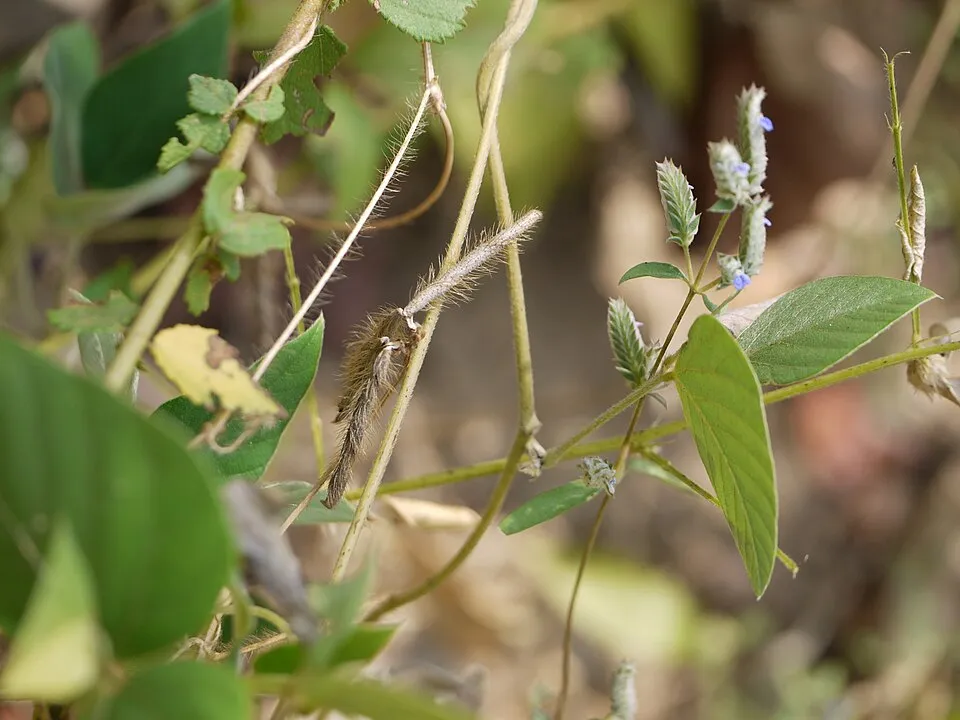
Teramnus labialis, widely recognized by its traditional name Mashaparni, is an exquisite perennial herbaceous climber belonging to the vast Fabaceae family. This resilient plant typically ascends to heights of 1.5 to 2 meters, gracefully intertwining its slender, glabrous green stems around available supports. Its foliage is distinctively trifoliate, with each leaflet presenting an ovate to elliptical shape, generally measuring between 4 to 12 cm in length and 2 to 5 cm in width.
The leaflets boast smooth margins and a characteristic glossy upper surface, contributing to the plant's verdant aesthetic. Short petioles, approximately 1 to 2.5 cm long, connect the leaflets to the main stem.
The floral display of Mashaparni is subtle yet charming, featuring small, papilionaceous flowers that range in color from delicate pale lilac to creamy off-white. These blossoms are arranged in elegant axillary racemes, which can extend up to 15 cm, serving as attractive beacons for various pollinators during the warmer months.
Following successful pollination, the plant develops elongated, flattened pods, each typically containing 4 to 7 dark brown, rounded seeds. These seeds are crucial for the plant's natural propagation and dispersal.
Ecologically, Teramnus labialis thrives across the tropical and subtropical belts of Asia, with significant prevalence in countries like India, Bangladesh, and various parts of Southeast Asia. It prefers environments with moist, well-drained soils, often found in open fields, forest edges, and disturbed areas. As a member of the Fabaceae family, it inherently contributes to soil health through its nitrogen-fixing capabilities, enriching the local ecosystems.
Taxonomically, it is classified within the genus Teramnus, known for its small, twining herbaceous legumes. Historically, Mashaparni holds a profound place in traditional healing systems, particularly in Ayurvedic medicine, where its roots and whole plant have been utilized for centuries, underscoring its deep cultural and therapeutic significance.
Trusted Scientific References
1. Authoritative external sources for Teramnus labialis
1.1 Wikipedia — Teramnus labialis
1.2 Kew POWO (Plants of the World Online)
1.3 PubMed — peer-reviewed research
1.4 NCBI Taxonomy Browser
1.5 GBIF — Global Biodiversity
1.1.Mashaparni — Distinguishing Points
- ✓Scientific Name — Teramnus labialis.
- ✓Common Name — Mashaparni.
- ✓Family — Fabaceae (Leguminosae).
- ✓Botanical Form — Perennial herbaceous climber.
- ✓Leaf Morphology — Trifoliate, ovate to elliptical leaflets with glossy surface.
- ✓Flower Characteristics — Small, pale lilac to off-white, papilionaceous flowers in axillary racemes.
- ✓Fruit Type — Elongated, flattened pods containing 4-7 seeds.
- ✓Geographic Distribution — Native to tropical and subtropical Asia, including India and Southeast Asia.
- ✓Traditional System — Prominently featured in Ayurvedic medicine.
- ✓Ayurvedic Categorization — Jivaniya (enlivening), Shukrajanana (sperm production), Madhura skandha (sweet tasting).
- ✓Dosha Effect — Balances Vata and Pitta, increases Kapha.
- ✓Key Constituents — Flavonoids, coumarins (fraxidin), vitexin, bergenin, essential amino acids, minerals.
- ✓Pharmacological Actions — Antioxidant, anti-inflammatory, antihyperglycemic, aphrodisiac.
- ✓Edible Parts — Seeds are consumed as food after processing.
- ✓Ecological Role — Nitrogen-fixing plant, improving soil fertility.
1.2.Mashaparni — At-a-Glance Summary
- ✓Teramnus labialis is a versatile Ayurvedic herb.
- ✓Highly valued for reproductive health in both men and women.
- ✓Rich in essential nutrients, minerals, and amino acids.
- ✓Known for its antioxidant, anti-inflammatory, and antihyperglycemic properties.
- ✓Balances Vata and Pitta doshas, offering cooling and nourishing effects.
- ✓Traditionally used for fatigue, bleeding disorders, and digestive complaints.
- ✓Edible seeds provide a nutritious food source after processing.
- ✓Consult a healthcare professional before use, especially with existing conditions or medications.
2.Mashaparni — Botanical Identity
3.Mashaparni — Fact Sheet
4.Mashaparni — Botanical Description
5.Mashaparni — Origin & Spread
6.Mashaparni — Heritage Uses
7.Mashaparni — Key Phytochemicals
- ✓Amino Acids — Contains essential amino acids such as lysine, leucine + isoleucine, arginine, valine, and histidine, crucial for protein synthesis, muscle repair, and overall metabolic functions.
- ✓Minerals — Rich in vital minerals including potassium, magnesium, calcium, and phosphorus, which are essential for bone health, nerve function, and electrolyte balance.
- ✓Crude Protein — Constitutes a significant percentage (approx. 22.86%) of the seed weight, providing a substantial dietary protein source.
- ✓Crude Fat — Seeds contain a notable amount of crude fat (approx. 6.10%), with over 60% consisting of beneficial unsaturated fatty acids.
- ✓Nitrogen-Free Extracts — Comprise a large portion (approx. 58.15%) of the seed material, primarily carbohydrates that serve as an energy source.
- ✓Flavonoids — A class of polyphenolic compounds known for their potent antioxidant, anti-inflammatory, and immune-modulating properties.
- ✓Coumarins — Identified as a key active fraction, particularly fraxidin, which has shown promise in antihyperglycemic activity and other pharmacological effects.
- ✓Vitexin — A specific flavonoid glycoside isolated from the plant, exhibiting significant anti-inflammatory and moderate antioxidant activities.
- ✓Bergenin — A C-glycoside found in Mashaparni, contributing to its anti-inflammatory properties.
- ✓Daidzin — An isoflavone glycoside, also contributing to the plant's observed anti-inflammatory effects.
- ✓3-O-methyl-D-chiro-inositol — A cyclitol derivative found to possess anti-inflammatory activity, further supporting the plant's traditional uses.
- ✓Phenols — Total free phenols are present in minute quantities, contributing to antioxidant capacity but generally not at levels considered anti-nutritional after processing.
- ✓Tannins — Present in small amounts, offering astringent properties and contributing to the plant's ability to manage bleeding disorders.
- ✓Phytic Acid — Found in minute quantities in seeds, an anti-nutritional factor that can be significantly reduced by traditional processing methods like soaking and boiling.
8.Mashaparni — Pharmacological Findings
- ✓Enhances Reproductive Health — Mashaparni is traditionally revered for its ability to support and improve reproductive functions, particularly in women, by balancing hormonal activity and nourishing reproductive tissues.
- ✓Supports Fertility — In Ayurvedic practices, it is specifically used to aid fertility by promoting a healthy uterine environment and improving gamete quality, often prescribed as part of a comprehensive fertility regimen.
- ✓Alleviates Menstrual Disorders — The plant helps regulate menstrual cycles and mitigate common issues such as dysmenorrhea (painful periods) and menorrhagia (heavy bleeding) due to its balancing and strengthening properties.
- ✓Boosts Sperm and Semen Quality — Known as 'Shukrala', Teramnus labialis is traditionally used to increase both the quantity and quality of sperm, enhancing male reproductive vitality and vigor.
- ✓Acts as an Aphrodisiac (Vrushya) — It is considered an aphrodisiac, improving libido and sexual performance by nourishing the reproductive system and boosting overall energy levels.
- ✓Combats Fatigue and Muscle Wasting — As a highly nutritious herb, Mashaparni is used to restore energy, alleviate general debility, and support muscle mass, making it beneficial for conditions of physical exhaustion or muscle atrophy.
- ✓Balances Vata and Pitta Dosha — Its inherent properties of being sweet (Madhura), cooling (Sheeta), and unctuous (Snigdha) effectively pacify Vata and Pitta imbalances, reducing inflammation and nervous tension.
- ✓Addresses Bleeding Disorders (Asrajit) — The herb is beneficial in managing various bleeding conditions, including nasal bleeding, heavy menstrual periods, and other internal hemorrhages, by promoting hemostasis.
- ✓Provides Nutritional Support (Pushtivardhini) — Rich in essential nutrients like proteins, minerals, and amino acids, it acts as a general tonic, improving overall nourishment and vitality, particularly useful during convalescence.
- ✓Reduces Burning Sensations (Daha) — Due to its cooling (Sheeta) property, Mashaparni is effective in alleviating burning sensations associated with gastritis, neuropathy, and inflammatory conditions.
- ✓Mitigates Fever (Jwara) — Its antipyretic properties help reduce fever and associated discomfort, providing a soothing effect on the body during febrile states.
- ✓Decreases Swelling and Inflammation (Shotha) — Research indicates anti-inflammatory activity, making it useful in reducing localized or systemic inflammation and edema.
- ✓Supports Digestive Health (Sangrahi) — It exhibits absorbent properties, making it beneficial in managing conditions like diarrhea and Irritable Bowel Syndrome (IBS) by consolidating bowel movements.
- ✓Offers Antioxidant Protection — Studies have shown significant free radical scavenging activity, protecting cells from oxidative damage and supporting overall cellular health.
- ✓Exhibits Antihyperglycemic Effects — Preliminary research suggests its potential in blood sugar management, indicating a role in supporting metabolic health, particularly in type 2 diabetes models.
- ✓Possesses Anti-inflammatory Activity — Specific compounds isolated from Mashaparni have demonstrated inhibitory activity against inflammatory enzymes, contributing to its traditional use for various inflammatory conditions.
8.1.Mashaparni — Health Applications
9.Mashaparni — Cautions & Contraindications
9.1.Mashaparni — Side Effects & Warnings
- ✓Increased Kapha Dosha — May increase Kapha in individuals prone to Kapha imbalances, potentially leading to congestion or sluggishness if consumed in excess.
- ✓Mild Digestive Upset — In sensitive individuals, high doses might cause mild gastrointestinal discomfort, such as bloating or indigestion.
- ✓Allergic Reactions — Although rare, some individuals may experience allergic reactions, including skin rashes or itching, particularly with topical application.
- ✓Hypoglycemic Effects — Due to its potential antihyperglycemic activity, individuals with diabetes on medication should monitor blood sugar levels closely to avoid hypoglycemia.
- ✓Hypotensive Effects — There is a theoretical possibility of mild blood pressure lowering effects, so caution is advised for individuals on antihypertensive medications.
- ✓Interaction with Medications — May interact with certain allopathic medications, particularly those for blood sugar management, blood pressure, or blood thinners; consultation with a healthcare professional is recommended.
- ✓Pregnancy and Lactation — Lack of sufficient safety data necessitates caution; pregnant or lactating women should avoid use unless advised by a qualified practitioner.
9.2.Mashaparni — Toxicity Assessment
- ✓Professional Consultation — Always consult a qualified healthcare practitioner or medical herbalist before using Mashaparni, especially if you have pre-existing health conditions or are on medication.
- ✓Dosage Adherence — Strictly follow recommended dosages as prescribed by a practitioner or indicated on product labels to prevent potential adverse effects.
- ✓Pregnancy and Breastfeeding — Avoid use during pregnancy and lactation due to insufficient safety data; potential effects on fetal development or infant health are not fully established.
- ✓Children and Infants — Not recommended for use in children or infants without specific guidance from a pediatric herbalist or physician.
- ✓Diabetes and Hypoglycemia — Individuals with diabetes or those prone to hypoglycemia should monitor blood glucose levels carefully, as Mashaparni may have blood sugar-lowering effects.
- ✓Blood Pressure Medications — Exercise caution if taking medications for high blood pressure, as the herb might theoretically augment hypotensive effects.
- ✓Allergic History — Individuals with known allergies to plants in the Fabaceae family should approach with caution and test for sensitivity.
- ✓Quality Sourcing — Ensure the plant material or products are sourced from reputable suppliers to guarantee purity, potency, and absence of contaminants.
- ✓Storage — Store herbal preparations in a cool, dry place away from direct sunlight and moisture to maintain efficacy and prevent degradation.
10.Mashaparni — Preparation Methods
- ✓Decoction (Kwath) — Prepare by boiling 50-100 ml of water with 3-6 grams of dried plant material until reduced, consumed to address Vata-Pitta imbalances and internal inflammation.
- ✓Powder (Churna) — Finely ground dried whole plant or root powder, typically taken in doses of 3-6 grams mixed with warm water, honey, or ghee for general debility and reproductive support.
- ✓Medicated Oils (Thailam) — Used as an ingredient in classical Ayurvedic oils like Narayan Oil and Mahanarayan Oil for external application in musculoskeletal pain, paralysis, and neurological conditions.
- ✓Herbal Infusion — A lighter preparation made by steeping dried leaves or aerial parts in hot water, consumed as a tonic or for digestive comfort.
- ✓Fermented Preparations (Arishtam) — Incorporated into formulations such as Dhanwanthararishtam to improve digestion, address lower back pain, and enhance overall strength.
- ✓Concoctions (Kashayam) — Utilized in formulations like Vidaryadi Kashayam, specifically for respiratory conditions and general strengthening.
- ✓Rejuvenative Tonics (Rasayanam) — Included in Ajamamsa Rasayanam and Amruth Jeevan Rasayan for treating Vata disorders, improving strength, and boosting immunity.
- ✓Edible Seeds — Seeds can be processed by soaking and boiling to reduce anti-nutritional factors, then consumed as a nutritious food source in some regional cuisines.
- ✓Paste Application — Fresh leaves or roots can be ground into a paste and applied topically for localized inflammation or skin conditions.
- ✓Ghee Infusion (Ghrita) — Plant extracts can be infused into ghee for enhanced bioavailability and specific therapeutic actions, particularly for neurological and reproductive health.
11.Mashaparni — Cultivation & Care
- ✓Climatic Preference — Thrives in tropical and subtropical climates, requiring warm temperatures and sufficient humidity.
- ✓Soil Requirements — Prefers moist, well-drained loamy or sandy-loam soils rich in organic matter.
- ✓Sunlight Exposure — Requires full sun to partial shade for optimal growth, with at least 6 hours of direct sunlight daily.
- ✓Propagation — Primarily propagated by seeds; direct sowing after scarification or germination in nursery beds is effective.
- ✓Watering — Needs consistent moisture, especially during dry periods, but avoids waterlogging to prevent root rot.
- ✓Support Structure — As a climbing vine, it requires trellises, stakes, or other support systems to grow vertically.
- ✓Fertilization — Benefits from organic compost or a balanced fertilizer, though its nitrogen-fixing ability reduces the need for nitrogen-rich feeds.
- ✓Pest and Disease Management — Generally robust, but monitor for common legume pests like aphids and fungal diseases in overly humid conditions.
- ✓Harvesting — Aerial parts can be harvested when the plant is mature, typically after flowering but before seed pods fully dry.
- ✓Nitrogen Fixation — As a legume, it enriches soil nitrogen content, making it a valuable cover crop or intercrop.
Reviewed by the Flora Medical Global Botanical Review Panel
Multi-disciplinary editorial group · Botany · Ethnobotany · Herbal-medicine literature
Who reviewed this: This page was checked by the Flora Medical Global Botanical Review Panel — an in-house editorial group of botany graduates, ethnobotany researchers, and horticulture practitioners who collectively maintain our 7,000+ plant encyclopedia. Meet the team.
Our 4-step verification process
1. Taxonomic verification
Scientific names and synonyms cross-checked against Kew POWO, World Flora Online, and The Plant List.
2. Phytochemical & medicinal cross-reference
Active compounds, traditional uses, and reported activities are cross-referenced with PubMed, USDA Dr. Duke's database, and peer-reviewed ethnobotanical literature.
3. Conservation & distribution check
Distribution, ecology, and conservation status confirmed against GBIF occurrence records and the IUCN Red List.
4. Editorial & safety review
Every entry passes an editorial pass for clarity, originality, and safety notices (toxicity, contraindications, dosage caveats) before publication.
Last reviewed:
Important medical disclaimer: This content is for educational and research purposes only. It is not medical advice and is not a substitute for consultation with a licensed healthcare provider. Do not use any herb to self-treat a medical condition without professional guidance.
Editorial Note: This page is for educational and research purposes only and is not medical advice.
Written by: Flora Medical Global Editorial Team
Reviewed by: Flora Medical Global Botanical Review Panel
Last Updated: June 15, 2026





Mashaparni — Comments & Community Reviews
Rate this plant