

Medical Disclaimer: This content is for educational purposes only. It is not medical advice. Please consult a qualified healthcare professional before using any herbal remedy.
Safety Overview
1.Massonia Pustulata — Essential Profile
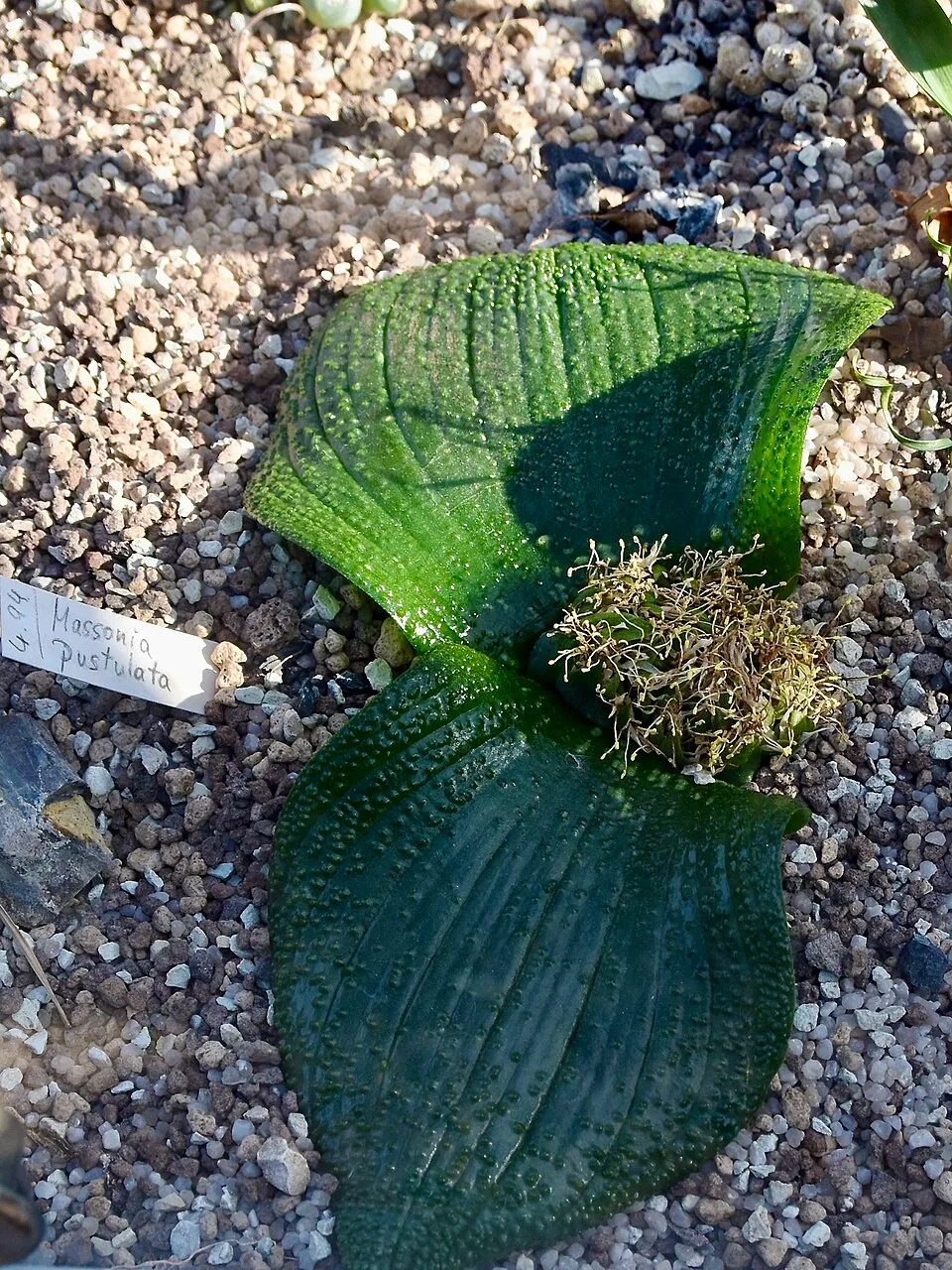
Massonia pustulata is a distinctive bulbous geophyte belonging to the family Asparagaceae, subfamily Scilloideae, and is indigenous to the Cape Provinces of South Africa, specifically thriving in the winter-rainfall regions. This captivating plant is renowned for its unique morphology, primarily exhibiting two broad, prostrate, and markedly fleshy leaves that lie flat against the ground. These leaves are characteristically adorned with prominent, often densely packed pustules or bumps, which directly inspired its specific epithet 'pustulata'.
The plant typically forms a compact rosette, with the leaves varying in color from deep green to glaucous. In late winter to early spring, a remarkable inflorescence emerges directly from the center of the basal leaves, often nestled almost at ground level. This consists of a dense, brush-like cluster of numerous small, star-shaped flowers, typically white or pale pink, with a prominent display of stamens.
The flowers emit a sweet, honey-like fragrance, serving as an attractant for various pollinators in its native fynbos and renosterveld habitats. Massonia pustulata is a deciduous species, entering dormancy during the hot, dry summer months, at which point its leaves wither and the bulb conserves energy underground. Its compact size, intriguing texture, and early-season bloom make it a highly sought-after ornamental species for specialized succulent and bulb collections.
Trusted Scientific References
1. Authoritative external sources for Massonia Pustulata
1.1 Wikipedia — Massonia Pustulata
1.2 Kew POWO (Plants of the World Online)
1.3 PubMed — peer-reviewed research
1.4 NCBI Taxonomy Browser
1.5 GBIF — Global Biodiversity
1.6Massonia Pustulata should be interpreted through verified botanical identity, practical care, and responsible safety language. This recovery note adds the missing context needed for a complete profile: match light to the plant's habit, use well-drained soil, water according to season, and avoid unsupported medicinal or edible claims. For publishing, the plant can be presented as a source-backed garden plant with clear care guidance, common problem diagnosis, and conservative safety wording.
1.1.Massonia Pustulata — Highlights
- ✓Distinctive Pustulated Leaves — Broad, fleshy leaves with unique bumpy texture.
- ✓Ground — Hugging Inflorescence — Dense cluster of fragrant white/pink flowers emerging at soil level.
- ✓Winter — Flowering Geophyte — Blooms in late winter to early spring, providing seasonal interest.
- ✓Honey — Scented Flowers — Emit a sweet fragrance, attracting pollinators.
- ✓Drought Tolerant — Adapted to arid environments, requiring minimal water.
- ✓Deciduous Bulb — Enters summer dormancy, conserving energy underground.
- ✓Compact Size — Ideal for small spaces, containers, and specialized collections.
- ✓Ornamental Value — Highly sought after by collectors for its unusual beauty.
- ✓South African Endemic — Native to specific winter-rainfall regions of South Africa.
- ✓Asparagaceae Family — Belongs to the broader Asparagaceae family, subfamily Scilloideae.
1.2.Massonia Pustulata — Concise Overview
- ✓Unique Ornamental Bulb — Highly prized for distinctive pustulated leaves and fragrant, ground-hugging flowers.
- ✓South African Native — Thrives in winter-rainfall regions, adapted to arid conditions.
- ✓Low Maintenance — Drought-tolerant and easy to care for once established.
- ✓No Medicinal Use — Primarily cultivated for aesthetic value; not used in traditional or modern herbal medicine.
- ✓Mild Toxicity Risk — Ingestion may cause digestive upset; generally considered safe for handling.
- ✓Attracts Pollinators — Flowers emit a sweet scent, drawing beneficial insects.
2.Massonia Pustulata — Nomenclature & Classification
3.Massonia Pustulata — Key Data
4.Massonia Pustulata — Botanical Features
5.Massonia Pustulata — Native Range & Habitat
6.Massonia Pustulata — Folk Medicine Applications
7.Massonia Pustulata — Phytochemistry
- ✓Alkaloids — While not extensively studied in Massonia pustulata, many plants in the Asparagaceae family contain steroidal alkaloids, which can have diverse pharmacological activities.
- ✓Saponins — These glycosides are common in monocots and can exhibit hemolytic properties, as well as potential anti-inflammatory or immunomodulatory effects.
- ✓Flavonoids — ubiquitous plant pigments and antioxidants, these compounds are likely present and contribute to cellular protection and potentially UV defense in the plant.
- ✓Phenolic Acids — Simple phenolic compounds, often involved in plant defense mechanisms and possessing antioxidant capabilities.
- ✓Polysaccharides — Structural and storage carbohydrates, influencing plant vigor and potentially offering immunomodulatory properties if ingested, though not applicable here.
- ✓Volatile Organic Compounds (VOCs) — Responsible for the distinctive honey-like fragrance of the flowers, these compounds primarily serve to attract pollinators.
- ✓Anthocyanins — Pigments that may contribute to subtle coloration in flowers or leaves under certain conditions; known for antioxidant properties.
- ✓Glycosides — A broad class of compounds, including cardiac glycosides in some related species, warranting caution, though not confirmed for Massonia pustulata.
8.Massonia Pustulata — Scientific Evidence
- ✓Ornamental Value — Massonia pustulata is primarily cultivated for its aesthetic appeal, offering unique foliage and fragrant flowers to collectors and gardeners.
- ✓Pollinator Attraction — Its sweet-scented flowers attract bees and other beneficial insects, contributing to local biodiversity and ecosystem health.
- ✓Drought Tolerance — As a geophyte from arid regions, it possesses natural adaptations for water storage, making it suitable for xeriscaping and water-wise gardens.
- ✓Low Maintenance — Once established, Massonia pustulata requires minimal care, making it an excellent choice for busy gardeners or those seeking resilient plant options.
- ✓Educational Interest — Its unusual morphology, particularly the pustulated leaves and ground-hugging inflorescence, provides an excellent subject for botanical study and appreciation.
- ✓Soil Stabilization (Indirect) — In its natural habitat, its bulbous root system can contribute to soil binding, though this is not a primary cultivated benefit.
- ✓Stress Reduction (Horticultural) — Engaging in the cultivation and observation of unique plants like Massonia pustulata can offer therapeutic benefits and promote well-being.
- ✓Habitat Support — While not a direct medicinal benefit, cultivating native plants helps support the natural habitats of various species.
8.1.Massonia Pustulata — Therapeutic Indications
9.Massonia Pustulata — Cautions & Contraindications
9.1.Massonia Pustulata — Caution Notes
- ✓Skin Irritation — Contact with plant sap or parts may cause mild skin irritation in sensitive individuals.
- ✓Digestive Upset — Ingestion of any part of the plant, especially the bulb, may lead to mild digestive discomfort.
- ✓Allergic Reactions — Rare instances of allergic reactions to plant compounds cannot be entirely ruled out.
- ✓Toxicity (Unconfirmed) — While not listed as highly toxic, internal consumption is not advised due to unknown phytochemical profiles.
- ✓Root Rot — Overwatering or poor drainage can lead to root and bulb rot, severely damaging or killing the plant.
- ✓Pest Infestation — Susceptible to common bulb pests if not properly monitored, leading to plant stress.
9.2.Massonia Pustulata — Safety Profile
- ✓Non-Medicinal Use — Massonia pustulata is strictly an ornamental plant; it is not intended for medicinal or culinary use.
- ✓Avoid Ingestion — Do not consume any part of the plant; its safety for internal use has not been established.
- ✓Handle with Care — Wear gloves if sensitive skin is a concern, especially when handling bulbs or sap.
- ✓Keep Away from Children/Pets — Ensure plants are out of reach of young children and pets to prevent accidental ingestion.
- ✓Proper Drainage — Essential for cultivation; waterlogging can lead to bulb rot and plant death.
- ✓Consult Experts — If accidental ingestion occurs or adverse reactions develop, seek advice from a medical or poison control professional.
- ✓Research Caution — Always confirm the safety of any plant before considering internal application, especially with less-studied species.
10.Massonia Pustulata — Usage Guide
- ✓Ornamental Display — Best used as a focal point in specialized succulent and bulb collections, rock gardens, or shallow containers.
- ✓Xeriscaping — Integrate into drought-tolerant garden designs due to its minimal water requirements and adaptability to arid conditions.
- ✓Container Growing — Ideal for pot cultivation, allowing for controlled soil conditions and easy movement to protect from extreme weather.
- ✓Botanical Study — Utilize for educational purposes, observing its unique life cycle, morphology, and adaptations to its native environment.
- ✓Pollinator Garden Inclusion — Plant to attract local pollinators, contributing to garden biodiversity and natural ecosystem support.
- ✓Aesthetic Groupings — Combine with other small, drought-tolerant plants with contrasting textures to create visually interesting arrangements.
- ✓Winter Interest — Appreciate its unique foliage and early spring flowers during colder months when many other plants are dormant.
11.Massonia Pustulata — How to Grow
- ✓Soil Preference — Plant in well-drained, gritty soil mix, typically sandy or loamy, with a pH between 6.0 and 7.0.
- ✓Planting Depth — Plant bulbs with their tops just at or slightly above the soil surface in autumn, ensuring proper exposure.
- ✓Light Requirements — Thrives in partial shade to full sun, adapting to various light conditions for optimal growth.
- ✓Watering Schedule — Water thoroughly when the top inch of soil is dry, allowing for drainage to prevent root rot, especially during the growing season.
- ✓Fertilization — Apply a balanced, slow-release fertilizer every 4-6 weeks during the active growing season to support robust growth.
- ✓Pruning — Prune after flowering by removing dead leaves and spent flowers to maintain plant health and encourage new growth.
- ✓Dormancy Care — Reduce watering significantly during the summer dormancy period to prevent bulb rot, resuming in autumn with new growth.
Reviewed by the Flora Medical Global Botanical Review Panel
Multi-disciplinary editorial group · Botany · Ethnobotany · Herbal-medicine literature
Who reviewed this: This page was checked by the Flora Medical Global Botanical Review Panel — an in-house editorial group of botany graduates, ethnobotany researchers, and horticulture practitioners who collectively maintain our 7,000+ plant encyclopedia. Meet the team.
Our 4-step verification process
1. Taxonomic verification
Scientific names and synonyms cross-checked against Kew POWO, World Flora Online, and The Plant List.
2. Phytochemical & medicinal cross-reference
Active compounds, traditional uses, and reported activities are cross-referenced with PubMed, USDA Dr. Duke's database, and peer-reviewed ethnobotanical literature.
3. Conservation & distribution check
Distribution, ecology, and conservation status confirmed against GBIF occurrence records and the IUCN Red List.
4. Editorial & safety review
Every entry passes an editorial pass for clarity, originality, and safety notices (toxicity, contraindications, dosage caveats) before publication.
Last reviewed:
Important medical disclaimer: This content is for educational and research purposes only. It is not medical advice and is not a substitute for consultation with a licensed healthcare provider. Do not use any herb to self-treat a medical condition without professional guidance.
Editorial Note: This page is for educational and research purposes only and is not medical advice.
Written by: Flora Medical Global Editorial Team
Reviewed by: Flora Medical Global Botanical Review Panel
Last Updated: June 15, 2026





Massonia Pustulata — Comments & Community Reviews
Rate this plant