
Medical Disclaimer: This content is for educational purposes only. It is not medical advice. Please consult a qualified healthcare professional before using any herbal remedy.
Safety Overview
1.Matcha — At a Glance
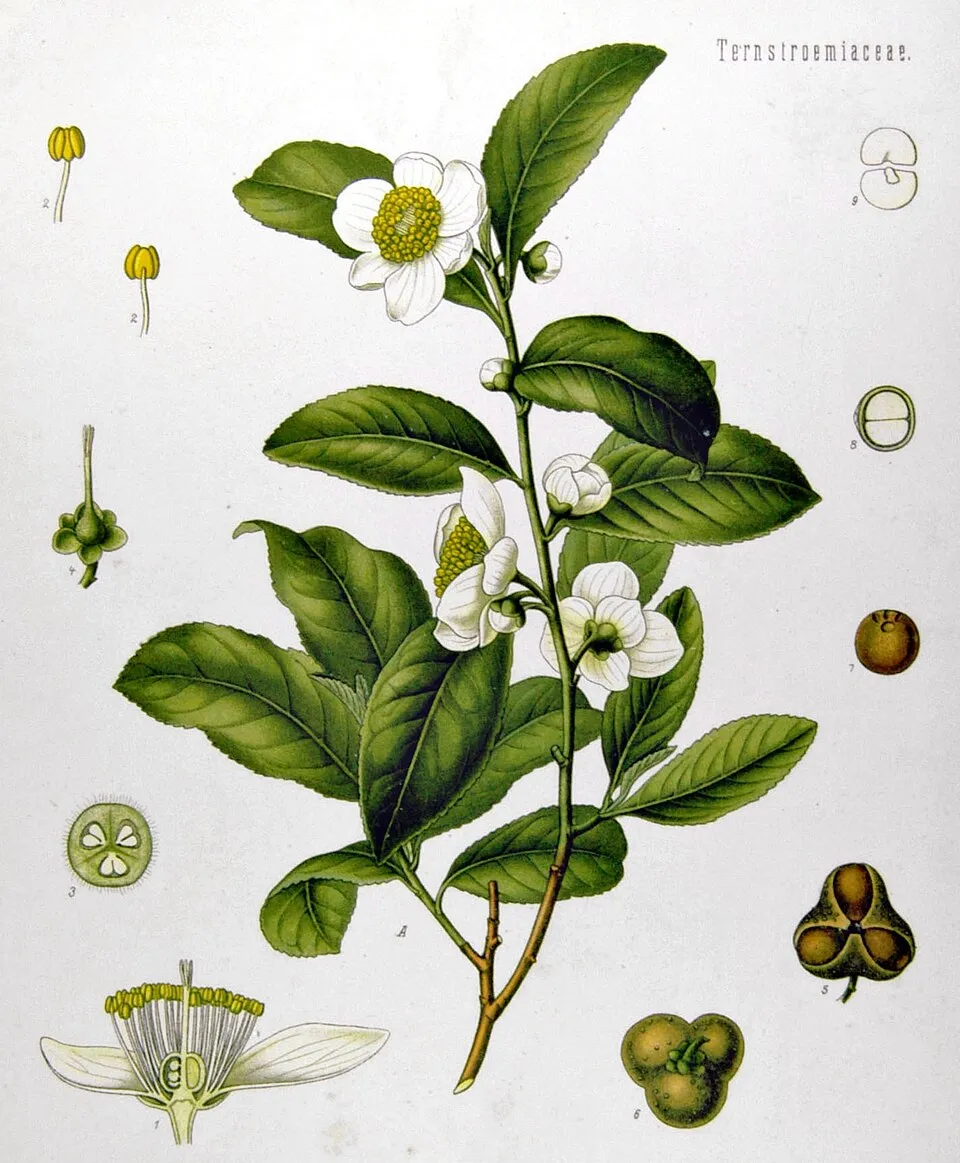
Matcha (Camellia sinensis var. sinensis) is a distinguished cultivar of the evergreen tea plant belonging to the Theaceae family, typically growing as a shrub or small tree between 1 to 2 meters in height when cultivated for tea production. The leaves, which are the prized component for matcha, are characteristically glossy, a deep, vibrant dark green, and ovate, usually measuring from 4 to 10 cm in length. These leaves feature finely serrated margins and are covered with delicate, fine hairs known as trichomes, contributing to their unique texture and enhancing the capture of beneficial compounds during the shading process. The plant produces small, subtly fragrant white flowers with prominent yellow anthers, which typically bloom in the late summer or early autumn.
Its bark is smooth and grayish-brown, providing a robust structural foundation. Camellia sinensis var. sinensis thrives in specific environmental conditions: humid, temperate climates with ample rainfall, preferring well-draining, acidic soils rich in organic matter. Its primary cultivation regions are Japan and certain areas of China. Taxonomically, this variety is distinct from Camellia sinensis var.
assamica, which has larger leaves and is predominantly found in Assam, India. This botanical differentiation underpins significant variations in flavor profile, chemical composition, and traditional preparation methods. The meticulous cultivation of matcha involves shading the plants for several weeks before harvest, a critical step that boosts chlorophyll production, resulting in the iconic vibrant green color and enhancing the concentration of amino acids like L-theanine, which contribute to its distinctive earthy, umami flavor and its revered health benefits, including relaxation and sustained focus.
Trusted Scientific References
1. Authoritative external sources for Camellia sinensis var. sinensis
1.1 Wikipedia — Camellia sinensis var. sinensis
1.2 Kew POWO (Plants of the World Online)
1.3 PubMed — peer-reviewed research
1.4 NCBI Taxonomy Browser
1.5 GBIF — Global Biodiversity
1.1.Matcha — Notable Characteristics
- ✓Shade — Grown Leaves — Cultivated under shade for weeks before harvest, boosting chlorophyll and L-theanine.
- ✓Fine Powder Form — Whole tea leaves are stone-ground into a vibrant green powder, consumed entirely.
- ✓High Antioxidant Content — Exceptionally rich in catechins, especially EGCG, offering superior antioxidant power.
- ✓L-Theanine Presence — — L-Theanine Presence — Provides a unique 'calm alertness' and smooth energy without jitters.
- ✓Distinctive Flavor Profile — Exhibits a rich umami taste with sweet, slightly grassy notes.
- ✓Ceremonial Significance — Integral to traditional Japanese tea ceremonies, symbolizing mindfulness.
- ✓Nutrient — Dense — Contains vitamins, minerals, and fiber, contributing to overall wellness.
- ✓Versatile Use — Enjoyed as a traditional tea, lattes, smoothies, and culinary ingredient.
- ✓Natural Energy Boost — Offers sustained energy due to a balanced combination of caffeine and L-theanine.
- ✓Detoxifying Properties — High chlorophyll content is often associated with natural detoxification support.
1.2.Matcha — Quick Summary
- ✓Matcha is a unique, shade-grown green tea powder from Camellia sinensis var. sinensis.
- ✓Rich in antioxidants, particularly EGCG, and the amino acid L-theanine.
- ✓Offers calm focus, sustained energy, and significant health benefits from its high nutrient density.
- ✓Traditionally central to Japanese tea ceremonies, now popular globally for wellness.
- ✓Supports cardiovascular health, metabolism, and provides powerful cellular protection.
- ✓Requires careful cultivation and preparation to maximize its distinctive flavor and benefits.
2.Matcha — Scientific Identity
3.Matcha — Vital Statistics
4.Matcha — Botanical Description
5.Matcha — Origin & Spread
6.Matcha — Traditional Uses
7.Matcha — Phytochemistry
- ✓Polyphenols — Primarily catechins such as Epigallocatechin gallate (EGCG), Epicatechin gallate (ECG), Epigallocatechin (EGC), and Epicatechin (EC), which are powerful antioxidants responsible for many of matcha's health benefits, including anti-inflammatory and chemopreventive actions.
- ✓Alkaloids — Caffeine is the most prominent alkaloid, providing stimulating effects, increasing alertness, and enhancing cognitive function. Theophylline and theobromine are also present in smaller amounts, contributing to sustained energy.
- ✓Amino Acids — L-theanine is a unique amino acid abundant in shaded tea leaves, promoting relaxation and focus without sedation, and modulating the effects of caffeine. Other amino acids like arginine and glutamine are also present.
- ✓Flavonoids — Quercetin, kaempferol, and myricetin are present, offering additional antioxidant and anti-inflammatory properties, complementing the catechins.
- ✓Vitamins — Rich in Vitamin C (ascorbic acid), which boosts immunity and acts as an antioxidant; Vitamin K (phylloquinone), important for blood clotting and bone health; and B vitamins (B1, B2, B3, B5, B9).
- ✓Minerals — Contains essential minerals such as potassium, calcium, iron, zinc, magnesium, and selenium, which are vital for various physiological functions, including nerve transmission, bone density, and enzyme activity.
- ✓Chlorophyll — Abundant due to the shading process, giving matcha its vibrant green color and contributing to its detoxifying properties.
- ✓Saponins — These compounds contribute to the slight bitterness and frothy texture of matcha, and have been studied for their potential anti-inflammatory and cholesterol-lowering effects.
- ✓Volatile Organic Compounds — Trace amounts contribute to matcha's complex aroma and flavor profile, though less prominent than in other tea types due to processing.
8.Matcha — Evidence-Based Benefits
- ✓Potent Antioxidant Protection — Matcha is exceptionally rich in catechins, particularly epigallocatechin gallate (EGCG), which combat oxidative stress by neutralizing free radicals, thereby protecting cellular integrity.
- ✓Enhanced Cognitive Function — L-theanine, an amino acid unique to tea, promotes alpha brain wave activity, leading to a state of calm alertness, improved focus, and reduced anxiety without drowsiness.
- ✓Cardiovascular Health Support — The catechins in matcha can help lower LDL cholesterol levels, improve endothelial function, and reduce the risk of heart disease by mitigating oxidative damage and inflammation.
- ✓Anti-inflammatory Properties — EGCG and other polyphenols exhibit significant anti-inflammatory effects, potentially alleviating symptoms associated with chronic inflammatory conditions.
- ✓Metabolic Boost and Weight Management — Matcha's compounds, including caffeine and catechins, can increase thermogenesis and fat oxidation, supporting metabolism and aiding in weight management efforts.
- ✓Liver Detoxification Support — Studies suggest that matcha may help protect the liver from damage and reduce the risk of liver disease by supporting its natural detoxification processes.
- ✓Immune System Fortification — The synergistic action of vitamins, minerals, and antioxidants in matcha strengthens the immune response, helping the body defend against pathogens.
- ✓Digestive Wellness — Matcha contains dietary fiber that can support healthy digestion and promote gut regularity, while its antimicrobial properties may help maintain a balanced gut microbiome.
- ✓Anti-cancer Potential — The high concentration of EGCG has been investigated for its chemopreventive properties, showing potential to inhibit the growth of various cancer cells in in vitro and animal studies.
- ✓Oral Health Improvement — Catechins in matcha possess antimicrobial properties that can inhibit the growth of bacteria responsible for plaque formation, bad breath, and dental caries.
8.1.Matcha — Health Applications
9.Matcha — Safety Considerations
9.1.Matcha — Warnings
- ✓Caffeine Sensitivity — Can cause insomnia, nervousness, jitters, or heart palpitations in individuals sensitive to caffeine.
- ✓Digestive Upset — High consumption may lead to stomach upset, nausea, or diarrhea due to caffeine content or tannins.
- ✓Iron Absorption Inhibition — Catechins can chelate iron, potentially reducing its absorption, especially if consumed with meals; best consumed between meals for those with iron deficiency.
- ✓Lead Contamination — Due to the consumption of the entire leaf, there is a potential for higher lead intake if grown in contaminated soils; sourcing from reputable suppliers is crucial.
- ✓Medication Interactions — May interact with blood thinners, certain heart medications, or stimulants due to its vitamin K and caffeine content.
- ✓Headaches — While L-theanine can reduce stress, excessive caffeine intake can sometimes trigger headaches in susceptible individuals.
9.2.Matcha — Safety Profile
- ✓Moderation is Key — Consume matcha in moderate amounts (1-2 servings per day) to minimize potential side effects, particularly caffeine-related ones.
- ✓Pregnant and Breastfeeding Women — Advised to limit or avoid due to caffeine content; consult a healthcare provider before use.
- ✓Children — Should consume sparingly due to caffeine content; alternatives are often recommended.
- ✓Individuals with Iron Deficiency Anemia — Should consume matcha between meals, not with them, to avoid inhibiting iron absorption.
- ✓Pre-existing Conditions — Those with heart conditions, anxiety disorders, or severe digestive issues should consult a doctor before regular consumption.
- ✓Quality Sourcing — Always choose high-quality, ceremonial-grade matcha from reputable sources to reduce the risk of heavy metal contamination and ensure purity.
- ✓Hydration — Maintain adequate hydration when consuming matcha, as caffeine can have a mild diuretic effect.
10.Matcha — Preparation Methods
- ✓Traditional Usucha Preparation — Whisk 1-2 bamboo scoops (chashaku) of matcha with 70 ml of hot water (70-80°C) in a bowl (chawan) until a smooth, frothy consistency is achieved.
- ✓Koicha Preparation — Use a higher ratio of matcha (3-4 scoops) to less water (40 ml) for a thicker, more intense tea, typically reserved for ceremonial use.
- ✓Matcha Latte — Blend 1-2 teaspoons of matcha powder with a small amount of hot water to create a paste, then add steamed milk (dairy or non-dairy) and a sweetener if desired.
- ✓Culinary Ingredient — Incorporate matcha into smoothies, baked goods (cakes, cookies), desserts (ice cream, mousse), and savory dishes for its unique flavor and health benefits.
- ✓Cold Brew Matcha — Whisk matcha with cold water and ice for a refreshing drink, ideal for warmer climates or as an alternative to hot tea.
- ✓Matcha Shots — Mix a smaller amount of matcha powder with just enough hot water to create a concentrated, potent shot for a quick energy boost.
- ✓Topical Application — Some use matcha powder in face masks or skincare products for its antioxidant and anti-inflammatory properties, though internal consumption is primary.
11.Matcha — How to Grow
- ✓Shade Cultivation — Tea bushes are covered for 20-30 days before harvest, blocking up to 90% of sunlight, which boosts chlorophyll, L-theanine, and catechin content.
- ✓Hand-Picking — Only the youngest, tenderest leaves and buds are carefully hand-picked, ensuring premium quality and a smoother flavor.
- ✓Steaming — Freshly harvested leaves are immediately steamed to prevent oxidation (fermentation), preserving the vibrant green color and nutrient profile.
- ✓Air Drying — After steaming, the leaves are air-dried to remove moisture, preparing them for further processing.
- ✓De-stemming and De-veining — Dried leaves, known as Tencha, are meticulously de-stemmed and de-veined to remove any fibrous parts.
- ✓Stone Grinding — Tencha leaves are traditionally stone-ground into a fine powder, preserving nutrients and flavor, a slow process to prevent heat degradation.
Reviewed by the Flora Medical Global Botanical Review Panel
Multi-disciplinary editorial group · Botany · Ethnobotany · Herbal-medicine literature
Who reviewed this: This page was checked by the Flora Medical Global Botanical Review Panel — an in-house editorial group of botany graduates, ethnobotany researchers, and horticulture practitioners who collectively maintain our 7,000+ plant encyclopedia. Meet the team.
Our 4-step verification process
1. Taxonomic verification
Scientific names and synonyms cross-checked against Kew POWO, World Flora Online, and The Plant List.
2. Phytochemical & medicinal cross-reference
Active compounds, traditional uses, and reported activities are cross-referenced with PubMed, USDA Dr. Duke's database, and peer-reviewed ethnobotanical literature.
3. Conservation & distribution check
Distribution, ecology, and conservation status confirmed against GBIF occurrence records and the IUCN Red List.
4. Editorial & safety review
Every entry passes an editorial pass for clarity, originality, and safety notices (toxicity, contraindications, dosage caveats) before publication.
Last reviewed:
Important medical disclaimer: This content is for educational and research purposes only. It is not medical advice and is not a substitute for consultation with a licensed healthcare provider. Do not use any herb to self-treat a medical condition without professional guidance.
Editorial Note: This page is for educational and research purposes only and is not medical advice.
Written by: Flora Medical Global Editorial Team
Reviewed by: Flora Medical Global Botanical Review Panel
Last Updated: June 15, 2026




Matcha — Comments & Community Reviews
Rate this plant