
Medical Disclaimer: This content is for educational purposes only. It is not medical advice. Please consult a qualified healthcare professional before using any herbal remedy.
Safety Overview
1.Matico — Botanical Snapshot
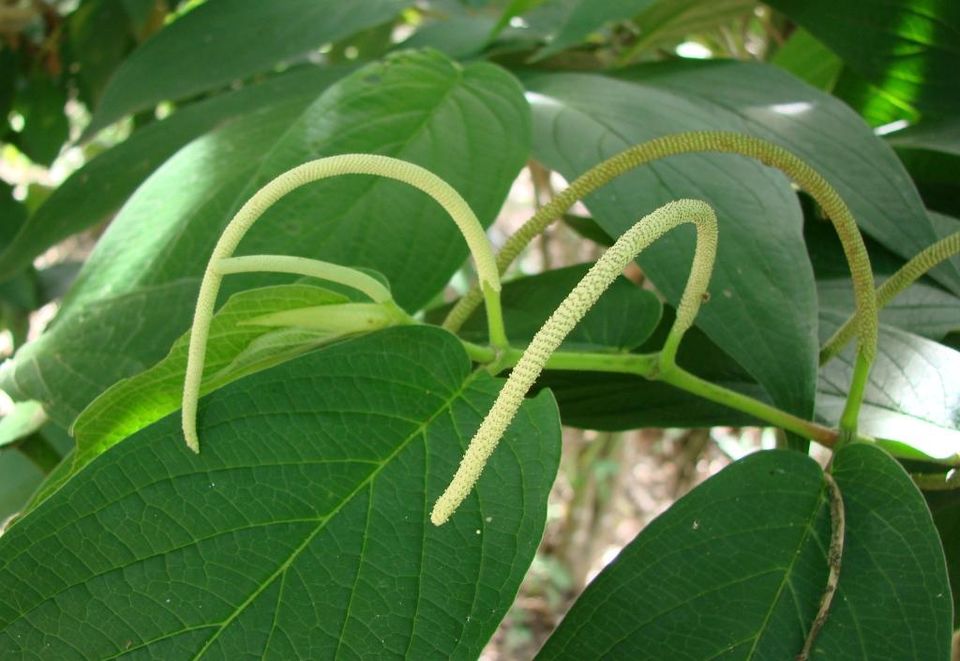
Matico, scientifically known as Piper aduncum, is an evergreen shrubby tree belonging to the extensive Piperaceae family, which also includes well-known species like black pepper and kava-kava. This robust perennial can reach impressive heights of 6 to 7 meters, exhibiting an erect growth habit.
Its distinctive lanceolate leaves are substantial, typically measuring 12 to 20 centimeters in length, with an elongated pointed tip, smooth texture, and prominent venation. When crushed, the stems and leaves emit a characteristic aromatic, spicy, peppery scent due to their rich essential oil content.
Piper aduncum produces unique cylindrical inflorescence spikes, which are white to pale yellow and densely packed with numerous minute, wind-pollinated flowers. These flowers mature into tiny drupes containing black seeds, which are efficiently dispersed by bats and birds. Matico thrives in the understory of tropical rainforests, preferring well-drained, moist, and nutrient-rich soils.
Its natural distribution spans most of tropical South America, including countries like Colombia, Peru, and Brazil, extending into Southern Mexico, the Caribbean, and much of tropical Latin America. It has also naturalized in various tropical regions globally, including parts of Asia, Polynesia, Melanesia, Southern Florida, Hawaii, and Puerto Rico, sometimes even being considered an introduced weed in certain areas. The primary part of the plant utilized for therapeutic purposes is traditionally the leaves, renowned for their complex aromatic profile and diverse phytochemical composition.
Trusted Scientific References
1. Authoritative external sources for Piper aduncum
1.1 Wikipedia — Piper aduncum
1.2 Kew POWO (Plants of the World Online)
1.3 PubMed — peer-reviewed research
1.4 NCBI Taxonomy Browser
1.5 GBIF — Global Biodiversity
1.6Matico should be interpreted through verified botanical identity, practical care, and responsible safety language. This recovery note adds the missing context needed for a complete profile: match light to the plant's habit, use well-drained soil, water according to season, and avoid unsupported medicinal or edible claims. For publishing, the plant can be presented as a source-backed medicinal plant with clear care guidance, common problem diagnosis, and conservative safety wording.
1.1.Matico — Notable Characteristics
- ✓Botanical Classification — Member of the Piperaceae family, related to black pepper and kava-kava.
- ✓Distinctive Morphology — Features large lanceolate leaves and characteristic cylindrical inflorescence spikes.
- ✓Aromatic Profile — Emits a spicy, peppery scent when crushed, indicative of its essential oil content.
- ✓Traditional Wound Healer — Historically revered across the Amazon for its styptic and vulnerary properties.
- ✓Broad Antimicrobial Actions — Demonstrated efficacy against bacteria, fungi, yeast, and viruses in studies.
- ✓Digestive Aid — A cornerstone remedy for various gastrointestinal discomforts in traditional medicine.
- ✓Anti — parasitic Potential — Research highlights its activity against leishmaniasis and schistosomiasis parasites.
- ✓Rich Phytochemistry — Contains a complex array of bioactive compounds including flavonoids, terpenes, and benzenoids.
- ✓Widespread Distribution — Native to tropical Americas and naturalized globally in warm climates.
- ✓Ethnomedicinal Importance — Deeply integrated into indigenous and herbal medicine systems for diverse ailments.
1.2.Matico — Quick Summary
- ✓Matico (Piper aduncum) is a tropical shrub known as "Soldier's Herb."
- ✓Traditionally used for powerful wound healing and to stop bleeding.
- ✓Exhibits broad-spectrum antimicrobial, anti-inflammatory, and digestive support.
- ✓Rich in essential oils, flavonoids, and sesquiterpenes; contains safrole.
- ✓Widely used in South American traditional medicine for infections and digestive issues.
- ✓Available as infusions, poultices, extracts, and capsules; requires dosage caution.
2.Matico — Scientific Identity
3.Matico — Fact Sheet
4.Matico — Physical Description
5.Matico — Native Range & Habitat
6.Matico — Heritage Uses
7.Matico — Phytochemistry
- ✓Flavonoids — Compounds like asebogenin, pinostrobin, sakuranetin, and tectochrysin contribute to its antioxidant and anti-inflammatory properties, also potentially exhibiting antimicrobial effects.
- ✓Sesquiterpenes — Key components include beta-caryophyllene, alpha-humulene, germacrene D, viridiflorol, and spathulenol, often responsible for the plant's aromatic profile and some antimicrobial actions.
- ✓Monoterpenes — Camphor, piperitone, alpha-pinene, limonene, and 1,8-cineole are significant, contributing to its peppery scent, antiseptic qualities, and decongestant effects.
- ✓Phenylpropanoids — Safrole, dill apiol, and myristicin are present, with safrole noted for its insecticidal properties, though requiring caution due to potential toxicity in high concentrations.
- ✓Alkaloids — While not extensively detailed by name in this specific context, alkaloids typically contribute to various pharmacological activities, including potential antimicrobial or analgesic effects.
- ✓Benzenoids — A group of benzenoid chemicals found in matico have demonstrated antibacterial and cytotoxic actions, supporting its traditional use against infections and for wound healing.
- ✓Chromenes — These compounds, identified in the leaves and essential oil, have shown promising toxic effects against cancer cells and bacteria in laboratory studies.
- ✓Essential Oils — A complex mixture containing over 90 identified chemicals, with camphor (17.1%), viridiflorol (14.5%), and piperitone (23.7%) being major constituents, imparting its characteristic aroma and therapeutic actions.
- ✓Phenolic Acids — These contribute to the plant's overall antioxidant capacity and may play a role in its anti-inflammatory and antimicrobial activities.
8.Matico — Pharmacological Findings
- ✓Wound Healing — Matico leaves are widely recognized for their ability to accelerate the healing process of cuts, scrapes, ulcers, and boils, often applied directly as a poultice or wash.
- ✓Hemostatic Properties — Historically and presently, Piper aduncum is valued for its capacity to staunch bleeding, both externally on wounds and internally for conditions like pulmonary or gastric hemorrhages.
- ✓Antimicrobial Action — Research indicates that matico possesses broad-spectrum antibacterial, antifungal, and antiviral properties, making it effective against various pathogens and infections.
- ✓Digestive Health Support — It is a traditional remedy for numerous digestive complaints, including stomachaches, nausea, vomiting, dyspepsia, diarrhea, and excessive intestinal gas.
- ✓Anti-inflammatory Effects — Matico has been traditionally used to alleviate inflammation, which supports its application in conditions ranging from gastritis to general bodily discomfort.
- ✓Genitourinary Tonic — In South American herbal medicine, it serves as a tonic for the genitourinary system, treating kidney stones, urinary tract infections, cystitis, and certain venereal diseases.
- ✓Respiratory System Aid — The plant is employed to address various upper respiratory conditions, such as colds, flu, coughs, bronchitis, and sore throats, often helping to reduce mucous and calm coughs.
- ✓Anti-parasitic Activity — Studies have shown matico's efficacy against tropical parasites like those causing leishmaniasis and schistosomiasis, as well as insecticidal actions against disease vectors.
- ✓Antioxidant Protection — While not explicitly detailed, the presence of flavonoids and phenolic compounds suggests a role in providing antioxidant benefits, protecting cells from oxidative stress.
- ✓Postpartum Support — The Shipibo-Conibo Indians specifically utilize an infusion of matico leaves as a postpartum tonic, aiding recovery after childbirth.
8.1.Matico — Conditions Traditionally Used For
9.Matico — Safety & Side Effects
9.1.Matico — Caution Notes
- ✓Gastrointestinal Upset — Some individuals may experience mild stomach discomfort, nausea, or diarrhea, especially with high doses or sensitive stomachs.
- ✓Allergic Reactions — As with any plant, allergic reactions such as skin rashes, itching, or respiratory symptoms are possible in susceptible individuals.
- ✓Safrole Content — Matico contains safrole, a compound that, in high concentrations or long-term use, has raised concerns about potential hepatotoxicity and carcinogenicity in animal studies.
- ✓Photosensitivity — While uncommon, some plant compounds can potentially increase sensitivity to sunlight, leading to sunburn or skin irritation.
- ✓Hypotension — Due to its potential diuretic or tonic effects, individuals with low blood pressure should monitor their response.
- ✓Blood Thinning — Although not explicitly reported, some phytochemicals can influence blood coagulation, warranting caution for those on anticoagulant medications.
9.2.Matico — Toxicity Assessment
- ✓Pregnant and Nursing Women — Due to insufficient safety data and the presence of safrole, use of Matico is generally advised against during pregnancy and lactation.
- ✓Children — Use in children should be approached with caution and under professional guidance, as specific dosage and safety for pediatric populations are not well-established.
- ✓Pre-existing Conditions — Individuals with liver disease, kidney conditions, or bleeding disorders should exercise extreme caution and consult a healthcare provider before use.
- ✓Drug Interactions — While no specific interactions are widely reported, caution is advised for individuals on medications, particularly anticoagulants, diuretics, or hepatotoxic drugs.
- ✓Safrole Consumption — High or prolonged intake of Matico, particularly concentrated extracts, should be avoided due to the presence of safrole, a compound with potential long-term health concerns.
- ✓Topical Use — When applied topically, perform a patch test first to check for skin sensitivity or allergic reactions, especially on broken skin.
- ✓Dosage Adherence — Always adhere to recommended dosages and preparation methods to minimize potential risks and maximize therapeutic benefits.
10.Matico — Usage Guide
- ✓Infusion (Tea) — Prepare a hot infusion by steeping 1 cup of matico leaves (dried or fresh) in boiling water; traditionally consumed three times daily for internal ailments.
- ✓Topical Poultice — For external wounds, heat and pound fresh matico leaves into a paste, then apply directly to cuts, sores, or ulcers to stop bleeding and aid healing.
- ✓Topical Wash — Brew a stronger infusion or decoction of the leaves and use it as an antiseptic wash for cleaning wounds, skin infections, or for sitz baths for genitourinary issues.
- ✓Fluid Extract — A concentrated liquid preparation, typically taken in dosages of 2-3 ml twice daily, offers a potent form for various internal conditions.
- ✓Tincture — An alcohol-based extract, often used in smaller, measured doses for systemic effects, following manufacturer or herbalist recommendations.
- ✓Encapsulated Powder — Dried and powdered matico leaves can be consumed in capsule form, with a standard dosage often being 1 gram three times daily for convenient internal use.
- ✓Decoction — For tougher plant parts or for a stronger extract, simmer matico leaves or bark in water for an extended period, then strain and consume.
- ✓Gargle/Mouthwash — A cooled infusion can be used as a gargle for sore throats, tonsillitis, or as a mouthwash for oral hygiene and minor gum irritations.
11.Matico — Cultivation & Care
- ✓Climate Preference — Thrives in tropical to subtropical climates with high humidity and consistent warmth, ideally mimicking its native rainforest environment.
- ✓Soil Requirements — Prefers well-drained, fertile, and moist soils rich in organic matter, with a slightly acidic to neutral pH being optimal.
- ✓Light Exposure — Matico grows best in partial shade, mimicking the understory conditions of its natural habitat; direct, intense sunlight can scorch its leaves.
- ✓Watering Regimen — Requires regular and ample watering to keep the soil consistently moist but never waterlogged, especially during dry spells.
- ✓Propagation — Can be propagated effectively from seeds, which are readily dispersed, or vegetatively through stem cuttings and suckers arising from the root crown.
- ✓Spacing — Allow adequate space for growth, as it can form large stands and reach significant heights, potentially outcompeting smaller native vegetation.
- ✓Pest and Disease Management — Generally robust, but monitor for common tropical pests and fungal issues associated with high humidity, ensuring good air circulation.
- ✓Fertilization — Benefits from periodic application of balanced organic fertilizers to support vigorous growth, particularly during its active growing season.
Reviewed by the Flora Medical Global Botanical Review Panel
Multi-disciplinary editorial group · Botany · Ethnobotany · Herbal-medicine literature
Who reviewed this: This page was checked by the Flora Medical Global Botanical Review Panel — an in-house editorial group of botany graduates, ethnobotany researchers, and horticulture practitioners who collectively maintain our 7,000+ plant encyclopedia. Meet the team.
Our 4-step verification process
1. Taxonomic verification
Scientific names and synonyms cross-checked against Kew POWO, World Flora Online, and The Plant List.
2. Phytochemical & medicinal cross-reference
Active compounds, traditional uses, and reported activities are cross-referenced with PubMed, USDA Dr. Duke's database, and peer-reviewed ethnobotanical literature.
3. Conservation & distribution check
Distribution, ecology, and conservation status confirmed against GBIF occurrence records and the IUCN Red List.
4. Editorial & safety review
Every entry passes an editorial pass for clarity, originality, and safety notices (toxicity, contraindications, dosage caveats) before publication.
Last reviewed:
Important medical disclaimer: This content is for educational and research purposes only. It is not medical advice and is not a substitute for consultation with a licensed healthcare provider. Do not use any herb to self-treat a medical condition without professional guidance.
Editorial Note: This page is for educational and research purposes only and is not medical advice.
Written by: Flora Medical Global Editorial Team
Reviewed by: Flora Medical Global Botanical Review Panel
Last Updated: June 15, 2026




Matico — Comments & Community Reviews
Rate this plant