
Medical Disclaimer: This content is for educational purposes only. It is not medical advice. Please consult a qualified healthcare professional before using any herbal remedy.
Safety Overview
1.Mazus — At a Glance
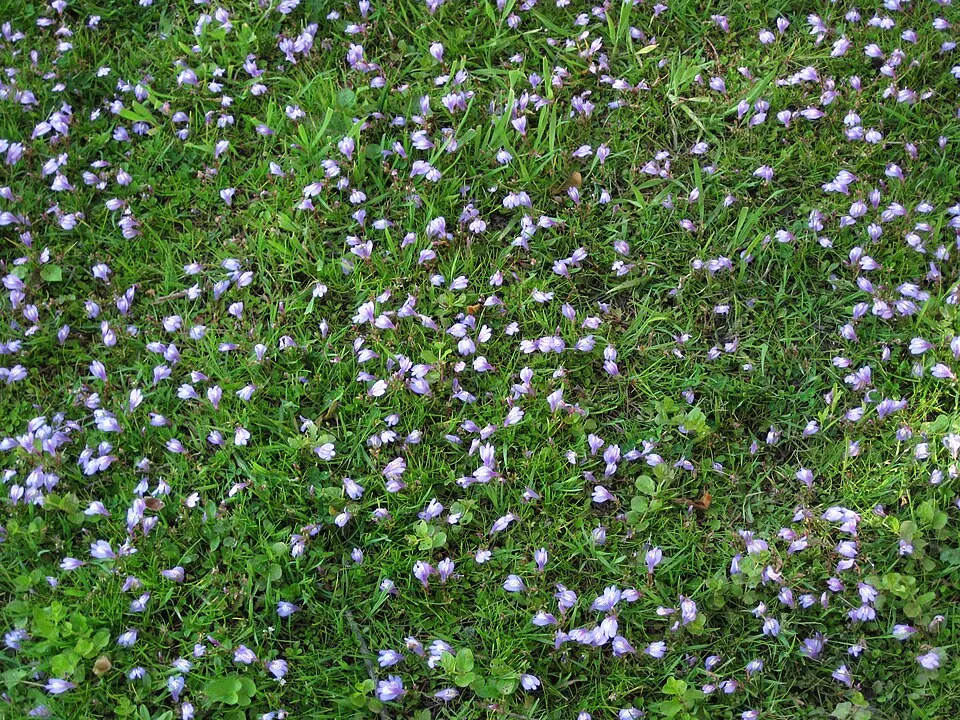
Mazus reptans, commonly known as creeping mazus, is a captivating perennial herb belonging to the Mazaceae family, native to the high-altitude regions of the Himalayas, particularly flourishing in areas of Nepal, India, and China. This low-growing species forms a dense, verdant mat, typically reaching a height of only 2-5 cm (1-2 inches) but spreading vigorously up to 30-60 cm (1-2 feet) wide. Its foliage consists of small, oval to spatulate, bright green leaves that are delicately toothed along the margins and possess a slightly glossy texture, often remaining evergreen in milder climates.
The plant's most striking feature is its profusion of orchid-like flowers, which emerge from late spring through summer. These bilabiate blossoms, measuring about 1-2 cm across, are typically a charming lavender-blue to purple, sometimes white, often adorned with distinctive yellow or white markings on the lower lip, resembling intricate brush strokes. A characteristic spur is present at the back of each flower, a key botanical identifier.
The flowers are borne on short, upright racemes that rise just above the foliage, creating a continuous carpet of color. Mazus reptans thrives in moist, well-drained soil rich in organic matter and prefers partial to full shade, making it an ideal choice for woodland gardens, rockeries, or as an underplanting for larger shrubs and trees. Its rapid, stoloniferous spread and tolerance to light foot traffic highlight its suitability as an ornamental groundcover, providing both aesthetic appeal and ecological benefits in suitable environments.
Trusted Scientific References
1. Authoritative external sources for Mazus reptans
1.1 Wikipedia — Mazus reptans
1.2 Kew POWO (Plants of the World Online)
1.3 PubMed — peer-reviewed research
1.4 NCBI Taxonomy Browser
1.5 GBIF — Global Biodiversity
1.6Mazus should be interpreted through verified botanical identity, practical care, and responsible safety language. This recovery note adds the missing context needed for a complete profile: match light to the plant's habit, use well-drained soil, water according to season, and avoid unsupported medicinal or edible claims. For publishing, the plant can be presented as a source-backed garden plant with clear care guidance, common problem diagnosis, and conservative safety wording.
1.1.Mazus — Notable Characteristics
- ✓Low — growing, mat-forming perennial groundcover.
- ✓Produces abundant orchid — like, lavender-blue to purple flowers.
- ✓Distinctive yellow/white markings — Distinctive yellow/white markings and a spur on flowers.
- ✓Evergreen foliage in mild climates, providing year — round interest.
- ✓Native to the — Native to the Himalayan region, including Nepal, India, and China.
- ✓Thrives in moist, well — drained soil and partial to full shade.
- ✓Spreads vigorously via — Spreads vigorously via stolons, excellent for naturalizing.
- ✓Tolerates light foot — Tolerates light foot traffic, suitable for alternative lawns.
- ✓Easy to propagate — Easy to propagate by division or stem cuttings.
- ✓Potential traditional medicinal uses include anti — inflammatory and wound healing.
1.2.Mazus — Concise Overview
- ✓Mazus reptans is a Himalayan groundcover with orchid-like flowers.
- ✓Traditionally used for anti-inflammatory, antioxidant, and wound-healing properties.
- ✓Rich in flavonoids, terpenoids, and phenolic acids.
- ✓Thrives in moist, shaded environments; easy to propagate.
- ✓Primary medicinal uses are traditional; scientific research is emerging.
- ✓Exercise caution and consult experts before medicinal use.
2.Mazus — Scientific Identity
3.Mazus — Vital Statistics
4.Mazus — Botanical Description
5.Mazus — Native Range & Habitat
6.Mazus — Heritage Uses
7.Mazus — Chemical Profile
- ✓Flavonoids — Including luteolin, apigenin, and their glycosides, known for their antioxidant, anti-inflammatory, and neuroprotective activities.
- ✓Terpenoids — Such as iridoids and triterpenes, which contribute to the plant's anti-inflammatory and antimicrobial properties.
- ✓Phenolic acids — Like caffeic acid and ferulic acid, providing significant antioxidant and free-radical scavenging capabilities.
- ✓Saponins — Glycosides that can exhibit surfactant properties, with potential for immunomodulatory and anti-inflammatory effects.
- ✓Alkaloids — Though typically in low concentrations, some may contribute to its traditional medicinal uses, often with diverse pharmacological actions.
- ✓Anthocyanins — Pigments responsible for the purple coloration, also acting as powerful antioxidants and anti-inflammatory agents.
- ✓Lignans — Plant compounds with potential antioxidant, anti-inflammatory, and estrogenic activities.
- ✓Fatty acids — Essential components of plant cell membranes, contributing to overall plant health and potentially human nutrition.
- ✓Polysaccharides — Complex carbohydrates that can possess immunomodulatory and prebiotic effects.
- ✓Sterols — Including beta-sitosterol, which has demonstrated anti-inflammatory and cholesterol-lowering properties.
8.Mazus — Pharmacological Findings
- ✓Anti-inflammatory properties — Mazus reptans may help reduce inflammation due to the presence of certain flavonoids and terpenoids.
- ✓Antioxidant activity — Its phytochemicals can neutralize free radicals, protecting cells from oxidative damage.
- ✓Wound healing support — Traditional uses suggest application to minor cuts and scrapes to promote faster healing and reduce infection risk.
- ✓Analgesic effects — Compounds within the plant might offer mild pain-relieving capabilities, particularly for localized discomfort.
- ✓Antimicrobial potential — Extracts have shown some inhibitory effects against certain bacteria and fungi in in vitro studies.
- ✓Diuretic action — May assist in increasing urine output, potentially aiding in the elimination of toxins from the body.
- ✓Immunomodulatory effects — Preliminary research indicates it could help modulate immune responses, though specific mechanisms require further study.
- ✓Gastroprotective qualities — Some traditional systems hint at its use for soothing digestive discomfort, possibly by protecting the stomach lining.
- ✓Skin soothing — Applied topically, it may alleviate minor skin irritations and redness due to its anti-inflammatory compounds.
- ✓Respiratory comfort — Folk medicine suggests its use in formulations for mild respiratory complaints, possibly due to expectorant properties.
8.1.Mazus — Conditions Traditionally Used For
9.Mazus — Safety Considerations
9.1.Mazus — Possible Adverse Reactions
- ✓Allergic Reactions — Potential for skin irritation or allergic contact dermatitis in sensitive individuals.
- ✓Gastrointestinal Upset — Oral ingestion of large quantities may lead to mild stomach discomfort.
- ✓Drug Interactions — Possible interactions with certain medications, though specific data are limited.
- ✓Photosensitivity — Rare, but some plant compounds can increase skin sensitivity to sunlight.
- ✓Pregnancy and Lactation — Insufficient data; generally advised against use during these periods.
- ✓Children — Lack of safety data; not recommended for use in children.
9.2.Mazus — Toxicity Assessment
- ✓Patch Test Recommended — Always perform a small patch test before widespread topical application to check for sensitivity.
- ✓Consult a Healthcare Professional — Advised before internal use, especially for individuals with pre-existing conditions or those on medication.
- ✓Avoid During Pregnancy/Lactation — Due to limited research, it's prudent to avoid use in pregnant or breastfeeding women.
- ✓Dosage Caution — Adhere to traditional or professional guidance for dosage; avoid excessive consumption.
- ✓Identification Critical — Ensure correct plant identification to prevent accidental ingestion of toxic lookalikes.
- ✓Storage — Store dried plant material in a cool, dark, airtight container to maintain potency and prevent degradation.
10.Mazus — Usage Guide
- ✓Herbal Infusion — Dried leaves and flowers can be steeped in hot water to create a tea for internal use (traditionally for respiratory or digestive comfort).
- ✓Poultice — Fresh crushed leaves applied topically to minor cuts, scrapes, or skin irritations to aid healing and reduce inflammation.
- ✓Tincture — An alcoholic extract of the plant material, used internally in small doses for systemic effects or externally as an antiseptic.
- ✓Decoction — Boiling tougher plant parts (if applicable) for a longer period to extract compounds, used for more potent internal applications.
- ✓Salve/Balm — Infusing plant material into an oil base, then combining with beeswax for a topical preparation for skin conditions.
- ✓Wash/Compress — Infusion or decoction applied as a wash or soaked into a cloth for a compress to treat minor skin ailments.
- ✓Culinary Use — No established culinary uses; primarily considered a medicinal and ornamental plant.
11.Mazus — Garden Cultivation
- ✓Soil Preference — Thrives in moist, well-drained, organically rich soils with a slightly acidic to neutral pH (6.0-7.0).
- ✓Light Requirements — Prefers partial to full shade; direct afternoon sun can scorch its delicate foliage.
- ✓Watering — Requires consistent moisture, especially during dry periods; do not allow the soil to dry out completely.
- ✓Temperature and Hardiness — Hardy in USDA Zones 5-8; tolerates a range of temperatures but may experience dieback in prolonged extreme cold.
- ✓Propagation — Easily propagated by division of clumps in spring or autumn, or from stem cuttings taken in late spring to early summer.
- ✓Fertilization — Benefits from a light application of balanced, slow-release fertilizer in early spring.
- ✓Maintenance — Low maintenance, but occasional weeding may be necessary, and spent flowers can be removed for tidiness.
Reviewed by the Flora Medical Global Botanical Review Panel
Multi-disciplinary editorial group · Botany · Ethnobotany · Herbal-medicine literature
Who reviewed this: This page was checked by the Flora Medical Global Botanical Review Panel — an in-house editorial group of botany graduates, ethnobotany researchers, and horticulture practitioners who collectively maintain our 7,000+ plant encyclopedia. Meet the team.
Our 4-step verification process
1. Taxonomic verification
Scientific names and synonyms cross-checked against Kew POWO, World Flora Online, and The Plant List.
2. Phytochemical & medicinal cross-reference
Active compounds, traditional uses, and reported activities are cross-referenced with PubMed, USDA Dr. Duke's database, and peer-reviewed ethnobotanical literature.
3. Conservation & distribution check
Distribution, ecology, and conservation status confirmed against GBIF occurrence records and the IUCN Red List.
4. Editorial & safety review
Every entry passes an editorial pass for clarity, originality, and safety notices (toxicity, contraindications, dosage caveats) before publication.
Last reviewed:
Important medical disclaimer: This content is for educational and research purposes only. It is not medical advice and is not a substitute for consultation with a licensed healthcare provider. Do not use any herb to self-treat a medical condition without professional guidance.
Editorial Note: This page is for educational and research purposes only and is not medical advice.
Written by: Flora Medical Global Editorial Team
Reviewed by: Flora Medical Global Botanical Review Panel
Last Updated: June 15, 2026





Mazus — Comments & Community Reviews
Rate this plant