

Medical Disclaimer: This content is for educational purposes only. It is not medical advice. Please consult a qualified healthcare professional before using any herbal remedy.
Safety Overview
1.Meconopsis — Essential Profile
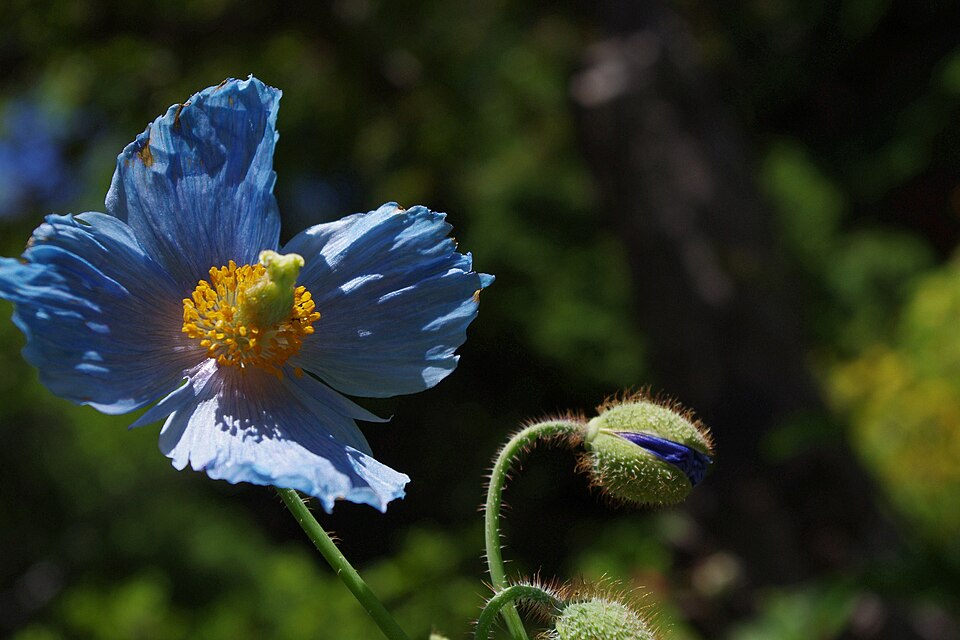
Meconopsis betonicifolia, commonly known as the Himalayan blue poppy, is a truly captivating biennial or short-lived perennial herbaceous plant indigenous to the high-altitude alpine zones of the Himalayas. Its natural distribution spans across Tibet, Bhutan, Nepal, and the northern mountainous regions of India, where it thrives in cool, moist, and well-drained environments, typically found in forest clearings, meadows, and rocky slopes. Belonging to the Papaveraceae family, it is easily distinguished from the opium poppy (Papaver somniferum) by its distinct morphology and chemical profile, lacking the potent psychoactive alkaloids.
The plant typically reaches a height of 60-90 cm (2-3 feet), presenting a basal rosette of ovate to oblong leaves that are often hairy and subtly lobed. Its most striking feature is the large, ethereal sky-blue flowers, often measuring 10-15 cm (4-6 inches) across, which emerge solitarily atop sturdy, erect stems. These delicate, paper-thin petals, sometimes crinkled, encircle a prominent cluster of bright yellow stamens, creating a vivid contrast.
While predominantly blue, flower coloration can vary from deep indigo to pale azure. As a monocarpic perennial or robust biennial, it typically flowers in its second year of growth before setting tiny black seeds and often perishing. The Himalayan blue poppy's exquisite beauty has made it a highly prized ornamental species, symbolizing the unique floral diversity and rugged charm of its native high-altitude habitat.
Trusted Scientific References
1. Authoritative external sources for Meconopsis betonicifolia
1.1 Wikipedia — Meconopsis betonicifolia
1.2 Kew POWO (Plants of the World Online)
1.3 PubMed — peer-reviewed research
1.4 NCBI Taxonomy Browser
1.5 GBIF — Global Biodiversity
1.6Meconopsis should be interpreted through verified botanical identity, practical care, and responsible safety language. This recovery note adds the missing context needed for a complete profile: match light to the plant's habit, use well-drained soil, water according to season, and avoid unsupported medicinal or edible claims. For publishing, the plant can be presented as a source-backed garden plant with clear care guidance, common problem diagnosis, and conservative safety wording.
1.1.Meconopsis — Highlights
- ✓Species Name — Meconopsis betonicifolia.
- ✓Common Name — Himalayan blue poppy.
- ✓Family — Papaveraceae (Poppy Family).
- ✓Habitat — Alpine regions of the Himalayas (Tibet, Bhutan, Nepal, India).
- ✓Flower Color — Vibrant sky blue, occasionally indigo or pale azure.
- ✓Medicinal Use — Traditional Tibetan medicine for inflammation and pain.
- ✓Key Compounds — Alkaloids, flavonoids, phenolic compounds.
- ✓Growth Habit — Biennial or short-lived perennial herb.
- ✓Height — Typically 60-90 cm (2-3 feet).
- ✓Distinctive Feature — Large, delicate, cup-shaped blue flowers.
1.2.Meconopsis — At-a-Glance Summary
- ✓Himalayan blue poppy (Meconopsis betonicifolia) is a stunning alpine plant with emerging medicinal interest.
- ✓Traditionally used in Tibetan medicine for anti-inflammatory and pain-relieving properties.
- ✓Contains alkaloids, flavonoids, and phenolic compounds contributing to its pharmacological effects.
- ✓Research supports its anti-inflammatory and antioxidative potential.
- ✓Primarily ornamental, but traditional uses are gaining scientific validation.
- ✓Requires cool, moist conditions for cultivation; sensitive to heat.
2.Meconopsis — Scientific Identity
3.Meconopsis — Key Data
4.Meconopsis — Botanical Features
5.Meconopsis — Native Range & Habitat
6.Meconopsis — Folk Medicine Applications
7.Meconopsis — Chemical Profile
- ✓Alkaloids — Contains isoquinoline alkaloids, although distinct from those found in opium poppy, contributing to its traditional medicinal uses and pharmacological activities.
- ✓Flavonoids — Rich in various flavonoids, which are known for their antioxidant, anti-inflammatory, and free-radical scavenging properties.
- ✓Phenolic Compounds — Presence of diverse phenolic acids and other phenolic compounds, key contributors to its antioxidative capacity.
- ✓Saponins — Contains saponins, which may contribute to its anti-inflammatory and immunomodulatory effects.
- ✓Terpenoids — Various terpenoid compounds are found, potentially playing a role in its biological activities.
- ✓Polysaccharides — Certain polysaccharides may be present, known for their immune-modulating properties.
- ✓Organic Acids — Contains a range of organic acids that contribute to the plant's overall metabolic profile and potential therapeutic effects.
- ✓Glycosides — Various glycosides are likely present, influencing its pharmacological actions and bioavailability.
- ✓Fatty Acids — Essential and non-essential fatty acids contribute to the plant's nutritional and potential health benefits.
- ✓Sterols — Plant sterols are found, which can have various physiological effects.
8.Meconopsis — Evidence-Based Benefits
- ✓Anti-inflammatory Action — Studies indicate that Meconopsis betonicifolia possesses significant anti-inflammatory properties, potentially modulating inflammatory pathways in a dose-dependent manner.
- ✓Analgesic Effects — Traditional Tibetan medicine has long utilized Meconopsis species for pain relief, suggesting an inherent analgesic capacity.
- ✓Antioxidative Properties — Research highlights its antioxidative activities, which can help neutralize free radicals and reduce oxidative stress within the body.
- ✓Immunomodulatory Support — The plant may contribute to regulating immune responses, potentially beneficial in conditions characterized by immune dysregulation.
- ✓Metabolic Pathway Modulation — Metabolomic studies suggest that constituents can influence key metabolic pathways, offering insights into its multi-targeted actions.
- ✓Traditional Pain Management — Historically used in Himalayan regions for alleviating pain associated with various conditions, including musculoskeletal discomfort.
- ✓Relief from Swelling — Its anti-inflammatory components are traditionally applied to reduce swelling and edema.
- ✓Respiratory Support — Some traditional practices suggest its use in addressing certain respiratory discomforts, though further research is needed.
- ✓Potential for Sustainable Alternatives — Chemical similarities to other Meconopsis species indicate potential as a sustainable source for medicinal compounds, especially for anti-inflammatory applications.
- ✓Localized Topical Application — Traditional uses include topical applications for localized pain and inflammatory conditions.
8.1.Meconopsis — Reported Uses
9.Meconopsis — Cautions & Contraindications
9.1.Meconopsis — Caution Notes
- ✓Gastrointestinal Upset — May cause mild nausea, indigestion, or stomach discomfort in sensitive individuals.
- ✓Allergic Reactions — Potential for skin rashes, itching, or respiratory symptoms in those allergic to Papaveraceae family plants.
- ✓Sedation — Some alkaloids might induce mild drowsiness or sedation, especially at higher doses.
- ✓Hypotension — Theoretically, certain compounds could lower blood pressure; caution for individuals on hypotensive medications.
- ✓Drug Interactions — Potential to interact with anticoagulants, sedatives, or other medications due to its active constituents.
- ✓Pregnancy and Lactation — Lack of safety data; generally contraindicated during pregnancy and breastfeeding.
- ✓Liver or Kidney Issues — Use with caution in individuals with pre-existing liver or kidney conditions, as metabolism and excretion may be affected.
9.2.Meconopsis — Risk Assessment
- ✓Consult a Healthcare Professional — Always seek advice from a qualified practitioner before using Meconopsis betonicifolia, especially with existing health conditions.
- ✓Not for Self-Medication — Due to its potent compounds and traditional use context, self-medication is not recommended.
- ✓Pregnancy and Breastfeeding Contraindicated — Avoid use during pregnancy and lactation due to insufficient safety data and potential alkaloid content.
- ✓Children and Infants — Not recommended for use in children or infants due to lack of safety studies.
- ✓Allergic Sensitivity — Individuals with known allergies to plants in the Papaveraceae family should exercise caution.
- ✓Dosage Adherence — Strictly adhere to prescribed dosages from a qualified herbalist or physician to minimize adverse effects.
- ✓Discontinue if Adverse Reactions Occur — Cease use immediately if any adverse symptoms or allergic reactions develop.
- ✓Avoid with CNS Depressants — Exercise caution or avoid concurrent use with central nervous system depressants due to potential additive effects.
10.Meconopsis — Preparation Methods
- ✓Traditional Decoction — Dried roots or aerial parts are traditionally boiled in water to create a decoction for internal consumption.
- ✓Poultice — Crushed fresh leaves or roots may be applied topically as a poultice for localized pain and swelling.
- ✓Tincture — Plant material can be macerated in alcohol to extract compounds, forming a tincture for internal or external use.
- ✓Infusion — Dried leaves or flowers can be steeped in hot water to make an herbal tea, though less common for potent medicinal effects.
- ✓Powdered Form — Dried plant material is ground into a fine powder for encapsulation or mixing into traditional formulations.
- ✓Oil Infusion — Flowers or leaves can be infused into a carrier oil for topical application as a pain-relieving liniment.
- ✓Traditional Tibetan Formulations — Incorporated as an ingredient in complex polyherbal formulations according to specific traditional Tibetan medicine principles.
- ✓Modern Extracts — Standardized extracts are being developed for research and potential pharmaceutical applications, focusing on anti-inflammatory compounds.
11.Meconopsis — Cultivation & Care
- ✓Site Selection — Choose a cool, partially shaded location with protection from strong winds and direct afternoon sun.
- ✓Soil Requirements — Requires well-drained, humus-rich, slightly acidic to neutral soil (pH 6.0-7.0) that remains consistently moist.
- ✓Watering — Maintain consistent moisture; never allow the soil to dry out, especially during active growth and flowering.
- ✓Propagation — Primarily propagated by fresh seeds, which require a period of cold stratification to germinate effectively.
- ✓Planting — Sow seeds in late winter or early spring in trays; transplant seedlings carefully once established, avoiding root disturbance.
- ✓Climate — Thrives in cool, humid climates, typical of its alpine origins; struggles in hot, dry conditions.
- ✓Fertilization — Apply a balanced, slow-release organic fertilizer in spring, or a liquid feed during the growing season.
- ✓Mulching — Mulch around the base of plants to retain soil moisture and keep roots cool.
Reviewed by the Flora Medical Global Botanical Review Panel
Multi-disciplinary editorial group · Botany · Ethnobotany · Herbal-medicine literature
Who reviewed this: This page was checked by the Flora Medical Global Botanical Review Panel — an in-house editorial group of botany graduates, ethnobotany researchers, and horticulture practitioners who collectively maintain our 7,000+ plant encyclopedia. Meet the team.
Our 4-step verification process
1. Taxonomic verification
Scientific names and synonyms cross-checked against Kew POWO, World Flora Online, and The Plant List.
2. Phytochemical & medicinal cross-reference
Active compounds, traditional uses, and reported activities are cross-referenced with PubMed, USDA Dr. Duke's database, and peer-reviewed ethnobotanical literature.
3. Conservation & distribution check
Distribution, ecology, and conservation status confirmed against GBIF occurrence records and the IUCN Red List.
4. Editorial & safety review
Every entry passes an editorial pass for clarity, originality, and safety notices (toxicity, contraindications, dosage caveats) before publication.
Last reviewed:
Important medical disclaimer: This content is for educational and research purposes only. It is not medical advice and is not a substitute for consultation with a licensed healthcare provider. Do not use any herb to self-treat a medical condition without professional guidance.
Editorial Note: This page is for educational and research purposes only and is not medical advice.
Written by: Flora Medical Global Editorial Team
Reviewed by: Flora Medical Global Botanical Review Panel
Last Updated: June 15, 2026





Meconopsis — Comments & Community Reviews
Rate this plant