

Medical Disclaimer: This content is for educational purposes only. It is not medical advice. Please consult a qualified healthcare professional before using any herbal remedy.
Safety Overview
1.Meconopsis Betonicifolia — Introduction & Highlights
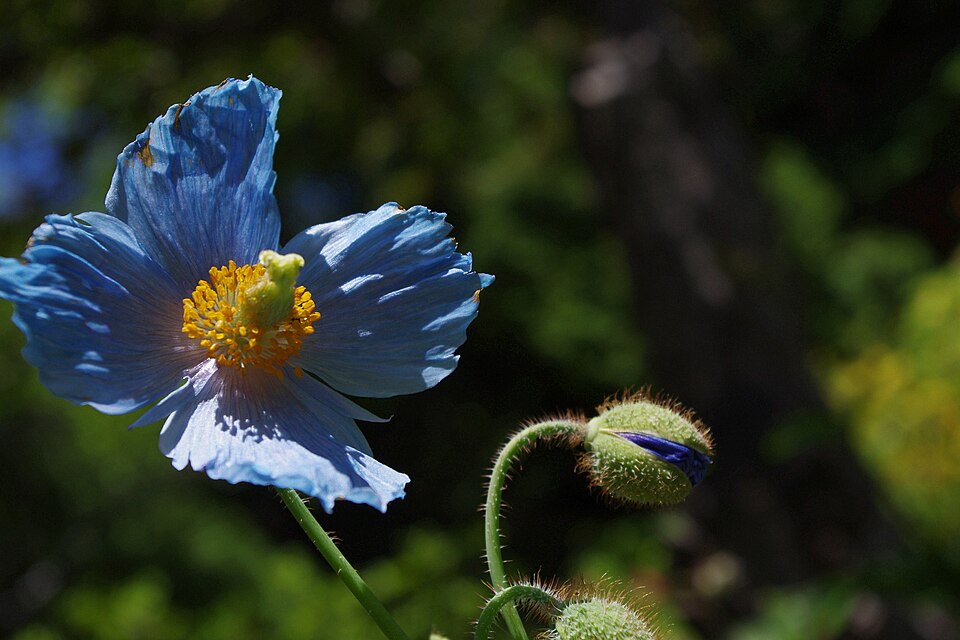
Meconopsis betonicifolia, commonly known as the Himalayan blue poppy, is a truly captivating perennial herb celebrated for its strikingly vibrant, sky-blue flowers. Native to the harsh yet beautiful alpine and subalpine regions of the Himalayas, including Tibet, Bhutan, and parts of China, it thrives at elevations typically between 3,000 to 4,000 meters.
This plant forms an elegant basal rosette of lance-shaped to oblong leaves, which are characteristically hairy on both surfaces and feature slightly toothed margins. From this rosette emerge erect, often branched flowering stems, reaching heights of 60 to 90 centimeters (2-3 feet).
The ethereal blossoms, appearing from late spring to early summer, are the plant's most distinguishing feature. Each flower measures an impressive 10-15 centimeters (4-6 inches) across, showcasing numerous delicate, often crinkled petals with a satiny sheen that captures and reflects light, giving them a luminous quality.
The center of the flower is typically adorned with a prominent cluster of bright yellow stamens, providing a striking contrast to the intense blue petals. As a member of the Papaveraceae family, it shares kinship with other poppies, though its primary allure has long been its ornamental value due to its challenging cultivation requirements and short-lived, yet intensely beautiful, bloom period.
The species name 'betonicifolia' alludes to the resemblance of its leaves to those of plants in the genus Betonica (now Stachys), such as Lamb's-ear. Its preferred natural habitat consists of cool, moist, and shaded environments, often found on mossy slopes, in damp ravines, or at the edges of woodland clearings.
This specific ecological niche underscores its demanding cultivation needs, making it a prized specimen for horticulturists. While its aesthetic appeal is paramount, recent research has begun to explore its biochemical properties, revealing potential applications beyond its visual splendor.
Trusted Scientific References
1. Authoritative external sources for Meconopsis Betonicifolia
1.1 Wikipedia — Meconopsis Betonicifolia
1.2 Kew POWO (Plants of the World Online)
1.3 PubMed — peer-reviewed research
1.4 NCBI Taxonomy Browser
1.5 GBIF — Global Biodiversity
1.1.Meconopsis Betonicifolia — Key Features
- ✓Striking Sky — Blue Flowers — Iconic feature, large and luminous, 10-15 cm across.
- ✓High — Altitude Native — Thrives in the cool, moist conditions of the Himalayas.
- ✓Perennial Herb — Returns year after year under optimal growing conditions.
- ✓Basal Rosette Growth — Distinctive growth habit with leaves originating from the base.
- ✓Delicate, Crinkled Petals — Unique texture and appearance of the flower petals.
- ✓Yellow Stamens — Provides a beautiful contrast against the blue petals.
- ✓Challenging Cultivation — Requires specific environmental conditions, making it a gardener's prize.
- ✓Ornamental Value — Primarily grown for its breathtaking aesthetic appeal.
- ✓Papaveraceae Family Member — Part of the poppy family, sharing some chemical characteristics.
- ✓Emerging Medicinal Research — Recent studies explore its phytochemical composition and potential anti-inflammatory properties.
1.2.Meconopsis Betonicifolia — Concise Overview
- ✓Himalayan blue poppy, Meconopsis betonicifolia, is a stunning ornamental.
- ✓Native to high-altitude Himalayan regions, known for vivid blue flowers.
- ✓Contains alkaloids, flavonoids, and phenolics, some with anti-inflammatory potential.
- ✓Primarily ornamental; traditional medicinal uses are more associated with related species.
- ✓Requires cool, moist, shaded conditions for cultivation.
- ✓Potential toxicity due to alkaloids; not recommended for internal use.
2.Meconopsis Betonicifolia — Taxonomic Classification
3.Meconopsis Betonicifolia — Reference Facts
4.Meconopsis Betonicifolia — Plant Morphology
5.Meconopsis Betonicifolia — Habitat & Distribution
6.Meconopsis Betonicifolia — Ethnobotanical Uses
7.Meconopsis Betonicifolia — Active Compounds
- ✓Alkaloids — Includes isoquinoline alkaloids such as protopine, allocryptopine, and sanguinarine, known for their diverse pharmacological activities including anti-inflammatory and analgesic effects.
- ✓Flavonoids — Compounds like quercetin and kaempferol derivatives, offering potent antioxidant and anti-inflammatory benefits.
- ✓Phenolic acids — Such as caffeic acid and ferulic acid, contributing to the plant's antioxidant capacity.
- ✓Terpenoids — A diverse group of compounds, some of which may possess anti-inflammatory and antimicrobial properties.
- ✓Saponins — Glycosides that can have adaptogenic and immune-modulating effects.
- ✓Polysaccharides — Complex carbohydrates that can support immune function.
- ✓Organic acids — Contributing to the plant's overall metabolic profile and potential therapeutic actions.
- ✓Essential oils — Present in trace amounts, potentially contributing to aroma and some biological activities.
- ✓Fatty acids — Important for cellular structure and various physiological functions.
- ✓Glycosides — Various types present, which can influence biological activity and bioavailability of other compounds.
8.Meconopsis Betonicifolia — Modern Studies
- ✓Anti-inflammatory properties — Research indicates the presence of compounds that can help reduce inflammation, potentially useful for inflammatory conditions.
- ✓Antioxidant activity — Contains metabolites that scavenge free radicals, protecting cells from oxidative stress and damage.
- ✓Pain relief potential — Traditional Tibetan medicine has historically used Meconopsis species for alleviating pain, suggesting analgesic properties.
- ✓Immunomodulatory effects — Certain constituents may help regulate immune responses, contributing to overall immune balance.
- ✓Potential for metabolic regulation — Studies suggest effects on metabolic pathways, which could be beneficial for metabolic disorders.
- ✓Cardiovascular support — Some alkaloids found in Papaveraceae are known to have cardiovascular effects, though specific to M. betonicifolia needs further study.
- ✓Neuroprotective qualities — Antioxidant and anti-inflammatory actions might indirectly offer protection to neural tissues.
- ✓Antimicrobial activity — Preliminary investigations into related species suggest possible inhibitory effects against certain microbes.
- ✓Detoxification support — Metabolites may assist in the body's natural detoxification processes.
- ✓Respiratory health — Traditional uses of some poppy relatives include supporting respiratory function, though direct evidence for M. betonicifolia is limited.
- ✓Gastrointestinal comfort — Anecdotal traditional uses hint at soothing properties for digestive discomfort.
8.1.Meconopsis Betonicifolia — Health Applications
9.Meconopsis Betonicifolia — Precautions & Warnings
9.1.Meconopsis Betonicifolia — Reported Side Effects
- ✓Allergic reactions — Possible skin irritation or allergic responses in sensitive individuals upon contact.
- ✓Toxicity (potential) — Like many Papaveraceae, some Meconopsis species contain alkaloids that can be toxic if ingested in large quantities.
- ✓Gastrointestinal upset — Ingestion of plant parts might cause nausea, vomiting, or diarrhea.
- ✓Central nervous system effects — Alkaloids could potentially depress or stimulate CNS if consumed, depending on dose and specific compounds.
- ✓Respiratory depression — High doses of certain poppy alkaloids can lead to respiratory issues.
- ✓Cardiac effects — Some alkaloids may impact heart rate or rhythm.
- ✓Interactions with medications — Potential for adverse interactions with sedatives, blood thinners, or other drugs due to alkaloid content.
9.2.Meconopsis Betonicifolia — Clinical Safety Notes
- ✓Not for internal consumption — Meconopsis betonicifolia is primarily an ornamental plant; internal use is not recommended due to potential toxicity.
- ✓Keep out of reach of children and pets — To prevent accidental ingestion of potentially toxic plant parts.
- ✓Handle with gloves — When gardening, handle plant with gloves to avoid skin irritation from plant sap.
- ✓Consult a healthcare professional — Before considering any traditional medicinal use, which is not widely documented for this specific species.
- ✓Research thoroughly — Any claims of medicinal use should be verified with robust scientific evidence.
- ✓Avoid during pregnancy and lactation — Due to unknown effects of its chemical constituents.
- ✓Do not self-medicate — The plant's alkaloid profile requires expert handling and dosage for any potential therapeutic application.
10.Meconopsis Betonicifolia — Preparation & Dosage
- ✓Ornamental planting — Primarily cultivated for its stunning floral display in gardens, especially in shaded, cool, moist borders.
- ✓Seed collection — Seeds can be harvested from mature, dried seed pods for propagation, ensuring they are fresh for best germination.
- ✓Botanical studies — Used in botanical research to understand alpine plant adaptation and Papaveraceae phytochemistry.
- ✓Traditional medicine extracts — In Tibetan traditional medicine, related Meconopsis species may be used in specific formulations for inflammatory conditions.
- ✓Scientific analysis — Plant material is processed for chemical extraction and identification of active compounds for pharmacological research.
- ✓Horticultural display — Prized for exhibition in botanical gardens and specialist plant collections.
- ✓Photography — Highly sought after by nature photographers for its unique blue color and delicate form.
11.Meconopsis Betonicifolia — Propagation & Care
- ✓Site Selection — Choose a cool, partially shaded location with protection from strong winds and intense afternoon sun.
- ✓Soil Requirements — Requires consistently moist, well-drained, humus-rich, slightly acidic to neutral soil (pH 6.0-7.0).
- ✓Watering — Provide regular, consistent watering, especially during dry periods; soil must never dry out completely.
- ✓Propagation — Typically grown from fresh seeds, which require a period of cold stratification for germination.
- ✓Planting — Plant seedlings in spring or early autumn, ensuring good air circulation to prevent fungal issues.
- ✓Fertilization — Apply a balanced, slow-release organic fertilizer in spring, avoiding over-fertilization.
- ✓Winter Protection — In colder climates, provide a protective mulch layer to shield crowns from extreme cold.
- ✓Pest and Disease Management — Monitor for slugs, snails, and fungal diseases like powdery mildew; ensure good drainage and air flow.
Reviewed by the Flora Medical Global Botanical Review Panel
Multi-disciplinary editorial group · Botany · Ethnobotany · Herbal-medicine literature
Who reviewed this: This page was checked by the Flora Medical Global Botanical Review Panel — an in-house editorial group of botany graduates, ethnobotany researchers, and horticulture practitioners who collectively maintain our 7,000+ plant encyclopedia. Meet the team.
Our 4-step verification process
1. Taxonomic verification
Scientific names and synonyms cross-checked against Kew POWO, World Flora Online, and The Plant List.
2. Phytochemical & medicinal cross-reference
Active compounds, traditional uses, and reported activities are cross-referenced with PubMed, USDA Dr. Duke's database, and peer-reviewed ethnobotanical literature.
3. Conservation & distribution check
Distribution, ecology, and conservation status confirmed against GBIF occurrence records and the IUCN Red List.
4. Editorial & safety review
Every entry passes an editorial pass for clarity, originality, and safety notices (toxicity, contraindications, dosage caveats) before publication.
Last reviewed:
Important medical disclaimer: This content is for educational and research purposes only. It is not medical advice and is not a substitute for consultation with a licensed healthcare provider. Do not use any herb to self-treat a medical condition without professional guidance.
Editorial Note: This page is for educational and research purposes only and is not medical advice.
Written by: Flora Medical Global Editorial Team
Reviewed by: Flora Medical Global Botanical Review Panel
Last Updated: June 15, 2026





Meconopsis Betonicifolia — Comments & Community Reviews
Rate this plant