
Medical Disclaimer: This content is for educational purposes only. It is not medical advice. Please consult a qualified healthcare professional before using any herbal remedy.
Safety Overview
1.Meconopsis Cambrica — Introduction & Highlights
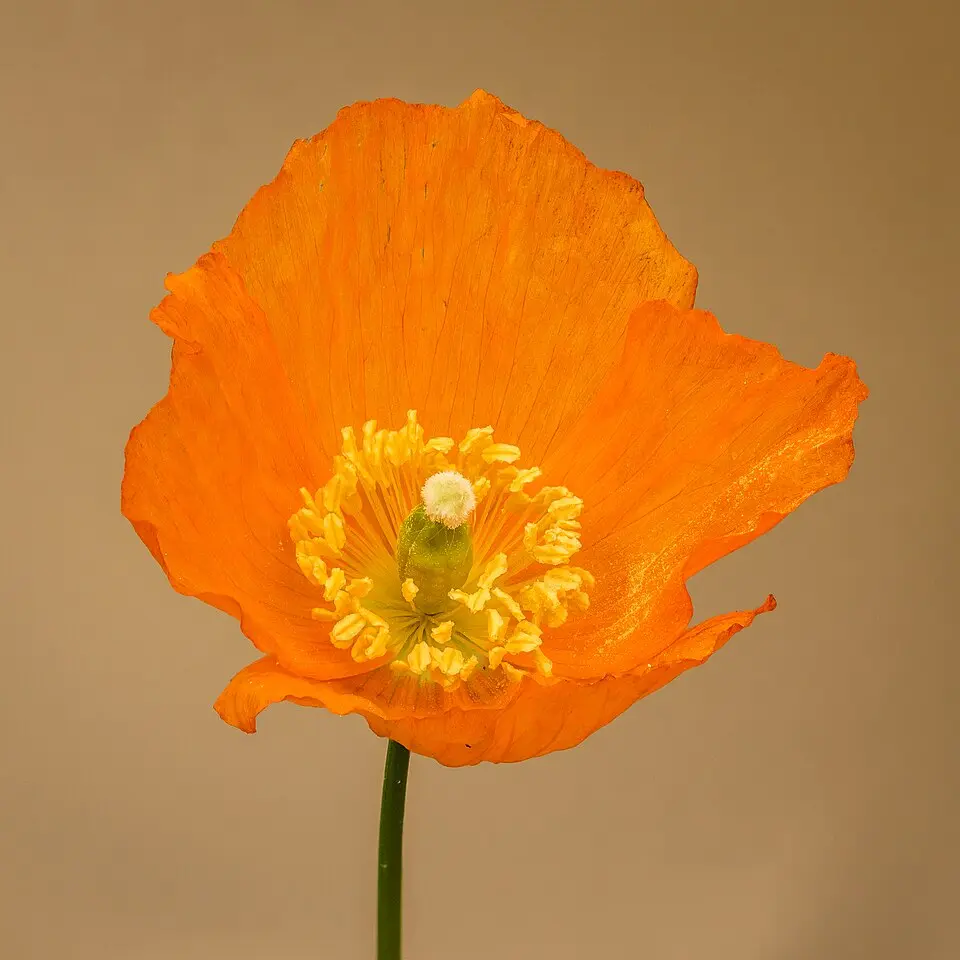
Meconopsis cambrica, commonly known as the Welsh Poppy, is a captivating herbaceous perennial indigenous to the mountainous regions of Wales, and also found across parts of England, Ireland, and the Massif Central in France. It holds the distinction of being the sole native poppy species in the United Kingdom. This plant is characterized by its vivid yellow to orange-yellow, delicate, papery flowers, typically solitary and measuring 5-7.5 cm (2-3 inches) in diameter.
These blossoms emerge from buds in late spring and early summer, frequently continuing their display intermittently until autumn. Each flower showcases numerous stamens encircling a central ovary, which subsequently develops into a nodding, capsule-like fruit upon maturity.
The foliage of Meconopsis cambrica forms a distinct basal rosette comprising deeply lobed, bristly, dark green leaves. The leaf stalks are notably hairy and can extend to considerable lengths, imparting a relaxed, naturalistic aesthetic to the plant. It thrives optimally in cool, moist, and semi-shaded environments, frequently observed growing in woodland clearings, on rocky slopes, and alongside stream banks within its natural range.
While possessing a similar name, Meconopsis cambrica is notably hardier and less finicky than many of its Himalayan relatives within the Meconopsis genus, making it a more forgiving choice for cultivation. It readily self-seeds, contributing to its graceful, natural spread within a garden setting. Although individual plants are often short-lived, typically persisting for 3-5 years, its prolific self-seeding ensures its continuous presence.
This hardy plant generally tolerates frost once established but can suffer under prolonged periods of intense heat and drought. The plant's sap contains alkaloids and can cause mild irritation to sensitive skin, warranting caution during handling, particularly for individuals with known allergies. The genus name 'Meconopsis' is derived from the Greek 'mekon' (poppy) and 'opsis' (likeness), accurately reflecting its poppy-like morphology, while 'cambrica' refers to its Welsh origin.
Trusted Scientific References
1. Authoritative external sources for Meconopsis Cambrica
1.1 Wikipedia — Meconopsis Cambrica
1.2 Kew POWO (Plants of the World Online)
1.3 PubMed — peer-reviewed research
1.4 NCBI Taxonomy Browser
1.5 GBIF — Global Biodiversity
1.1.Meconopsis Cambrica — Standout Qualities
- ✓Native European Poppy — The only Meconopsis species indigenous to Europe.
- ✓Vibrant Floral Display — Striking yellow to orange-yellow, solitary flowers.
- ✓Self — Seeding Habit — Prolific self-seeder ensuring continuity in gardens.
- ✓Hardy Perennial — More robust than many Himalayan Meconopsis relatives.
- ✓Alkaloid — Rich — Contains various isoquinoline alkaloids with medicinal potential.
- ✓Basal Rosette Foliage — Distinctive deeply lobed, bristly dark green leaves.
- ✓Shade/Moisture Lover — Prefers cool, moist, and semi-shaded growing conditions.
- ✓Medicinal History — Traditional external uses for pain and inflammation.
- ✓Ornamental Value — Highly valued for its aesthetic appeal in gardens.
- ✓Short — Lived Individual Plants — Though self-seeding ensures longevity in a patch.
1.2.Meconopsis Cambrica — Quick Summary
- ✓Native to Wales, UK, and parts of Europe.
- ✓Bright yellow to orange-yellow, papery flowers.
- ✓Contains various alkaloids, including protopine and allocryptopine.
- ✓Primarily used externally in traditional medicine for pain and inflammation.
- ✓Internal use is not recommended due to potential toxicity.
- ✓Thrives in cool, moist, semi-shaded environments.
2.Meconopsis Cambrica — Systematic Position
3.Meconopsis Cambrica — Botanical Stats
4.Meconopsis Cambrica — Plant Morphology
5.Meconopsis Cambrica — Geographic Distribution
6.Meconopsis Cambrica — Ethnobotanical Uses
7.Meconopsis Cambrica — Secondary Metabolites
- ✓Alkaloids — Key active compounds including protopine, allocryptopine, sanguinarine, chelerythrine, and berberine, which are known for their analgesic, sedative, and anti-inflammatory properties.
- ✓Flavonoids — Plant pigments like quercetin and kaempferol, contributing to antioxidant and anti-inflammatory effects.
- ✓Tannins — Astringent compounds that can have anti-inflammatory and antiseptic actions.
- ✓Phenolic Acids — Such as caffeic acid and ferulic acid, known for their antioxidant and free-radical scavenging abilities.
- ✓Saponins — Compounds that can have expectorant and anti-inflammatory properties, potentially aiding respiratory issues.
- ✓Volatile Oils — Present in small quantities, contributing to the plant's aroma and potentially having mild therapeutic effects.
- ✓Organic Acids — Including malic and citric acids, involved in plant metabolism and potentially offering mild therapeutic benefits.
- ✓Glycosides — Various glycosides that can have diverse biological activities, dependent on their specific structures.
- ✓Resins — Complex mixtures that may contribute to the plant's traditional medicinal uses through various actions.
8.Meconopsis Cambrica — Modern Studies
- ✓Analgesic Properties — The alkaloids present, such as protopine and allocryptopine, may contribute to pain-relieving effects, traditionally used for mild discomfort.
- ✓Sedative Effects — Certain alkaloids can exert a mild sedative action, potentially aiding in relaxation and alleviating nervous tension.
- ✓Anti-inflammatory Action — Alkaloids and flavonoids may help reduce inflammation, though specific mechanisms require further research.
- ✓Cough Suppressant — Traditional uses suggest it may help soothe coughs, likely due to its mild expectorant or antitussive properties.
- ✓Digestive Aid — Historically, some poppy species have been used to calm digestive upsets, possibly through antispasmodic effects.
- ✓Mild Diuretic — Anecdotal evidence suggests a gentle diuretic action, potentially assisting in fluid balance.
- ✓Antispasmodic Activity — Alkaloids may help relax smooth muscles, offering relief from spasms in the digestive or respiratory tracts.
- ✓Supports Respiratory Health — Traditionally used for conditions like asthma and bronchitis, possibly by easing breathing.
- ✓Antimicrobial Potential — Preliminary studies on related Meconopsis species indicate some antimicrobial activity, which warrants further investigation for M. cambrica.
- ✓Detoxification Support — Some traditional systems suggest it aids in detoxification processes, though scientific evidence for M. cambrica is limited.
8.1.Meconopsis Cambrica — Therapeutic Indications
9.Meconopsis Cambrica — Precautions & Warnings
9.1.Meconopsis Cambrica — Caution Notes
- ✓Skin Irritation — Sap can cause mild dermatitis or allergic reactions in sensitive individuals upon contact.
- ✓Gastrointestinal Upset — Internal consumption, particularly of large doses, may lead to nausea, vomiting, or diarrhea.
- ✓Drowsiness — The presence of alkaloids can induce mild sedation, affecting alertness.
- ✓Allergic Reactions — Individuals sensitive to Papaveraceae family plants may experience allergic responses.
- ✓Respiratory Depression — In very high doses, alkaloid content could theoretically depress respiratory function.
- ✓Central Nervous System Effects — Potential for dizziness or confusion, especially with improper internal use.
- ✓Drug Interactions — May interact with central nervous system depressants or other medications due to alkaloid content.
9.2.Meconopsis Cambrica — Clinical Safety Notes
- ✓External Use Only — Due to alkaloid content, internal use is strongly discouraged and potentially toxic without expert guidance.
- ✓Pregnancy and Lactation — Avoid use during pregnancy and breastfeeding due to unknown effects of alkaloids on fetus or infant.
- ✓Children — Not recommended for use in children due to sensitivity and unpredictable reactions to alkaloids.
- ✓Allergies — Individuals with known allergies to poppies or other Papaveraceae should avoid contact.
- ✓Skin Patch Test — Always perform a patch test before topical application to check for skin sensitivity.
- ✓Medical Consultation — Consult a healthcare professional before any medicinal use, especially if on medication or with underlying health conditions.
- ✓Proper Identification — Ensure correct plant identification as other poppy species can be highly toxic.
- ✓Handle with Gloves — Wear gloves when handling fresh plant material to prevent skin irritation from the sap.
10.Meconopsis Cambrica — Preparation & Dosage
- ✓Herbal Tea (External) — Infuse dried leaves or flowers in hot water; use as a compress for superficial skin irritations.
- ✓Poultice (External) — Crush fresh leaves and flowers to form a paste, apply directly to skin for minor aches or inflammation.
- ✓Tincture (Topical) — Prepare an alcoholic extract of the aerial parts for external application on sore muscles or joints.
- ✓Infused Oil (External) — Macerate flowers and leaves in a carrier oil for use in massage or as a soothing balm.
- ✓Decoction (External) — Boil roots or tougher plant parts for a longer duration; use the cooled liquid as a wash.
- ✓Herbal Bath — Add fresh or dried plant material to bathwater for a relaxing and skin-soothing experience.
- ✓Smoking blends (Traditional, with caution) — Historically, some poppy species were included in smoking blends for sedative effects, but this is highly discouraged due to alkaloid content and unknown dosage.
- ✓Homeopathic Preparations — Used in highly diluted forms by homeopathic practitioners for specific indications.
11.Meconopsis Cambrica — Growth Requirements
- ✓Site Selection — Choose a cool, moist, and semi-shaded location, mimicking its natural woodland habitat.
- ✓Soil Preparation — Ensure well-drained, humus-rich, slightly acidic to neutral soil, amending with compost if necessary.
- ✓Sowing Seeds — Sow seeds thinly on the surface in late autumn or early spring, as they require light for germination.
- ✓Watering — Maintain consistently moist soil, especially during dry spells; avoid waterlogging.
- ✓Fertilization — Light feeding with a balanced organic fertilizer in spring can promote vigorous growth.
- ✓Pest and Disease Control — Generally robust, but monitor for slugs and snails, especially on young plants.
- ✓Propagation — Readily self-seeds, but can also be propagated by division in early spring or seed collection.
- ✓Winter Care — Protect from harsh winter winds and extreme cold with a layer of mulch in colder climates.
Reviewed by the Flora Medical Global Botanical Review Panel
Multi-disciplinary editorial group · Botany · Ethnobotany · Herbal-medicine literature
Who reviewed this: This page was checked by the Flora Medical Global Botanical Review Panel — an in-house editorial group of botany graduates, ethnobotany researchers, and horticulture practitioners who collectively maintain our 7,000+ plant encyclopedia. Meet the team.
Our 4-step verification process
1. Taxonomic verification
Scientific names and synonyms cross-checked against Kew POWO, World Flora Online, and The Plant List.
2. Phytochemical & medicinal cross-reference
Active compounds, traditional uses, and reported activities are cross-referenced with PubMed, USDA Dr. Duke's database, and peer-reviewed ethnobotanical literature.
3. Conservation & distribution check
Distribution, ecology, and conservation status confirmed against GBIF occurrence records and the IUCN Red List.
4. Editorial & safety review
Every entry passes an editorial pass for clarity, originality, and safety notices (toxicity, contraindications, dosage caveats) before publication.
Last reviewed:
Important medical disclaimer: This content is for educational and research purposes only. It is not medical advice and is not a substitute for consultation with a licensed healthcare provider. Do not use any herb to self-treat a medical condition without professional guidance.
Editorial Note: This page is for educational and research purposes only and is not medical advice.
Written by: Flora Medical Global Editorial Team
Reviewed by: Flora Medical Global Botanical Review Panel
Last Updated: June 15, 2026





Meconopsis Cambrica — Comments & Community Reviews
Rate this plant