
Medical Disclaimer: This content is for educational purposes only. It is not medical advice. Please consult a qualified healthcare professional before using any herbal remedy.
Safety Overview
1.Mediterranean Buckthorn — At a Glance
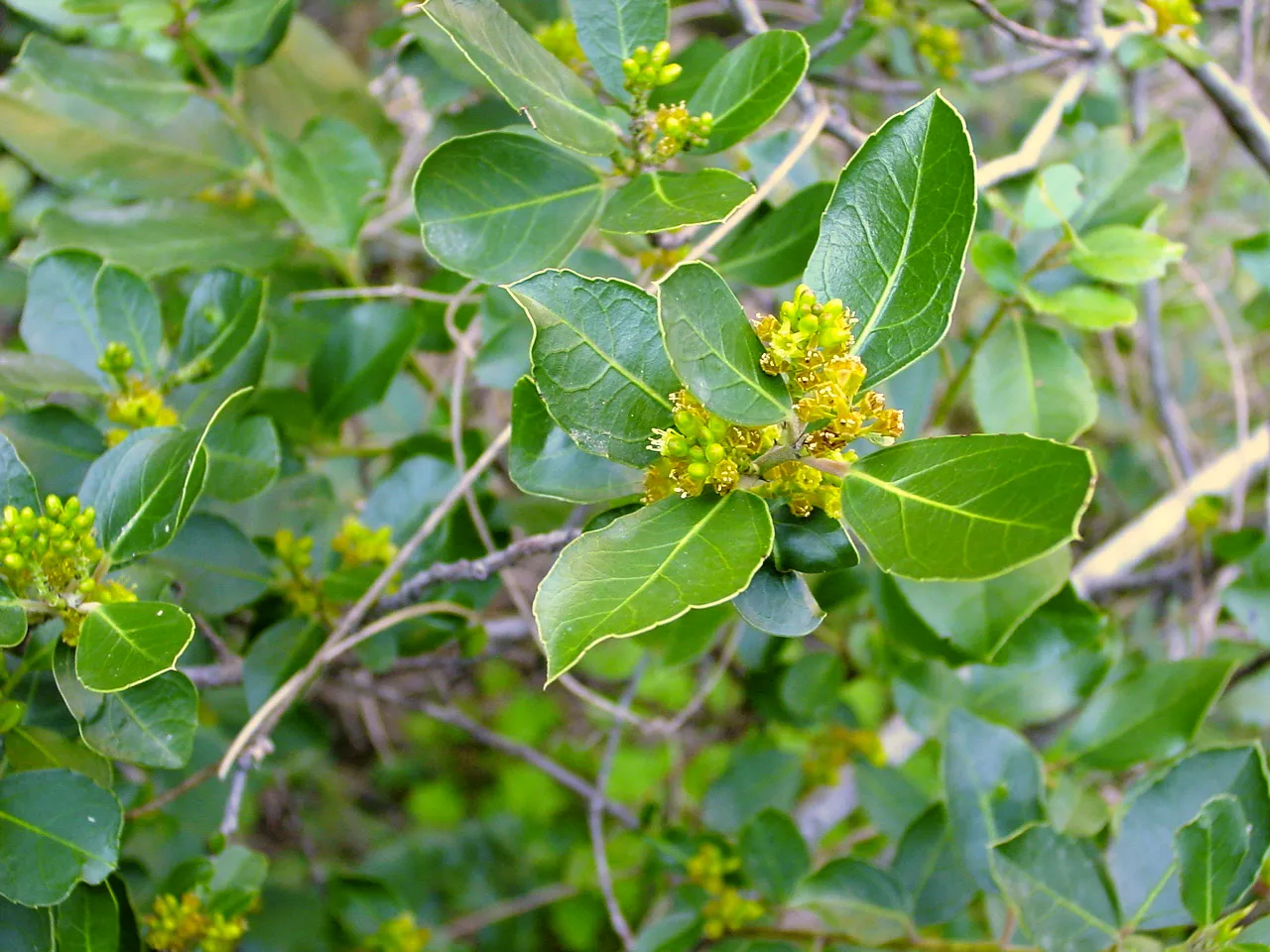
Rhamnus alaternus, commonly known as Mediterranean Buckthorn or Italian Buckthorn, is a robust, evergreen shrub or small tree belonging to the Rhamnaceae family. Native to the diverse thermophilic evergreen bush and scrubland regions across the Mediterranean Basin, its natural range extends from the Canary Islands, Morocco, and Portugal in the west to the Levant in the east, thriving from sea level up to 1,300 meters in altitude. This resilient species typically reaches heights of 1 to 5 meters, occasionally growing up to 8 meters. It is characterized by its dense, rounded foliage comprising alternate, ovate to lanceolate, leathery, glossy dark green leaves, which are often yellowish-green underneath and feature finely serrated margins.
The stems exhibit reddish bark, with young branches often pubescent. Small, fragrant, greenish-yellow flowers emerge in short axillary racemes from late winter to early spring (February to April). These are followed by obovoidal drupes, approximately 3-4 millimeters in diameter, which ripen from red-brownish to a deep black, each containing 2 to 4 seeds. Mediterranean Buckthorn is remarkably adaptable, tolerating a variety of soils, including poor and rocky substrates, and demonstrating excellent drought resistance.
While providing ecological value as food and shelter for local wildlife in its native habitat, it has become a serious invasive woody weed in certain non-native regions like coastal parts of Southeast Australia, where it can form dense monocultural thickets, displacing native flora and significantly reducing biodiversity. Despite this, its conservation status is currently listed as Least Concern by the IUCN.
Trusted Scientific References
1. Authoritative external sources for Rhamnus alaternus
1.1 Wikipedia — Rhamnus alaternus
1.2 Kew POWO (Plants of the World Online)
1.3 PubMed — peer-reviewed research
1.4 NCBI Taxonomy Browser
1.5 GBIF — Global Biodiversity
1.6Mediterranean Buckthorn should be interpreted through verified botanical identity, practical care, and responsible safety language. This recovery note adds the missing context needed for a complete profile: match light to the plant's habit, use well-drained soil, water according to season, and avoid unsupported medicinal or edible claims. For publishing, the plant can be presented as a source-backed medicinal plant with clear care guidance, common problem diagnosis, and conservative safety wording.
1.1.Mediterranean Buckthorn — Distinguishing Points
- ✓Evergreen Foliage — Maintains glossy, dark green leaves year-round, providing continuous aesthetic appeal.
- ✓Drought — Tolerant — Highly resilient in dry conditions, making it suitable for xeriscaping and arid climates.
- ✓Purgative Properties — Contains anthraquinones in bark and fruits, historically used as a powerful natural laxative.
- ✓Antioxidant Rich — Abundant in flavonoids and tannins, offering protection against oxidative stress.
- ✓Mediterranean Native — Thrives in its natural habitat across the Mediterranean Basin, adapted to its specific climate.
- ✓Ornamental Value — Frequently used in landscaping for hedges, screens, and as a resilient garden shrub.
- ✓Adaptable to Poor Soils — Capable of growing in rocky, poor, and calcareous soils, enhancing its versatility.
- ✓Red — to-Black Berries — Produces small, spherical drupes that ripen from red to black, attractive to birds.
- ✓Invasive Potential — Can be invasive in non-native environments, particularly in Australia, where it outcompetes native flora.
- ✓Ecologically Important — Provides food and shelter for various wildlife species in its native range.
1.2.Mediterranean Buckthorn — Concise Overview
- ✓Rhamnus alaternus is an evergreen shrub native to the Mediterranean, known as Mediterranean Buckthorn.
- ✓Traditionally valued for its strong purgative and laxative properties, primarily from its bark and fruits.
- ✓Contains active anthraquinones like emodin, alongside beneficial flavonoids and tannins.
- ✓Modern research explores its antioxidant and anti-inflammatory potential.
- ✓Requires significant caution due to potent effects, potential for gastrointestinal upset, and electrolyte imbalance.
- ✓Also recognized for its ornamental value and adaptability in landscaping.
2.Mediterranean Buckthorn — Botanical Identity
3.Mediterranean Buckthorn — Fact Sheet
4.Mediterranean Buckthorn — Physical Description
5.Mediterranean Buckthorn — Native Range & Habitat
6.Mediterranean Buckthorn — Heritage Uses
7.Mediterranean Buckthorn — Key Phytochemicals
- ✓Anthraquinones — Key active compounds responsible for the plant's purgative and laxative effects, including emodin, aloe-emodin, and chrysophanol, which act as stimulant laxatives by irritating the colon wall.
- ✓Flavonoids — A diverse group of polyphenolic compounds such as quercetin and kaempferol derivatives, contributing to the plant's antioxidant, anti-inflammatory, and potentially antimicrobial activities.
- ✓Tannins — Both hydrolyzable and condensed tannins are present, imparting astringent properties and contributing to the plant's antioxidant and anti-inflammatory potential.
- ✓Glycosides — Various glycosides are found, notably anthraquinone glycosides, which are precursors to the active anthraquinones and are hydrolyzed in the gut to release the aglycones.
- ✓Phenolic Acids — Compounds like gallic acid and caffeic acid derivatives are present, further enhancing the plant's overall antioxidant capacity.
- ✓Saponins — While less prominent than anthraquinones, some saponins may be present, contributing to minor foaming properties and potential expectorant or anti-inflammatory effects.
- ✓Resins — Complex mixtures of organic compounds found in the bark, which can contribute to the plant's overall pharmacological profile and may have mild irritant effects.
- ✓Lipids — Fatty acids and their derivatives are present in seeds and other plant parts, serving as energy storage and structural components.
- ✓Organic Acids — Various organic acids contribute to the plant's metabolism and overall chemical composition, influencing pH and potentially interacting with other constituents.
- ✓Sugars — Simple sugars are found in the fruits, providing energy and contributing to their taste, especially as they ripen.
8.Mediterranean Buckthorn — Scientific Evidence
- ✓Purgative Action — Historically, the bark and fruits of Mediterranean Buckthorn have been utilized for their potent purgative effects, primarily attributed to their anthraquinone content, which stimulates colonic peristalsis and promotes bowel evacuation.
- ✓Laxative Properties — As a milder extension of its purgative action, Rhamnus alaternus acts as a stimulant laxative, helping to relieve occasional constipation by increasing intestinal motility.
- ✓Antioxidant Support — Rich in flavonoids and tannins, Mediterranean Buckthorn exhibits significant antioxidant activity, helping to neutralize free radicals and protect cells from oxidative stress.
- ✓Anti-inflammatory Potential — Research suggests that the plant's phenolic compounds, including flavonoids, contribute to its anti-inflammatory properties, potentially modulating inflammatory pathways.
- ✓Traditional Detoxification — In various folk medicine traditions, the plant was employed as a 'detoxifying agent,' believed to cleanse the body through its powerful laxative and eliminative actions.
- ✓Digestive Aid — Beyond its laxative effect, the plant's constituents may support overall digestive health by promoting regular bowel movements and alleviating sluggish digestion.
- ✓Potential Antimicrobial Effects — Some preliminary in vitro studies indicate that extracts from Rhamnus alaternus may possess mild antimicrobial activity against certain bacteria and fungi, possibly due to its flavonoid and anthraquinone content.
- ✓Astringent Qualities — The presence of tannins provides astringent properties, which traditionally made certain preparations useful for minor topical applications, though internal use is focused on laxative effects.
- ✓Support for Liver Function — Indirectly, through its role in promoting detoxification and waste elimination, Mediterranean Buckthorn may support the liver's natural cleansing processes, easing its burden.
- ✓Immune System Modulation — The antioxidant compounds contribute to general cellular health, which can indirectly support a healthy immune response by protecting immune cells from damage.
8.1.Mediterranean Buckthorn — Indications & Uses
9.Mediterranean Buckthorn — Cautions & Contraindications
9.1.Mediterranean Buckthorn — Warnings
- ✓Gastrointestinal Upset — Common side effects include abdominal cramps, nausea, and vomiting, especially with high doses or sensitive individuals.
- ✓Diarrhea — The potent purgative action can lead to severe diarrhea, which, if prolonged, can result in dehydration and electrolyte imbalance.
- ✓Electrolyte Imbalance — Chronic use or overdose can deplete essential electrolytes like potassium, leading to cardiac and muscular dysfunction.
- ✓Laxative Dependence — Prolonged use can lead to dependence, where the bowel loses its natural tone and function, requiring increasing doses to achieve an effect.
- ✓Liver Toxicity — While rare, very high doses of anthraquinones over extended periods have been implicated in potential liver damage.
- ✓Allergic Reactions — Sensitive individuals may experience allergic reactions such as skin rashes or itching.
- ✓Melanosis Coli — Long-term use of anthraquinone-containing laxatives can cause a benign pigmentation of the colonic mucosa.
9.2.Mediterranean Buckthorn — Safety Overview
- ✓Contraindications for Pregnancy and Lactation — Mediterranean Buckthorn is strictly contraindicated during pregnancy and breastfeeding due to its potent laxative effects, which could induce uterine contractions or pass into breast milk.
- ✓Avoid in Children — Its strong purgative action makes it unsuitable for use in infants and children, who are more susceptible to dehydration and electrolyte imbalances.
- ✓Gastrointestinal Conditions — Contraindicated in individuals with intestinal obstruction, inflammatory bowel diseases (Crohn's disease, ulcerative colitis), appendicitis, or abdominal pain of unknown origin.
- ✓Short-Term Use Only — Due to the risk of laxative dependence and electrolyte imbalance, use should be limited to short durations, typically not exceeding one week.
- ✓Consult a Healthcare Professional — Always consult a qualified healthcare provider before using Mediterranean Buckthorn, especially if on other medications or with pre-existing health conditions.
- ✓Avoid Raw Fruits — The raw fruits are mildly toxic and should not be ingested by humans in significant quantities, as they can cause gastrointestinal upset.
- ✓Hydration — Maintain adequate fluid intake when using Mediterranean Buckthorn to prevent dehydration associated with its laxative effects.
10.Mediterranean Buckthorn — Preparation Methods
- ✓Decoction of Bark — The dried bark is traditionally prepared as a decoction by simmering in water, then strained and consumed for its strong purgative effects; dosage must be carefully controlled.
- ✓Infusion of Dried Fruits — Dried, ripe fruits can be infused in hot water to create a milder laxative tea, often used for less severe cases of constipation.
- ✓Tincture Preparation — An alcoholic tincture can be made from the bark or fruits, allowing for a concentrated extract with a longer shelf life, administered in drops.
- ✓Powdered Form — Dried bark or fruits can be ground into a fine powder and encapsulated or mixed with liquids for easier ingestion, though precise dosing is critical.
- ✓External Dye — Historically, extracts from the bark were used as a natural dye, yielding yellow to brown colors, though this is not a medicinal application.
- ✓Ointments/Poultices (Traditional) — Less common, but astringent preparations from leaves or bark were sometimes traditionally applied topically for minor skin conditions, though internal use is predominant.
- ✓Standardized Extracts — Modern herbal preparations may involve standardized extracts, ensuring consistent levels of active anthraquinones for predictable therapeutic effects.
- ✓Juices or Syrups (Traditional) — In some traditions, the fruits were incorporated into medicinal syrups or juices, especially for children, albeit with extreme caution due to their potent effects.
11.Mediterranean Buckthorn — Cultivation & Care
- ✓Climate and Light — Mediterranean Buckthorn thrives in Mediterranean climates, preferring full sun to partial shade for optimal growth and fruit production.
- ✓Soil Requirements — It is highly adaptable to a wide range of soil types, including poor, rocky, and calcareous soils, provided they are well-draining.
- ✓Watering — Once established, Rhamnus alaternus is remarkably drought-tolerant, requiring minimal irrigation; young plants need regular watering until rooted.
- ✓Propagation — Can be propagated from seeds, which often benefit from cold stratification to improve germination rates, or from semi-hardwood cuttings taken in summer.
- ✓Pruning — Responds well to pruning, making it suitable for hedges, screens, or shaping into a small ornamental tree; prune in late winter or early spring before new growth.
- ✓Pest and Disease Resistance — Generally a hardy plant with good resistance to most common pests and diseases, contributing to its low maintenance requirements.
- ✓Environmental Adaptation — Exhibits high tolerance to coastal conditions, salt spray, and urban pollution, making it a versatile choice for various landscapes.
- ✓Invasive Potential — In non-native regions, particularly in Australia, its vigorous growth and prolific seed production necessitate careful management to prevent it from becoming an invasive weed.
Reviewed by the Flora Medical Global Botanical Review Panel
Multi-disciplinary editorial group · Botany · Ethnobotany · Herbal-medicine literature
Who reviewed this: This page was checked by the Flora Medical Global Botanical Review Panel — an in-house editorial group of botany graduates, ethnobotany researchers, and horticulture practitioners who collectively maintain our 7,000+ plant encyclopedia. Meet the team.
Our 4-step verification process
1. Taxonomic verification
Scientific names and synonyms cross-checked against Kew POWO, World Flora Online, and The Plant List.
2. Phytochemical & medicinal cross-reference
Active compounds, traditional uses, and reported activities are cross-referenced with PubMed, USDA Dr. Duke's database, and peer-reviewed ethnobotanical literature.
3. Conservation & distribution check
Distribution, ecology, and conservation status confirmed against GBIF occurrence records and the IUCN Red List.
4. Editorial & safety review
Every entry passes an editorial pass for clarity, originality, and safety notices (toxicity, contraindications, dosage caveats) before publication.
Last reviewed:
Important medical disclaimer: This content is for educational and research purposes only. It is not medical advice and is not a substitute for consultation with a licensed healthcare provider. Do not use any herb to self-treat a medical condition without professional guidance.
Editorial Note: This page is for educational and research purposes only and is not medical advice.
Written by: Flora Medical Global Editorial Team
Reviewed by: Flora Medical Global Botanical Review Panel
Last Updated: June 15, 2026
Mediterranean Buckthorn — Comments & Community Reviews
Rate this plant