

Medical Disclaimer: This content is for educational purposes only. It is not medical advice. Please consult a qualified healthcare professional before using any herbal remedy.
Safety Overview
1.Medlar — Introduction & Highlights
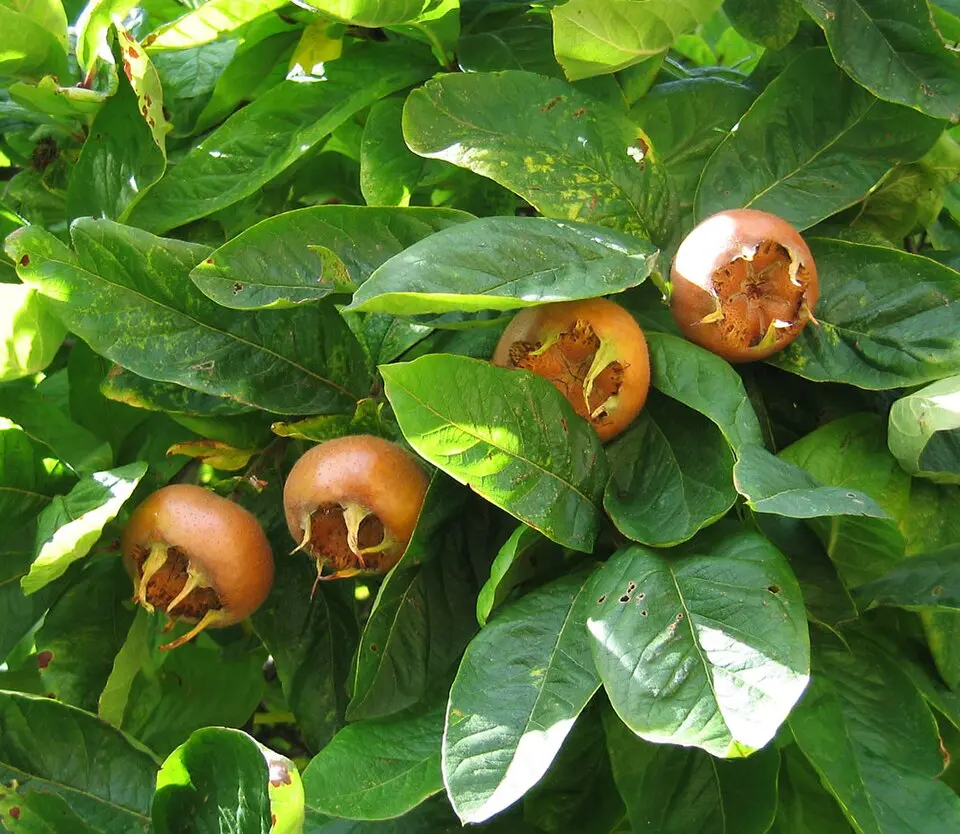
The Medlar, scientifically designated as Mespilus germanica, is a captivating deciduous fruiting tree within the Rosaceae family, native to regions of Southwest Asia and Southeastern Europe. This often-overlooked species is celebrated for its distinctive fruit, which becomes palatable only after a unique post-harvest ripening process known as 'bletting'. Bletting, typically induced by frost or prolonged storage, transforms the fruit's initially hard, highly astringent flesh into a soft, sweet, and subtly spicy pulp.
The tree itself exhibits a charming, gnarled growth habit, typically reaching modest heights of 3 to 6 meters. Its foliage consists of dark green, oblong, and slightly hairy leaves that undergo a stunning autumnal transformation, displaying rich coppery and red hues. Solitary, five-petaled white flowers, occasionally adorned with a pink blush, emerge in late spring or early summer, preceding the development of the characteristic russet-brown, apple-shaped fruits, distinguished by their prominent calyx lobes.
Historically, Mespilus germanica held greater prominence in cultivation, valued since antiquity for its unique flavor profile, often likened to a blend of date, apple, and wine. Its robust nature and adaptability to various temperate climates make it an excellent candidate for edible landscaping and sustainable permaculture systems, offering both historical charm and an unconventional culinary experience. The genus Mespilus is part of the Pyrinae subtribe within the Amygdaloideae subfamily, closely related to other well-known fruit trees.
Trusted Scientific References
1. Authoritative external sources for Mespilus germanica
1.1 Wikipedia — Mespilus germanica
1.2 Kew POWO (Plants of the World Online)
1.3 PubMed — peer-reviewed research
1.4 NCBI Taxonomy Browser
1.5 GBIF — Global Biodiversity
1.6Medlar should be interpreted through verified botanical identity, practical care, and responsible safety language. This recovery note adds the missing context needed for a complete profile: match light to the plant's habit, use well-drained soil, water according to season, and avoid unsupported medicinal or edible claims. For publishing, the plant can be presented as a source-backed garden plant with clear care guidance, common problem diagnosis, and conservative safety wording.
1.1.Medlar — Standout Qualities
- ✓Deciduous fruiting tree. — Deciduous fruiting tree.
- ✓Native to Southwest — Native to Southwest Asia and Southeastern Europe.
- ✓Belongs to the — Belongs to the Rosaceae family.
- ✓Fruit requires 'bletting' — Fruit requires 'bletting' before consumption.
- ✓High in tannins — High in tannins when unripe, sweet and soft when bletted.
- ✓Rich source of — Rich source of antioxidants, fiber, and vitamin C.
- ✓Distinctive apple — shaped fruit with prominent calyx.
- ✓Ornamental value with — Ornamental value with attractive autumn foliage.
- ✓Adaptable to temperate — Adaptable to temperate climates.
- ✓Historical culinary and — Historical culinary and medicinal significance.
1.2.Medlar — Snapshot Summary
- ✓Unique fruit requiring 'bletting' for edibility.
- ✓Rich in antioxidants, fiber, and polyphenols.
- ✓Traditionally used for digestive issues due to astringency.
- ✓Supports cardiovascular and immune health.
- ✓Seeds are toxic and should not be consumed.
- ✓Versatile in culinary applications, especially jams and preserves.
2.Medlar — Scientific Profile
3.Medlar — Quick Facts
4.Medlar — Structural Profile
5.Medlar — Habitat & Distribution
6.Medlar — Historical Applications
7.Medlar — Secondary Metabolites
- ✓Sugars — Predominantly fructose and glucose, increasing significantly after bletting, contributing to the fruit's sweetness.
- ✓Organic Acids — Malic acid is the most abundant, along with citric and tartaric acids, influencing the fruit's flavor profile.
- ✓Tannins — High concentrations in unripe fruits and leaves, responsible for their astringent properties, decreasing significantly during bletting.
- ✓Pectin — A soluble fiber found abundantly, contributing to the fruit's texture and digestive benefits, and acting as a gelling agent.
- ✓Vitamin C — Ascorbic acid, a potent antioxidant, present in varying amounts depending on ripeness and processing.
- ✓Polyphenols — Including flavonoids (e.g., quercetin, catechin) and phenolic acids (e.g., gallic acid, chlorogenic acid), which are strong antioxidants.
- ✓Carotenoids — Pigments like beta-carotene, precursors to Vitamin A, contributing to antioxidant activity and fruit color.
- ✓Fatty Acids — Present in the fruit, contributing to its nutritional value and potentially influencing its antioxidant capacity.
- ✓Amino Acids — Essential building blocks of proteins, found in the fruit, contributing to its overall nutritional profile.
- ✓Minerals — Potassium, calcium, magnesium, and iron are present, vital for various physiological functions.
- ✓Volatile Compounds — Contribute to the unique aroma and flavor of the bletted fruit, though less studied than other constituents.
- ✓Triterpenoids — Specific compounds that may contribute to the plant's medicinal properties, including anti-inflammatory effects.
8.Medlar — Modern Studies
- ✓Digestive Health — The high fiber content in bletted medlar fruits aids digestion, promotes regular bowel movements, and can alleviate constipation.
- ✓Antioxidant Support — Rich in polyphenols and vitamin C, medlar fruits combat oxidative stress and protect cells from free radical damage.
- ✓Anti-inflammatory Effects — Specific phenolic compounds found in medlar may help reduce inflammation throughout the body, contributing to overall wellness.
- ✓Cardiovascular Health — The fiber and potassium content can support heart health by helping to regulate blood pressure and cholesterol levels.
- ✓Blood Sugar Regulation — Research suggests medlar extracts may possess anti-diabetic properties, potentially aiding in glucose metabolism and insulin sensitivity.
- ✓Antimicrobial Activity — Extracts from medlar leaves and fruits have demonstrated inhibitory effects against certain bacteria and fungi.
- ✓Liver Protection — Some studies indicate that medlar components may exhibit hepatoprotective qualities, supporting liver function against damage.
- ✓Skin Health — Antioxidants and vitamins can contribute to healthier skin by reducing oxidative damage and promoting cellular regeneration.
- ✓Immune System Boost — Vitamin C and other micronutrients in medlar support a robust immune response, helping the body fight off infections.
- ✓Diuretic Properties — Traditional uses suggest medlar may act as a mild diuretic, assisting in fluid balance and kidney function.
- ✓Astringent Action — Unbletted fruits and leaves, due to high tannin content, have been traditionally used to treat diarrhea and reduce hemorrhoidal swelling.
- ✓Neuroprotective Potential — Emerging research hints at possible neurodegenerative protective effects from certain medlar compounds.
8.1.Medlar — Therapeutic Indications
9.Medlar — Risk Profile
9.1.Medlar — Reported Side Effects
- ✓Astringency in Unripe Fruit — Ingesting unbletted medlar fruit can cause significant mouth puckering, digestive upset, and constipation due to high tannin levels.
- ✓Allergic Reactions — Rare, but individuals sensitive to other Rosaceae family members may experience mild allergic responses.
- ✓Digestive Discomfort — Overconsumption of bletted fruit may lead to mild gastrointestinal upset in sensitive individuals.
- ✓Seed Toxicity — Medlar seeds contain small amounts of cyanogenic glycosides; they should not be consumed.
- ✓Drug Interactions — High tannin content could theoretically interfere with the absorption of certain medications if consumed simultaneously.
- ✓Oxalate Content — While not high, individuals prone to kidney stones should consume in moderation.
- ✓Pesticide Residues — If not organically grown, fruits may contain pesticide residues; always wash thoroughly.
9.2.Medlar — Risk Assessment
- ✓Bletted Fruit is Safe — The properly bletted fruit is generally considered safe for consumption by most individuals.
- ✓Avoid Unripe Fruit — Due to extreme astringency and potential digestive upset, unripe fruit should not be eaten raw.
- ✓Do Not Consume Seeds — Medlar seeds contain cyanogenic glycosides and should be discarded.
- ✓Pregnancy and Lactation — Limited data available; consult a healthcare professional before extensive use.
- ✓Moderation is Key — As with any fruit, consume in moderation as part of a balanced diet.
- ✓Allergy Caution — Individuals with known allergies to Rosaceae family plants should exercise caution.
- ✓Consult Healthcare Provider — If using for medicinal purposes, especially with existing health conditions or medications, seek professional advice.
10.Medlar — Application Forms
- ✓Bletted Fruit Consumption — The most common method; eat the soft pulp directly, scoop out with a spoon, or use in desserts and preserves.
- ✓Jams and Jellies — Bletted medlar fruit makes excellent jams, jellies, and fruit cheeses due to its high pectin content and unique flavor.
- ✓Medlar 'Cheese' — A traditional dense fruit paste made by cooking and reducing bletted medlar pulp, similar to quince paste.
- ✓Wine and Liqueurs — Fermented medlar fruit can be used to produce unique wines or infused into spirits for liqueurs.
- ✓Herbal Tea (Leaves) — Dried medlar leaves can be steeped to make an astringent tea, traditionally used for digestive complaints.
- ✓Culinary Additions — Unbletted fruits, due to their astringency, are rarely consumed raw but can be used in savory dishes or pickles after specific processing.
- ✓Traditional Remedies — Infusions or decoctions from various parts of the plant have been used topically or internally for their astringent and anti-inflammatory properties.
- ✓Juices and Syrups — Bletted medlar pulp can be pressed for juice or cooked down into a rich syrup.
11.Medlar — Propagation & Care
- ✓Site Selection — Choose a sunny location with well-drained soil; medlar tolerates a range of soil types but prefers slightly acidic to neutral.
- ✓Planting — Best planted in autumn or spring as bare-root or containerized trees, ensuring adequate spacing for mature size.
- ✓Watering — Requires regular watering during dry periods, especially for young trees, to establish a strong root system.
- ✓Fertilization — Apply a balanced organic fertilizer in early spring, avoiding excessive nitrogen which can promote leafy growth over fruit.
- ✓Pruning — Prune in late winter to remove dead, diseased, or crossing branches, and to maintain an open canopy for air circulation and light penetration.
- ✓Pest and Disease Management — Generally resistant, but monitor for common fruit tree pests like aphids or fungal issues, treating organically if possible.
- ✓Harvesting — Fruits are harvested in late autumn after the first hard frost, or picked slightly earlier and bletted indoors.
- ✓Propagation — Can be propagated by seed (stratification required), grafting onto quince or hawthorn rootstock, or by budding.
Reviewed by the Flora Medical Global Botanical Review Panel
Multi-disciplinary editorial group · Botany · Ethnobotany · Herbal-medicine literature
Who reviewed this: This page was checked by the Flora Medical Global Botanical Review Panel — an in-house editorial group of botany graduates, ethnobotany researchers, and horticulture practitioners who collectively maintain our 7,000+ plant encyclopedia. Meet the team.
Our 4-step verification process
1. Taxonomic verification
Scientific names and synonyms cross-checked against Kew POWO, World Flora Online, and The Plant List.
2. Phytochemical & medicinal cross-reference
Active compounds, traditional uses, and reported activities are cross-referenced with PubMed, USDA Dr. Duke's database, and peer-reviewed ethnobotanical literature.
3. Conservation & distribution check
Distribution, ecology, and conservation status confirmed against GBIF occurrence records and the IUCN Red List.
4. Editorial & safety review
Every entry passes an editorial pass for clarity, originality, and safety notices (toxicity, contraindications, dosage caveats) before publication.
Last reviewed:
Important medical disclaimer: This content is for educational and research purposes only. It is not medical advice and is not a substitute for consultation with a licensed healthcare provider. Do not use any herb to self-treat a medical condition without professional guidance.
Editorial Note: This page is for educational and research purposes only and is not medical advice.
Written by: Flora Medical Global Editorial Team
Reviewed by: Flora Medical Global Botanical Review Panel
Last Updated: June 15, 2026





Medlar — Comments & Community Reviews
Rate this plant