
Medical Disclaimer: This content is for educational purposes only. It is not medical advice. Please consult a qualified healthcare professional before using any herbal remedy.
Safety Overview
1.Michelia — Essential Profile
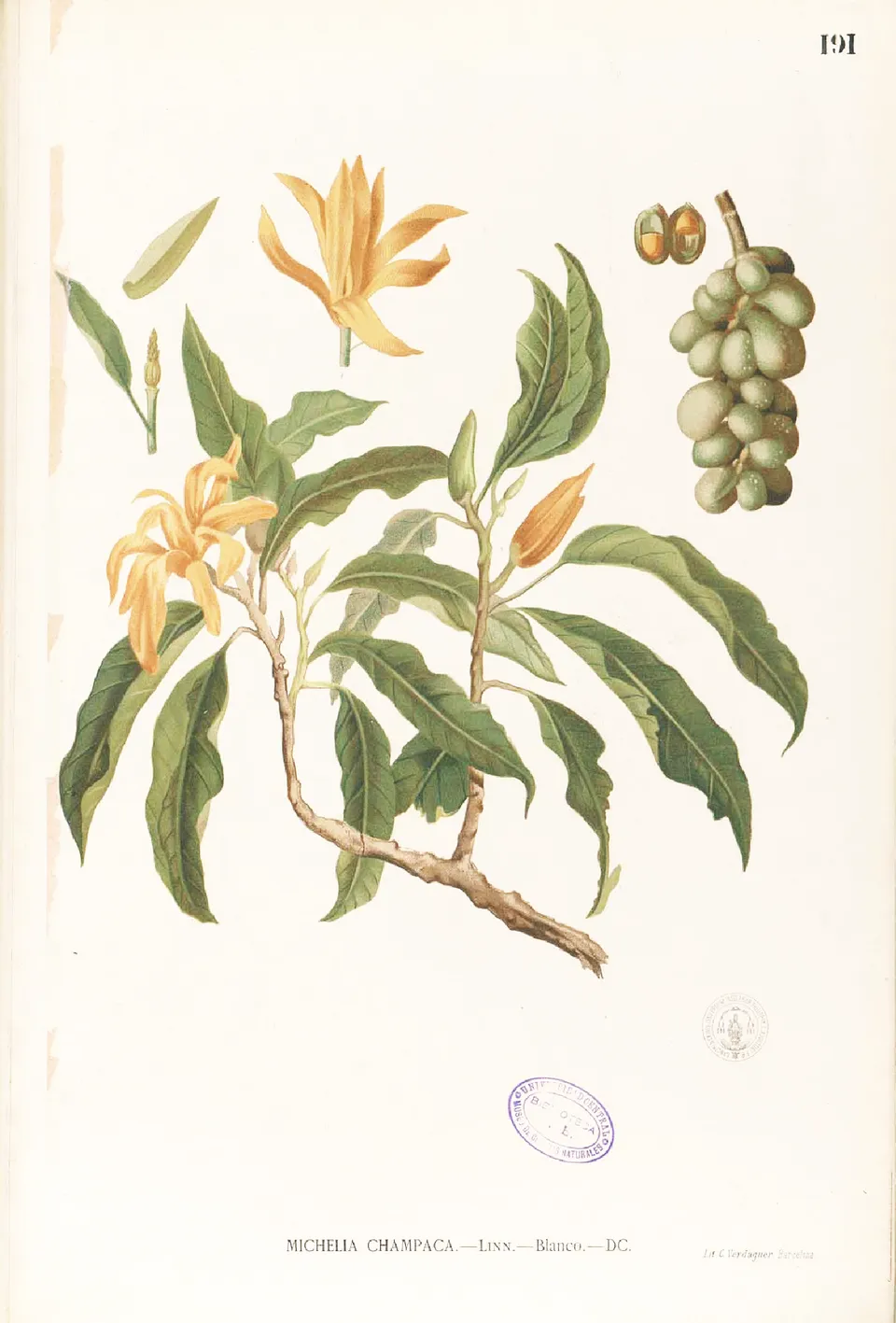
Michelia champaca, commonly known as champak or golden champa, is a magnificent evergreen tree native to the tropical and subtropical forests of South Asia, particularly abundant in regions spanning India, Myanmar, and Indonesia. This species thrives in humid environments and well-drained loamy soils, reaching impressive heights of 15 to 30 meters, occasionally even taller. Its dense, lush canopy is formed by simple, alternate, lanceolate leaves, typically measuring 10 to 20 centimeters in length and 4 to 8 centimeters in width, with a glossy upper surface.
The tree's most iconic feature is its intensely fragrant flowers, which are cup-shaped and can span 7 to 10 centimeters in diameter. These star-like blooms typically display vibrant shades of bright yellow to deep orange, emanating a rich, sweet aroma that is especially potent at dawn and dusk. The bark is characteristically smooth, grayish-brown, and slightly glossy, while younger branches are greenish and exhibit a fine pubescence.
Following flowering, Michelia champaca produces aggregates of follicles, which mature into woody capsules containing small, reddish-brown seeds encased in a pink, fleshy aril. As a member of the ancient Magnoliaceae family, it shares lineage with many other botanically significant species, valued for both ornamental beauty and medicinal properties.
Trusted Scientific References
1. Authoritative external sources for Michelia champaca
1.1 Wikipedia — Michelia champaca
1.2 Kew POWO (Plants of the World Online)
1.3 PubMed — peer-reviewed research
1.4 NCBI Taxonomy Browser
1.5 GBIF — Global Biodiversity
1.6Michelia should be interpreted through verified botanical identity, practical care, and responsible safety language. This recovery note adds the missing context needed for a complete profile: match light to the plant's habit, use well-drained soil, water according to season, and avoid unsupported medicinal or edible claims. For publishing, the plant can be presented as a source-backed medicinal plant with clear care guidance, common problem diagnosis, and conservative safety wording.
1.1.Michelia — Highlights
- ✓Highly Fragrant Flowers — Emitting a captivating, sweet aroma, particularly at specific times of the day.
- ✓Evergreen Tree — Provides a dense, lush canopy throughout the year.
- ✓Native to South Asia — Deeply embedded in the cultural and medicinal traditions of the region.
- ✓Rich Phytochemistry — Contains a wide array of active compounds like alkaloids, terpenoids, and flavonoids.
- ✓Traditional Medicinal Staple — Extensively used in Ayurveda, TCM, and Unani systems.
- ✓Anxiolytic and Sedative Properties — Effective in promoting relaxation and improving sleep quality.
- ✓Anti — inflammatory and Analgesic — Offers natural relief from pain and inflammation.
- ✓Respiratory and Digestive Support — Used as an expectorant and to aid digestion.
- ✓Ornamental Value — Widely cultivated for its aesthetic beauty and delightful fragrance in gardens and parks.
- ✓Eco — friendly — Provides shade and supports local biodiversity.
1.2.Michelia — In Brief
- ✓Michelia champaca, or Golden Champa, is a revered fragrant tree from South Asia.
- ✓Valued in Ayurveda and TCM for its diverse medicinal properties, especially its calming and pain-relieving effects.
- ✓Rich in alkaloids, terpenoids, and flavonoids, contributing to its therapeutic actions.
- ✓Used in various forms, including essential oil, decoctions, and powders for both internal and external applications.
- ✓Generally safe with proper usage, but contraindications exist, particularly during pregnancy.
- ✓An important botanical for stress relief, respiratory health, and overall well-being.
2.Michelia — Scientific Identity
3.Michelia — Vital Statistics
4.Michelia — Botanical Features
5.Michelia — Origin & Spread
6.Michelia — Traditional Uses
7.Michelia — Phytochemistry
- ✓Alkaloids — Liriodenine, Micheline, and Lanuginosine are prominent alkaloids found primarily in the stem bark, leaves, and roots, contributing to its anti-inflammatory and potential analgesic effects.
- ✓Terpenoids — The essential oil from Michelia champaca flowers is rich in monoterpenes and sesquiterpenes such as Linalool and Champacene, responsible for its distinctive aroma and sedative properties.
- ✓Flavonoids — Present in various parts of the plant, flavonoids contribute to its antioxidant and anti-inflammatory activities, protecting cells from oxidative damage.
- ✓Steroids — Compounds like Beta-sitosterol are identified in the leaves, known for their potential anti-inflammatory and cholesterol-lowering effects.
- ✓Polyisoprenoids — These compounds are present in the leaves, contributing to the plant's structural and defensive mechanisms.
- ✓Sesquiterpene Lactones — Micheliolide and Champakin are sesquiterpenes found in the roots, which may contribute to its traditional antidiabetic and anti-inflammatory uses.
- ✓Phenolic Compounds — General phenolic acids and tannins are present, offering antioxidant and astringent properties, beneficial for wound healing and antimicrobial action.
- ✓Essential Fatty Acids — While not primary active compounds, fatty acids may be present in seed oils, contributing to emollient properties.
8.Michelia — Pharmacological Findings
- ✓Anxiolytic and Sedative — The flowers and essential oil of Michelia champaca are traditionally used to calm the nervous system, alleviating symptoms of stress, anxiety, and promoting restful sleep due to their natural sedative properties.
- ✓Mood Enhancer — The aromatic compounds in champak essential oil are known to uplift mood and reduce feelings of depression, making it a popular choice in aromatherapy for emotional well-being.
- ✓Pain Relief (Analgesic) — Extracts from the bark, particularly in Traditional Chinese Medicine (TCM), are employed to alleviate various types of pain, including menstrual discomfort and general body aches, by invigorating blood circulation.
- ✓Respiratory Support (Expectorant) — Traditionally, Michelia champaca leaves and flowers are used to address respiratory issues, acting as expectorants to help clear phlegm and soothe coughs, often attributed to their antimicrobial potential.
- ✓Anti-inflammatory Action — Various parts of the plant, including the bark and leaves, contain compounds that exhibit anti-inflammatory effects, useful in mitigating inflammation-related conditions such as gout.
- ✓Antidiabetic Potential — Early research suggests that extracts from the flower buds of Michelia champaca may possess antihyperglycemic activity, helping to manage blood sugar levels, particularly in traditional Ayurvedic applications.
- ✓Wound Healing and Antimicrobial — The plant's extracts are traditionally applied topically to accelerate wound healing and prevent infections, owing to their potential antimicrobial and antiseptic properties.
- ✓Cardiotonic — In Ayurvedic medicine, Michelia champaca is considered beneficial for heart health, acting as a cardiac tonic and supporting overall cardiovascular function.
- ✓Digestive Aid — The root bark has been historically used as a purgative and to address digestive issues such as loss of appetite, abdominal cramps, and to expel intestinal worms.
- ✓Gynecological Support — The root bark is recognized as a uterine stimulant, traditionally prescribed for conditions like amenorrhea (absence of menstruation) and dysmenorrhea (painful menstruation).
- ✓Skin Health — Topical applications of bark and flower pastes are used in traditional practices to soothe itchy skin conditions, reduce burning sensations, and promote healthy skin.
- ✓Detoxification (Anti-poisonous) — The plant is traditionally believed to possess anti-toxic properties, useful in certain poisoning conditions or as a general detoxifier.
8.1.Michelia — Reported Uses
9.Michelia — Safety Considerations
9.1.Michelia — Possible Adverse Reactions
- ✓Allergic Reactions — Individuals sensitive to Magnoliaceae family plants or strong floral scents may experience allergic reactions such as skin rashes or respiratory irritation.
- ✓Gastrointestinal Upset — High doses of bark or root preparations, especially those with purgative properties, might lead to abdominal discomfort, cramping, or diarrhea.
- ✓Hypotension — Due to potential cardiac effects, individuals with low blood pressure should use this herb with caution, as it might exacerbate hypotensive conditions.
- ✓Sedation — While beneficial for sleep, excessive use of essential oil or internal preparations may cause over-sedation, drowsiness, or impair concentration.
- ✓Drug Interactions — Potential interactions with sedative medications, blood thinners, or antidiabetic drugs are possible, necessitating medical consultation.
- ✓Uterine Stimulation — Preparations from the root bark are known to be uterine stimulants, posing a risk of miscarriage or premature labor if used during pregnancy.
9.2.Michelia — Safety Profile
- ✓Pregnancy — Contraindicated during pregnancy, particularly the root bark, due to its known uterine stimulating properties and the risk of adverse outcomes. Consult a healthcare professional.
- ✓Lactation — Generally considered safe for use during lactation in traditional practices, but medical advice is recommended before use.
- ✓Children — Can be used in children, but dosage should be significantly reduced and administered under the guidance of a qualified herbalist or physician.
- ✓Pre-existing Conditions — Individuals with cardiac conditions, diabetes, or blood pressure issues should use Michelia champaca only under medical supervision.
- ✓Drug Interactions — Exercise caution when combining with prescription medications, especially sedatives, anticoagulants, or hypoglycemic agents, due to potential synergistic or antagonistic effects.
- ✓Allergic Sensitivity — Perform a patch test for topical applications of essential oil or extracts to check for skin sensitivity or allergic reactions.
- ✓Dosage Adherence — Always adhere to recommended dosages, as excessive consumption may lead to adverse effects, particularly with internal preparations.
10.Michelia — Preparations & Uses
- ✓Aromatherapy Oil — The essential oil, extracted from the highly fragrant flowers, is diffused or inhaled for its calming, mood-enhancing, and anxiolytic effects.
- ✓Decoction (Bark/Root) — Dried bark or root pieces are boiled in water to create a decoction, traditionally used internally for pain relief, gynecological issues, or as a cardiac tonic.
- ✓Herbal Powder — Dried and pulverized plant parts (flowers, bark, root) are taken as a powder, typically 3-6 grams, often mixed with honey or water, for conditions like diabetes support or digestive complaints.
- ✓Topical Paste — Crushed fresh flowers or ground bark mixed with water or a carrier oil can be applied externally as a paste for wound healing, skin irritations, or localized pain.
- ✓Infusion (Flowers/Leaves) — Fresh or dried flowers and leaves can be steeped in hot water to make an herbal tea, often consumed for respiratory issues or as a mild sedative.
- ✓Herbal Formulations — Michelia champaca extracts are often incorporated into complex Ayurvedic and TCM formulations, such as Baladhatryadi Thailam or Maharajaprasarini Thailam, for specific therapeutic purposes.
- ✓Steam Inhalation — Infusions of leaves or a few drops of essential oil can be added to hot water for steam inhalation to relieve respiratory congestion.
11.Michelia — How to Grow
- ✓Climate — Michelia champaca thrives in tropical to subtropical climates with high humidity and consistent warmth, ideally without frost.
- ✓Sunlight — Requires full sun exposure to partial shade, with young plants benefiting from some protection from intense afternoon sun.
- ✓Soil — Prefers well-drained, fertile, slightly acidic to neutral soil (pH 6.0-7.0) rich in organic matter.
- ✓Watering — Needs regular and ample watering, especially during dry periods and for young trees, to maintain consistent soil moisture but avoid waterlogging.
- ✓Propagation — Primarily propagated by seeds, which should be fresh and sown quickly after extraction. Vegetative propagation through air layering or stem cuttings can also be successful.
- ✓Pruning — Minimal pruning is required, mainly for shaping, removing dead or diseased branches, or to control size.
- ✓Pests and Diseases — Generally robust, but can be susceptible to common garden pests like aphids or scale insects and fungal diseases in overly wet conditions.
- ✓Fertilization — Benefits from balanced organic fertilizers applied during the growing season to support its vigorous growth and flowering.
Reviewed by the Flora Medical Global Botanical Review Panel
Multi-disciplinary editorial group · Botany · Ethnobotany · Herbal-medicine literature
Who reviewed this: This page was checked by the Flora Medical Global Botanical Review Panel — an in-house editorial group of botany graduates, ethnobotany researchers, and horticulture practitioners who collectively maintain our 7,000+ plant encyclopedia. Meet the team.
Our 4-step verification process
1. Taxonomic verification
Scientific names and synonyms cross-checked against Kew POWO, World Flora Online, and The Plant List.
2. Phytochemical & medicinal cross-reference
Active compounds, traditional uses, and reported activities are cross-referenced with PubMed, USDA Dr. Duke's database, and peer-reviewed ethnobotanical literature.
3. Conservation & distribution check
Distribution, ecology, and conservation status confirmed against GBIF occurrence records and the IUCN Red List.
4. Editorial & safety review
Every entry passes an editorial pass for clarity, originality, and safety notices (toxicity, contraindications, dosage caveats) before publication.
Last reviewed:
Important medical disclaimer: This content is for educational and research purposes only. It is not medical advice and is not a substitute for consultation with a licensed healthcare provider. Do not use any herb to self-treat a medical condition without professional guidance.
Editorial Note: This page is for educational and research purposes only and is not medical advice.
Written by: Flora Medical Global Editorial Team
Reviewed by: Flora Medical Global Botanical Review Panel
Last Updated: June 15, 2026





Michelia — Comments & Community Reviews
Rate this plant