
Medical Disclaimer: This content is for educational purposes only. It is not medical advice. Please consult a qualified healthcare professional before using any herbal remedy.
Safety Overview
1.Microsorum Crocodile — Plant Snapshot
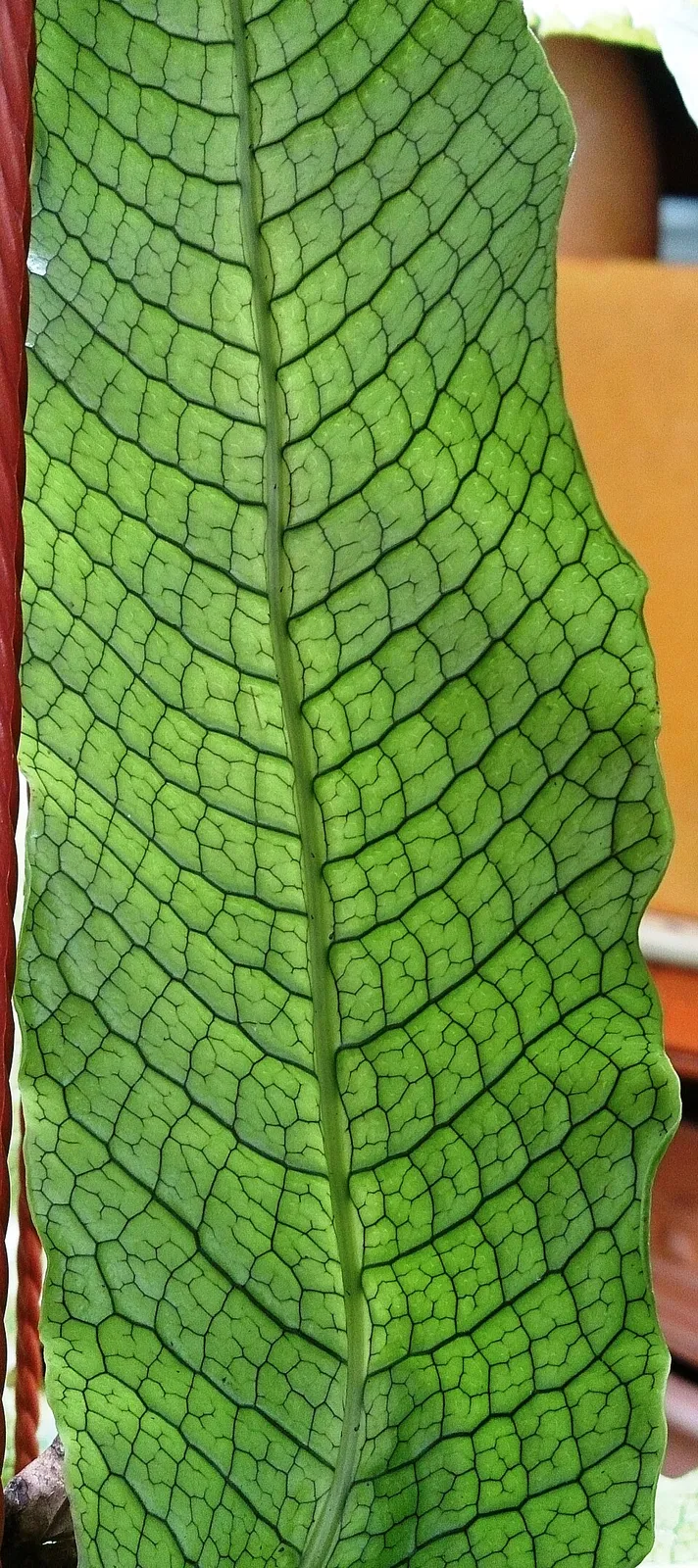
Microsorum musifolium 'Crocodyllus', commonly known as the Crocodile Fern, is a distinctive epiphytic or terrestrial fern highly valued for its uniquely textured foliage. This cultivar, belonging to the Polypodiaceae family, is characterized by its long, lanceolate to ovate fronds, which can extend up to 60 cm (2 feet) in length and 15 cm (6 inches) in width. The most striking feature is the frond's surface, which exhibits an intricate, raised pattern of dark green to blackish blotches against a lighter green background, remarkably mimicking the scaly skin of a crocodile—hence its common name.
The rhizomes are creeping, dark brown, and covered with fine, hair-like scales, enabling the plant to spread effectively or anchor itself to various substrates. In its native tropical rainforests, primarily in Malaysia, it thrives as an epiphyte on tree trunks and branches, or as a lithophyte on moss-covered rocks, always preferring environments with ample shade and high humidity. Fertile fronds bear characteristic round sori, or spore clusters, arranged in neat rows on their undersides.
Beyond its botanical intrigue, the Crocodile Fern's robust, architectural form and tolerance for lower light conditions make it a highly sought-after indoor ornamental plant, further enhanced by its general air-purifying qualities common to many houseplants.
Trusted Scientific References
1. Authoritative external sources for Microsorum musifolium Crocodyllus
1.1 Wikipedia — Microsorum musifolium Crocodyllus
1.2 Kew POWO (Plants of the World Online)
1.3 PubMed — peer-reviewed research
1.4 NCBI Taxonomy Browser
1.5 GBIF — Global Biodiversity
1.6Microsorum Crocodile should be interpreted through verified botanical identity, practical care, and responsible safety language. This recovery note adds the missing context needed for a complete profile: match light to the plant's habit, use well-drained soil, water according to season, and avoid unsupported medicinal or edible claims. For publishing, the plant can be presented as a source-backed indoor plant with clear care guidance, common problem diagnosis, and conservative safety wording.
1.1.Microsorum Crocodile — Standout Qualities
- ✓Distinctive Foliage — Features unique, scaly, crocodile-like frond texture.
- ✓Epiphytic/Terrestrial Nature — Adaptable to growing on trees, rocks, or in soil.
- ✓Low Light Tolerance — Thrives in bright, indirect light, making it ideal for indoor settings.
- ✓High Humidity Lover — Prefers moist air, mimicking its tropical native habitat.
- ✓Air — Purifying Qualities — Contributes to cleaner indoor air by absorbing toxins.
- ✓Robust & Architectural Form — Offers a strong visual statement in any decor.
- ✓Easy to Care For — Considered a low-maintenance plant once ideal conditions are met.
- ✓Native to Malaysia — Originates from tropical rainforests.
- ✓Family Polypodiaceae — A member of the true fern family.
- ✓Non — Toxic Ornamental — Generally safe for homes with pets and children.
1.2.Microsorum Crocodile — At-a-Glance Summary
- ✓Unique 'crocodile skin' textured fronds, highly prized ornamental fern.
- ✓Native to Malaysian jungles, thrives in warm, humid, indirect light.
- ✓Easy-care houseplant, suitable for beginners and experienced growers.
- ✓Contributes to indoor air purification and aesthetic well-being.
- ✓Propagated by rhizome division; requires consistent moisture and humidity.
- ✓Generally non-toxic to humans and pets, making it a safe indoor choice.
2.Microsorum Crocodile — Taxonomic Classification
3.Microsorum Crocodile — Reference Facts
4.Microsorum Crocodile — Morphological Account
5.Microsorum Crocodile — Geographic Distribution
6.Microsorum Crocodile — Ethnobotanical Uses
7.Microsorum Crocodile — Active Compounds
- ✓Specific chemical constituent analysis for Microsorum musifolium 'Crocodyllus' is currently limited. However, based on general phytochemical studies of ferns within the Polypodiaceae family, the following compound categories are typically found, contributing to their biological activities:
- ✓Flavonoids — Compounds like kaempferol, quercetin, and luteolin are common, known for their antioxidant, anti-inflammatory, and potentially anticarcinogenic properties.
- ✓Phenolic Acids — Gallic acid, caffeic acid, and ferulic acid are frequently present, contributing to antioxidant and antimicrobial effects.
- ✓Tannins — Both hydrolyzable and condensed tannins may be found, responsible for astringent properties, wound healing, and antimicrobial actions.
- ✓Triterpenoids — These compounds can exhibit anti-inflammatory, antiviral, and hepatoprotective activities in various plant species.
- ✓Steroids/Phytosterols — Including beta-sitosterol, which can have anti-inflammatory and cholesterol-lowering effects.
- ✓Saponins — Glycosides that can possess expectorant, anti-inflammatory, and sometimes cytotoxic activities.
- ✓Polysaccharides — Complex carbohydrates that may contribute to immunomodulatory and prebiotic effects.
- ✓Essential Oils/Volatile Compounds — While less prominent than in flowering plants, some ferns contain trace amounts of volatile compounds that contribute to their characteristic scent and may have insecticidal or antimicrobial properties.
- ✓Carotenoids — Pigments like beta-carotene, often found in photosynthetic tissues, acting as antioxidants and precursors to Vitamin A.
8.Microsorum Crocodile — Research Insights
- ✓While specific traditional or modern medicinal documentation for Microsorum musifolium 'Crocodyllus' is limited, general properties observed in other ferns within the broader Polypodiaceae family or the Microsorum genus include:
- ✓Potential Anti-inflammatory Effects — Some fern species contain compounds like flavonoids and phenolics that exhibit anti-inflammatory activity, potentially aiding in reducing swelling and pain.
- ✓Diuretic Properties — Certain ferns have been traditionally used to promote urine production, which could help in flushing toxins from the body and supporting kidney function.
- ✓Wound Healing Support — Extracts from various ferns are noted for their potential to accelerate wound closure and tissue regeneration, often attributed to their astringent and antimicrobial constituents.
- ✓Antimicrobial Activity — General fern phytochemistry often includes compounds with inhibitory effects against various bacteria and fungi, offering potential protective benefits.
- ✓Antioxidant Capacity — Ferns are a source of natural antioxidants, such as phenolic compounds, which help neutralize free radicals and protect cells from oxidative stress.
- ✓Potential for Respiratory Health — In some traditional systems, certain fern preparations are used to alleviate respiratory ailments, possibly due to mucolytic or bronchodilatory effects.
- ✓Gastrointestinal Support — Astringent properties in some ferns may help in managing mild digestive upsets or diarrhea.
- ✓Air Purification (Ornamental Benefit) — As a houseplant, Microsorum musifolium 'Crocodyllus', like many ferns, contributes to improving indoor air quality by absorbing common volatile organic compounds (VOCs) and releasing oxygen.
- ✓Aesthetic and Psychological Well-being — The presence of lush, unique foliage like the Crocodile Fern can significantly reduce stress, improve mood, and enhance concentration in indoor environments, contributing to overall mental health.
8.1.Microsorum Crocodile — Health Applications
9.Microsorum Crocodile — Risk Profile
9.1.Microsorum Crocodile — Caution Notes
- ✓As an ornamental houseplant, Microsorum musifolium 'Crocodyllus' is generally considered safe. However, potential considerations, though rare and non-specific, include:
- ✓Allergic Reactions — Sensitive individuals may experience mild skin irritation upon direct contact with fronds or spores, similar to other ferns.
- ✓Gastrointestinal Upset — Ingestion by pets or children is not recommended and could lead to mild stomach upset, vomiting, or diarrhea.
- ✓Spore Inhalation — While not typically harmful, excessive inhalation of spores in a very enclosed space might irritate sensitive respiratory systems.
- ✓Phytodermatitis — Rare instances of contact dermatitis have been reported for some fern species, though specific data for Crocodile Fern is lacking.
- ✓Toxicity — No known significant toxicity to humans or pets has been reported, but it is always best to prevent ingestion.
- ✓Overwatering Issues — Incorrect care leading to root rot can cause plant health decline, though this is a plant care issue, not a direct side effect on humans.
9.2.Microsorum Crocodile — Clinical Safety Notes
- ✓The Crocodile Fern (Microsorum musifolium 'Crocodyllus') is generally regarded as a safe indoor plant. Specific safety guidelines include:
- ✓Non-Toxic (Generally) — It is not listed as significantly toxic to humans or common pets by major plant toxicity databases, though ingestion is discouraged.
- ✓Handle with Care — While not severely irritating, individuals with sensitive skin should wear gloves during extensive handling or repotting, especially if spore production is high.
- ✓Keep Out of Reach of Children and Pets — To prevent accidental ingestion and potential mild gastrointestinal upset.
- ✓No Known Drug Interactions — As it is not used medicinally, there are no documented drug interactions.
- ✓Pregnancy and Lactation — Due to the lack of specific medicinal research, use during pregnancy or lactation is not applicable.
- ✓Allergen Status — Low allergenicity, but individuals with known fern allergies should exercise caution.
- ✓Air Quality — Known for its air-purifying qualities, it contributes positively to indoor environments when properly cared for.
10.Microsorum Crocodile — How to Use
- ✓While Microsorum musifolium 'Crocodyllus' is not traditionally used for medicinal preparations, its primary usage is ornamental and for enhancing indoor environments. Here are common usage methods:
- ✓Indoor Ornamental Display — Place in decorative pots to showcase its unique foliage as a focal point in living rooms, offices, or bathrooms.
- ✓Terrarium or Vivarium Inclusion — Due to its humidity preference and aesthetic appeal, it is an excellent choice for enclosed environments like terrariums or vivariums.
- ✓Air Purification — Position in areas where air quality improvement is desired, as ferns are known to absorb common indoor pollutants.
- ✓Group Planting — Combine with other tropical houseplants to create a humid microclimate and enhance a 'jungle' aesthetic.
- ✓Epiphytic Mounting (Advanced) — Mimic its natural growth habit by mounting it onto cork bark or driftwood with sphagnum moss for a striking display.
- ✓Aesthetic Element in Biophilic Design — Integrate into biophilic design schemes to connect indoor spaces with nature and promote well-being.
- ✓Educational Tool — Use as an example of unique fern morphology and epiphytic/lithophytic growth in botanical education.
11.Microsorum Crocodile — Propagation & Care
- ✓Light — Provide bright, indirect light; avoid direct sunlight which can scorch fronds. East or north-facing windows are ideal.
- ✓Soil — Use a loose, well-draining potting mix. A blend of peat moss or coco coir, perlite, and orchid bark (2:1:1 ratio) works well.
- ✓Water — Keep soil consistently moist but never waterlogged during spring and summer; reduce watering in fall and winter.
- ✓Temperature — Maintain warm temperatures between 18-24°C (65-75°F); avoid dropping below 10°C (50°F).
- ✓Humidity — Requires high humidity (at least 50%). Group with other plants, use a pebble tray, or a small humidifier.
- ✓Fertilizer — Feed monthly during growing season (spring/summer) with a balanced liquid houseplant fertilizer diluted to half strength.
- ✓Propagation — Easily propagated by rhizome division during repotting in spring or summer, ensuring each division has healthy roots and fronds.
- ✓Repotting — Repot only when root-bound, typically every 1-2 years, into a slightly larger pot.
Reviewed by the Flora Medical Global Botanical Review Panel
Multi-disciplinary editorial group · Botany · Ethnobotany · Herbal-medicine literature
Who reviewed this: This page was checked by the Flora Medical Global Botanical Review Panel — an in-house editorial group of botany graduates, ethnobotany researchers, and horticulture practitioners who collectively maintain our 7,000+ plant encyclopedia. Meet the team.
Our 4-step verification process
1. Taxonomic verification
Scientific names and synonyms cross-checked against Kew POWO, World Flora Online, and The Plant List.
2. Phytochemical & medicinal cross-reference
Active compounds, traditional uses, and reported activities are cross-referenced with PubMed, USDA Dr. Duke's database, and peer-reviewed ethnobotanical literature.
3. Conservation & distribution check
Distribution, ecology, and conservation status confirmed against GBIF occurrence records and the IUCN Red List.
4. Editorial & safety review
Every entry passes an editorial pass for clarity, originality, and safety notices (toxicity, contraindications, dosage caveats) before publication.
Last reviewed:
Important medical disclaimer: This content is for educational and research purposes only. It is not medical advice and is not a substitute for consultation with a licensed healthcare provider. Do not use any herb to self-treat a medical condition without professional guidance.
Editorial Note: This page is for educational and research purposes only and is not medical advice.
Written by: Flora Medical Global Editorial Team
Reviewed by: Flora Medical Global Botanical Review Panel
Last Updated: June 15, 2026





Microsorum Crocodile — Comments & Community Reviews
Rate this plant