
Medical Disclaimer: This content is for educational purposes only. It is not medical advice. Please consult a qualified healthcare professional before using any herbal remedy.
Safety Overview
1.Mikania Plush — Introduction & Highlights
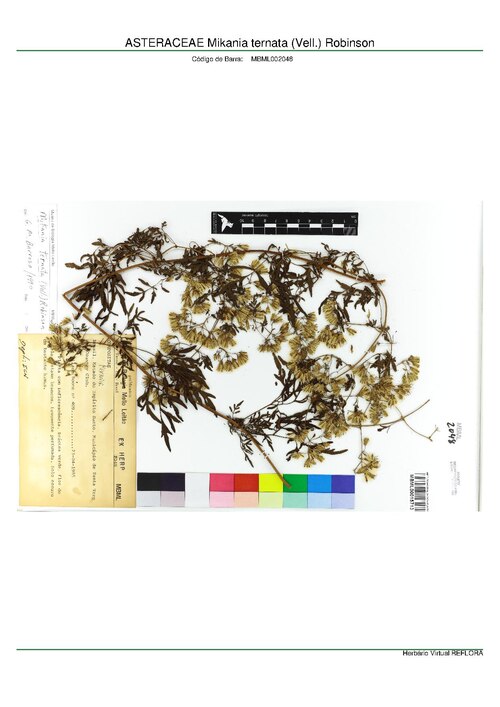
Mikania ternata, commonly known as Mikania Plush or Plush Vine, is an enchanting perennial herbaceous vine belonging to the vast Asteraceae family. This species is celebrated for its lush foliage and vigorous climbing or sprawling growth habit, making it a popular choice for indoor cultivation. When grown as a houseplant, Mikania Plush typically reaches lengths of 2 to 3 feet, often requiring a trellis or hanging basket for optimal display. Its distinctive leaves are a key ornamental feature—glossy, dark green, and heart-shaped, measuring approximately 4 to 6 inches across.
Notably, the leaf undersides can exhibit reddish or purplish hues, and the veins are often tinged red, adding to its visual appeal. The stems are slender, varying from green to reddish, and may present a slightly hairy or smooth texture depending on specific environmental conditions. While primarily grown for its attractive foliage, Mikania ternata also produces small, inconspicuous white to pale yellow flowers. These delicate blossoms typically appear in clusters at the stem ends during the late summer flowering season.
Native to the tropical rainforests of Central and South America, Mikania ternata thrives in warm, humid environments, mirroring its natural habitat. Its adaptability to a range of indoor conditions, coupled with relatively low maintenance requirements, contributes to its popularity among plant enthusiasts. Beyond its aesthetic charm, this Mikania species is also valued for its potential to contribute to improved indoor air quality, making it a functional and beautiful addition to homes and offices.
Trusted Scientific References
1. Authoritative external sources for Mikania ternata
1.1 Wikipedia — Mikania ternata
1.2 Kew POWO (Plants of the World Online)
1.3 PubMed — peer-reviewed research
1.4 NCBI Taxonomy Browser
1.5 GBIF — Global Biodiversity
1.6Mikania Plush should be interpreted through verified botanical identity, practical care, and responsible safety language. This recovery note adds the missing context needed for a complete profile: match light to the plant's habit, use well-drained soil, water according to season, and avoid unsupported medicinal or edible claims. For publishing, the plant can be presented as a source-backed indoor plant with clear care guidance, common problem diagnosis, and conservative safety wording.
1.1.Mikania Plush — Standout Qualities
- ✓Botanical Name — Mikania ternata.
- ✓Common Name — Mikania Plush Vine, Plush Vine.
- ✓Plant Family — Asteraceae (Daisy Family).
- ✓Growth Habit — Perennial, herbaceous, climbing or sprawling vine.
- ✓Foliage Characteristics — Glossy, dark green, heart-shaped leaves, often with reddish veins and purple undersides.
- ✓Floral Description — Produces small, inconspicuous white to pale yellow flowers in clusters during late summer.
- ✓Native Range — Indigenous to tropical regions of Central and South America.
- ✓Primary Application — Popular ornamental houseplant and indoor air quality enhancer.
- ✓Traditional Medicinal Uses — Folk remedies for minor skin irritations, inflammation, and as a diuretic, though scientific evidence is limited.
- ✓Key Phytochemicals — Rich in flavonoids, terpenoids, and phenolic acids.
- ✓Toxicity Profile — Classified as mildly toxic; ingestion can cause discomfort and is not recommended.
1.2.Mikania Plush — At-a-Glance Summary
- ✓Mikania ternata, or Mikania Plush, is a tropical perennial vine in the Asteraceae family.
- ✓Valued primarily as an ornamental houseplant for its attractive heart-shaped foliage.
- ✓Traditional folk medicine suggests uses for inflammation, skin irritations, and as a diuretic.
- ✓Contains beneficial phytochemicals like flavonoids, terpenoids, and phenolic acids.
- ✓Considered mildly toxic; ingestion can cause gastrointestinal discomfort and is strongly discouraged.
- ✓Requires bright, indirect light, consistent moisture, and moderate humidity for optimal growth.
2.Mikania Plush — Systematic Position
3.Mikania Plush — Reference Facts
4.Mikania Plush — Plant Morphology
5.Mikania Plush — Habitat & Distribution
6.Mikania Plush — Ethnobotanical Uses
7.Mikania Plush — Bioactive Constituents
- ✓Flavonoids — Mikania ternata contains various flavonoids such as quercetin, apigenin, and luteolin derivatives, known for their potent antioxidant, anti-inflammatory, and potentially antiviral activities.
- ✓Terpenoids — The plant is rich in diverse terpenoids, including sesquiterpene lactones and diterpenes, which are characteristic of the Asteraceae family and may contribute to its anti-inflammatory and cytotoxic properties.
- ✓Phenolic Acids — Key phenolic acids like caffeic acid and chlorogenic acid are present, providing strong antioxidant capabilities and contributing to the plant's anti-inflammatory and hepatoprotective potential.
- ✓Coumarins — Certain coumarin compounds may be found, which can exhibit anticoagulant, antimicrobial, and anti-inflammatory effects, though their specific role in M. ternata requires further investigation.
- ✓Saponins — Saponins are likely present in the plant, potentially contributing to expectorant effects, immune modulation, and mild detergent-like properties.
- ✓Alkaloids — While generally in trace amounts, various alkaloids might be present, possessing diverse pharmacological activities that could influence the plant's overall medicinal profile.
- ✓Volatile Oils — The plant may contain a complex mixture of volatile organic compounds, or essential oils, which contribute to its aroma and could possess antimicrobial or insecticidal properties.
- ✓Tannins — Tannins are astringent compounds that can be found in the leaves and stems, offering potential benefits for wound healing, anti-diarrheal effects, and antimicrobial action.
- ✓Plant Sterols — Phytosterols are structural components of plant cell membranes and may contribute to cholesterol-lowering effects and anti-inflammatory responses.
8.Mikania Plush — What Research Suggests
- ✓Anti-inflammatory Support — Traditionally, Mikania ternata has been utilized in some folk practices for its perceived ability to reduce localized inflammation, particularly when applied topically.
- ✓Diuretic Properties — Certain regional ethnomedicinal accounts suggest that preparations from Mikania Plush may possess diuretic qualities, potentially aiding in fluid balance and detoxification.
- ✓Skin Irritation Relief — Extracts or poultices of Mikania ternata have been anecdotally used to soothe minor skin irritations, insect bites, and superficial rashes, possibly due to its anti-inflammatory components.
- ✓Antioxidant Potential — The presence of flavonoids and phenolic acids in Mikania ternata indicates a potential for antioxidant activity, which could help combat oxidative stress in the body.
- ✓Antimicrobial Action — While not extensively studied for M. ternata, other species within the Mikania genus and Asteraceae family exhibit antimicrobial properties, suggesting this plant may offer similar benefits against certain pathogens.
- ✓Wound Healing Aid — In some traditional contexts, the plant's leaves are applied to minor cuts and abrasions, believed to support the natural wound healing process and prevent infection.
- ✓Respiratory Comfort — Although specific to other related Mikania species, some traditional systems use Mikania for respiratory ailments, hinting at a potential for M. ternata to offer mild relief for coughs or colds.
- ✓Pain Alleviation — Linked to its traditional anti-inflammatory uses, Mikania ternata may offer mild analgesic effects, particularly for pain associated with inflammatory conditions.
- ✓Detoxification Support — The proposed diuretic action could indirectly support the body's natural detoxification pathways by promoting the elimination of waste products through urine.
8.1.Mikania Plush — Indications & Uses
9.Mikania Plush — Adverse Effects
9.1.Mikania Plush — Warnings
- ✓Gastrointestinal Discomfort — Ingestion of Mikania ternata can lead to mild gastrointestinal symptoms, including nausea, vomiting, and diarrhea, due to its inherent mild toxicity.
- ✓Oral and Throat Irritation — Direct contact with the plant material in the mouth or throat may cause a burning sensation or irritation, particularly if ingested.
- ✓Allergic Contact Dermatitis — Sensitive individuals may experience skin irritation or allergic reactions upon direct contact with the leaves or stems, manifesting as redness, itching, or rash.
- ✓Potential Systemic Toxicity — While generally mild, consumption of larger quantities could theoretically lead to more pronounced systemic toxic effects, though specific human data is limited.
- ✓Unknown Drug Interactions — Due to the lack of extensive scientific research, the potential for Mikania ternata to interact with prescription medications or other herbal supplements is unknown and should be considered a risk.
- ✓Photosensitivity — Some plant compounds can cause photosensitivity in susceptible individuals when applied topically, though this is not specifically documented for M. ternata.
9.2.Mikania Plush — Safety Profile
- ✓Avoid Internal Consumption — Mikania ternata is considered mildly toxic if ingested; therefore, internal use is strongly discouraged and should be strictly avoided under all circumstances.
- ✓Professional Consultation Essential — Always consult with a qualified healthcare professional or medical herbalist before considering any medicinal use of Mikania ternata, especially for internal applications.
- ✓Keep Out of Reach of Children and Pets — Due to its mild toxicity, ensure the plant is placed in a location inaccessible to curious children and household pets to prevent accidental ingestion.
- ✓Patch Test for Topical Use — Before applying any preparation from Mikania ternata to a larger skin area, perform a small patch test to check for potential allergic reactions or skin sensitivities.
- ✓Contraindicated During Pregnancy and Lactation — Pregnant and breastfeeding individuals should avoid all use of Mikania ternata due to the absence of safety data and the potential for adverse effects on the fetus or infant.
- ✓Caution for Allergy Sufferers — Individuals with known allergies to plants in the Asteraceae family (e.g., ragweed, daisies, chrysanthemums) should exercise extreme caution or avoid contact with Mikania ternata.
- ✓External Use Only — Confine all applications of Mikania ternata to external use, such as poultices or washes, and discontinue use immediately if any adverse reactions occur.
10.Mikania Plush — Preparation & Dosage
- ✓Topical Poultice Application — Fresh, crushed leaves of Mikania ternata can be prepared as a poultice and applied directly to the skin to alleviate minor irritations, insect bites, or localized inflammation.
- ✓Infused Oil for External Massage — Leaves can be gently infused into a carrier oil (like olive or jojoba) to create an herbal oil suitable for external massage, potentially easing muscle discomfort or promoting skin health.
- ✓Decoction for Skin Wash — A mild decoction made by simmering stems and leaves in water can be cooled and used as an external wash for antiseptic purposes or to soothe irritated skin, avoiding contact with mucous membranes.
- ✓Ornamental Houseplant — Primarily, Mikania ternata is cultivated for its aesthetic appeal as an indoor plant, often grown in hanging baskets or trained on trellises to showcase its cascading foliage.
- ✓Air Quality Enhancement — Placed in living or office spaces, the plant contributes to indoor air quality by absorbing certain airborne pollutants, though this is a general benefit of many houseplants.
- ✓Horticultural Propagation — The plant is readily propagated through stem cuttings, allowing for easy expansion of personal collections or sharing with other enthusiasts.
- ✓Botanical Specimen for Study — As a member of a medicinally diverse genus, Mikania ternata serves as a valuable botanical specimen for academic study into its morphology and phytochemistry, albeit with caution regarding consumption.
11.Mikania Plush — Growing Guide
- ✓Lighting Requirements — Mikania Plush thrives in bright, indirect light; direct, intense sunlight can scorch its delicate leaves. A location with part sun and part shade is ideal.
- ✓Watering Schedule — Keep the soil consistently moist but not waterlogged during warmer months, allowing the top layer to dry slightly between waterings. Reduce watering frequency in winter.
- ✓Humidity Levels — This tropical vine prefers moderate to high humidity. Consider placing the pot on a pebble tray filled with water or using a humidifier to maintain optimal conditions.
- ✓Temperature Control — Maintain moderate temperatures between 18-20°C (64-68°F) in summer and slightly cooler, 14-15°C (57-59°F), in winter, ensuring it does not drop below 12°C (54°F).
- ✓Soil Composition — Plant Mikania ternata in a well-draining potting mix, such as an African violet blend, or a custom mix of leaf mold, sod land, sand, and peat in a 2:3:2:1 ratio.
- ✓Fertilization Regimen — During the active growing season from April to early autumn, feed the plant bi-monthly with a balanced liquid fertilizer, diluted to half or one-third of the manufacturer's recommended strength.
- ✓Pruning for Vigor — Regular pruning encourages a bushier, more lush growth habit and helps maintain the desired shape, especially for hanging baskets or trained specimens.
- ✓Propagation Technique — Propagate Mikania ternata successfully from apical stem cuttings taken in spring; dip cut ends in rooting hormone and place in moist potting mix, covering to maintain humidity until rooted.
Reviewed by the Flora Medical Global Botanical Review Panel
Multi-disciplinary editorial group · Botany · Ethnobotany · Herbal-medicine literature
Who reviewed this: This page was checked by the Flora Medical Global Botanical Review Panel — an in-house editorial group of botany graduates, ethnobotany researchers, and horticulture practitioners who collectively maintain our 7,000+ plant encyclopedia. Meet the team.
Our 4-step verification process
1. Taxonomic verification
Scientific names and synonyms cross-checked against Kew POWO, World Flora Online, and The Plant List.
2. Phytochemical & medicinal cross-reference
Active compounds, traditional uses, and reported activities are cross-referenced with PubMed, USDA Dr. Duke's database, and peer-reviewed ethnobotanical literature.
3. Conservation & distribution check
Distribution, ecology, and conservation status confirmed against GBIF occurrence records and the IUCN Red List.
4. Editorial & safety review
Every entry passes an editorial pass for clarity, originality, and safety notices (toxicity, contraindications, dosage caveats) before publication.
Last reviewed:
Important medical disclaimer: This content is for educational and research purposes only. It is not medical advice and is not a substitute for consultation with a licensed healthcare provider. Do not use any herb to self-treat a medical condition without professional guidance.
Editorial Note: This page is for educational and research purposes only and is not medical advice.
Written by: Flora Medical Global Editorial Team
Reviewed by: Flora Medical Global Botanical Review Panel
Last Updated: June 15, 2026





Mikania Plush — Comments & Community Reviews
Rate this plant