
Medical Disclaimer: This content is for educational purposes only. It is not medical advice. Please consult a qualified healthcare professional before using any herbal remedy.
Safety Overview
1.Milk Parsley — Essential Profile
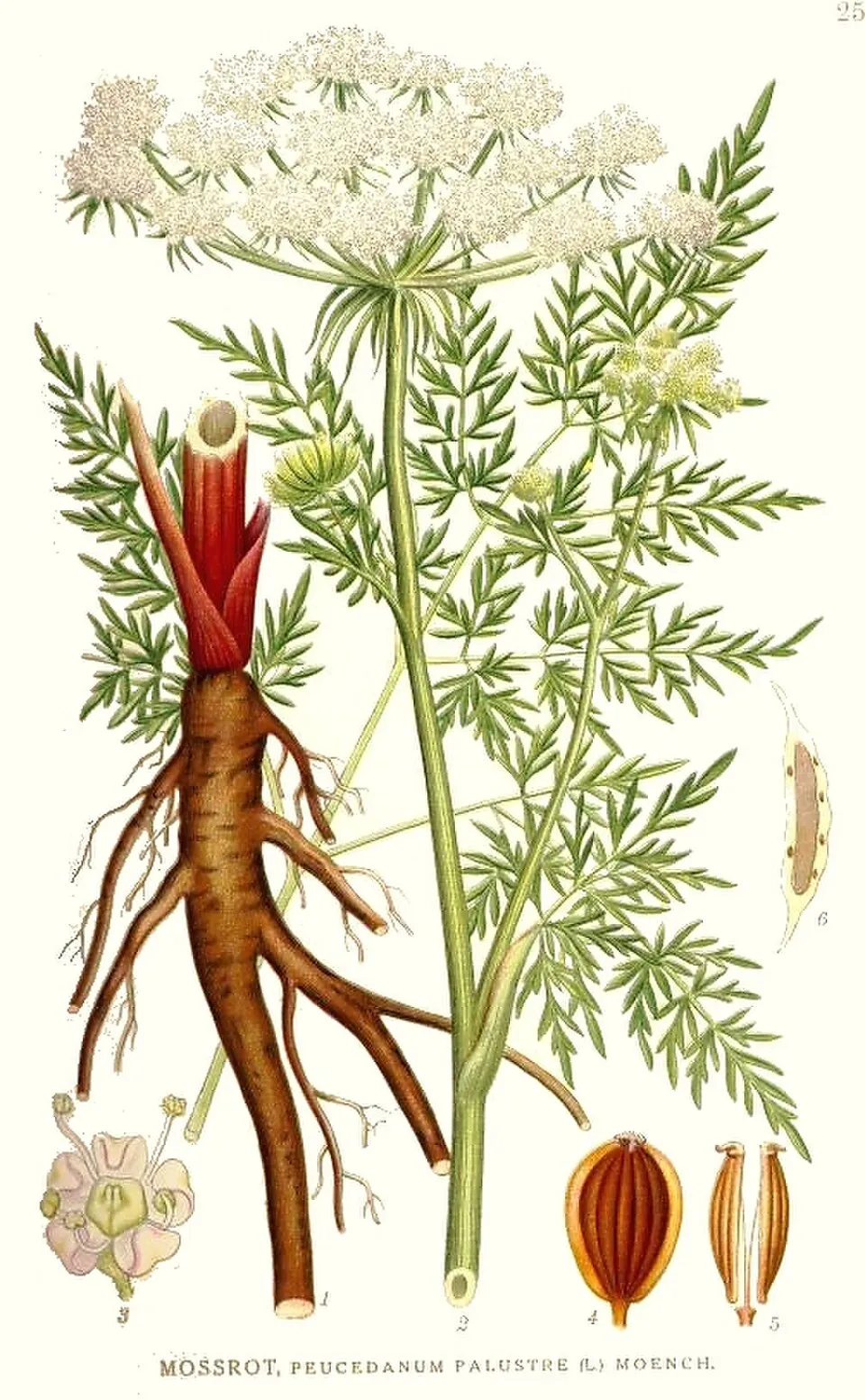
Milk Parsley (Peucedanum palustre), an intriguing perennial herb belonging to the diverse Apiaceae family, showcases a robust growth habit, typically reaching heights of 30 to 90 cm, though it can extend up to 160 cm in optimal conditions. Its foliage is distinctive, featuring broad, deeply lobed leaves that present a dark green hue with a characteristic glossy sheen, often measuring between 10 to 40 cm in length. The plant's stem is notably hollow and glabrous, frequently displaying a subtly ridged texture.
During the late spring to early summer months, Peucedanum palustre unfurls its delicate inflorescences, producing compound umbels composed of numerous small, white flowers, each approximately 2-3 mm in diameter. These blossoms mature into elongated, flattened brown fruits, typically 4-5 mm long, which are schizocarpic and split into two segments. This remarkable herb thrives predominantly in wet, marshy areas, swamps, and occasionally human-disturbed habitats across regions of Europe and central Asia.
While rarely found in North America, with documented occurrences on Massachusetts roadsides, it plays a vital ecological role in its native range, serving as an important food source for swallowtail butterfly (Papilio) caterpillars. Taxonomically, it is classified within the genus Peucedanum, a group renowned for its aromatic and medicinal plants. The common name 'Milk Parsley' is derived from the milky sap, or latex, that exudes from its cut stems, making its identification quite unique within its habitat.
Trusted Scientific References
1. Authoritative external sources for Peucedanum palustre
1.1 Wikipedia — Peucedanum palustre
1.2 Kew POWO (Plants of the World Online)
1.3 PubMed — peer-reviewed research
1.4 NCBI Taxonomy Browser
1.5 GBIF — Global Biodiversity
1.6Milk Parsley should be interpreted through verified botanical identity, practical care, and responsible safety language. This recovery note adds the missing context needed for a complete profile: match light to the plant's habit, use well-drained soil, water according to season, and avoid unsupported medicinal or edible claims. For publishing, the plant can be presented as a source-backed medicinal plant with clear care guidance, common problem diagnosis, and conservative safety wording.
1.1.Milk Parsley — Notable Characteristics
- ✓Perennial herbaceous plant — Perennial herbaceous plant with hollow stems.
- ✓Distinctive broad, deeply — Distinctive broad, deeply lobed, glossy dark green leaves.
- ✓Produces characteristic white — Produces characteristic white compound umbel flowers in summer.
- ✓Native to European — Native to European and Central Asian wetlands and moist habitats.
- ✓Exudes a milky — Exudes a milky sap when stems are cut, inspiring its common name.
- ✓Traditionally utilized for its immune — modulating and anti-inflammatory properties.
- ✓Contains a significant — Contains a significant profile of coumarins, flavonoids, and phenolic compounds.
- ✓Serves as an — Serves as an important host plant for swallowtail butterfly caterpillars.
- ✓Requires consistently moist — Requires consistently moist soil and partial to full sun for optimal growth.
- ✓Critical to distinguish — Critical to distinguish from highly poisonous members of the Apiaceae family.
1.2.Milk Parsley — At-a-Glance Summary
- ✓Botanical Name — Peucedanum palustre
- ✓Family — Apiaceae (Carrot Family)
- ✓Key Uses — Immune support, anti-inflammatory, antioxidant, digestive aid.
- ✓Bioactive Compounds — Rich in coumarins (e.g., peucedanin), flavonoids, and phenolic acids.
- ✓Habitat — Native to wet, marshy areas of Europe and Central Asia.
- ✓Caution — Potential phototoxicity and severe misidentification risk with toxic look-alikes.
2.Milk Parsley — Botanical Identity
3.Milk Parsley — Vital Statistics
4.Milk Parsley — Physical Description
5.Milk Parsley — Ecological Habitat
6.Milk Parsley — Folk Medicine Applications
7.Milk Parsley — Chemical Profile
- ✓Coumarins — Key compounds include peucedanin, osthol, and imperatorin, known for their anti-inflammatory, antispasmodic, and potentially phototoxic properties, characteristic of the Peucedanum genus.
- ✓Flavonoids — Compounds like quercetin, apigenin, and their glycosides are present, contributing significantly to the plant's antioxidant, anti-inflammatory, and immune-modulating activities.
- ✓Phenolic Acids — Caffeic acid, chlorogenic acid, and ferulic acid derivatives are found, offering potent antioxidant and anti-inflammatory benefits, protecting cells from oxidative damage.
- ✓Terpenoids — Aromatic monoterpenes and sesquiterpenes may be present in trace amounts, contributing to the plant's characteristic aroma and potential antimicrobial effects.
- ✓Polyacetylenes — Unique to the Apiaceae family, these compounds can exhibit cytotoxic, antimicrobial, and anti-inflammatory activities, though specific types and concentrations in Milk Parsley require further study.
- ✓Alkaloids — While generally in lower concentrations compared to other classes, certain nitrogen-containing compounds may contribute to the plant's diverse pharmacological actions.
- ✓Saponins — These glycosides might be present, potentially contributing to adaptogenic, expectorant, and immune-modulating properties.
- ✓Fatty Acids — The fruits and seeds may contain various fatty acids, important for cell structure and potentially offering anti-inflammatory benefits.
8.Milk Parsley — Evidence-Based Benefits
- ✓Immune System Modulation — Milk Parsley is traditionally valued for its ability to support and balance immune responses, potentially enhancing the body's natural defense mechanisms against pathogens.
- ✓Anti-inflammatory Action — Rich in bioactive compounds, Peucedanum palustre may help mitigate inflammatory processes throughout the body by inhibiting key inflammatory pathways, offering relief from various discomforts.
- ✓Antioxidant Protection — Its diverse phytochemical profile, including flavonoids and phenolic acids, provides robust antioxidant activity, scavenging free radicals and reducing cellular oxidative stress.
- ✓Digestive Health Support — Historically used to promote digestive comfort, Milk Parsley may aid in easing indigestion, bloating, and other gastrointestinal disturbances, contributing to overall gut wellness.
- ✓Respiratory System Relief — Traditional practices suggest its use for supporting respiratory function, potentially helping to clear congestion and soothe irritated airways, common in the Apiaceae family.
- ✓Diuretic Properties — The herb is believed to possess mild diuretic effects, assisting the body in healthy fluid balance and supporting kidney function, which can be beneficial for detoxification.
- ✓Antimicrobial Effects — Preliminary research and traditional applications indicate potential antimicrobial properties, suggesting Milk Parsley may help combat certain bacterial and fungal agents.
- ✓General Wellness Tonic — Considered a general tonic in some folk traditions, it contributes to overall vitality and well-being, helping to restore balance and energy.
- ✓Pain Management Support — Its anti-inflammatory constituents may also contribute to mild analgesic effects, offering a natural approach to managing minor aches and discomforts.
8.1.Milk Parsley — Reported Uses
9.Milk Parsley — Cautions & Contraindications
9.1.Milk Parsley — Caution Notes
- ✓Phototoxicity — Furanocoumarins in Milk Parsley can cause skin sensitivity to sunlight, leading to dermatitis or blistering upon sun exposure, especially with topical use or ingestion of large amounts.
- ✓Allergic Reactions — Individuals sensitive to plants in the Apiaceae family (e.g., celery, carrot, fennel) may experience allergic responses, including skin rashes, itching, or respiratory issues.
- ✓Gastrointestinal Upset — High doses or sensitive individuals might experience mild digestive discomfort, such as nausea, stomach upset, or diarrhea.
- ✓Drug Interactions — Potential interactions with anticoagulant medications, sedatives, or drugs metabolized by cytochrome P450 enzymes due to its bioactive compounds.
- ✓Uterine Stimulation — Due to potential emmenagogue or abortifacient effects, Milk Parsley should be strictly avoided during pregnancy.
- ✓Kidney/Liver Stress — Prolonged use or excessive doses may theoretically place stress on the liver and kidneys, especially in individuals with pre-existing conditions.
- ✓Misidentification Risk — The Apiaceae family contains several highly poisonous look-alikes, making misidentification a severe risk that can lead to toxic ingestion.
9.2.Milk Parsley — Toxicity Assessment
- ✓Professional Guidance — Always consult a qualified healthcare practitioner or medical herbalist before using Milk Parsley, especially if pregnant, nursing, or on medication.
- ✓Proper Identification — Critical due to the presence of highly toxic look-alikes within the Apiaceae family (e.g., Poison Hemlock, Water Hemlock). Never forage without expert botanical knowledge.
- ✓Pregnancy and Lactation — Contraindicated during pregnancy and breastfeeding due to potential abortifacient or emmenagogue effects and lack of safety data.
- ✓Children — Not recommended for use in children without the explicit guidance and supervision of a pediatric herbalist or medical professional.
- ✓Photosensitivity Precaution — Users should exercise caution regarding sun exposure, especially after ingestion or topical application, due to the presence of furanocoumarins.
- ✓Pre-existing Conditions — Individuals with liver disease, kidney conditions, or autoimmune disorders should avoid use or proceed with extreme caution under medical supervision.
- ✓Allergic History — Those with known allergies to other Apiaceae plants should avoid Milk Parsley to prevent cross-reactivity and allergic reactions.
10.Milk Parsley — Usage Guide
- ✓Herbal Tea/Infusion — Prepare by steeping 1-2 teaspoons of dried Milk Parsley leaves or aerial parts in hot water for 10-15 minutes, consumed for digestive or immune support.
- ✓Decoction — For harder plant parts like roots or seeds, simmer 1-2 teaspoons in water for 15-20 minutes, then strain and drink, often used for more potent extraction.
- ✓Tincture — A concentrated liquid extract made by macerating fresh or dried plant material in alcohol, typically taken in drops for systemic effects.
- ✓Poultice/Compress — Fresh, crushed leaves can be applied topically as a poultice to soothe skin irritations or localized inflammation, though caution regarding photosensitivity is advised.
- ✓Herbal Bath — Infusions of the aerial parts can be added to bathwater for a relaxing and potentially skin-benefiting soak.
- ✓Culinary Use — While related to parsley, Milk Parsley should be used with extreme caution due to potential misidentification and specific compound concentrations; its use as a culinary herb is not widely recommended.
- ✓Encapsulated Extracts — Standardized extracts or powdered dried herb can be taken in capsule form for convenient and precise dosing, available through reputable suppliers.
11.Milk Parsley — How to Grow
- ✓Site Selection — Choose a location with full sun to partial shade, mimicking its natural wetland edge habitat.
- ✓Soil Requirements — Prefers rich, consistently moist to wet soil, ideally a loamy or clay-rich substrate that retains water well but isn't stagnant. A pH range of 6.0 to 7.0 is suitable.
- ✓Watering — Requires regular and abundant watering, especially during dry periods, to keep the soil consistently damp. It thrives in conditions where other plants might suffer from excess moisture.
- ✓Propagation — Can be propagated from fresh seeds, which may require cold stratification for optimal germination. Division of established clumps in early spring is also a viable method.
- ✓Planting — Plant seedlings or divisions in spring, spacing them about 30-45 cm apart to allow for mature growth. Ensure the crown is at soil level.
- ✓Climate — Best suited for temperate to cool temperate climates, reflecting its native European and Central Asian distribution, rather than tropical or subtropical zones.
- ✓Maintenance — Fertilize sparingly with organic matter in spring. Monitor for pests, though it's relatively robust. Pruning spent flower stalks can encourage vegetative growth.
- ✓Harvesting — Leaves can be harvested throughout the growing season, while roots are best collected in autumn after the plant's energy has returned underground.
Reviewed by the Flora Medical Global Botanical Review Panel
Multi-disciplinary editorial group · Botany · Ethnobotany · Herbal-medicine literature
Who reviewed this: This page was checked by the Flora Medical Global Botanical Review Panel — an in-house editorial group of botany graduates, ethnobotany researchers, and horticulture practitioners who collectively maintain our 7,000+ plant encyclopedia. Meet the team.
Our 4-step verification process
1. Taxonomic verification
Scientific names and synonyms cross-checked against Kew POWO, World Flora Online, and The Plant List.
2. Phytochemical & medicinal cross-reference
Active compounds, traditional uses, and reported activities are cross-referenced with PubMed, USDA Dr. Duke's database, and peer-reviewed ethnobotanical literature.
3. Conservation & distribution check
Distribution, ecology, and conservation status confirmed against GBIF occurrence records and the IUCN Red List.
4. Editorial & safety review
Every entry passes an editorial pass for clarity, originality, and safety notices (toxicity, contraindications, dosage caveats) before publication.
Last reviewed:
Important medical disclaimer: This content is for educational and research purposes only. It is not medical advice and is not a substitute for consultation with a licensed healthcare provider. Do not use any herb to self-treat a medical condition without professional guidance.
Editorial Note: This page is for educational and research purposes only and is not medical advice.
Written by: Flora Medical Global Editorial Team
Reviewed by: Flora Medical Global Botanical Review Panel
Last Updated: June 15, 2026




Milk Parsley — Comments & Community Reviews
Rate this plant