

Medical Disclaimer: This content is for educational purposes only. It is not medical advice. Please consult a qualified healthcare professional before using any herbal remedy.
Safety Overview
1.Milk Thistle — Botanical Snapshot
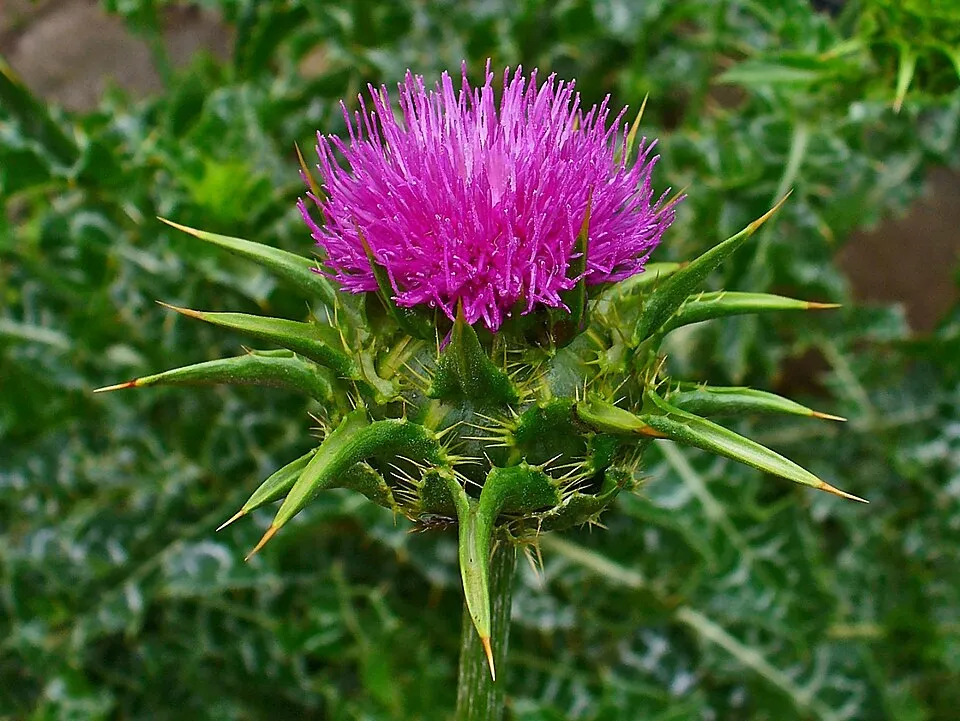
Milk Thistle, scientifically designated as Silybum marianum, is a commanding herbaceous annual or biennial plant belonging to the Asteraceae family, renowned for its distinctive appearance and historical medicinal use. It originates from the sun-drenched landscapes of Southern Europe, North Africa, and the Middle East, yet has successfully established itself across various temperate zones, including extensive areas of North America. The plant typically achieves a substantial height, ranging from 30 to 150 cm, characterized by its large, deeply lobed, and notably spiny leaves. These glossy green leaves are uniquely variegated with prominent white veins, a feature that contributes to its common 'milk' moniker, often associated with folklore regarding the Virgin Mary.
Atop its robust stems, Silybum marianum produces striking, solitary, globe-shaped flower heads, which can measure up to 6 cm in diameter. These inflorescences are composed of vibrant purple or reddish-purple disc florets, encircled by rigid, sharply spiky bracts that offer protection. Anchored by a strong taproot, the plant thrives in well-drained, often disturbed, and sunny soils. Following the flowering phase, the mature seed heads yield numerous dark brown, shiny achenes, each surmounted by a silky pappus.
These achenes, or seeds, are the primary source of the plant's potent medicinal compounds, particularly the silymarin complex. Its formidable and spiny morphology serves as an effective protective mechanism within its native arid and semi-arid environments. Beyond its scientific name, Silybum marianum is also recognized by several other common names, such as Mary Thistle and Holy Thistle, underscoring its enduring cultural and therapeutic significance throughout history.
Trusted Scientific References
1. Authoritative external sources for Silybum marianum
1.1 Wikipedia — Silybum marianum
1.2 Kew POWO (Plants of the World Online)
1.3 PubMed — peer-reviewed research
1.4 NCBI Taxonomy Browser
1.5 GBIF — Global Biodiversity
1.6Milk Thistle should be interpreted through verified botanical identity, practical care, and responsible safety language. This recovery note adds the missing context needed for a complete profile: match light to the plant's habit, use well-drained soil, water according to season, and avoid unsupported medicinal or edible claims. For publishing, the plant can be presented as a source-backed medicinal plant with clear care guidance, common problem diagnosis, and conservative safety wording.
1.1.Milk Thistle — Distinguishing Points
- ✓Distinctive Appearance — Large, spiny leaves with white veins.
- ✓Asteraceae Family — Member of the daisy/sunflower family.
- ✓Global Distribution — Native to Europe/Middle East, widely naturalized.
- ✓Potent Seeds — Source of the medicinal silymarin complex.
- ✓Hepatoprotective — Primary action is liver protection and regeneration.
- ✓Strong Antioxidant — High capacity to neutralize free radicals.
- ✓Anti — inflammatory — Reduces inflammation at a cellular level.
- ✓Traditional Heritage — Long history in traditional medicine systems.
- ✓Adaptable Growth — Thrives in diverse temperate climates.
- ✓Biennial/Annual Lifecycle — Completes life cycle in one or two years.
1.2.Milk Thistle — At-a-Glance Summary
- ✓Primary Liver Support — Renowned for its hepatoprotective and regenerative properties.
- ✓Active Compound — Silymarin complex is the key therapeutic agent.
- ✓Antioxidant Powerhouse — Fights oxidative stress and free radical damage.
- ✓Anti-inflammatory — Modulates inflammatory pathways in the body.
- ✓Traditional and Modern Use — Valued for centuries in herbal medicine, now supported by research.
- ✓Seed-Derived — Medicinal compounds are concentrated in the plant's seeds.
2.Milk Thistle — Nomenclature & Classification
3.Milk Thistle — Key Data
4.Milk Thistle — Botanical Features
5.Milk Thistle — Ecological Habitat
6.Milk Thistle — Heritage Uses
7.Milk Thistle — Phytochemistry
- ✓Flavonolignans — The primary active compounds, collectively known as silymarin, include silybin (or silibinin, a diastereomeric mixture of silybin A and B), isosilybin, silychristin, silydianin, and taxifolin. These are responsible for the plant's hepatoprotective and antioxidant activities.
- ✓Flavonoids — Other flavonoids like quercetin, kaempferol, and apigenin are present, contributing to the overall antioxidant and anti-inflammatory profile.
- ✓Fatty Acids — The seeds are rich in essential fatty acids, including linoleic acid (omega-6) and oleic acid (omega-9), which are important for cellular health and membrane integrity.
- ✓Sterols — Phytosterols such as cholesterol, campesterol, stigmasterol, and beta-sitosterol are found, which may have cholesterol-lowering properties.
- ✓Proteins and Amino Acids — Milk thistle seeds contain a significant amount of protein and various amino acids, contributing to their nutritional value.
- ✓Mucilage — Polysaccharides and mucilage are present, which can have demulcent properties, soothing irritated tissues.
- ✓Saponins — These compounds contribute to the plant's overall biochemical complexity and potential pharmacological effects.
- ✓Tocopherols (Vitamin E) — Natural antioxidants like alpha-tocopherol are found, further enhancing the plant's free radical scavenging capacity.
- ✓Minerals — Trace amounts of essential minerals such as potassium, calcium, magnesium, and zinc are also present.
8.Milk Thistle — Scientific Evidence
- ✓Liver Cell Regeneration — Silymarin, the principal active complex in milk thistle, significantly stimulates ribosomal RNA polymerase activity, thereby accelerating protein synthesis essential for the repair and regeneration of damaged liver cells.
- ✓Hepatoprotection — Milk thistle acts as a potent protective agent for the liver, shielding hepatocytes from a wide array of toxins, including alcohol, environmental pollutants, and certain pharmaceuticals, by stabilizing cell membranes and reducing toxin penetration.
- ✓Antioxidant Activity — The powerful flavonolignans within silymarin effectively scavenge free radicals, substantially reducing oxidative stress in the liver and other tissues, a critical factor in the progression of many chronic diseases.
- ✓Anti-inflammatory Effects — Silybum marianum compounds modulate inflammatory pathways, inhibiting the release of pro-inflammatory cytokines and reducing cellular damage associated with chronic inflammation, particularly in hepatic tissues.
- ✓Antifibrotic Potential — Research suggests milk thistle may impede the progression of liver fibrosis by inhibiting stellate cell activation and collagen deposition, offering a potential therapeutic avenue for fibrotic liver conditions.
- ✓Cholagogue and Choleretic Action — The plant promotes the flow and production of bile, aiding in the digestion of fats and the elimination of toxins and waste products from the liver.
- ✓Gallbladder Support — By facilitating bile flow, milk thistle can help prevent the formation of gallstones and alleviate symptoms associated with gallbladder dysfunction, contributing to overall digestive health.
- ✓Blood Sugar Regulation — Emerging studies indicate that silymarin may improve insulin sensitivity and help lower blood glucose levels, offering potential benefits for individuals managing type 2 diabetes.
- ✓Neuroprotective Effects — Flavonolignans in milk thistle have demonstrated neuroprotective properties, potentially safeguarding brain cells from oxidative damage and inflammation, which could be relevant for neurodegenerative conditions.
- ✓Renoprotective Properties — Beyond the liver, milk thistle has shown promise in protecting kidney cells from damage induced by toxins and oxidative stress, supporting renal function.
- ✓Anticancer Potential — Preclinical studies suggest that silymarin may exhibit antiproliferative and pro-apoptotic effects on various cancer cell lines, potentially inhibiting tumor growth and metastasis.
- ✓Immunomodulatory Actions — Milk thistle compounds can modulate immune responses, enhancing the body's natural defense mechanisms while also dampening excessive inflammatory reactions.
8.1.Milk Thistle — Conditions Traditionally Used For
9.Milk Thistle — Safety & Side Effects
9.1.Milk Thistle — Caution Notes
- ✓Mild Gastrointestinal Upset — May cause mild diarrhea, nausea, indigestion, or bloating in some individuals.
- ✓Allergic Reactions — Individuals allergic to plants in the Asteraceae family (ragweed, daisies, marigolds) may experience allergic reactions.
- ✓Skin Rashes — Rarely, skin rashes, itching, or hives can occur following consumption.
- ✓Headaches — Some users have reported mild headaches as a side effect.
- ✓Insomnia — Infrequent reports of sleep disturbances have been noted.
- ✓Laxative Effect — High doses may exert a mild laxative effect due to its bile-stimulating properties.
- ✓Dizziness — Occasional instances of dizziness have been reported.
9.2.Milk Thistle — Clinical Safety Notes
- ✓Pregnancy and Lactation — Generally advised against due to insufficient safety data; consult a healthcare professional.
- ✓Drug Interactions — May interact with certain medications metabolized by the liver (e.g., statins, anticoagulants, oral contraceptives) due to CYP450 enzyme modulation.
- ✓Hormone-Sensitive Conditions — Caution advised for individuals with hormone-sensitive conditions (e.g., breast cancer, uterine fibroids) due to potential mild estrogenic effects.
- ✓Diabetes Management — Individuals with diabetes should monitor blood sugar levels closely, as milk thistle may lower glucose.
- ✓Gallbladder Obstruction — Avoid in cases of bile duct obstruction without medical supervision, as it stimulates bile flow.
- ✓Children — Use in children is not well-established; consult a pediatrician before administration.
- ✓Quality of Supplements — Ensure use of reputable, standardized products to guarantee purity and potency.
10.Milk Thistle — Preparations & Uses
- ✓Oral Capsules/Tablets — Standardized extracts of milk thistle, typically containing 70-80% silymarin, are widely available in capsule or tablet form for precise dosing.
- ✓Liquid Extracts/Tinctures — Alcohol or glycerin-based tinctures offer a concentrated form, allowing for flexible dosing by drops in water or juice.
- ✓Tea Infusion — While less potent for silymarin (which is poorly water-soluble), crushed seeds can be steeped in hot water for a traditional herbal tea, primarily for digestive support.
- ✓Powdered Seeds — Ground milk thistle seeds can be added to smoothies, yogurts, or cereals, providing a broader spectrum of nutrients beyond silymarin.
- ✓Topical Preparations — Extracts can be incorporated into creams or salves for potential skin soothing and antioxidant benefits, though this is less common for liver support.
- ✓Culinary Use — Young leaves and stems can be eaten as a vegetable, similar to artichokes, after removing spines, offering nutritional value.
- ✓Decoction — For traditional use, the seeds can be simmered in water for a longer period to extract compounds, though this method is not optimized for silymarin extraction.
11.Milk Thistle — Cultivation & Care
- ✓Soil Preference — Thrives in well-drained, sandy, or loamy soils with a pH range of 6.0 to 7.5.
- ✓Sun Exposure — Requires full sun exposure, at least 6-8 hours of direct sunlight daily for optimal growth.
- ✓Sowing Seeds — Sow seeds directly outdoors in early spring after the last frost or in late autumn in milder climates.
- ✓Watering — Water moderately, allowing the soil to dry out between waterings; it is drought-tolerant once established.
- ✓Fertilization — Generally does not require heavy fertilization; a balanced, slow-release fertilizer can be applied if soil is poor.
- ✓Pest and Disease Management — Relatively pest-resistant, but watch for aphids and powdery mildew in humid conditions.
- ✓Harvesting — Harvest seeds when flower heads turn brown and dry, typically in late summer to early autumn.
- ✓Propagation — Primarily propagated by seed; self-seeds readily in favorable conditions.
Reviewed by the Flora Medical Global Botanical Review Panel
Multi-disciplinary editorial group · Botany · Ethnobotany · Herbal-medicine literature
Who reviewed this: This page was checked by the Flora Medical Global Botanical Review Panel — an in-house editorial group of botany graduates, ethnobotany researchers, and horticulture practitioners who collectively maintain our 7,000+ plant encyclopedia. Meet the team.
Our 4-step verification process
1. Taxonomic verification
Scientific names and synonyms cross-checked against Kew POWO, World Flora Online, and The Plant List.
2. Phytochemical & medicinal cross-reference
Active compounds, traditional uses, and reported activities are cross-referenced with PubMed, USDA Dr. Duke's database, and peer-reviewed ethnobotanical literature.
3. Conservation & distribution check
Distribution, ecology, and conservation status confirmed against GBIF occurrence records and the IUCN Red List.
4. Editorial & safety review
Every entry passes an editorial pass for clarity, originality, and safety notices (toxicity, contraindications, dosage caveats) before publication.
Last reviewed:
Important medical disclaimer: This content is for educational and research purposes only. It is not medical advice and is not a substitute for consultation with a licensed healthcare provider. Do not use any herb to self-treat a medical condition without professional guidance.
Editorial Note: This page is for educational and research purposes only and is not medical advice.
Written by: Flora Medical Global Editorial Team
Reviewed by: Flora Medical Global Botanical Review Panel
Last Updated: June 15, 2026





Milk Thistle — Comments & Community Reviews
Rate this plant