
Medical Disclaimer: This content is for educational purposes only. It is not medical advice. Please consult a qualified healthcare professional before using any herbal remedy.
Safety Overview
1.Miltoniopsis Orchid — Botanical Snapshot
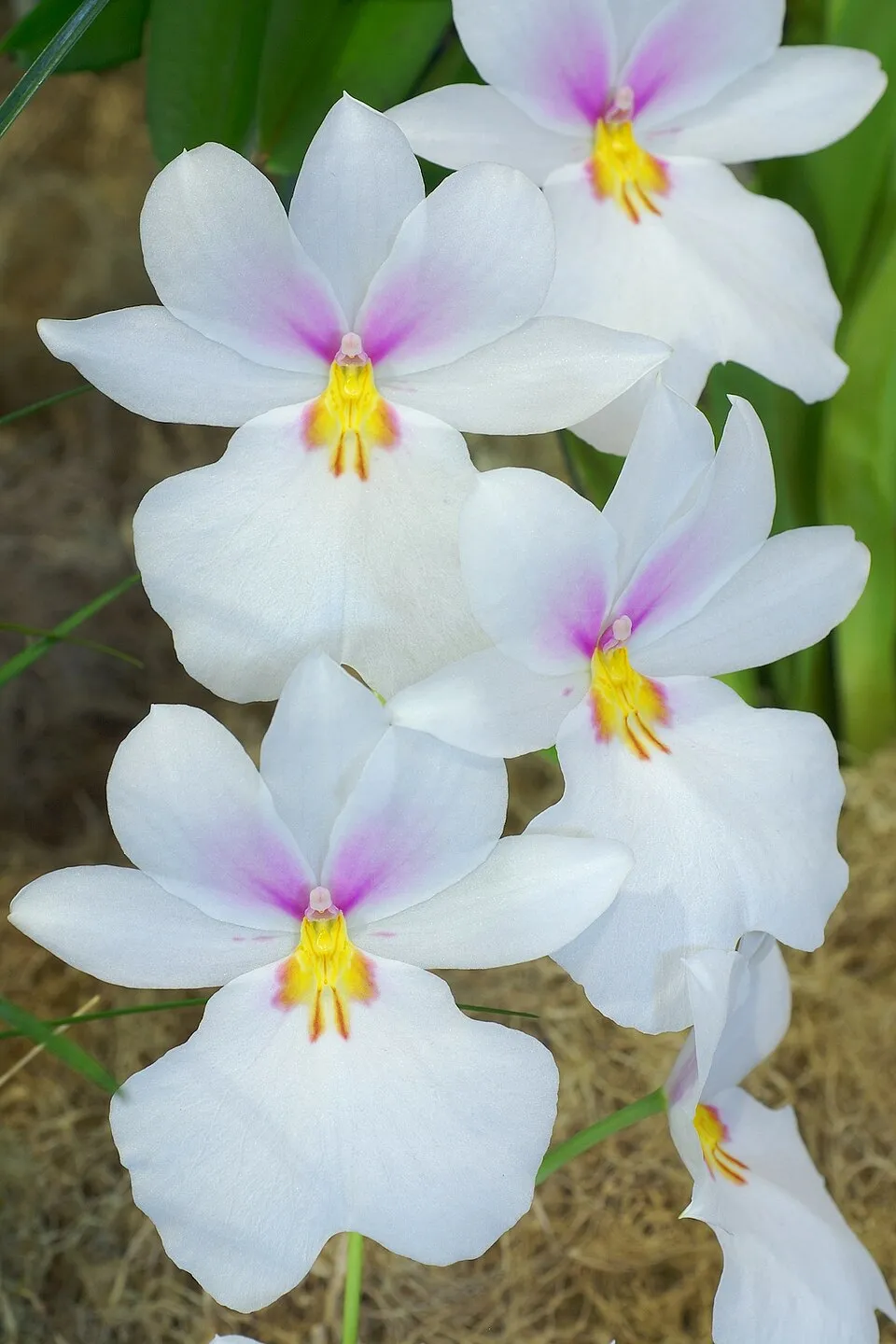
Miltoniopsis vexillaria, commonly known as the Pansy Orchid, is a captivating epiphytic orchid species native to the cool, humid cloud forests of Colombia and Ecuador. This genus, belonging to the Orchidaceae family, is distinguished by its flattened, oval-shaped pseudobulbs, which typically support one to three lanceolate to oblong, leathery leaves that can reach lengths of 30-40 cm.
The foliage of Miltoniopsis vexillaria specifically exhibits a soft, grayish-green hue, adding to its delicate appearance.
From the base of mature pseudobulbs, elegant, arching inflorescences emerge, bearing several exquisite flowers, often blooming sequentially from spring to fall. The individual blossoms, typically 5-10 cm across, are renowned for their striking resemblance to pansies, characterized by a prominent, often vibrantly colored labellum (lip) with intricate crests and patterns.
Sepals and petals are usually similar in form, though narrower than the lip, displaying a spectrum of colors from white, pink, and yellow to reddish-brown and lavender. Miltoniopsis vexillaria flowers are particularly noted for their shades of pink to red with a darker, distinct lip, and each upright stem can bear up to a dozen 4-inch flowers.
Thriving at elevations between 1000 and 2000 meters, these orchids naturally perch on mossy tree branches or rock crevices, benefiting from filtered sunlight, consistent air movement, and high atmospheric humidity. Their fine root systems are expertly adapted to absorb moisture and nutrients from the air and decaying organic matter, reflecting their specialized epiphytic lifestyle.
The genus Miltoniopsis is differentiated from its close relative, Miltonia, primarily by its characteristic flattened pseudobulbs and arching flower spikes, making Miltoniopsis vexillaria a unique and cherished botanical specimen.
Trusted Scientific References
1. Authoritative external sources for Miltoniopsis vexillaria
1.1 Wikipedia — Miltoniopsis vexillaria
1.2 Kew POWO (Plants of the World Online)
1.3 PubMed — peer-reviewed research
1.4 NCBI Taxonomy Browser
1.5 GBIF — Global Biodiversity
1.1.Miltoniopsis Orchid — Distinguishing Points
- ✓Pansy — like Flowers — Distinctive blossoms with a prominent, often colorful labellum.
- ✓Epiphytic Growth Habit — Naturally grows on trees and rocks in its native habitat.
- ✓Cool — Growing Orchid — Thrives in cooler temperatures, especially at night.
- ✓High Humidity Requirement — Essential for mimicking its cloud forest environment.
- ✓Pseudobulbs — Flattened, oval-shaped structures for water and nutrient storage.
- ✓Native to Andes — Indigenous to the tropical cloud forests of Colombia and Ecuador.
- ✓Ornamental Value — Highly prized for its aesthetic appeal in horticulture.
- ✓Unique Foliage — Soft, grayish-green leaves add to its delicate charm.
- ✓Sequential Blooming — Flowers often open over an extended period, providing continuous display.
- ✓Distinct from Miltonia — Differentiated by specific floral and pseudobulb characteristics.
1.2.Miltoniopsis Orchid — Quick Summary
- ✓Exquisite Pansy Orchid, Miltoniopsis vexillaria, native to Andean cloud forests.
- ✓Renowned for its stunning, pansy-like flowers in shades of pink to red.
- ✓Requires cool temperatures, high humidity, and filtered light for optimal growth.
- ✓Primarily an ornamental plant, contributing to aesthetic well-being.
- ✓Contains potential antioxidant and anti-inflammatory phytochemicals.
- ✓Generally considered non-toxic, but direct ingestion is not advised.
2.Miltoniopsis Orchid — Nomenclature & Classification
3.Miltoniopsis Orchid — Vital Statistics
4.Miltoniopsis Orchid — Botanical Description
5.Miltoniopsis Orchid — Origin & Spread
6.Miltoniopsis Orchid — Heritage Uses
7.Miltoniopsis Orchid — Phytochemistry
- ✓Flavonoids — Including quercetin, kaempferol, and their glycosides, known for potent antioxidant, anti-inflammatory, and potentially antiallergic activities.
- ✓Phenolic Acids — Such as rosmarinic acid and caffeic acid derivatives, contributing to antioxidant capacity and offering mild antimicrobial properties.
- ✓Alkaloids — Various nitrogen-containing compounds, often present in trace amounts, which can exhibit diverse pharmacological effects, including neuroactivity or analgesic properties.
- ✓Terpenoids — A broad class of organic compounds, including monoterpenes and sesquiterpenes, which contribute to the plant's aroma and may possess anti-inflammatory or insecticidal actions.
- ✓Polysaccharides — Complex carbohydrates that can offer immunomodulatory effects, supporting the body's natural defenses and providing structural integrity.
- ✓Anthocyanins — Pigments responsible for the vibrant red and pink hues in the flowers, acting as powerful antioxidants and potentially offering cardiovascular benefits.
- ✓Saponins — Glycosides that form a soapy lather, which may exhibit adaptogenic, anti-inflammatory, and cholesterol-lowering properties in some plants.
- ✓Steroids — Plant sterols and triterpenoids, which can have hormone-like activity and contribute to anti-inflammatory and cardiovascular health benefits.
- ✓Glycosides — A diverse group of compounds where a sugar molecule is attached to a non-sugar component, often influencing the compound's solubility and biological activity.
- ✓Organic Acids — Including malic and citric acids, contributing to overall plant metabolism and potentially influencing pH regulation and cellular energy.
8.Miltoniopsis Orchid — Scientific Evidence
- ✓Antioxidant Support — Research suggests that various orchid species contain phenolic compounds and flavonoids, which may contribute to cellular protection by neutralizing free radicals and reducing oxidative stress.
- ✓Anti-inflammatory Potential — Compounds found in orchids, though not extensively studied in Miltoniopsis vexillaria specifically, often exhibit anti-inflammatory properties that could help modulate immune responses and alleviate minor irritations.
- ✓Antimicrobial Activity — Some orchid extracts have demonstrated mild antimicrobial effects against certain bacteria and fungi, potentially offering a natural defense against common pathogens.
- ✓Dermatological Soothing — Extracts from certain orchids are used in cosmetics for their moisturizing and skin-conditioning properties, which may help soothe and improve skin texture.
- ✓Stress Reduction (Indirect) — As an ornamental plant, the presence of Miltoniopsis vexillaria in living spaces can contribute to psychological well-being, reducing stress and enhancing mood through aesthetic appreciation.
- ✓Air Purification (Indirect) — Like many houseplants, Miltoniopsis vexillaria may contribute to improved indoor air quality by absorbing certain airborne toxins, though its specific capacity is not fully quantified.
- ✓Cellular Regeneration — Hypothetically, certain plant growth factors or secondary metabolites could support cellular repair and regeneration, aiding in tissue maintenance.
- ✓Immune System Modulation — While not a direct immune booster, the general adaptogenic qualities of some plant compounds could subtly support the body's natural defense mechanisms.
- ✓Cognitive Enhancement (Hypothetical) — Some plant-derived compounds are being explored for neuroprotective effects, which could theoretically extend to certain orchid constituents.
- ✓Minor Wound Healing — Traditional applications of various plant extracts for minor cuts and abrasions suggest potential for Miltoniopsis vexillaria to offer mild antiseptic and soothing benefits.
8.1.Miltoniopsis Orchid — Conditions Traditionally Used For
9.Miltoniopsis Orchid — Safety Considerations
9.1.Miltoniopsis Orchid — Possible Adverse Reactions
- ✓Allergic Contact Dermatitis — Direct skin contact with sap or plant parts may cause mild irritation or allergic reactions in sensitive individuals.
- ✓Ingestion Toxicity (Hypothetical) — While generally considered non-toxic, ingestion of large quantities could potentially cause mild gastrointestinal upset; not intended for consumption.
- ✓Respiratory Irritation — Pollen or airborne particles from the plant might cause mild respiratory irritation in individuals with severe allergies.
- ✓Cross-Reactivity — Individuals with known allergies to other Orchidaceae family members may experience similar reactions to Miltoniopsis vexillaria.
- ✓Misidentification Risk — Confusion with other orchid species could lead to unintended exposure to plants with different or unknown toxicity profiles.
- ✓Potted Medium Irritation — Components of the potting mix, such as sphagnum moss or bark, can sometimes cause skin irritation during handling.
9.2.Miltoniopsis Orchid — Toxicity Assessment
- ✓Non-Toxic (Generally) — Miltoniopsis vexillaria is widely considered non-toxic to humans and common pets, though ingestion is not recommended.
- ✓Skin Sensitivity Test — For individuals with sensitive skin, performing a patch test before extensive handling is advisable to rule out contact dermatitis.
- ✓Pet Safety — Generally safe for household pets, but monitoring for any adverse reactions after accidental ingestion is always prudent.
- ✓Pregnancy and Lactation — Due to limited research on internal use, pregnant or lactating individuals should exercise caution and avoid any form of internal consumption.
- ✓Environmental Handling — Wear gloves when handling potting media or plant sap if prone to skin sensitivities or allergies.
- ✓Keep Out of Reach — Store plants and any derived products away from young children to prevent accidental ingestion or skin contact.
- ✓Controlled Environment — Cultivate in controlled indoor environments to minimize exposure to external contaminants or potential allergens.
10.Miltoniopsis Orchid — Preparations & Uses
- ✓Aesthetic Cultivation — Grow Miltoniopsis vexillaria as an ornamental houseplant to enhance indoor environments and promote a sense of well-being through its beauty.
- ✓Botanical Display — Utilize its striking flowers in horticultural exhibitions or botanical gardens for educational and aesthetic purposes.
- ✓Aromatic Infusion (Research) — Explore the potential for gentle aromatic infusions from dried flowers or leaves for subtle atmospheric enhancement, assuming non-toxicity.
- ✓Topical Compresses (Hypothetical) — In traditional contexts, plant extracts are sometimes used in compresses for minor skin irritations; research into this plant's dermatological potential is needed.
- ✓Environmental Enrichment — Incorporate the plant into therapeutic gardens or spaces designed for relaxation and stress reduction, leveraging its visual appeal.
- ✓Research Extraction — Prepare botanical extracts from various plant parts for scientific study into its phytochemical composition and potential biological activities.
- ✓Traditional Decoctions (Ethnobotanical Study) — Investigate any historical or contemporary ethnobotanical uses among indigenous communities for local remedies, if documented.
- ✓Horticultural Propagation — Propagate through pseudobulb divisions to expand collections or for conservation efforts, ensuring sustainable growth.
11.Miltoniopsis Orchid — Garden Cultivation
- ✓Provide partial shade with only 1-2 hours of bright, filtered sunlight daily, ideally near a north-facing window, to prevent leaf scorching.
- ✓Plant in a well-draining epiphytic medium composed of small fir bark, sphagnum moss, and pebbles, ensuring excellent air circulation for roots.
- ✓Maintain a consistently moist but not waterlogged growing medium for Miltoniopsis vexillaria; water in the morning to allow drying before nightfall.
- ✓Ensure cool nighttime temperatures of 55-60°F (13-16°C) for optimal blooming, with daytime temperatures around 70°F (21°C).
- ✓Keep humidity levels high, ideally between 60-70%, to replicate its native cloud forest environment, using humidifiers or pebble trays if necessary.
- ✓Fertilize monthly during active growth and flowering periods with a balanced orchid fertilizer, flushing the medium periodically with plain water due to salt sensitivity.
- ✓Repot only when the medium breaks down (typically every 2+ years), using a slightly larger clay pot with superior drainage to accommodate its preference for being potbound.
Reviewed by the Flora Medical Global Botanical Review Panel
Multi-disciplinary editorial group · Botany · Ethnobotany · Herbal-medicine literature
Who reviewed this: This page was checked by the Flora Medical Global Botanical Review Panel — an in-house editorial group of botany graduates, ethnobotany researchers, and horticulture practitioners who collectively maintain our 7,000+ plant encyclopedia. Meet the team.
Our 4-step verification process
1. Taxonomic verification
Scientific names and synonyms cross-checked against Kew POWO, World Flora Online, and The Plant List.
2. Phytochemical & medicinal cross-reference
Active compounds, traditional uses, and reported activities are cross-referenced with PubMed, USDA Dr. Duke's database, and peer-reviewed ethnobotanical literature.
3. Conservation & distribution check
Distribution, ecology, and conservation status confirmed against GBIF occurrence records and the IUCN Red List.
4. Editorial & safety review
Every entry passes an editorial pass for clarity, originality, and safety notices (toxicity, contraindications, dosage caveats) before publication.
Last reviewed:
Important medical disclaimer: This content is for educational and research purposes only. It is not medical advice and is not a substitute for consultation with a licensed healthcare provider. Do not use any herb to self-treat a medical condition without professional guidance.
Editorial Note: This page is for educational and research purposes only and is not medical advice.
Written by: Flora Medical Global Editorial Team
Reviewed by: Flora Medical Global Botanical Review Panel
Last Updated: June 15, 2026





Miltoniopsis Orchid — Comments & Community Reviews
Rate this plant