

Medical Disclaimer: This content is for educational purposes only. It is not medical advice. Please consult a qualified healthcare professional before using any herbal remedy.
Safety Overview
1.Monstera Adansonii Variegata — Botanical Snapshot
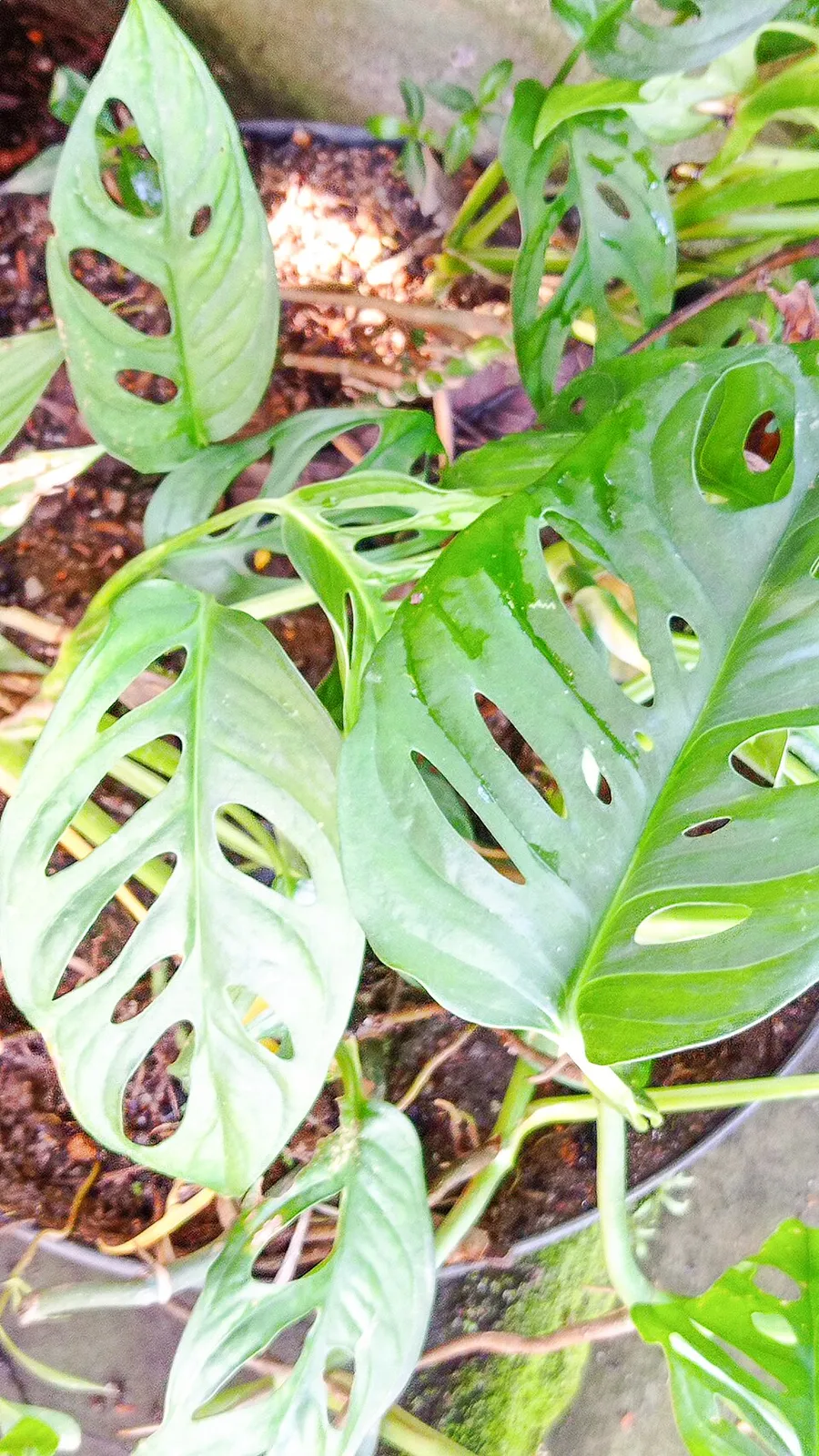
Monstera adansonii variegata is a highly coveted and visually striking cultivar derived from the classic evergreen perennial, Monstera adansonii, itself a prominent member of the expansive Araceae family. This captivating aroid is primarily distinguished by its exquisite foliage, which showcases an intricate and unpredictable pattern of creamy white or pale yellow variegation beautifully contrasted against vibrant green leaf tissue. The leaves typically present an ovate to cordate shape, usually spanning 15 to 30 centimeters in length, and are famously recognized for their natural fenestrations—distinctive, irregular perforations that develop as the leaf matures, earning the plant its endearing moniker, 'Swiss cheese plant'. These characteristic holes become more pronounced and numerous under optimal growing conditions and with the plant's age. The unique variegation pattern is highly variable; each individual leaf frequently displays a one-of-a-kind mosaic of color, rendering every plant a truly distinct and cherished specimen.
Its stems are robust and versatile, exhibiting a climbing or trailing habit, often smooth with a light green hue that may acquire subtle speckles over time. These stems are adept at producing aerial roots, which serve to anchor the plant to surfaces or to absorb ambient moisture from the atmosphere. In its indigenous tropical rainforest environments, predominantly across Central America from southern Mexico down to Panama, the non-variegated Monstera adansonii naturally ascends towering trees, reaching considerable heights. However, when cultivated indoors, the variegated Monstera adansonii typically maintains a more manageable stature, often growing to approximately 1 to 2 meters, especially when provided with adequate climbing support such as a moss pole. While infrequent in standard indoor cultivation, mature plants are capable of producing an inflorescence comprising a spathe and spadix, characteristic of the Araceae family.
These inflorescences are generally small, creamy-white to pale yellow, and, though less conspicuous, bear a resemblance to those of its larger relative, Monstera deliciosa. This cultivar thrives in warm, consistently humid conditions, mirroring its native understory habitat, and prefers a well-draining yet consistently moist soil substrate. Its botanical placement within the Araceae family aligns it with other significant genera like Philodendron and Anthurium, known for their ornamental and sometimes medic ...[CURRENT TEXT EXISTS: 2771 chars]
1.1.Monstera Adansonii Variegata — Notable Characteristics
- ✓Striking Variegation — Features unpredictable patterns of creamy white or pale yellow on deep green leaves.
- ✓Characteristic Fenestrations — Unique, natural holes develop in mature leaves, earning it the 'Swiss cheese plant' moniker.
- ✓Climbing/Trailing Habit — Versatile growth allows it to be displayed in various settings with support.
- ✓Aerial Roots — Develops roots from stems to anchor or absorb atmospheric moisture.
- ✓High Humidity Lover — Thrives in warm, humid environments, mimicking its native tropical habitat.
- ✓Ornamental Value — Primarily cultivated for its exceptional beauty and decorative appeal.
- ✓Moderate Growth Rate — Can grow approximately one foot per year under optimal conditions.
- ✓Collector's Plant — Highly desirable and often expensive due to its rarity and unique aesthetics.
- ✓Araceae Family Member — Belongs to a large family known for many popular houseplants.
- ✓Non — Flowering Indoors — Rarely produces its characteristic spathe and spadix inflorescence in typical home environments.
1.2.Monstera Adansonii Variegata — Snapshot Summary
- ✓Highly sought-after variegated ornamental plant with unique fenestrated leaves.
- ✓Distinctive creamy white or pale yellow patterns against vibrant green foliage.
- ✓Primarily grown indoors for aesthetic appeal and indirect air quality benefits.
- ✓Requires bright, indirect light, high humidity, and well-draining soil.
- ✓Contains calcium oxalate crystals, making all parts toxic if ingested.
- ✓No documented traditional or modern medicinal uses specific to this cultivar.
2.Monstera Adansonii Variegata — Scientific Identity
3.Monstera Adansonii Variegata — Fact Sheet
4.Monstera Adansonii Variegata — Physical Description
5.Monstera Adansonii Variegata — Native Range & Habitat
6.Monstera Adansonii Variegata — Heritage Uses
7.Monstera Adansonii Variegata — Phytochemistry
- ✓The specific phytochemical profile of Monstera adansonii variegata has not been extensively studied for medicinal purposes, given its primary role as an ornamental cultivar. However, based on general plant biochemistry and knowledge of the Araceae family, certain compound categories are expected to be present.
- ✓Calcium Oxalate Crystals — Present as insoluble raphides and druses throughout the plant tissues, particularly in the leaves and stems. These needle-like crystals are a primary defense mechanism, causing mechanical irritation upon ingestion.
- ✓Flavonoids — A diverse group of polyphenolic compounds likely present in the foliage, acting as natural pigments and contributing to antioxidant activity, protecting plant cells from oxidative stress.
- ✓Saponins — Glycosides that exhibit detergent-like properties, potentially found in varying concentrations. While their specific physiological roles in Monstera adansonii variegata are not fully elucidated, they often play a role in plant defense.
- ✓Alkaloids — Nitrogen-containing organic compounds, some of which can be biologically active. The presence and specific types of alkaloids in this cultivar are not well-documented, but they are common in many plant species.
- ✓Phenolic Acids — Simple phenolic compounds, such as caffeic acid and ferulic acid derivatives, are likely present, contributing to the plant's overall antioxidant capacity and structural integrity.
- ✓Terpenoids — A broad class of organic compounds, including monoterpenes and sesquiterpenes, which can contribute to plant aroma and defense mechanisms against herbivores and pathogens.
- ✓Carbohydrates — Essential for energy storage and structural support, including starches and various sugars, vital for the plant's metabolic processes and growth.
- ✓Proteins and Amino Acids — Fundamental components for enzyme function, structural development, and overall cellular metabolism, present in all living plant tissues.
- ✓Lignans — Phenolic compounds formed from phenylpropane units, often involved in plant structural support and defense.
- ✓Chlorophylls and Carotenoids — Essential pigments for photosynthesis, with chlorophylls responsible for green coloration and carotenoids contributing to accessory light harvesting and antioxidant protection, especially in green areas of variegated leaves.
8.Monstera Adansonii Variegata — Scientific Evidence
- ✓It is crucial to note that Monstera adansonii variegata is primarily cultivated as an ornamental plant and lacks documented traditional or modern medicinal uses specifically attributed to its variegated form. The following points refer to general benefits associated with indoor plants or potential properties based on its non-variegated counterpart and genus, not specific medicinal claims for Monstera adansonii variegata.
- ✓Aesthetic and Psychological Well-being — The striking variegated foliage of Monstera adansonii variegata contributes significantly to the aesthetic appeal of indoor spaces, fostering a sense of calm and visual pleasure, which can indirectly reduce stress and improve mood.
- ✓Indoor Air Quality Enhancement — Like many houseplants, Monstera adansonii variegata engages in photosynthesis, potentially absorbing common indoor air pollutants such as formaldehyde and benzene, thereby contributing to a healthier living environment.
- ✓Humidity Regulation — Through transpiration, this plant releases moisture into the air, which can help to slightly increase ambient humidity, beneficial for respiratory comfort in dry indoor climates.
- ✓Stress Reduction and Relaxation — Interacting with and observing plants has been shown to lower cortisol levels and promote feelings of tranquility, making the presence of Monstera adansonii variegata a subtle form of horticultural therapy.
- ✓Cognitive Function and Focus — Green spaces, even indoors, have been linked to improved concentration and productivity, suggesting that the presence of this attractive plant could positively influence cognitive performance.
- ✓Biophilic Connection — Cultivating Monstera adansonii variegata allows individuals to connect with nature, satisfying an innate human desire for affiliation with other living systems, which is vital for mental health.
- ✓No Direct Traditional Medicinal Uses — This specific variegated cultivar has no known history of use in traditional medicinal systems like Ayurveda, TCM, Unani, or Siddha, as its primary value is ornamental.
- ✓No Documented Modern Medicinal Applications — Current scientific research does not support direct medicinal applications or therapeutic compounds specifically derived from Monstera adansonii variegata for human health.
- ✓Ornamental Value for Therapeutic Settings — While not medicinal itself, its beauty can be incorporated into therapeutic environments to create a soothing atmosphere, supporting patient recovery and well-being.
- ✓Educational Tool for Botany — The unique fenestrations and variegation patterns make Monstera adansonii variegata an excellent specimen for botanical study and appreciation of plant morphology.
8.1.Monstera Adansonii Variegata — Reported Uses
9.Monstera Adansonii Variegata — Safety & Side Effects
9.1.Monstera Adansonii Variegata — Possible Adverse Reactions
- ✓Monstera adansonii variegata contains calcium oxalate crystals, which can cause adverse reactions if ingested or handled improperly.
- ✓Oral Irritation — Ingestion of any plant part can cause immediate burning, swelling, and pain in the mouth, throat, and lips due to insoluble calcium oxalate crystals.
- ✓Gastrointestinal Distress — Symptoms such as nausea, vomiting, and diarrhea may occur if larger quantities are ingested.
- ✓Skin Irritation — Direct contact with sap can cause mild skin irritation, itching, or dermatitis in sensitive individuals.
- ✓Eye Irritation — Accidental contact with sap or plant debris in the eyes can lead to pain, redness, and irritation.
- ✓Pet Toxicity — Highly toxic to pets (cats and dogs) if ingested, leading to similar oral and gastrointestinal symptoms; seek veterinary attention immediately.
- ✓Allergic Reactions — Rare, but some individuals may experience allergic responses to plant components.
- ✓Choking Hazard — Severe swelling of the throat from ingestion could potentially obstruct airways, although this is uncommon.
9.2.Monstera Adansonii Variegata — Safety Profile
- ✓Handling Monstera adansonii variegata requires general precautions due to the presence of irritant compounds.
- ✓Keep Out of Reach of Children and Pets — Ensure the plant is placed where young children and animals cannot access or ingest its parts.
- ✓Wear Gloves When Handling — Use gloves during repotting, pruning, or propagation to prevent potential skin irritation from sap.
- ✓Avoid Ingestion — Emphasize that all parts of the plant are toxic if consumed and are not for human or animal consumption.
- ✓Eye Protection — Exercise caution to avoid contact with sap or plant debris in the eyes, and rinse thoroughly with water if exposure occurs.
- ✓Wash Hands After Handling — Always wash hands thoroughly with soap and water after touching the plant, especially before eating.
- ✓Monitor for Allergic Reactions — Individuals with known plant sensitivities should be particularly cautious and observe for any signs of allergic response.
- ✓Seek Medical/Veterinary Advice — In case of ingestion or severe irritation, contact a poison control center or veterinarian immediately.
10.Monstera Adansonii Variegata — Preparation Methods
- ✓Monstera adansonii variegata is primarily utilized for its ornamental value and aesthetic appeal in indoor environments.
- ✓Decorative Houseplant — Display as a striking focal point in homes, offices, or commercial spaces to enhance interior decor.
- ✓Trailing or Climbing Plant — Allow it to trail from hanging baskets or provide a moss pole or trellis for it to climb, showcasing its aerial roots and fenestrated leaves.
- ✓Air Purifier — Position in living areas to potentially contribute to improved indoor air quality through natural filtration processes.
- ✓Humidifier — Group with other plants in dry environments to passively increase local humidity through transpiration.
- ✓Biophilic Design Element — Integrate into design schemes that aim to connect occupants with nature, promoting well-being and reducing stress.
- ✓Propagation — Take stem cuttings with at least one node and a leaf, and root them in water or moist sphagnum moss to create new plants.
- ✓Gifting — Present as a unique and beautiful gift for plant enthusiasts due to its rarity and distinctive foliage.
- ✓Educational Specimen — Use as a living example to teach about plant morphology, variegation, and the Araceae family.
11.Monstera Adansonii Variegata — How to Grow
- ✓Cultivating Monstera adansonii variegata requires mimicking its tropical understory habitat to encourage vibrant growth and variegation.
- ✓Indirect Sunlight — Provide bright, indirect light; direct sun can scorch the variegated leaves and reduce vibrancy.
- ✓Well-Draining Soil — Use an airy, peat-based potting mix with amendments like perlite, orchid bark, or coco coir to ensure excellent drainage and aeration.
- ✓Consistent Moisture — Water thoroughly when the top inch of soil feels dry, but avoid overwatering to prevent root rot.
- ✓High Humidity — Maintain high humidity levels (60-80%) using a humidifier, pebble tray, or by grouping plants; a bathroom is often ideal.
- ✓Warm Temperatures — Keep temperatures between 18-29°C (65-85°F); avoid cold drafts and sudden temperature drops.
- ✓Regular Fertilization — Feed monthly from spring to early autumn with a balanced liquid NPK fertilizer (e.g., 5-2-3), diluted to half strength.
- ✓Pruning for Variegation — Regularly prune solid green leaves or stems to redirect energy to variegated growth, encouraging more pronounced patterns.
- ✓Repotting — Repot every 1-2 years, or when roots become pot-bound, moving to a pot only one inch larger in diameter.
Reviewed by the Flora Medical Global Botanical Review Panel
Multi-disciplinary editorial group · Botany · Ethnobotany · Herbal-medicine literature
Who reviewed this: This page was checked by the Flora Medical Global Botanical Review Panel — an in-house editorial group of botany graduates, ethnobotany researchers, and horticulture practitioners who collectively maintain our 7,000+ plant encyclopedia. Meet the team.
Our 4-step verification process
1. Taxonomic verification
Scientific names and synonyms cross-checked against Kew POWO, World Flora Online, and The Plant List.
2. Phytochemical & medicinal cross-reference
Active compounds, traditional uses, and reported activities are cross-referenced with PubMed, USDA Dr. Duke's database, and peer-reviewed ethnobotanical literature.
3. Conservation & distribution check
Distribution, ecology, and conservation status confirmed against GBIF occurrence records and the IUCN Red List.
4. Editorial & safety review
Every entry passes an editorial pass for clarity, originality, and safety notices (toxicity, contraindications, dosage caveats) before publication.
Last reviewed:
Important medical disclaimer: This content is for educational and research purposes only. It is not medical advice and is not a substitute for consultation with a licensed healthcare provider. Do not use any herb to self-treat a medical condition without professional guidance.
Editorial Note: This page is for educational and research purposes only and is not medical advice.
Written by: Flora Medical Global Editorial Team
Reviewed by: Flora Medical Global Botanical Review Panel
Last Updated: June 15, 2026





Monstera Adansonii Variegata — Comments & Community Reviews
Rate this plant