

Medical Disclaimer: This content is for educational purposes only. It is not medical advice. Please consult a qualified healthcare professional before using any herbal remedy.
Safety Overview
1.Monstera Albo Variegata — Botanical Snapshot
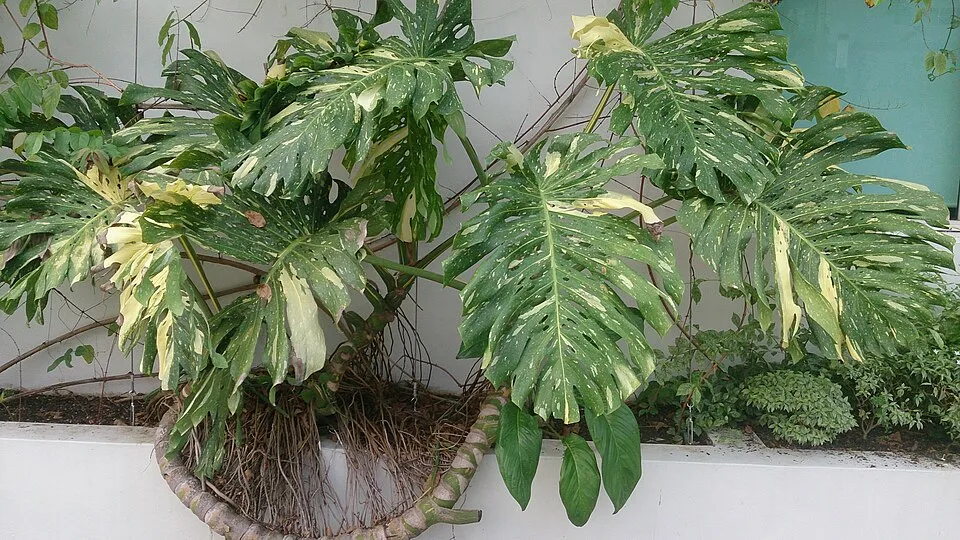
Monstera deliciosa albo, commonly revered as Monstera Albo Variegata, represents a highly coveted cultivar of the iconic Swiss Cheese Plant, Monstera deliciosa, and is a distinguished member of the Araceae family. This mesmerizing hemi-epiphytic vine originates from the lush, humid tropical rainforests spanning Southern Mexico and Central America, including regions such as Guatemala, Costa Rica, and Panama. In its natural environment, Monstera deliciosa begins its life cycle rooted in the forest floor, gradually ascending larger host trees.
It employs robust aerial roots that not only cling for support but also efficiently absorb vital moisture and nutrients from the consistently humid air. The striking 'albo' variegation is a remarkable genetic mutation, manifesting as a deficiency of chlorophyll in specific sections of the leaf tissue. This results in breathtaking, irregular splashes of creamy white to brilliant yellow, starkly contrasting with the deep, glossy green backdrop of the foliage.
Each leaf boasts a unique variegated pattern, transforming every individual plant into a distinct living masterpiece.
Morphologically, Monstera deliciosa albo displays the characteristic large, cordate (heart-shaped) leaves synonymous with its species, which can attain impressive dimensions, often reaching up to 3 feet (90 cm) in length and nearly as wide in mature specimens. A signature feature is the development of fenestrations—natural perforations and deep splits that emerge as the leaves mature, giving rise to its popular 'Swiss Cheese' appellation. These fenestrations are theorized to optimize light capture within the dense rainforest understory, allowing sunlight to penetrate to lower leaves.
The petioles are notably thick, sturdy, and often elongated, providing robust support for the substantial foliage. Stems are typically green and robust, sometimes developing a slightly textured or fibrous surface. The plant's root system is dual-functional, comprising terrestrial roots for anchorage and nutrient absorption from the soil, alongside numerous aerial roots that offer additional structural support and absorb atmospheric moisture and nutrients.
Trusted Scientific References
1. Authoritative external sources for Monstera deliciosa albo
1.1 Wikipedia — Monstera deliciosa albo
1.2 Kew POWO (Plants of the World Online)
1.3 PubMed — peer-reviewed research
1.4 NCBI Taxonomy Browser
1.5 GBIF — Global Biodiversity
1.1.Monstera Albo Variegata — Notable Characteristics
- ✓Stunning Albo Variegation — Exhibits highly desirable, irregular white and green sectoral or marbled patterns on its foliage.
- ✓Large Fenestrated Leaves — Develops iconic 'Swiss Cheese' holes and deep splits as its large, cordate leaves mature.
- ✓Hemi — Epiphytic Growth Habit — Starts as a terrestrial plant, then climbs using specialized aerial roots for support and nutrient absorption.
- ✓Rare and High — Value Cultivar — Extremely popular among plant collectors, commanding a significant market value due to its unique aesthetics and limited availability.
- ✓Air Purifying Qualities — Contributes to cleaner indoor air by absorbing common airborne toxins (benefit observed in the parent species).
- ✓Robust Aerial Root System — Develops strong, functional aerial roots that anchor the plant and absorb atmospheric moisture.
- ✓Evergreen Perennial Vine — Maintains its lush foliage year-round under suitable tropical or indoor conditions.
- ✓Distinctive Leaf Morphology — Characterized by large, heart-shaped leaves with prominent venation and a glossy texture.
- ✓Genetic Mutation — The 'albo' variegation is a stable genetic mutation, ensuring unique patterns on each leaf.
1.2.Monstera Albo Variegata — Quick Summary
- ✓Prized Ornamental Aroid — Highly sought-after variegated cultivar of Monstera deliciosa, known for its unique beauty.
- ✓Striking White Variegation — Features distinctive, irregular creamy white to deep green leaf patterns.
- ✓Tropical Hemi-Epiphyte — Native to Central American rainforests, climbing with robust aerial roots.
- ✓Lacks Medicinal Uses — Primarily cultivated for aesthetic, air purification, and horticultural well-being, not traditional medicine.
- ✓Contains Calcium Oxalates — All parts are toxic if ingested, causing severe irritation and digestive upset.
- ✓Requires Specific Care — Thrives in bright indirect light, high humidity, consistent moisture, and warm temperatures.
2.Monstera Albo Variegata — Botanical Identity
3.Monstera Albo Variegata — Vital Statistics
4.Monstera Albo Variegata — Botanical Features
5.Monstera Albo Variegata — Native Range & Habitat
6.Monstera Albo Variegata — Traditional Uses
7.Monstera Albo Variegata — Chemical Profile
- ✓Calcium Oxalate Crystals — These insoluble crystals, particularly in the form of needle-like raphides, are abundantly present in the sap, leaves, and especially the unripe fruit, responsible for the plant's irritant and toxic properties upon ingestion or direct contact.
- ✓Chlorophylls (a and b) — Essential photosynthetic pigments found in the green sections of the leaves, crucial for converting light energy into chemical energy, driving plant growth and vitality.
- ✓Carotenoids — A class of accessory pigments present in both green and white leaf tissues, aiding in light absorption and providing photoprotection to chlorophyll, while potentially contributing to subtle hues in variegated areas.
- ✓Flavonoids — A diverse group of polyphenolic compounds common in many plants, often acting as antioxidants and contributing to plant defense mechanisms against environmental stressors and pathogens, though specific medicinal roles for Monstera are not documented.
- ✓Organic Acids — Various organic acids, such as citric and malic acid, are involved in fundamental plant metabolic pathways, growth regulation, and nutrient cycling within the cellular sap.
- ✓Lipids and Fatty Acids — Integral components of cell membranes and serve as energy storage molecules, found throughout the plant structure, vital for structural integrity and metabolic functions.
- ✓Proteins and Enzymes — Essential macromolecules facilitating virtually all biochemical reactions, growth processes, and structural maintenance within the plant cells.
- ✓Starch and Sugars — Primary carbohydrates acting as energy storage compounds (starch) and transport molecules (sugars), crucial for plant development, metabolic activity, and resilience.
8.Monstera Albo Variegata — Evidence-Based Benefits
- ✓Air Purification Potential — Studies on its parent species, Monstera deliciosa, suggest some capacity for filtering common indoor air pollutants like formaldehyde and benzene, contributing to a healthier indoor environment.
- ✓Aesthetic Well-being — The presence of vibrant houseplants like Monstera Albo Variegata has been linked to reduced stress, improved mood, and enhanced cognitive function, fostering a sense of calm and connection to nature.
- ✓Horticultural Therapy — Engaging in the meticulous care of plants, including this prized cultivar, can serve as a therapeutic activity, promoting mindfulness, reducing anxiety, and providing a sense of accomplishment.
- ✓Humidity Regulation (Minor) — Large-leaved plants transpire water, potentially contributing to a slight increase in ambient humidity, which can be marginally beneficial for respiratory comfort in dry indoor environments.
- ✓Educational Value — Cultivating rare plants like the Monstera Albo offers a unique opportunity to learn about botanical genetics, plant physiology, sustainable horticulture practices, and the ecological role of tropical epiphytes.
- ✓Biophilic Connection — Fosters a deeper connection to the natural world, which can enhance overall psychological health and a sense of belonging.
- ✓Stress Reduction (Visual) — The visually appealing variegation and lush foliage provide a natural focal point, aiding in mental relaxation and reducing visual fatigue.
- ✓Cautionary Note — It is crucial to emphasize that Monstera deliciosa albo is primarily an ornamental plant and lacks documented traditional or modern medicinal uses for internal consumption. The plant contains calcium oxalate crystals, which are toxic if ingested.
8.1.Monstera Albo Variegata — Health Applications
9.Monstera Albo Variegata — Cautions & Contraindications
9.1.Monstera Albo Variegata — Side Effects & Warnings
- ✓Calcium Oxalate Toxicity — Ingestion of any plant part can cause severe oral irritation, swelling, dysphagia, and gastrointestinal upset due to insoluble calcium oxalate crystals.
- ✓Skin Irritation — Direct contact with the sap may cause mild dermatitis, itching, or irritation in sensitive individuals.
- ✓Leaf Burn — Excessive exposure to direct sunlight leads to irreversible scorching and browning of the leaves, particularly the delicate white variegated sections.
- ✓Root Rot — Overwatering is a common issue, causing root decay, yellowing leaves, stunted growth, and eventually plant death.
- ✓Loss of Variegation — Insufficient light can result in new leaves emerging with reduced white variegation, causing the plant to revert to a greener form.
- ✓Pest Infestations — Susceptible to common houseplant pests like spider mites, mealybugs, and thrips, especially under dry or stressed conditions.
- ✓Stunted Growth — Inadequate light, nutrients, or improper watering can lead to significantly slowed or halted plant development.
9.2.Monstera Albo Variegata — Safety Profile
- ✓Keep Out of Reach of Children and Pets — Due to the presence of toxic calcium oxalate crystals, ensure the plant is inaccessible to prevent accidental ingestion.
- ✓Wear Gloves When Handling — Protect skin from direct contact with the sap during pruning, repotting, or propagation to avoid potential irritation.
- ✓Do Not Ingest — Emphasize that no part of the Monstera Albo Variegata should be consumed by humans or animals.
- ✓Provide Adequate Ventilation — Ensure good air circulation around the plant to prevent fungal issues and reduce the risk of pest infestations.
- ✓Monitor for Signs of Stress — Regularly inspect leaves for browning, yellowing, or wilting, which can indicate improper care or pest problems.
- ✓Wash Hands Thoroughly — After handling the plant, always wash hands with soap and water to remove any residual sap.
- ✓Avoid Inhaling Dust from Dried Plant Material — If dealing with dried or powdered plant parts, take precautions to avoid inhaling fine particles, which could irritate respiratory passages.
10.Monstera Albo Variegata — Preparation Methods
- ✓Indoor Decoration — Primarily cultivated and displayed as a highly prized ornamental houseplant due to its stunning variegated foliage.
- ✓Air Quality Enhancement — Placed in living and working spaces to potentially contribute to improved indoor air quality through phytoremediation processes.
- ✓Horticultural Display — Featured in botanical gardens, conservatories, and private collections as a specimen plant for its unique aesthetic and rarity.
- ✓Educational Specimen — Utilized in educational settings to illustrate principles of plant genetics, variegation, and tropical plant physiology.
- ✓Vegetative Propagation — Stem cuttings containing a node and aerial root are commonly taken for asexual propagation to create new plants.
- ✓Aesthetic Photography — Frequently employed as a subject in plant photography and interior design contexts due to its visually striking appearance.
- ✓Biophilic Design Element — Incorporated into interior design schemes to foster a connection with nature and enhance well-being in indoor environments.
11.Monstera Albo Variegata — Garden Cultivation
- ✓Light — Provide bright, indirect light; avoid prolonged direct sunlight which can scorch variegated leaf sections.
- ✓Watering — Allow the top 2-3 inches (5-7.5 cm) of soil to dry out completely between thorough waterings to prevent root rot.
- ✓Humidity — Maintain high humidity levels (50% or above); consider using a humidifier, especially in dry indoor environments.
- ✓Temperature — Thrives in warm conditions, ideally between 65-85°F (18-29°C); protect from temperatures below 50°F (10°C).
- ✓Feeding — Fertilize every 4-6 weeks during the active growing season (spring to early fall) with a balanced liquid houseplant fertilizer.
- ✓Potting Mix — Use a well-draining, airy aroid-specific mix containing components like bark, perlite, coco coir, and compost.
- ✓Support — Provide a moss pole, trellis, or stake for its aerial roots to climb and encourage larger leaf development.
- ✓Repotting — Repot young plants annually; mature plants every 2-3 years or when visibly root-bound, preferably in spring.
Reviewed by the Flora Medical Global Botanical Review Panel
Multi-disciplinary editorial group · Botany · Ethnobotany · Herbal-medicine literature
Who reviewed this: This page was checked by the Flora Medical Global Botanical Review Panel — an in-house editorial group of botany graduates, ethnobotany researchers, and horticulture practitioners who collectively maintain our 7,000+ plant encyclopedia. Meet the team.
Our 4-step verification process
1. Taxonomic verification
Scientific names and synonyms cross-checked against Kew POWO, World Flora Online, and The Plant List.
2. Phytochemical & medicinal cross-reference
Active compounds, traditional uses, and reported activities are cross-referenced with PubMed, USDA Dr. Duke's database, and peer-reviewed ethnobotanical literature.
3. Conservation & distribution check
Distribution, ecology, and conservation status confirmed against GBIF occurrence records and the IUCN Red List.
4. Editorial & safety review
Every entry passes an editorial pass for clarity, originality, and safety notices (toxicity, contraindications, dosage caveats) before publication.
Last reviewed:
Important medical disclaimer: This content is for educational and research purposes only. It is not medical advice and is not a substitute for consultation with a licensed healthcare provider. Do not use any herb to self-treat a medical condition without professional guidance.
Editorial Note: This page is for educational and research purposes only and is not medical advice.
Written by: Flora Medical Global Editorial Team
Reviewed by: Flora Medical Global Botanical Review Panel
Last Updated: June 15, 2026





Monstera Albo Variegata — Comments & Community Reviews
Rate this plant