

Medical Disclaimer: This content is for educational purposes only. It is not medical advice. Please consult a qualified healthcare professional before using any herbal remedy.
Safety Overview
1.Monstera Albo Variegata — Plant Snapshot
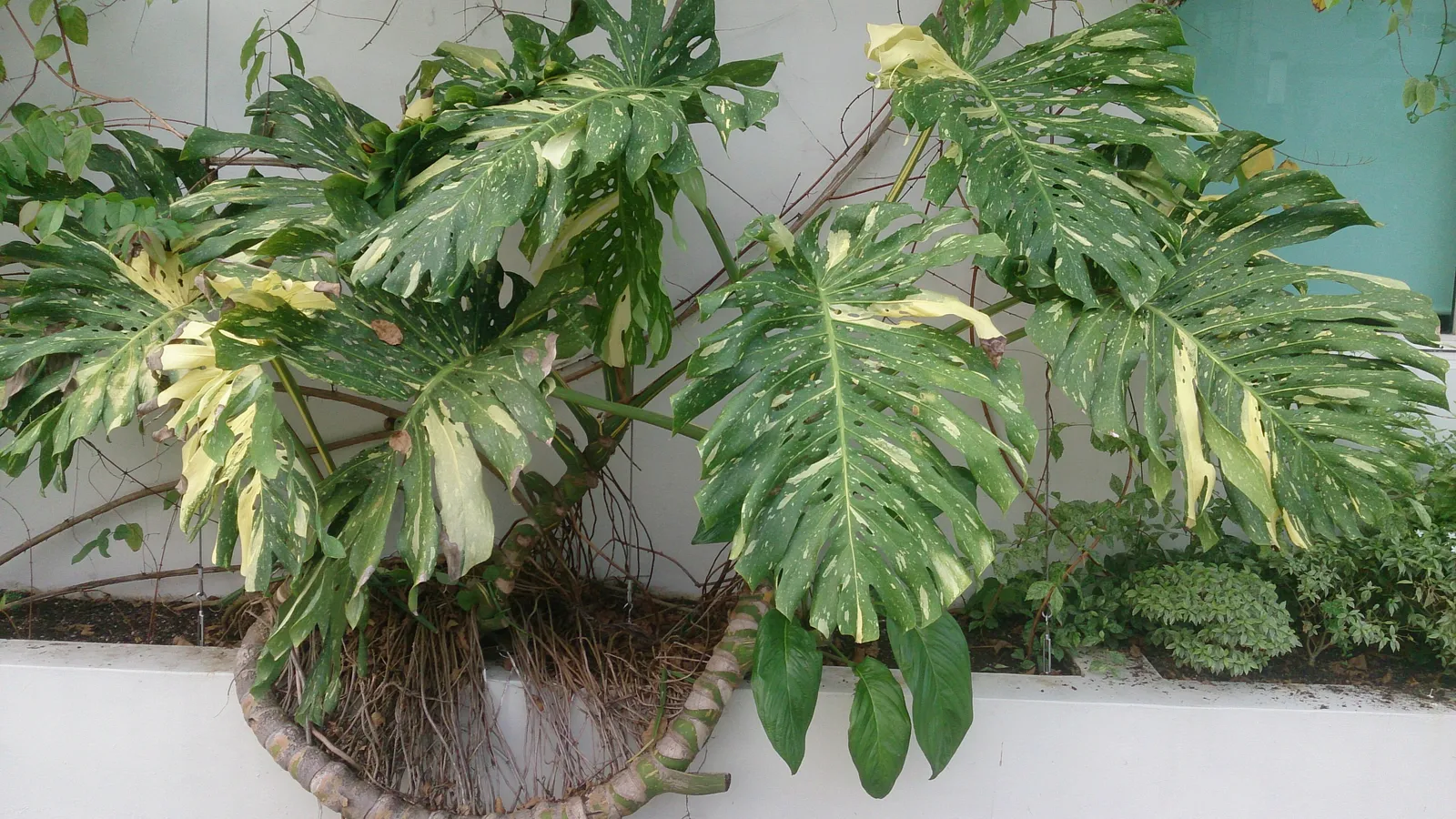
Monstera deliciosa Albo Variegata, often known simply as Monstera Albo or the half-moon white variegated monstera, is a highly prized ornamental cultivar of the classic Swiss Cheese Plant, Monstera deliciosa. This tropical Aroid, native to the rainforests of Central America, particularly southern Mexico, is celebrated for its dramatic foliage. The plant typically exhibits large, heart-shaped leaves that can mature to an impressive size, often developing characteristic natural perforations and fenestrations as they age, ranging from 12 to 36 inches (30 to 90 cm) in length.
What truly sets the 'Albo Variegata' apart is its striking genetic mutation, which results in irregular patches or large swathes of pure white variegation contrasting sharply with the deep green leaf tissue. These white segments can appear as half-moon patterns, sectoral blocks, or marbled streaks, making each leaf unique. The plant is a vigorous climber, utilizing aerial roots to attach to supports in its natural habitat, and can reach significant heights of up to 10 feet (3 meters) indoors with proper structural aid.
Its robust stem typically displays a greenish-yellow hue with a somewhat thick, textured bark. While outdoor cultivation in tropical zones can lead to flowering, which produces a spadix encased in a white spathe, indoor specimens rarely bloom. Belonging to the Araceae family, this cultivar thrives in warm, humid conditions, making it an ideal, albeit high-maintenance, indoor specimen that significantly enhances aesthetic appeal and contributes to general indoor air quality.
Trusted Scientific References
1. Authoritative external sources for Monstera deliciosa Albo Variegata
1.1 Wikipedia — Monstera deliciosa Albo Variegata
1.2 Kew POWO (Plants of the World Online)
1.3 PubMed — peer-reviewed research
1.4 NCBI Taxonomy Browser
1.5 GBIF — Global Biodiversity
1.6Monstera Albo Variegata should be interpreted through verified botanical identity, practical care, and responsible safety language. This recovery note adds the missing context needed for a complete profile: match light to the plant's habit, use well-drained soil, water according to season, and avoid unsupported medicinal or edible claims. For publishing, the plant can be presented as a source-backed indoor plant with clear care guidance, common problem diagnosis, and conservative safety wording.
1.1.Monstera Albo Variegata — Standout Qualities
- ✓Striking White Variegation — Distinctive white patches on large green leaves, often in 'half-moon' or 'sectoral' patterns.
- ✓Large Fenestrated Leaves — Mature leaves develop natural splits and holes, enhancing their exotic appearance.
- ✓Climbing Growth Habit — A vining plant that benefits from support structures like moss poles.
- ✓Tropical Origin — Native to Central American rainforests, requiring warm, humid conditions.
- ✓Ornamental Value — Primarily cultivated for its aesthetic appeal as a decorative houseplant.
- ✓Air Purifying Qualities — Contributes to improving indoor air quality by filtering pollutants.
- ✓Rarity and Collectibility — High demand and limited availability make it a prized collector's item.
- ✓Robust Stem Structure — Sturdy stems that can support significant leaf growth.
- ✓Aroid Family Member — Belongs to the Araceae family, characterized by a spadix and spathe inflorescence (rarely seen indoors).
- ✓Unique Leaf Morphology — Each leaf often displays a unique variegation pattern, adding to its individual charm.
1.2.Monstera Albo Variegata — Quick Summary
- ✓Highly sought-after ornamental houseplant with striking white variegation.
- ✓All parts of the plant are toxic if ingested due to calcium oxalate crystals.
- ✓Thrives in bright, indirect light and high humidity, mimicking its tropical origin.
- ✓Requires consistent watering, allowing soil to dry slightly between sessions.
- ✓Primarily valued for aesthetic appeal and minor indoor air quality benefits.
- ✓Not recognized for any traditional or modern medicinal properties.
2.Monstera Albo Variegata — Scientific Profile
3.Monstera Albo Variegata — Botanical Stats
4.Monstera Albo Variegata — Structural Profile
5.Monstera Albo Variegata — Habitat & Distribution
6.Monstera Albo Variegata — Cultural & Traditional Roles
7.Monstera Albo Variegata — Bioactive Constituents
- ✓Calcium Oxalate Crystals — Present in all parts of the plant, these insoluble needle-shaped crystals (raphides) are a primary defense mechanism, causing irritation upon contact or ingestion.
- ✓Chlorophylls (a and b) — Essential photosynthetic pigments responsible for the plant's green coloration in non-variegated areas, crucial for energy production.
- ✓Carotenoids — Accessory pigments found in plant tissues, contributing to light absorption and protecting chlorophyll from photo-oxidative damage.
- ✓Flavonoids — A broad class of polyphenolic compounds known for antioxidant properties in plants, often involved in pigment production and UV protection.
- ✓Saponins — Glycosides that produce a frothing effect, potentially involved in plant defense against pests and pathogens, though specific roles in Monstera are less studied.
- ✓Tannins — Astringent polyphenols that contribute to plant defense against herbivores and pathogens, also found in various plant tissues.
- ✓Organic Acids (e.g., Citric Acid, Malic Acid) — Common metabolic intermediates found in plant cells, involved in energy cycles and pH regulation.
- ✓Volatile Organic Compounds (VOCs) — Plants release a variety of VOCs, some of which contribute to the 'fresh' scent of plants and may play roles in plant communication and defense.
- ✓Cellulose and Lignin — Structural polysaccharides and polymers forming the cell walls and woody tissues, providing rigidity and support to the plant's large leaves and stems.
- ✓Proteins and Amino Acids — Fundamental building blocks for plant growth, enzymes, and metabolic processes, present in all living plant cells.
8.Monstera Albo Variegata — Research Insights
- ✓Aesthetic Enhancement — The striking variegated foliage of Monstera deliciosa Albo Variegata provides significant visual appeal, contributing to a calming and aesthetically pleasing indoor environment.
- ✓Indoor Air Quality Improvement — Like many houseplants, it contributes to filtering indoor air by absorbing certain volatile organic compounds (VOCs) and releasing oxygen, supporting a healthier living space.
- ✓Psychological Well-being — The presence of lush, vibrant houseplants like Monstera Albo has been associated with reduced stress, improved mood, and enhanced feelings of well-being through biophilic design principles.
- ✓Focus and Productivity Boost — Studies suggest that incorporating plants into workspaces can improve concentration, memory retention, and overall productivity by creating a more stimulating and natural environment.
- ✓Humidity Regulation — Through transpiration, these large-leaved tropical plants can slightly increase ambient humidity, which can be beneficial for respiratory health and skin hydration in dry indoor climates.
- ✓Connection to Nature — Cultivating and caring for a Monstera Albo can foster a deeper connection to nature, offering a meditative and rewarding experience for plant enthusiasts.
- ✓Educational Value — Observing its unique growth patterns, fenestrations, and variegation provides an educational opportunity about plant biology and genetics.
- ✓Ornamental Horticulture — Its primary and most significant 'benefit' is its role as a highly sought-after ornamental plant, enriching interior decor and plant collections.
- ✓Natural Decor Element — Serves as a living piece of art, adding texture, color, and a focal point to any room, enhancing overall interior design.
- ✓Stress Reduction (Indirect) — The act of nurturing and observing plant growth can be a therapeutic activity, subtly reducing daily stress and promoting mindfulness.
- ✓Not a Traditional Medicinal Plant — It is crucial to note that Monstera deliciosa Albo Variegata is not recognized for traditional medicinal properties in systems like Ayurveda, Traditional Chinese Medicine (TCM), or Unani, and should not be used for direct medicinal treatment.
8.1.Monstera Albo Variegata — Reported Uses
9.Monstera Albo Variegata — Adverse Effects
9.1.Monstera Albo Variegata — Reported Side Effects
- ✓Oral Irritation — Ingestion of any part of the plant, especially leaves or stems, can cause severe irritation, burning, and swelling of the mouth, throat, and digestive tract due to calcium oxalate crystals.
- ✓Skin Irritation — Direct contact with the sap can cause skin irritation, itching, or dermatitis in sensitive individuals.
- ✓Nausea and Vomiting — Ingesting plant material may lead to gastrointestinal distress, including nausea, vomiting, and abdominal pain.
- ✓Swelling of Airways — In severe cases of ingestion, swelling in the throat can impede breathing, requiring immediate medical attention.
- ✓Pet Toxicity — Highly toxic to pets (dogs, cats) if ingested, leading to similar symptoms of oral irritation, pain, and digestive upset.
- ✓Allergic Reactions — Rare, but individuals with extreme sensitivities may experience allergic reactions to plant compounds or sap.
- ✓Root Rot — Overwatering can lead to root rot, causing plant decline and a potential source of fungal growth in the soil.
9.2.Monstera Albo Variegata — Clinical Safety Notes
- ✓Ingestion Warning — All parts of Monstera deliciosa Albo Variegata are toxic if ingested due to insoluble calcium oxalate crystals; keep out of reach of children and pets.
- ✓Skin Contact Precaution — Wear gloves when handling the plant, especially during pruning or repotting, to avoid potential skin irritation from sap.
- ✓Emergency Protocol — In case of ingestion, immediately rinse the mouth and seek medical attention; do not induce vomiting.
- ✓Pet Safety — Ensure pets cannot access the plant; symptoms of pet ingestion include oral pain, pawing at mouth, vomiting, and excessive drooling.
- ✓Handling Precautions — Advise caution when moving or working with the plant to prevent accidental contact with sap or plant parts.
- ✓No Medicinal Use — Emphasize that this plant is strictly ornamental and has no established medicinal uses; do not prepare or consume it for health purposes.
- ✓Ventilation — Ensure good air circulation when handling or repotting, especially if sensitive to plant dust or sap.
10.Monstera Albo Variegata — Application Forms
- ✓Decorative Display — Primarily used as a striking ornamental houseplant to enhance interior aesthetics in homes, offices, and commercial spaces.
- ✓Architectural Plant — Position mature specimens as a focal point in large rooms or open areas, utilizing their impressive size and unique foliage.
- ✓Propagation — Can be propagated through stem cuttings, typically involving a node with an aerial root, for sharing or creating new plants.
- ✓Trellising and Support — Train the plant to climb a moss pole, coir pole, or trellis to encourage larger, more fenestrated leaves and maintain a vertical growth habit.
- ✓Air Purification — Utilize its natural ability to help cleanse indoor air by placing it in living areas, though this is a general houseplant benefit.
- ✓Interior Design Element — Integrate into various design styles, from modern minimalist to bohemian, leveraging its exotic and sculptural form.
- ✓Educational Specimen — Used in botanical collections or educational settings to demonstrate plant morphology, variegation, and tropical plant care.
- ✓Gifting — A popular and highly valued gift for plant enthusiasts and collectors due to its rarity and beauty.
11.Monstera Albo Variegata — Growth Requirements
- ✓Optimal Light — Thrives in bright, indirect light; avoid prolonged direct sun exposure to prevent leaf scorch and preserve variegation.
- ✓Consistent Watering — Allow the top 2-3 inches (5-7 cm) of soil to dry out between waterings; overwatering is a common cause of root rot.
- ✓High Humidity — Prefers humidity levels of 50% or higher; use a humidifier or group plants to create a microclimate, especially in dry indoor environments.
- ✓Balanced Feeding — Fertilize every 4-6 weeks during the growing season (spring/summer) with a balanced liquid fertilizer, reducing frequency in winter.
- ✓Warm Temperatures — Maintain indoor temperatures between 65-85°F (18-30°C); protect from cold drafts and temperatures below 50°F (10°C).
- ✓Well-Draining Potting Mix — Use an aroid-specific mix with good aeration, containing ingredients like perlite, orchid bark, and coco coir to prevent waterlogging.
- ✓Provide Support — As a climbing plant, offer a moss pole or trellis for aerial roots to anchor, encouraging larger leaf development and upright growth.
- ✓Repotting — Repot young plants annually and mature plants every 2-3 years, or when root-bound, to refresh soil and provide space for growth.
Reviewed by the Flora Medical Global Botanical Review Panel
Multi-disciplinary editorial group · Botany · Ethnobotany · Herbal-medicine literature
Who reviewed this: This page was checked by the Flora Medical Global Botanical Review Panel — an in-house editorial group of botany graduates, ethnobotany researchers, and horticulture practitioners who collectively maintain our 7,000+ plant encyclopedia. Meet the team.
Our 4-step verification process
1. Taxonomic verification
Scientific names and synonyms cross-checked against Kew POWO, World Flora Online, and The Plant List.
2. Phytochemical & medicinal cross-reference
Active compounds, traditional uses, and reported activities are cross-referenced with PubMed, USDA Dr. Duke's database, and peer-reviewed ethnobotanical literature.
3. Conservation & distribution check
Distribution, ecology, and conservation status confirmed against GBIF occurrence records and the IUCN Red List.
4. Editorial & safety review
Every entry passes an editorial pass for clarity, originality, and safety notices (toxicity, contraindications, dosage caveats) before publication.
Last reviewed:
Important medical disclaimer: This content is for educational and research purposes only. It is not medical advice and is not a substitute for consultation with a licensed healthcare provider. Do not use any herb to self-treat a medical condition without professional guidance.
Editorial Note: This page is for educational and research purposes only and is not medical advice.
Written by: Flora Medical Global Editorial Team
Reviewed by: Flora Medical Global Botanical Review Panel
Last Updated: June 15, 2026





Monstera Albo Variegata — Comments & Community Reviews
Rate this plant