
Medical Disclaimer: This content is for educational purposes only. It is not medical advice. Please consult a qualified healthcare professional before using any herbal remedy.
Safety Overview
1.Monstera Lechleriana — Introduction & Highlights
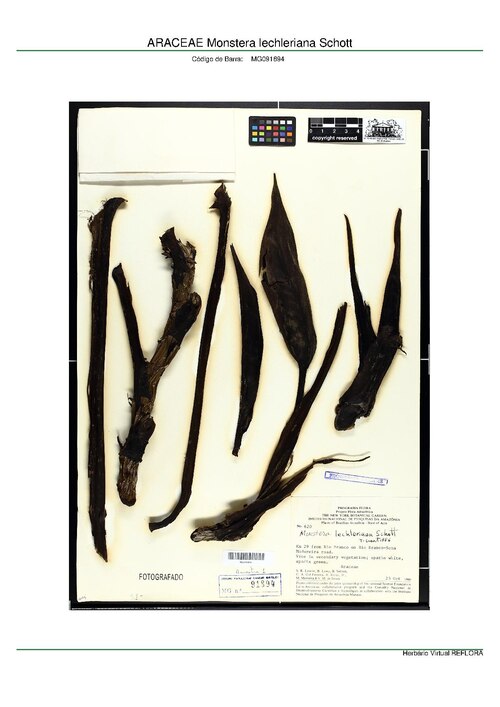
Monstera lechleriana is a captivating hemi-epiphytic species belonging to the Araceae family, native to the lush, humid tropical rainforests of Central and South America. This remarkable plant initiates its life cycle as a terrestrial seedling before developing its characteristic climbing habit, ascending host trees with the aid of robust aerial roots that anchor it and absorb moisture and nutrients from the environment. A defining feature of mature M. lechleriana leaves is the development of fenestrations, or natural splits and holes, which are believed to enhance its resilience against strong winds and facilitate light penetration to lower canopy layers.
Juvenile leaves, in contrast, are typically entire and smaller, lacking these dramatic characteristic perforations. The plant exhibits a vigorous vining growth pattern, utilizing its specialized aerial roots for adherence to surfaces. Under optimal conditions, particularly in its natural habitat, it produces the distinctive spathe and spadix inflorescence common to the Araceae family, though flowering is a rare occurrence in indoor cultivation. Its leaves are generally ovate to oblong, often elongated, and can achieve substantial dimensions on well-established, mature specimens.
Monstera lechleriana thrives in the shaded understory or climbing positions within humid tropical ecosystems, preferring well-drained, humus-rich substrates with consistent moisture and high ambient humidity. The species epithet 'lechleriana' pays homage to the botanist Willibald Lechler, recognizing his contributions to botanical exploration. Its distinctly vining nature makes it an excellent candidate for vertical gardening or training on trellises, particularly in ornamental settings.
Trusted Scientific References
1. Authoritative external sources for Monstera lechleriana
1.1 Wikipedia — Monstera lechleriana
1.2 Kew POWO (Plants of the World Online)
1.3 PubMed — peer-reviewed research
1.4 NCBI Taxonomy Browser
1.5 GBIF — Global Biodiversity
1.6Monstera Lechleriana should be interpreted through verified botanical identity, practical care, and responsible safety language. This recovery note adds the missing context needed for a complete profile: match light to the plant's habit, use well-drained soil, water according to season, and avoid unsupported medicinal or edible claims. For publishing, the plant can be presented as a source-backed indoor plant with clear care guidance, common problem diagnosis, and conservative safety wording.
1.1.Monstera Lechleriana — Standout Qualities
- ✓Hemi — epiphytic growth habit, starting on the ground and climbing host trees.
- ✓Characteristic fenestrated (split — Characteristic fenestrated (split and holed) mature leaves, unique to the species.
- ✓Native distribution across — Native distribution across the tropical rainforests of Central and South America.
- ✓Contains toxic calcium — Contains toxic calcium oxalate crystals, rendering all plant parts poisonous if ingested.
- ✓Primarily cultivated as — Primarily cultivated as an ornamental houseplant for its aesthetic appeal.
- ✓Thrives in bright, — Thrives in bright, indirect light conditions and requires high ambient humidity.
- ✓Benefits significantly from — Benefits significantly from climbing support such as a moss pole or trellis.
- ✓Considered relatively low — maintenance for experienced plant enthusiasts and beginners alike.
- ✓Develops prominent aerial — Develops prominent aerial roots for anchoring and nutrient absorption.
- ✓Belongs to the — Belongs to the Araceae family, known for many popular houseplants.
1.2.Monstera Lechleriana — Concise Overview
- ✓Ornamental tropical hemi-epiphyte native to Central and South American rainforests.
- ✓Features distinctive fenestrated mature leaves, a vigorous climbing habit, and prominent aerial roots.
- ✓Contains toxic calcium oxalate crystals in all parts, making it poisonous if ingested by humans or pets.
- ✓Primarily valued for its lush aesthetic appeal and unique foliage as a relatively low-maintenance houseplant.
- ✓Lacks any documented traditional or scientific medicinal uses, serving purely ornamental purposes.
- ✓Requires bright indirect light, a well-draining, airy soil mix, and consistent high humidity for optimal growth.
2.Monstera Lechleriana — Taxonomic Classification
3.Monstera Lechleriana — Quick Facts
4.Monstera Lechleriana — Morphological Account
5.Monstera Lechleriana — Geographic Distribution
6.Monstera Lechleriana — Cultural & Traditional Roles
7.Monstera Lechleriana — Secondary Metabolites
- ✓Calcium Oxalates — Predominantly present as insoluble calcium oxalate crystals, specifically raphides, which are responsible for the plant's irritant and toxic properties upon ingestion, causing immediate oral and gastrointestinal discomfort.
- ✓Alkaloids (Undetermined) — While alkaloids are nitrogen-containing organic compounds with diverse pharmacological activities found in many plants, their specific presence and profile in Monstera lechleriana are currently not documented or characterized.
- ✓Flavonoids (Undetermined) — These are ubiquitous plant pigments and potent antioxidants found across numerous plant families. If present in M. lechleriana, they could hypothetically contribute to cellular protection, but specific identification is lacking.
- ✓Saponins (Undetermined) — Glycosides with a characteristic foaming property, saponins are found in various plant species. Their occurrence and any potential biological roles in M. lechleriana remain unestablished.
- ✓Terpenoids (Undetermined) — A large and structurally diverse class of organic chemicals, including essential oils, often involved in plant defense and signaling. The specific terpenoid composition of M. lechleriana has not been elucidated.
- ✓Phenolic Acids (Undetermined) — Simple phenolic compounds known for their antioxidant and anti-inflammatory potential, widely distributed in the plant kingdom. Their exact presence and concentration in M. lechleriana require dedicated investigation.
- ✓Polysaccharides (General) — Complex carbohydrates are universally present in plant tissues, primarily contributing to structural integrity, energy storage, and cell wall composition, without specific medicinal distinction in this species.
- ✓Proteins and Amino Acids (General) — Fundamental organic molecules essential for growth, metabolism, and enzymatic functions, found in all plant cells, but not uniquely characterized for medicinal action in M. lechleriana.
- ✓Chlorophylls — Essential photosynthetic pigments present in the green leaves, vital for energy conversion, but not directly considered a medicinal constituent in this context.
- ✓Waxes and Cutins — Lipidic compounds forming protective layers on epidermal surfaces, aiding in moisture retention and defense against pathogens, common to most plants.
8.Monstera Lechleriana — Modern Studies
- ✓Lack of Documented Medicinal Use — Currently, there is no significant traditional or scientific evidence supporting specific medicinal benefits for Monstera lechleriana, distinguishing it from many other botanicals with established therapeutic applications.
- ✓Ornamental Value — The primary recognized benefit of Monstera lechleriana is its profound aesthetic appeal as a houseplant, contributing significantly to indoor ambiance and potentially enhancing psychological well-being through biophilic integration.
- ✓Potential for Bioprospecting — As a member of the diverse Araceae family, future phytochemical screening might hypothetically reveal novel compounds with pharmacological potential, though this is purely speculative for this specific species.
- ✓Air Purification (Unsubstantiated) — Like many houseplants, M. lechleriana may contribute to minor improvements in indoor air quality by absorbing certain volatile organic compounds, though this is not a studied medicinal property for this particular species.
- ✓Traditional Aroid Uses (General) — While some plants within the wider Araceae family have historical medicinal applications, such as anti-inflammatory or antimicrobial properties, these uses are not specifically attributed to Monstera lechleriana.
- ✓Research Focus — Any potential properties for Monstera lechleriana would need to be investigated from a foundational level, as current ethnobotanical and specific pharmacological research for this species is absent.
- ✓Calcium Oxalate Content — The presence of calcium oxalates, a common feature in the Araceae family, indicates toxicity upon ingestion rather than medicinal application, serving as a protective mechanism for the plant.
- ✓Educational and Horticultural Interest — This species holds significant value for botanical education and as a subject of horticultural interest, showcasing unique growth habits and leaf morphology to enthusiasts.
- ✓Ecological Contribution — In its native ecosystem, M. lechleriana plays an integral role as a hemi-epiphyte, contributing to local biodiversity and the structural complexity of the rainforest canopy.
- ✓Aesthetic Appeal for Well-being — Its lush foliage and unique fenestrations offer visual comfort and a connection to nature, which can indirectly support mental well-being and reduce stress in indoor environments.
8.1.Monstera Lechleriana — Therapeutic Indications
9.Monstera Lechleriana — Adverse Effects
9.1.Monstera Lechleriana — Possible Adverse Reactions
- ✓Oral and Pharyngeal Irritation — Ingestion of any part of Monstera lechleriana can cause immediate and intense burning, stinging, and swelling of the mouth, tongue, lips, and throat due to insoluble calcium oxalate crystals.
- ✓Gastrointestinal Distress — Symptoms may include nausea, vomiting, abdominal pain, and diarrhea following accidental ingestion.
- ✓Dysphagia and Dysphonia — Swelling in the mouth and throat can lead to difficulty swallowing (dysphagia) and speaking (dysphonia) in moderate to severe cases.
- ✓Skin Irritation — Direct contact with the plant's sap can cause localized skin irritation, redness, and itching (contact dermatitis) in sensitive individuals.
- ✓Ocular Irritation — If sap comes into contact with the eyes, it can cause pain, redness, irritation, and temporary vision disturbances.
- ✓Pet Toxicity — Highly toxic to common household pets (cats, dogs, etc.), leading to similar oral irritation, excessive drooling, pawing at the mouth, and gastrointestinal upset upon ingestion.
- ✓Respiratory Compromise (Rare) — In extreme cases of severe swelling of the airways, breathing difficulties may occur, necessitating urgent medical intervention.
9.2.Monstera Lechleriana — Risk Assessment
- ✓Keep Out of Reach — Absolutely essential to position Monstera lechleriana where it cannot be accessed by children, toddlers, or pets to prevent accidental ingestion.
- ✓Avoid Ingestion — Explicitly inform all household members that no part of this plant is safe for consumption by humans or animals due to its inherent toxicity.
- ✓Wear Protective Gear — Always use gloves when handling the plant, especially during pruning, repotting, or propagation, to prevent skin contact with the irritant sap.
- ✓Hand Hygiene — Thoroughly wash hands with soap and water immediately after any contact with the plant to remove residual calcium oxalate crystals.
- ✓Eye Protection — Exercise caution to prevent plant sap from entering the eyes; if exposure occurs, flush with copious amounts of water and seek medical advice.
- ✓Emergency Protocol — In the event of accidental ingestion, immediately contact poison control or seek professional medical/veterinary attention without delay.
- ✓Educational Awareness — Educate visitors and caregivers about the plant's toxic nature, emphasizing the critical importance of not touching or consuming any part of it.
10.Monstera Lechleriana — How to Use
- ✓Ornamental Houseplant — Primarily cultivated and appreciated for its striking foliage and unique fenestrations, serving as an attractive indoor ornamental plant.
- ✓Biophilic Design Element — Integrate into interior design schemes to bring natural elements indoors, enhancing ambiance and promoting a sense of calm and connection to nature.
- ✓Vertical Display — Utilize moss poles, trellises, or other climbing structures to showcase its vining habit and encourage the development of larger, more mature leaves with distinct splits.
- ✓Botanical Education — Employ as a specimen in educational settings to illustrate tropical plant morphology, hemi-epiphytic growth, and the diversity of the Araceae family.
- ✓Gifting Material — Propagate stem cuttings to create new plants that can be shared with other plant enthusiasts, expanding its reach as a decorative item.
- ✓Aesthetic Enhancement — Position in well-lit, humid areas such as bathrooms or living rooms to maximize its visual impact and contribute to the overall beauty of a space.
- ✓Air Quality Contribution (Minor) — While not a primary function, like many houseplants, it can contribute marginally to improving indoor air quality through natural processes.
- ✓Horticultural Collection — A valuable addition to rare plant collections, particularly for enthusiasts interested in unique Monstera varieties and aroid diversity.
11.Monstera Lechleriana — Growth Requirements
- ✓Light Requirements — Provide bright to medium indirect light; direct sunlight can scorch leaves, while insufficient light leads to leggy growth and reduced fenestration.
- ✓Soil Mix — Utilize an airy, well-draining aroid-specific potting mix, ideally combining equal parts potting soil, coco coir, orchid bark, and perlite to ensure proper aeration and moisture retention.
- ✓Watering Schedule — Water thoroughly once the top half to three-quarters of the soil has dried out; always err on the side of underwatering to prevent root rot, which this species is susceptible to.
- ✓Temperature and Humidity — Maintain warm household temperatures (above 65°F / 18°C) and high humidity levels; consider a humidifier or pebble tray for optimal growth in drier environments.
- ✓Fertilization — During the active growing seasons of spring and summer, feed monthly with a balanced liquid fertilizer, discontinuing applications in the fall and winter months.
- ✓Climbing Support — Provide a moss pole or trellis to support its natural vining and climbing habit, which encourages larger leaf development and more pronounced fenestrations.
- ✓Repotting Frequency — Repot every one to two years, or when the plant becomes root-bound, into a container that is 2-4 inches larger in diameter to accommodate growth.
- ✓Propagation — Easily propagated via stem cuttings containing at least two nodes and one leaf, which can be rooted effectively in water or directly in a moist, well-draining substrate.
Reviewed by the Flora Medical Global Botanical Review Panel
Multi-disciplinary editorial group · Botany · Ethnobotany · Herbal-medicine literature
Who reviewed this: This page was checked by the Flora Medical Global Botanical Review Panel — an in-house editorial group of botany graduates, ethnobotany researchers, and horticulture practitioners who collectively maintain our 7,000+ plant encyclopedia. Meet the team.
Our 4-step verification process
1. Taxonomic verification
Scientific names and synonyms cross-checked against Kew POWO, World Flora Online, and The Plant List.
2. Phytochemical & medicinal cross-reference
Active compounds, traditional uses, and reported activities are cross-referenced with PubMed, USDA Dr. Duke's database, and peer-reviewed ethnobotanical literature.
3. Conservation & distribution check
Distribution, ecology, and conservation status confirmed against GBIF occurrence records and the IUCN Red List.
4. Editorial & safety review
Every entry passes an editorial pass for clarity, originality, and safety notices (toxicity, contraindications, dosage caveats) before publication.
Last reviewed:
Important medical disclaimer: This content is for educational and research purposes only. It is not medical advice and is not a substitute for consultation with a licensed healthcare provider. Do not use any herb to self-treat a medical condition without professional guidance.
Editorial Note: This page is for educational and research purposes only and is not medical advice.
Written by: Flora Medical Global Editorial Team
Reviewed by: Flora Medical Global Botanical Review Panel
Last Updated: June 15, 2026





Monstera Lechleriana — Comments & Community Reviews
Rate this plant