
Medical Disclaimer: This content is for educational purposes only. It is not medical advice. Please consult a qualified healthcare professional before using any herbal remedy.
Safety Overview
1.Monstera Peru — Botanical Snapshot
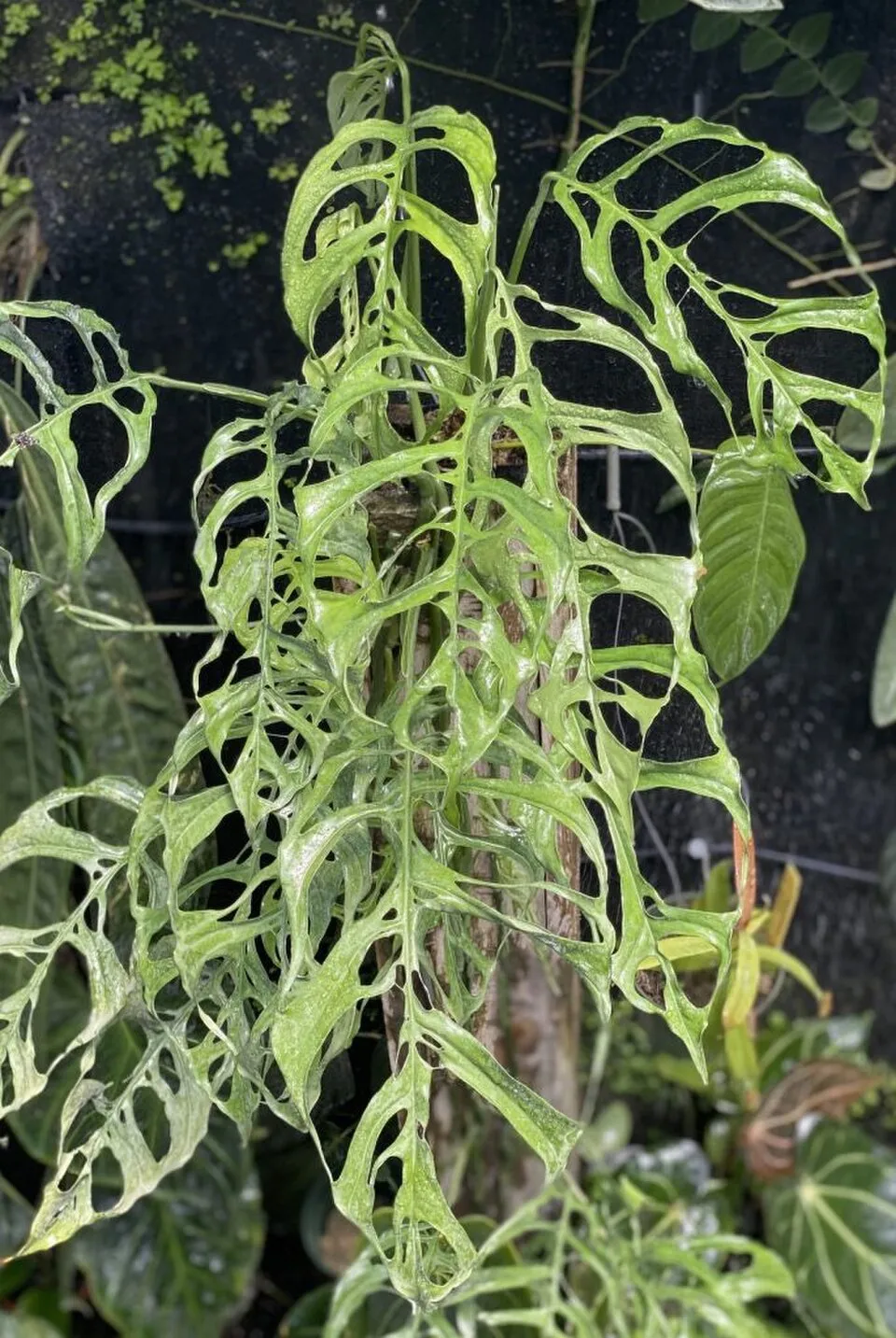
Monstera karstenianum, widely recognized as Monstera Peru, is a captivating epiphytic climbing plant belonging to the diverse Araceae family. This species is indigenous to the humid tropical rainforests of Central and South America, with a notable presence in Peru, Ecuador, and Colombia. Thriving as an understory inhabitant, it gracefully ascends host trees and other structures, utilizing its robust aerial roots for anchorage and to access dappled sunlight filtering through the canopy. Unlike many well-known members of its genus, such as the fenestrated Monstera deliciosa, Monstera Peru is celebrated for its distinctive foliage morphology.
Its leaves are typically ovate to lanceolate, characterized by a thick, leathery texture. The most striking attribute is their intensely bullate or quilted surface, which imparts a textured, almost three-dimensional quality to the deep green lamina, reminiscent of hammered metal or crinkled fabric. The venation is subtly lighter, offering a delicate contrast without being overtly prominent. These leaves remain unfenestrated throughout their life cycle, presenting a more compact and solid form.
The plant's stems are relatively slender yet sturdy, producing numerous aerial roots that not only facilitate climbing but also efficiently absorb moisture and nutrients directly from the ambient humid air. While inflorescence, typical of Araceae (spathe and spadix), occurs in its natural habitat, flowering is exceptionally rare in indoor cultivation. Primarily valued for its striking ornamental appeal, Monstera Peru’s integration into living spaces aligns with biophilic design principles, fostering a tangible connection to nature. Its unique form and growth habit make it a prized specimen for botanical enthusiasts, adding a distinctive elegance to any plant collection and embodying the subtle, profound beauty of the tropical understory.
Trusted Scientific References
1. Authoritative external sources for Monstera karstenianum
1.1 Wikipedia — Monstera karstenianum
1.2 Kew POWO (Plants of the World Online)
1.3 PubMed — peer-reviewed research
1.4 NCBI Taxonomy Browser
1.5 GBIF — Global Biodiversity
1.1.Monstera Peru — Distinguishing Points
- ✓Distinctive Bullate Foliage — Deep green, thick, leathery leaves with a unique textured, quilted surface.
- ✓Unfenestrated Leaves — Unlike many Monstera species, its leaves do not develop characteristic splits or holes.
- ✓Epiphytic Growth Habit — Naturally grows on other plants for support, absorbing nutrients from air and debris.
- ✓Robust Aerial Roots — Develops numerous aerial roots for climbing, support, and moisture absorption.
- ✓Tropical Origin — Native to humid rainforests of Peru, Ecuador, and Colombia.
- ✓Araceae Family Member — Belongs to the aroid family, known for its spathe and spadix inflorescence.
- ✓Ornamental Appeal — Highly valued as a houseplant for its striking and unusual aesthetic.
- ✓Moderate Growth Rate — Generally a slow to moderate grower, making it manageable indoors.
- ✓Toxicity — Contains calcium oxalate crystals, rendering it toxic if ingested by humans or pets.
- ✓Climbing Support Required — Thrives when provided with a moss pole or other structure to climb.
1.2.Monstera Peru — Quick Summary
- ✓Unique bullate, unfenestrated leaves.
- ✓Epiphytic climbing plant native to tropical Americas.
- ✓Requires moderate care — bright indirect light, high humidity, well-draining soil.
- ✓All parts are toxic if ingested due to calcium oxalate.
- ✓Primarily an ornamental houseplant with no known medicinal uses.
2.Monstera Peru — Botanical Identity
3.Monstera Peru — Key Data
4.Monstera Peru — Botanical Features
5.Monstera Peru — Native Range & Habitat
6.Monstera Peru — Traditional Uses
7.Monstera Peru — Phytochemistry
- ✓Calcium Oxalate Crystals — Present as insoluble raphides in all plant tissues, acting as a defense mechanism against herbivory and causing irritation upon ingestion or contact.
- ✓Flavonoids — Expected to be present in varying concentrations, contributing to antioxidant activity and plant pigmentation, common in many plant species.
- ✓Saponins — Potentially present, these glycosides can have detergent-like properties and may contribute to the plant's defense against pests.
- ✓Alkaloids — While not specifically identified for Monstera karstenianum, many plants in the Araceae family contain various alkaloids with diverse physiological effects.
- ✓Tannins — Likely present, these polyphenolic compounds contribute to the plant's astringent properties and defense against pathogens.
- ✓Volatile Organic Compounds (VOCs) — Released in trace amounts, contributing to the plant's natural scent profile, though not typically considered medicinally active in this context.
- ✓Starch — Present as a primary carbohydrate storage in plant cells, particularly in stems and roots, providing energy reserves.
- ✓Terpenoids — A broad class of organic compounds, potentially present and contributing to plant defense and aroma, common in tropical flora.
8.Monstera Peru — Scientific Evidence
- ✓Environmental Air Purification — Like many indoor plants, Monstera Peru can contribute to minor improvements in indoor air quality by absorbing certain volatile organic compounds (VOCs) and releasing oxygen through photosynthesis, though specific studies for this species are limited.
- ✓Enhanced Psychological Well-being — Interacting with and caring for Monstera Peru, as with other houseplants, can reduce stress, improve mood, and foster a sense of calm, aligning with biophilic design principles.
- ✓Aesthetic and Visual Stimulation — The plant's unique bullate and textured foliage provides significant ornamental value, enhancing the visual appeal of indoor spaces and contributing to a more stimulating and natural environment.
- ✓Humidity Regulation (Microclimate) — As a tropical plant, Monstera Peru releases moisture through transpiration, subtly increasing localized humidity levels, which can be beneficial in dry indoor environments.
- ✓Connects to Nature — Cultivating Monstera Peru allows individuals to engage with nature within urban settings, promoting a sense of connection to the natural world and potentially mitigating symptoms of nature deficit disorder.
- ✓Therapeutic Horticulture — The act of nurturing and observing plant growth, including that of Monstera Peru, can offer a meditative and rewarding experience, contributing to mental health and mindfulness practices.
- ✓Biophilic Design Integration — Its presence supports biophilic design, which incorporates natural elements into built environments to improve human health and well-being, though this is an indirect benefit rather than a direct medicinal action.
- ✓No Specific Traditional Medicinal Uses — It is important to note that Monstera karstenianum is not traditionally documented or extensively researched for specific medicinal applications in herbalism or traditional medicine systems; its primary benefits are ornamental and environmental.
8.1.Monstera Peru — Conditions Traditionally Used For
9.Monstera Peru — Safety Considerations
9.1.Monstera Peru — Side Effects & Warnings
- ✓Oral Irritation — Ingestion of any part of Monstera Peru can cause immediate burning, swelling, and pain in the mouth, throat, and tongue due to calcium oxalate crystals.
- ✓Digestive Upset — May lead to symptoms such as nausea, vomiting, stomach pain, and diarrhea if ingested, particularly in larger quantities.
- ✓Skin Irritation — Direct contact with the sap can cause mild skin irritation or dermatitis in sensitive individuals, though this is less common.
- ✓Pet Toxicity — Highly toxic to cats and dogs, causing excessive drooling, pawing at the mouth, vomiting, and difficulty swallowing upon ingestion.
- ✓Eye Irritation — If sap comes into contact with the eyes, it can cause pain, redness, and irritation, requiring immediate rinsing.
- ✓Allergic Reactions — Rare but possible, individuals with extreme sensitivities may experience allergic responses to plant components.
9.2.Monstera Peru — Risk Assessment
- ✓Keep Out of Reach — Ensure Monstera Peru is placed where children and pets cannot easily access or ingest any part of the plant.
- ✓Avoid Ingestion — Emphasize that all parts of the plant are considered toxic due to the presence of calcium oxalate crystals.
- ✓Handle with Care — Wear gloves when pruning or repotting if you have sensitive skin to avoid potential sap contact.
- ✓Wash Hands — Always wash hands thoroughly with soap and water after handling Monstera Peru.
- ✓Immediate Medical Attention — Seek emergency medical advice if significant ingestion occurs or if severe symptoms develop.
- ✓Pet Awareness — Educate pet owners about the plant's toxicity and monitor pets for any signs of ingestion if exposed.
- ✓Eye Protection — Avoid rubbing eyes after handling the plant and consider eye protection during extensive pruning.
10.Monstera Peru — Preparations & Uses
- ✓Ornamental Display — Primarily used as a decorative houseplant, showcasing its unique bullate foliage in homes, offices, and commercial spaces.
- ✓Climbing Specimen — Encourage its natural climbing habit by providing a moss pole, trellis, or other support structure to promote robust vertical growth.
- ✓Hanging Basket Display — While it prefers to climb, it can be grown in hanging baskets, allowing its vines to cascade, though leaves may remain smaller.
- ✓Terrarium or Vivarium Inclusion — Its love for high humidity and tropical aesthetic makes it suitable for enclosed environments like terrariums or vivariums.
- ✓Propagation by Cuttings — Easily propagated from stem cuttings with at least one node, rooted in water or moist, well-draining soil.
- ✓Biophilic Design Element — Integrated into interior designs to enhance connection to nature, improve aesthetics, and contribute to occupant well-being.
- ✓Air Quality Enhancement — Placed in living areas to contribute to minor indoor air purification and oxygen exchange, as with many common houseplants.
- ✓Educational Specimen — Used in botanical collections or educational settings to illustrate unique plant adaptations like bullate leaves and epiphytic growth.
11.Monstera Peru — How to Grow
- ✓Soil — Requires an airy, well-draining substrate; a mix of coco coir, orchid bark, and perlite is ideal for its epiphytic nature.
- ✓Humidity — Thrives in high humidity (60-80%); use a humidifier, mist regularly, or place on a pebble tray with water.
- ✓Temperature — Prefers warm conditions, ideally between 60-85°F (15.5-29.5°C); avoid cold drafts and sudden temperature drops.
- ✓Light — Best in medium to bright indirect light; direct sun can scorch leaves, while too little light leads to leggy growth.
- ✓Water — Sensitive to overwatering; allow the top few inches of soil to dry out completely between waterings to prevent root rot.
- ✓Support — As a climbing epiphyte, it benefits greatly from a moss pole, bamboo stake, or wall clips to encourage larger, stronger growth.
- ✓Fertilizer — Fertilize monthly during the growing season (spring and summer) with a balanced liquid houseplant fertilizer.
- ✓Pruning — Prune to encourage thicker growth or to manage size; cuttings can be used for propagation.
Reviewed by the Flora Medical Global Botanical Review Panel
Multi-disciplinary editorial group · Botany · Ethnobotany · Herbal-medicine literature
Who reviewed this: This page was checked by the Flora Medical Global Botanical Review Panel — an in-house editorial group of botany graduates, ethnobotany researchers, and horticulture practitioners who collectively maintain our 7,000+ plant encyclopedia. Meet the team.
Our 4-step verification process
1. Taxonomic verification
Scientific names and synonyms cross-checked against Kew POWO, World Flora Online, and The Plant List.
2. Phytochemical & medicinal cross-reference
Active compounds, traditional uses, and reported activities are cross-referenced with PubMed, USDA Dr. Duke's database, and peer-reviewed ethnobotanical literature.
3. Conservation & distribution check
Distribution, ecology, and conservation status confirmed against GBIF occurrence records and the IUCN Red List.
4. Editorial & safety review
Every entry passes an editorial pass for clarity, originality, and safety notices (toxicity, contraindications, dosage caveats) before publication.
Last reviewed:
Important medical disclaimer: This content is for educational and research purposes only. It is not medical advice and is not a substitute for consultation with a licensed healthcare provider. Do not use any herb to self-treat a medical condition without professional guidance.
Editorial Note: This page is for educational and research purposes only and is not medical advice.
Written by: Flora Medical Global Editorial Team
Reviewed by: Flora Medical Global Botanical Review Panel
Last Updated: June 15, 2026





Monstera Peru — Comments & Community Reviews
Rate this plant