
Medical Disclaimer: This content is for educational purposes only. It is not medical advice. Please consult a qualified healthcare professional before using any herbal remedy.
Safety Overview
1.Monstera Peru — Botanical Snapshot
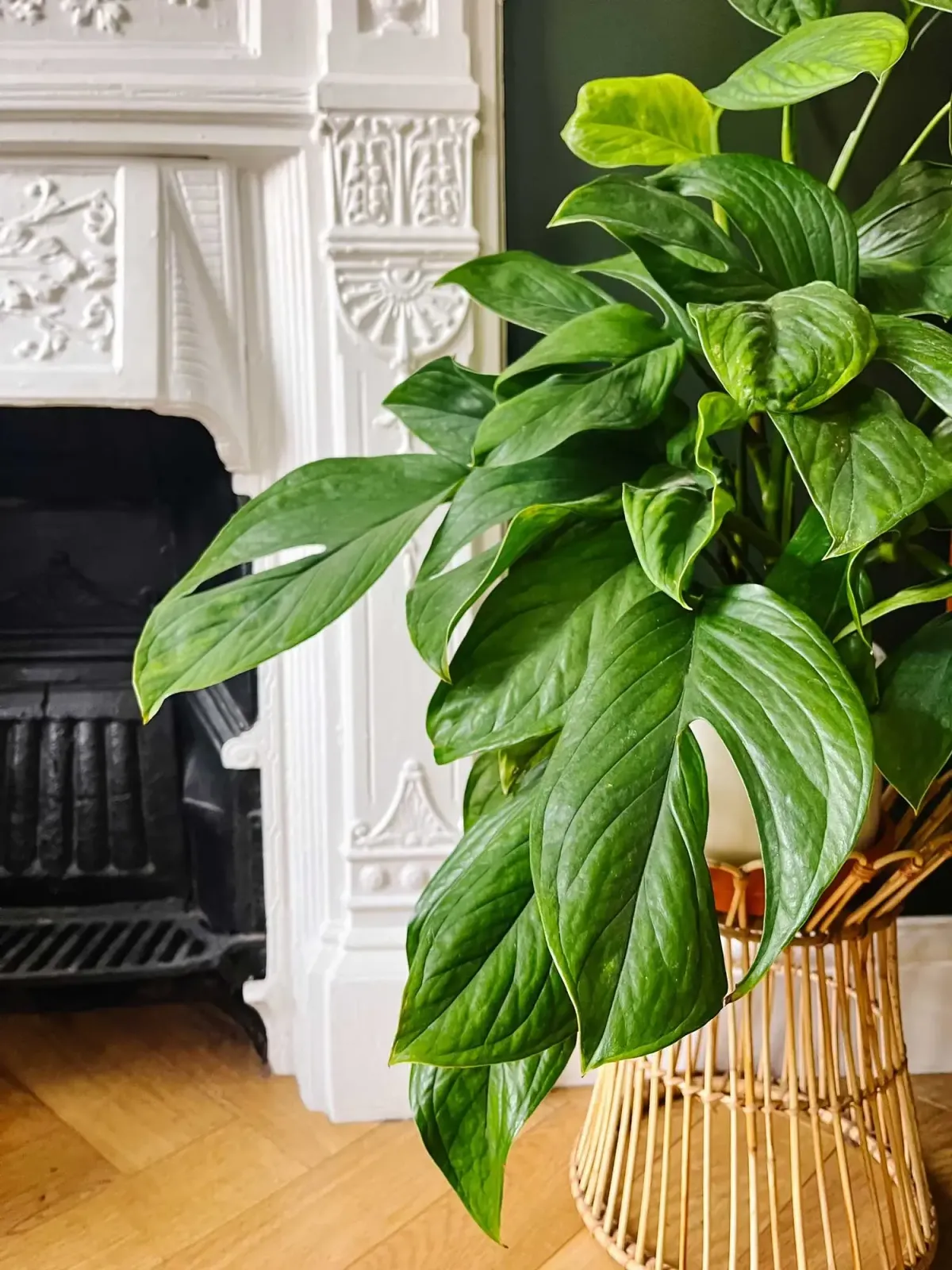
Monstera sp. Peru, often simply called Monstera Peru, is a captivating evergreen hemiepiphyte belonging to the Araceae family, indigenous to the verdant tropical rainforests of Central and South America. Its natural range primarily encompasses regions such as Peru, Ecuador, and Colombia, where it thrives in the understory, utilizing aerial roots to ascend trees and other structures. This climbing plant is highly prized for its unique and distinctive foliage, which sets it apart from many other species within the diverse Monstera genus. While capable of reaching impressive lengths in its native habitat, cultivated indoor specimens typically maintain a more manageable size, usually between 1 to 2 meters with appropriate support, though its vigorous vines can extend considerably further.
The most striking characteristic of Monstera Peru is its deeply textured, almost bullate, glossy dark green leaves. These leaves are thick, robust, and leathery, often measuring up to 30 centimeters in length and 20 centimeters in width. They exhibit a unique, often irregular pattern of deep indentations or staggered splits along the leaf margins, giving them a rugged, almost prehistoric aesthetic rather than the typical fenestrations (holes) seen in other Monstera species. Prominent and slightly sunken venation contributes to the corrugated surface texture. The leaves are supported by sturdy petioles attached to a robust stem, which initially appears green but matures into a smooth, light-brown, bark-like texture.
Flowering is a rare occurrence in cultivation, particularly indoors, as Monstera Peru requires very specific environmental cues to produce its characteristic inflorescence. When it does bloom, it forms a small, creamy-white spathe enveloping a central spadix, a structure typical of the Araceae family. Successful pollination can lead to the production of small, edible fruits, though these are rarely observed outside of its natural habitat. Its preference for the tropical forest understory dictates its need for high humidity and warm temperatures.
Trusted Scientific References
1. Authoritative external sources for Monstera sp. Peru
1.1 Wikipedia — Monstera sp. Peru
1.2 Kew POWO (Plants of the World Online)
1.3 PubMed — peer-reviewed research
1.4 NCBI Taxonomy Browser
1.5 GBIF — Global Biodiversity
1.1.Monstera Peru — Notable Characteristics
- ✓Unique Foliage — Deeply textured, bullate, glossy dark green leaves with irregular marginal splits.
- ✓Hemiepiphytic Growth — Climbs using aerial roots, attaching to supports in its natural habitat and cultivation.
- ✓Tropical Origin — Native to the rainforests of Peru, Ecuador, and Colombia.
- ✓Moderate Growth Rate — Relatively slow-growing compared to some other Monstera species.
- ✓Low Light Tolerance — Adaptable to medium to bright indirect light conditions, suitable for indoor environments.
- ✓Toxicity — Contains calcium oxalate, rendering it toxic if ingested.
- ✓Aroid Family — Member of the Araceae family, characterized by spathe and spadix inflorescence (rarely seen indoors).
- ✓Vining Habit — Can be grown as a climbing plant with support or allowed to trail in hanging baskets.
- ✓Air Purifier (General) — Contributes to indoor air quality like many other houseplants.
- ✓Distinctive Texture — Leaves have a corrugated, almost prehistoric feel.
1.2.Monstera Peru — In Brief
- ✓Monstera Peru is an ornamental tropical hemiepiphyte from the Araceae family.
- ✓Features distinctive, textured, dark green leaves with deep marginal splits.
- ✓Native to Central and South American rainforests, thriving in high humidity.
- ✓Primarily grown as a houseplant for its unique aesthetic and vining habit.
- ✓Contains calcium oxalate crystals, making it toxic if ingested by humans or pets.
- ✓Requires bright indirect light, well-draining soil, and consistent warmth.
2.Monstera Peru — Botanical Identity
3.Monstera Peru — Key Data
4.Monstera Peru — Botanical Features
5.Monstera Peru — Native Range & Habitat
6.Monstera Peru — Heritage Uses
7.Monstera Peru — Phytochemistry
- ✓Calcium Oxalate — Found throughout the plant, these insoluble crystals are responsible for the plant's toxicity, causing irritation upon ingestion or contact.
- ✓Chlorophylls — Essential photosynthetic pigments (e.g., chlorophyll a and b) responsible for the plant's vibrant green coloration and energy production.
- ✓Carotenoids — Accessory pigments (e.g., beta-carotene, lutein) contributing to photosynthesis and protecting against photo-oxidative damage.
- ✓Flavonoids — General plant secondary metabolites known for antioxidant properties, though their specific profile in Monstera Peru is not well-studied.
- ✓Organic Acids — Various organic acids involved in metabolic pathways and contributing to the plant's overall biochemistry.
- ✓Polysaccharides — Structural carbohydrates like cellulose and hemicellulose forming the plant cell walls, providing rigidity and support.
- ✓Lignins — Complex polymers that provide structural integrity to the plant's cell walls, particularly in woody tissues and stems.
- ✓Terpenoids — A diverse group of organic compounds that may contribute to plant defense mechanisms and aroma, though not specifically documented for medicinal use in this species.
8.Monstera Peru — Pharmacological Findings
- ✓Ornamental Value — Monstera Peru is highly valued for its aesthetic appeal, contributing to interior design and creating a calming environment.
- ✓Air Purification — Like many houseplants, Monstera Peru can help improve indoor air quality by absorbing common airborne toxins, though specific research on this species is limited.
- ✓Psychological Well-being — The presence of lush green plants such as Monstera Peru has been associated with reduced stress, improved mood, and enhanced cognitive function in indoor settings.
- ✓Biophilic Connection — Cultivating Monstera Peru can foster a deeper connection to nature, promoting a sense of tranquility and mindfulness.
- ✓Humidity Regulation — Transpiration from Monstera Peru can slightly increase ambient humidity levels, which may be beneficial in dry indoor environments.
- ✓Educational Value — Caring for Monstera Peru provides an opportunity to learn about tropical botany, plant physiology, and ecological interactions.
- ✓Aesthetic Enhancement — Its unique textured leaves and climbing habit offer a distinctive visual element that can enrich any living or working space.
- ✓Stress Reduction — Interacting with and nurturing houseplants like Monstera Peru can serve as a meditative practice, aiding in mental relaxation.
8.1.Monstera Peru — Indications & Uses
9.Monstera Peru — Cautions & Contraindications
9.1.Monstera Peru — Possible Adverse Reactions
- ✓Oral Irritation — Ingestion can cause severe irritation of the mouth, throat, and digestive tract due to calcium oxalate crystals.
- ✓Swelling — Symptoms may include swelling of the tongue, lips, and throat, leading to difficulty speaking or swallowing.
- ✓Nausea and Vomiting — Gastrointestinal distress, including nausea, vomiting, and abdominal pain, can occur if consumed.
- ✓Skin Irritation — Direct contact with the sap can cause skin irritation or dermatitis in sensitive individuals.
- ✓Pet Toxicity — Highly toxic to pets (dogs, cats) if ingested, leading to similar symptoms of oral and gastrointestinal irritation.
- ✓Eye Irritation — Contact with plant sap can cause irritation or burning sensation if it gets into the eyes.
9.2.Monstera Peru — Safety Overview
- ✓Keep Out of Reach — Always keep Monstera Peru plants away from children and pets to prevent accidental ingestion.
- ✓Avoid Ingestion — The plant is toxic if consumed due to calcium oxalate crystals; it is not for internal medicinal use.
- ✓Handle with Care — Wear gloves when handling the plant, especially during pruning or repotting, to avoid skin irritation from sap.
- ✓Wash Hands — Thoroughly wash hands after touching the plant to remove any residual sap.
- ✓Seek Medical Attention — In case of accidental ingestion, seek immediate medical advice for both humans and pets.
- ✓No Medicinal Use — Emphasize that Monstera Peru is an ornamental plant and has no known safe traditional or modern medicinal applications for internal use.
- ✓Outdoor Placement Risk — If placed outdoors, ensure it's in an area inaccessible to curious wildlife or pets.
10.Monstera Peru — Preparations & Uses
- ✓Ornamental Display — Primarily used as an indoor decorative plant, enhancing living spaces with its unique foliage and vining habit.
- ✓Propagation — Cuttings with multiple nodes can be easily rooted in water or moist soil to create new plants, ideal for sharing or expanding collections.
- ✓Air Quality Improvement — Positioned in homes or offices to contribute to a healthier indoor environment through general plant air purification.
- ✓Aesthetic Enhancement — Utilized in interior design to add a touch of tropical elegance and natural texture to various settings.
- ✓Climbing Feature — Trained on moss poles or trellises to showcase its natural climbing behavior and encourage mature leaf development.
- ✓Terrarium or Vivariums — Suitable for large, high-humidity enclosed environments where its growth can be managed and enjoyed.
- ✓Educational Specimen — Used as a botanical example in educational settings to illustrate tropical plant morphology and epiphytic growth.
- ✓Gifting — Propagated plantlets make thoughtful and popular gifts for plant enthusiasts and beginners alike.
11.Monstera Peru — Cultivation & Care
- ✓Soil — Requires airy, well-draining soil, ideally a mix of coco coir, orchid bark, and perlite to replicate its epiphytic nature.
- ✓Humidity — Thrives in high humidity (60-80%); misting, humidifiers, or pebble trays can help maintain optimal conditions.
- ✓Temperature — Prefers warm environments between 15.5-29.5°C (60-85°F); avoid cold drafts.
- ✓Light — Needs medium to bright indirect light; direct sun can scorch leaves, while too little light causes leggy growth.
- ✓Water — Sensitive to overwatering; allow the top few inches of soil to dry out completely between waterings to prevent root rot.
- ✓Fertilization — Fertilize monthly during the growing season (spring and summer) with a balanced houseplant fertilizer.
- ✓Support — Best grown with a moss pole, bamboo stake, or wall clips to encourage larger, stronger leaf development as it climbs.
- ✓Pruning — Prune to encourage bushier growth or to propagate new plants, removing leggy sections to maintain desired shape.
Reviewed by the Flora Medical Global Botanical Review Panel
Multi-disciplinary editorial group · Botany · Ethnobotany · Herbal-medicine literature
Who reviewed this: This page was checked by the Flora Medical Global Botanical Review Panel — an in-house editorial group of botany graduates, ethnobotany researchers, and horticulture practitioners who collectively maintain our 7,000+ plant encyclopedia. Meet the team.
Our 4-step verification process
1. Taxonomic verification
Scientific names and synonyms cross-checked against Kew POWO, World Flora Online, and The Plant List.
2. Phytochemical & medicinal cross-reference
Active compounds, traditional uses, and reported activities are cross-referenced with PubMed, USDA Dr. Duke's database, and peer-reviewed ethnobotanical literature.
3. Conservation & distribution check
Distribution, ecology, and conservation status confirmed against GBIF occurrence records and the IUCN Red List.
4. Editorial & safety review
Every entry passes an editorial pass for clarity, originality, and safety notices (toxicity, contraindications, dosage caveats) before publication.
Last reviewed:
Important medical disclaimer: This content is for educational and research purposes only. It is not medical advice and is not a substitute for consultation with a licensed healthcare provider. Do not use any herb to self-treat a medical condition without professional guidance.
Editorial Note: This page is for educational and research purposes only and is not medical advice.
Written by: Flora Medical Global Editorial Team
Reviewed by: Flora Medical Global Botanical Review Panel
Last Updated: June 15, 2026





Monstera Peru — Comments & Community Reviews
Rate this plant